
Selecting the right packaging foam is a critical decision that directly impacts your shipping success, product safety, and overall packaging budget. There is no single “best” packaging foam; the right choice depends entirely on your item’s weight, fragility, and whether the packaging will be reused. Choosing the wrong material can lead to damaged goods, inflated shipping costs, or unnecessary waste in your fulfillment process.
To make an informed decision, you must evaluate the unique physical properties, protective capabilities, and cost structures of the three most common packaging foams: Expanded Polyethylene (EPE), Expanded Polystyrene (EPS), and Ethylene-Vinyl Acetate (EVA). Each material serves a distinct purpose in the packaging lifecycle, from high-volume industrial shipping to premium, custom-designed retail presentations. By understanding how these foams behave under stress, you can optimize your packaging strategy to protect your items while managing operational costs.
Understanding the Physical Structure of EPE, EPS, and EVA
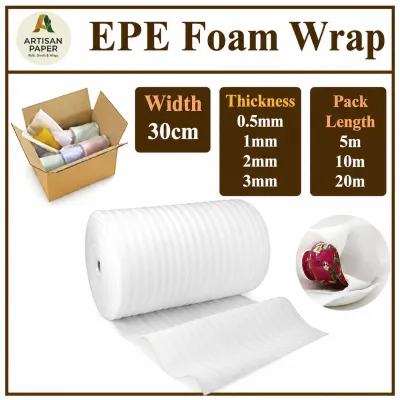
Expanded Polyethylene (EPE) is a semi-rigid, closed-cell foam known for its remarkable flexibility and resilience. It is manufactured by expanding polyethylene resin beads, resulting in a structure filled with thousands of tiny, independent air pockets. This closed-cell design allows EPE to bend, compress, and flex without breaking, tearing, or flaking. When you handle EPE, it feels slightly waxy and soft, yet it maintains enough structural integrity to cushion medium-weight items effectively.
Products mentioned in this guide
![[SG] Bubble Wrap® 10m | Foam Roll 5m | Packing Tapes – Cushioning for Packing Moving Warehouse Use](https://img.lazcdn.com/g/p/5d1b2367f552267faa5f9fe7d51ee653.jpg_400x400q80.jpg_.webp)
Prices are valid at publication and may change. Please refer to the product page for the latest price.
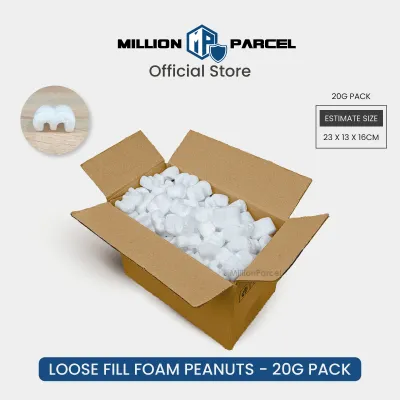
Expanded Polystyrene (EPS), commonly referred to by various brand names or simply as styrofoam, has a rigid and brittle physical structure. It is produced by heating polystyrene beads containing a blowing agent, causing them to expand and fuse together inside a mold. This process creates a lightweight foam composed of distinct, visible spherical beads. Because these beads are fused together, EPS does not bend; instead, it snaps, cracks, or crumbles when subjected to bending forces or concentrated pressure.
Ethylene-Vinyl Acetate (EVA) is a highly dense, copolymer foam that exhibits a rubber-like flexibility and smoothness. The combination of ethylene and vinyl acetate monomers produces a closed-cell material with extremely fine cells, giving it a uniform, non-porous surface. EVA is significantly denser and heavier than both EPE and EPS, offering a premium feel and high elastic recovery. It can be compressed repeatedly and will return to its original shape with virtually no permanent deformation or surface wear.
Comparing Shock Absorption and Surface Protection
When evaluating shock absorption, the primary distinction lies in how each foam handles multi-impact scenarios during transit. EPE and EVA are resilient foams, meaning their closed-cell structures compress under impact to absorb energy and then quickly spring back to their original shape. This makes them highly effective for parcel shipping, where packages are frequently dropped, tumbled, or stacked multiple times along the delivery route.

In contrast, EPS is a sacrificial, single-impact cushioning material. When an EPS block experiences a heavy impact, the fused polystyrene beads crush permanently to absorb the kinetic energy. While this provides excellent initial protection by keeping the shock away from the product, the crushed area loses its cushioning ability. If the package experiences a second drop on the same side during transit, the compromised EPS will transfer the shock directly to your item.
Load-bearing limits must be carefully verified by checking manufacturer specifications rather than relying on general material assumptions. Heavy items require a foam with higher density and compression resistance to prevent the material from “bottoming out” under weight. If a foam bottoms out, it compresses completely, losing its ability to absorb further shocks and leaving the item vulnerable to damage.
Surface protection is another critical factor, particularly for items with polished, painted, or highly delicate finishes. EPS poses a risk of micro-scratches because its rigid, beaded surface can rub against the product during transit, and loose beads can flake off and migrate into sensitive components. EPE and EVA offer a smooth, non-abrasive surface finish that gently cradles delicate items, eliminating the risk of surface scuffing or cosmetic damage without requiring additional protective wraps.
Balancing Cost, Reusability, and Storage Space
Balancing your packaging budget requires looking beyond the initial purchase price of the foam to consider the total cost of ownership. EPS is highly cost-effective for high-volume, single-use shipping because of its low raw material cost and efficient molding processes. If you are shipping large, heavy appliances or industrial equipment where the packaging is discarded by the end consumer, EPS often provides the most economical solution.
However, if your business operates a closed-loop logistics system or offers subscription boxes, EPE and EVA become highly cost-effective due to their durability. Because EPE and EVA can withstand dozens of transit cycles without structural degradation, the cost per use drops significantly over time. Whether you are managing a packaging budget of S$500 or S$5,000, investing in a more expensive, reusable EVA insert can ultimately save money compared to constantly purchasing and discarding single-use EPS packaging.
Storage efficiency and warehouse space are practical operational constraints that vary widely between these materials. EPS is rigid and bulky; it cannot be compressed or folded for storage, meaning it occupies significant warehouse space before it is used. EPE, on the other hand, can be purchased in flexible rolls, thin sheets, or plank forms that are easier to stack, roll, or store compactly in your facility.
Environmental factors in your storage area can also influence your choice of packaging material. In humid climates, such as Singapore, non-air-conditioned warehouses can experience high moisture levels that affect traditional packaging materials. Closed-cell foams like EPE and EVA are completely waterproof and resistant to mold, mildew, and rot, ensuring they remain clean and structurally sound even during prolonged storage in humid conditions.
Matching Foam Types to Your Specific Items
To select the right packaging foam, you must match the physical properties of the material to the specific weight, fragility, and value of your products. Heavy, rigid items that require absolute immobilization—such as large electronics, kitchen appliances, or heavy machinery parts—are best protected using molded EPS corner blocks or thick EPE foam planks. These materials provide the structural rigidity needed to hold heavy items securely in the center of the shipping carton, preventing them from shifting and breaking through the outer walls.
For light to medium-weight items that require precise positioning and high-end presentation, EVA foam is the premier choice. Cosmetics, luxury stationery, delicate medical instruments, and high-value consumer electronics benefit from custom-cut EVA foam inserts. The dense, rubbery texture of EVA allows for clean, precise cuts that hold items snugly, while its smooth surface ensures a scratch-free, premium unboxing experience that enhances your brand’s perceived value.
If you are shipping items that fall between these categories, such as moderately fragile glassware, medium-sized electronics, or delicate office supplies, EPE foam offers an excellent middle ground. EPE can be easily fabricated into custom shapes, laminated into thick protective pads, or used as a thin wrap to protect individual components. Its balance of flexibility, multi-impact protection, and moderate cost makes it a highly versatile choice for a wide range of everyday shipping needs.
High-frequency returnable packaging systems, such as internal warehouse transfer totes or reusable shipping containers, demand materials with exceptional structural memory. EPE and EVA are ideal for these applications because they do not degrade, crack, or lose their shape after repeated handling. By choosing these resilient foams for your returnable packaging, you ensure consistent protection over hundreds of trips while minimizing waste.
Verifying Foam Specifications Before You Buy
Before finalizing your packaging purchase, it is essential to verify the technical specifications of the foam to ensure it meets your operational requirements. Do not rely solely on generic material names, as the performance of EPE, EPS, and EVA can vary widely based on density and manufacturing quality. Request a technical data sheet from your supplier and pay close attention to the density, which is typically expressed in kilograms per cubic meter (kg/m³).
Verify the thickness tolerances of the foam sheets or inserts to ensure they will fit consistently inside your outer shipping cartons. Variations in thickness can lead to loose packaging that allows items to shift, or overly tight packaging that puts unnecessary stress on the product. A reliable supplier should provide clear tolerances and guarantee consistent dimensions across production batches.
Ask your manufacturer for compression deflection and drop-test documentation to confirm how the foam performs under specific weight loads. This data is crucial for determining if the foam will bottom out under the weight of your heaviest items during a fall. If you are designing custom packaging, also verify the supplier’s fabrication capabilities, such as die-cutting, water-jet cutting, or CNC routing, to ensure they can achieve the precise shapes and clean edges your product requires.
Frequently Asked Questions (FAQ)
Can I combine different foam types in a single package?
Yes, combining different foam types in a single package is a highly effective way to optimize both protection and cost. For example, you can use rigid EPS corner blocks to provide structural support and immobilize a heavy item within the shipping box, while wrapping the item itself in a thin layer of flexible EPE foam to prevent surface scratches. When designing a hybrid packaging system, ensure that the different materials are secured properly so they do not shift, rub against each other, or create uneven pressure points on your product during transit.
How do I identify the foam type if the packaging is unmarked?
You can easily identify unmarked packaging foam by performing a few simple physical checks. EPS is highly rigid, has a distinct texture of fused spherical beads, and will snap or crumble easily when you attempt to bend it. EPE is highly flexible, feels slightly waxy or soft to the touch, and can be bent, twisted, or stretched without tearing or cracking. EVA feels dense, rubbery, and exceptionally smooth, and if you press your fingernail into it, the foam will quickly rebound without leaving a permanent indentation.

Community discussion
Share your experience or ask a question. Comments are reviewed before publication.