
Finding the perfect envelope for children’s letters, drawings, and school projects is about balancing protection with presentation. When kids pour their creativity into a vibrant painting, a handwritten letter to a grandparent, or a delicate school craft, the last thing you want is for their hard work to arrive bent, torn, or smudged. Choosing the right envelope size ensures that these precious creations slide in smoothly and remain pristine during transit or storage. By matching the envelope to the paper size and thickness, parents and teachers can preserve every brushstroke and pencil mark without forcing awkward folds.
Decoding Standard Envelope Sizes for A-Series Paper
Standard envelope sizes can seem confusing at first glance, but they follow a logical system designed to match standard paper dimensions. In Singapore and many other regions, paper is typically sized using the A-series system, where A4 is a standard printer sheet, A5 is half that size, and A6 is a quarter. To make pairing simple, envelopes use a corresponding C-series system. A C-series envelope is designed to perfectly hold the matching A-series paper size without any folding.
For example, a C4 envelope is sized to fit an unfolded sheet of A4 paper. If your child has created a large drawing on a standard drawing block or a school worksheet, a C4 envelope will keep it completely flat. A C5 envelope is designed to hold an A5 sheet of paper flat, or an A4 sheet folded exactly in half once. This is one of the most versatile sizes for school notices and medium-sized drawings. A C6 envelope fits an A6 sheet flat, or an A5 sheet folded in half, making it the classic choice for small greeting cards and short handwritten notes.
Products mentioned in this guide
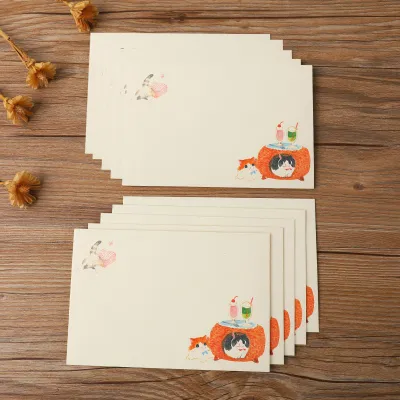
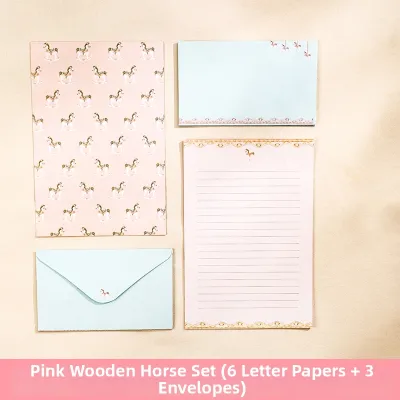
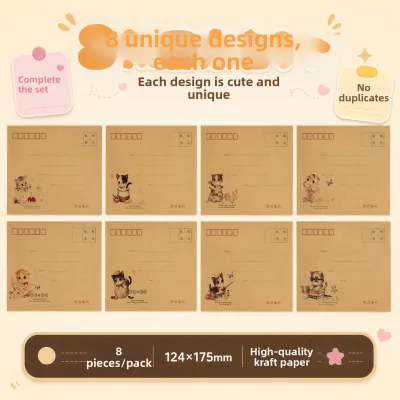
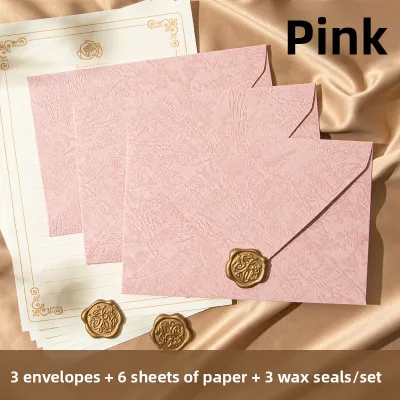
Prices are valid at publication and may change. Please refer to the product page for the latest price.
Another common option is the DL envelope, which stands for “Dimension Lengthwise.” This long, narrow envelope is designed to hold a standard A4 sheet that has been folded into three equal horizontal sections. While DL envelopes are highly popular for official school letters and certificates, they are also excellent for long, narrow kids’ creations, such as custom bookmarks, paper weaving strips, or panoramic drawings.
It is helpful to note that standard envelope dimensions are intentionally manufactured to be slightly larger than the paper sizes they are meant to hold. For instance, while an A4 sheet measures 210 by 297 millimetres, a C4 envelope measures 229 by 324 millimetres. This extra clearance is crucial because it allows for smooth insertion and prevents the edges of the paper from catching, bending, or tearing on the inner seams of the envelope.
Choosing the Right Size for Letters, Drawings, and Projects
Selecting the ideal envelope depends heavily on the specific type of content your child is sending or storing. For large school projects, certificates, and detailed A4 drawings, a C4 envelope is almost always the best choice. Keeping these items flat in a C4 envelope prevents unsightly creases across the middle of the artwork, which is especially important for graded school submissions or pieces destined for a frame. If the project consists of half-sized worksheets or A5 drawings, a C5 envelope offers a snugger fit that keeps the contents from sliding around too much.

For handwritten letters, small sketches, and handmade greeting cards, C5 and C6 envelopes are the traditional go-to options. If your child has written a letter on A5 paper, you can slide it directly into a C5 envelope to keep it flat, or fold it once to fit it into a compact C6 envelope. Handmade cards, which often use thicker cardstock, are best paired with C6 envelopes to ensure they do not bend when sealed.
When dealing with long, narrow crafts like bookmarks, woven paper strips, or printed school awards, a DL envelope provides the perfect proportions. Using a DL envelope for these specific shapes prevents the item from shifting excessively, which can cause corner damage during transit. It also presents the contents beautifully when opened, making the recipient’s experience much more special.
Preserving the integrity of delicate mediums requires careful envelope selection. If your child has used wet paint, heavy markers, pastels, or charcoal, folding the paper can cause the medium to smudge, transfer, or crack along the crease. In these cases, you should always prioritize flat mailing using a C4 or C5 envelope, even if the paper size is small. Keeping the paper completely flat minimizes friction and preserves the texture and color of the artwork.
How to Measure and Test for a Crease-Free Fit
Before sealing any children’s artwork or letter inside an envelope, taking a moment to measure and test the fit can save you from accidental damage. Start by laying the artwork flat on a clean surface and measuring its length, width, and thickness. While standard paper is virtually flat, children’s crafts often feature layered elements like glued construction paper, stickers, or even three-dimensional decorations like sequins and yarn. These layers add thickness, which reduces the available space inside the envelope.
To account for this thickness, a good rule of thumb is to choose an envelope that is at least 5 to 10 millimetres larger than the dimensions of the artwork on all sides. Once you have selected a potential envelope, perform a gentle “slide test.” Hold the envelope open and slowly slide the artwork inside. The paper should glide in smoothly without requiring force, catching on the inner seams, or bending at the corners. If you feel any resistance, the envelope is too tight.
There are clear stopping conditions when standard paper envelopes are no longer suitable. If the artwork features fragile, easily crushed elements like dried leaves, macaroni, or pop-up structures, a standard paper envelope will not provide enough protection. In these situations, you should abandon standard envelopes and opt for a rigid cardboard mailer, a padded bubble envelope, or a dedicated plastic portfolio. These alternatives prevent the contents from being crushed under the weight of other mail.
Selecting Kid-Friendly Materials and Closures
When choosing envelopes for children to use, the material and closure mechanism play a significant role in how easy and enjoyable the process is. Standard envelopes are typically made from paper weighing between 80 and 100 grams per square metre (gsm). For everyday letters, this weight is perfectly adequate. However, for school transit or mailing heavier artwork, opting for a sturdier paper weight, such as 110 or 120 gsm, provides the durability needed to prevent tearing during rough handling.
The type of closure is another critical factor, especially for young children who want to seal their letters independently. Gummed envelopes require moisture to activate the adhesive, which can be messy and unhygienic for kids. Self-seal envelopes, which feature a strip of adhesive that bonds when pressed together, or peel-and-seal envelopes, which have a protective paper strip over the adhesive, are much easier for small hands to manage without water or glue sticks. Clasp envelopes, which use a reusable metal prong, are excellent for school projects that need to be opened and closed multiple times by teachers.
You should also consider whether an opaque or windowed envelope is more appropriate for your needs. Opaque envelopes offer complete privacy for personal letters and drawings, and they allow children to write and decorate the recipient’s address directly on the front. On the other hand, windowed envelopes can be useful if the school project or letter already has the recipient’s name or address printed clearly on the top sheet, eliminating the need to rewrite the information on the outside.
Frequently Asked Questions (FAQ)
Can I use a standard paper envelope for thick cardboard art?
Standard paper envelopes are generally not suitable for thick cardboard art or three-dimensional crafts. Because paper envelopes lack depth, forcing a thick item inside can stretch the paper, causing the seams to burst or the artwork to bend and warp. For thick cardboard art, it is best to use a rigid cardboard mailer or a padded bubble envelope. These options provide the necessary depth and structural support to protect the artwork from bending or crushing during transit.
Do I need to fold school worksheets to fit them in smaller envelopes?
Whether you should fold school worksheets depends on their purpose and how they will be used. For everyday homework or general school notices, folding an A4 worksheet in half to fit into a C5 envelope, or into thirds for a DL envelope, is perfectly acceptable and saves space. However, if the worksheet is a graded assignment, a certificate, or a project that needs to be displayed, you should avoid folding it. Instead, use a C4 envelope to keep the sheet completely flat and professional.

Community discussion
Share your experience or ask a question. Comments are reviewed before publication.