
To use SingPost Tracked Letterbox Prepaid Labels successfully, your envelope must fit within the physical dimensions of standard Singapore HDB and private letterboxes. Generally, this service accommodates envelopes up to standard C4 size (324 mm by 229 mm) with a maximum thickness of 65 mm, though you should always verify the exact limits printed on your specific prepaid label package. Ensuring your mailpiece stays within these boundaries guarantees that the postal carrier can safely deposit the item directly into the recipient’s locked letterbox without requiring a face-to-face delivery.
Understanding Letterbox Dimension Limits
The physical design of residential letterboxes in Singapore dictates the strict size limits of the Tracked Letterbox service. Most letterboxes feature a narrow aperture designed to protect mail from unauthorized retrieval while keeping contents secure and dry. If an envelope is too wide, too long, or too thick, it simply cannot pass through the slot or fit inside the internal compartment. Thickness is the most critical dimension, as even a slightly bulging envelope can jam the delivery mechanism or block other mail.
To ensure your mailpiece complies with current standards, always check the official SingPost website or review the detailed specifications printed directly on the prepaid label sheet before sealing your envelope. Postal guidelines can occasionally be updated to reflect changes in infrastructure or delivery regulations. Verifying these details beforehand prevents unexpected delivery issues.
Products mentioned in this guide
![[1/2/3/4 pcs] SingPost Prepaid Postage Label Tracked to Letterbox for Local delivery within Singapore](https://img.lazcdn.com/g/p/52dd774bedbd4b78a928c699eeef6e91.jpg_400x400q80.jpg_.webp)
![[3pcs] SingPost Prepaid Postage Label Tracked to Letterbox for Local delivery within Singapore](https://img.lazcdn.com/g/p/de7ebe2d3294ef869209b212ec59a91e.jpg_400x400q80.jpg_.webp)
![[SG] [FREE SHIP] 1 Piece Singpost Tracked Prepaid Postage Label Local Singapore Delivery Stamp Postal Service](https://img.lazcdn.com/g/p/a3f54e576d00741f3dff9cb87c8de2cc.jpg_400x400q80.jpg_.webp)
![[Normal Mail] [1 pc] SingPost Prepaid Postage Label Tracked to Letterbox for Local delivery within Singapore](https://img.lazcdn.com/g/p/e8d72aa850c60c5a0408bccb70f8687a.png_400x400q80.png_.webp)
![[Normal Mail] [3 pc] SingPost Prepaid Postage Label Tracked to Letterbox for Local delivery within Singapore](https://img.lazcdn.com/g/p/6e1e42a707aa766bca561d9ff7e455f1.png_400x400q80.png_.webp)
![[Normal Mail] [5 pcs] SingPost Prepaid Postage Label Tracked to Letterbox for Local delivery within Singapore](https://img.lazcdn.com/g/p/f1f7dd657c47dcf54c6f081680437f76.png_400x400q80.png_.webp)
Prices are valid at publication and may change. Please refer to the product page for the latest price.
Exceeding the designated size limits carries several inconvenient consequences. If a postal carrier finds that an envelope cannot fit into the recipient’s letterbox, the item may be redirected to a local post office for self-collection, returned to the sender, or subjected to additional postage fees and administrative surcharges. In some cases, delivery may be significantly delayed as the item is rerouted through alternative parcel delivery channels.
How to Measure and Select Compatible Envelopes
Accurately measuring your envelope requires assessing its dimensions after it has been fully packed and sealed. Use a standard ruler or measuring tape to check the maximum length and width from edge to edge. To measure thickness, place the filled envelope flat on a hard surface and measure vertically from the table to the highest point of the envelope. Do not measure an empty envelope, as the contents will inevitably expand its profile.

Standard stationery sizes serve as an excellent starting point when selecting your packaging. A C4 envelope (324 mm x 229 mm) is designed to hold unfolded A4 sheets and typically represents the absolute limit of standard letterbox dimensions. Smaller options, such as C5 (229 mm x 162 mm) for folded A4 sheets, C6 (162 mm x 114 mm), and DL (220 mm x 110 mm) for tri-folded letters, easily fit within the allowable width and length limits.
You must carefully account for the bulk added by internal items when choosing your envelope size. Rigid items like plastic cards, thick booklets, or multiple folded documents can cause the center of the envelope to swell significantly. If your contents are dense or rigid, select a slightly larger envelope size to allow the contents to spread out flatter, keeping the overall thickness well below the maximum limit.
Weight Limits and Surface Preparation
Weight is just as important as physical dimensions when preparing your tracked mailpiece. Before applying your prepaid label, check the specific weight tier printed on the label packaging, which commonly supports items up to 2 kg. Using a digital kitchen scale at home is a reliable way to verify that your fully packed envelope does not exceed this weight limit before sending.
To keep your envelope within the thickness threshold, arrange the contents as flatly and evenly as possible. Avoid stacking items directly on top of one another inside the envelope; instead, lay them side by side if space permits. For documents, folding them neatly and securing them with a minimal amount of tape or a flat paperclip helps prevent shifting and localized bulging during transit.
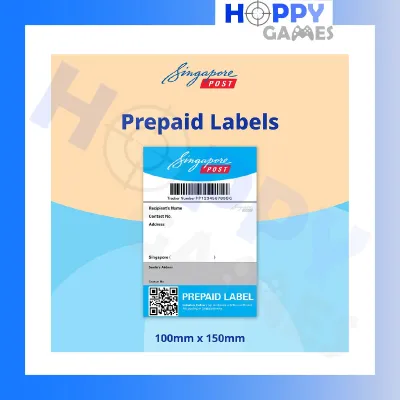
Proper surface preparation is essential for the automated scanning systems used to track your mail. Ensure the exterior of the envelope is completely clean, dry, and free of dust or oils that could prevent the adhesive label from bonding securely. Apply the prepaid label flatly on the front of the envelope, avoiding seams, folds, or closures that could distort the barcode and hinder successful scanning.
Alternatives When Envelopes Exceed Limits
If your packed envelope exceeds the maximum dimensions or weight limits, you have several practical workarounds to ensure successful delivery. The simplest option is to repackage the contents into a larger but thinner envelope, or to use a more flexible wrapping material that can compress easily. Distributing the contents more evenly across a wider surface area can often bring a thick envelope back down to an acceptable thickness.
For large document batches or multiple items, consider splitting the contents into two or more separate, compliant envelopes. While this requires using an additional prepaid label for each package, it guarantees that each piece remains light and thin enough to fit comfortably into the recipient’s letterbox. This method also provides individual tracking numbers for each portion of your shipment.
When items are too heavy, rigid, or bulky to be split or compressed, you should transition to alternative postal services. Standard tracked parcel services or registered mail options are specifically designed to handle larger boxes and thicker packages that cannot fit into a standard letterbox. These services typically involve doorstep delivery or collection points, ensuring your bulkier items still reach their destination securely.
Frequently Asked Questions (FAQ)
Can I use padded or bubble envelopes for this service?
Yes, you can use padded or bubble envelopes, provided the final, fully packed envelope still complies with the official thickness and size limits. Because bubble wrap adds inherent thickness even when empty, you must ensure that the contents inside do not push the overall thickness past the maximum limit. It is also helpful to use flexible padded mailers that can compress slightly if needed, rather than completely rigid padded mailers.
Do I need to use official SingPost branded envelopes?
No, you do not need to use official branded envelopes when using Tracked Letterbox Prepaid Labels. Standard commercial envelopes purchased from any stationery store are fully acceptable, as long as they meet the required size, weight, and thickness specifications. Ensure the envelope material is opaque enough to protect privacy and has a light-colored, smooth surface so the prepaid tracking label remains highly visible and easy for optical scanners to read.

Community discussion
Share your experience or ask a question. Comments are reviewed before publication.