
Selecting the right envelope or mailer size is key to ensuring your documents, books, and products arrive at their destination in pristine condition. Using an envelope that is too small forces you to fold important papers or strain the seams, while an oversized mailer allows items to slide around, increasing the risk of damage during transit. By understanding standard sizing codes and learning how to measure three-dimensional items, you can confidently choose the perfect packaging for any shipment.
Understanding Standard Envelope Size Codes
Standard paper envelopes follow a systematic international coding system, primarily the ISO 269 C-series, which is designed to match standard A-series paper sizes. The beauty of this system lies in its mathematical relationship: a C-series envelope is slightly larger than the corresponding A-series sheet of paper. This means you can slide your documents inside without needing to force or bend them.
The C4 envelope is designed to hold an unfolded A4 sheet of paper perfectly. This size is ideal for official contracts, certificates, brochures, and multi-page manuscripts that must remain flat and professional. If you frequently send documents that cannot be folded, keeping a stock of C4 envelopes is essential.
Products mentioned in this guide
Prices are valid at publication and may change. Please refer to the product page for the latest price.
For smaller documents or those that can be folded in half once, the C5 envelope is the standard choice. It fits an A5 sheet of paper, or an A4 sheet folded neatly in half across its shorter side. This size is highly versatile, commonly used for greeting cards, invitations, and standard corporate correspondence.
When you fold an A4 sheet into thirds, or an A5 sheet in half, you create a format that fits into a DL envelope. The DL size is the classic business envelope, measuring 110mm by 220mm. It is the most common choice for invoices, letters, and promotional flyers, fitting easily into standard letterboxes.
For even smaller items, the C6 envelope accommodates an A6 sheet, which is equivalent to an A4 sheet folded into quarters. This compact size is popular for personal letters, RSVP cards, and small photos. Understanding these relationships allows you to quickly match your paper documents to the correct envelope code.
While standard flat envelopes work beautifully for a few sheets of paper, they struggle with thicker document stacks. For bulky manuscripts, legal briefs, or catalogs, you should look for pocket envelopes with gussets. These expandable sides allow the envelope to stretch, accommodating depth without tearing the paper seams.
Choosing Mailers for Books, Products, and Bulky Items
When your shipping needs extend beyond flat paper documents to books, catalogs, or small retail products, standard paper envelopes are no longer sufficient. Three-dimensional items require specialized mailers that offer structural support, cushioning, and durability. Selecting the right material depends on the fragility and weight of the item you are sending.

Cardboard book mailers and rigid kraft mailers are designed specifically for items that must not bend, such as hardcover books, art prints, or photographs. These mailers feature stiff, heavy-duty cardboard walls that resist folding and corner damage during transit. Many book mailers also include adjustable creases, allowing you to wrap the cardboard tightly around items of varying thicknesses.
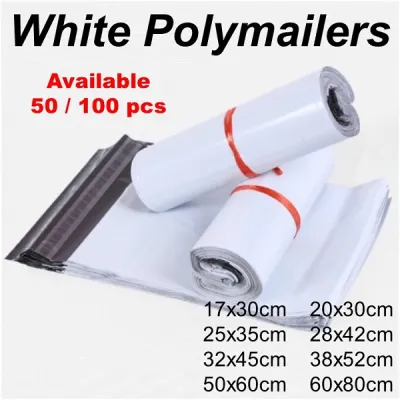
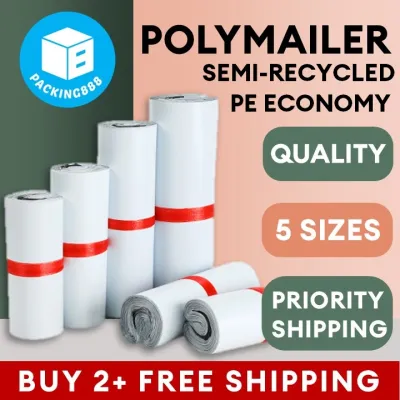
For non-fragile items like clothing, textiles, or soft goods, flexible poly mailers offer a lightweight and water-resistant solution. Made from durable polyethylene plastic, these mailers stretch slightly to accommodate irregular shapes and protect contents from rain and dirt. Because they add virtually no weight to your shipment, they help keep postage costs low.
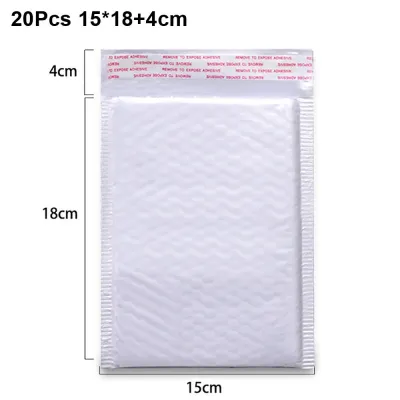
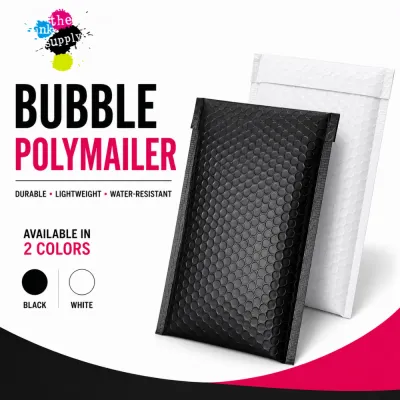
When shipping semi-fragile items that require a balance of flexibility and impact protection, bubble-lined mailers are the standard choice. These mailers combine a paper or plastic exterior with an integrated bubble wrap lining. They are excellent for shipping jewelry, small electronics, cosmetics, or optical discs, absorbing minor shocks during sorting and transport.
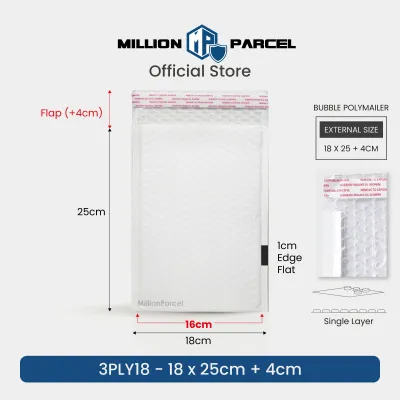
Regardless of the mailer type you choose, you must pay close attention to the difference between internal and external dimensions. Manufacturers list external dimensions to help you calculate shipping space, but the usable interior space is always smaller, especially for padded or rigid mailers. Always check the internal specifications to ensure your item will actually fit inside the pocket.
Step-by-Step Guide to Measuring and Verifying Your Size
To avoid purchasing the wrong packaging, you should follow a reliable measurement workflow before placing an order. Measuring your items accurately ensures a snug fit that prevents movement without putting excessive stress on the mailer seams.
Start by stacking the exact contents you plan to send and measuring the overall length, width, and thickness at the bulkiest point. If you are shipping a book or a product box, use a firm ruler to measure the maximum depth. For soft items like clothing, compress the stack slightly to simulate how it will sit inside the mailer.
Once you have the raw dimensions of your item, you must calculate the required interior dimensions of the mailer. As a general rule, add the thickness of your item to both the length and the width measurements. For example, if your book is 20 centimeters wide and 3 centimeters thick, you will need a mailer with an internal width of at least 23 centimeters to allow the material to wrap around the sides.
Next, account for the space consumed by any additional protective packaging, such as loose bubble wrap, foam wrap, or tissue paper. If you wrap your item in two layers of bubble wrap, you must add the thickness of those layers to your final measurements. Neglecting this step is a frequent cause of tight fits that can pop seams during transit.
Finally, verify that your packed mailer complies with local postal regulations and weight limits. In Singapore, postal services categorize mail based on dimensions and weight, with different rates for standard letters, large letters, and packages. Keeping your mailer within specific thickness thresholds can save you significant postage costs and prevent your items from being returned due to insufficient postage.
Common Sizing Mistakes and How to Avoid Them
One of the most common mistakes is overstuffing a flat envelope or mailer. When an envelope is packed past its capacity, the tension pulls against the adhesive seal and the paper seams, making it highly vulnerable to bursting open in transit. If you have to force an item into an envelope, it is a clear sign that you need to upgrade to the next size up.
Another frequent error is confusing internal and external dimensions when purchasing shipping supplies online. A bubble mailer labeled as 20 by 25 centimeters refers to its outer edge; the actual usable space inside might only be 18 by 23 centimeters due to the padded lining and heat-sealed edges. Always read the product description carefully to find the listed internal dimensions.
To maintain a professional presentation and protect your items, use a simple rule of thumb: if your item is more than 2 centimeters thick, transition from a standard flat envelope to a gusseted envelope, a padded mailer, or a small cardboard shipping box. This transition ensures that your packaging maintains its structural integrity, keeping your contents secure from the post office to the recipient’s doorstep.
Frequently Asked Questions (FAQ)
What is the difference between C4 and A4 sizes?
An A4 size refers to the standard dimensions of a single sheet of paper, measuring 210mm by 297mm. A C4 size refers to the envelope designed to hold that A4 sheet flat without any folding, measuring 229mm by 324mm. Because the C4 envelope is slightly larger in both length and width, it allows the A4 paper to slide in easily without bending or tearing the edges.
Do poly mailers come in standard C-series sizes?
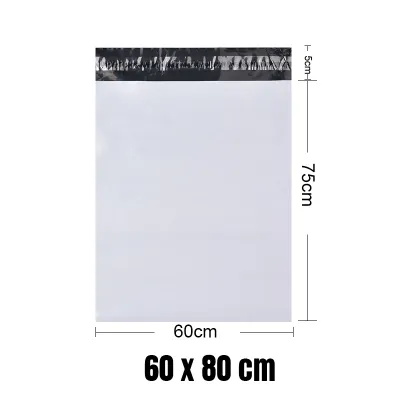
No, poly mailers typically do not follow the standard C-series sizing codes used for paper envelopes. Instead, manufacturers list poly mailers by their exact width and length dimensions in centimeters or inches. When purchasing poly mailers, you should measure your items directly and compare them to the listed internal dimensions of the mailer, rather than looking for a C-series equivalent.

Community discussion
Share your experience or ask a question. Comments are reviewed before publication.