
Choosing the right packaging materials is the most critical step in ensuring your belongings survive a relocation intact. When shopping for supplies, you will frequently encounter the term “double-wall” applied to heavy-duty cartons. A double-wall moving box features a five-layer corrugated construction consisting of two wavy fluted mediums sandwiched between three flat linerboards. This design provides twice the stacking strength and significantly higher puncture resistance than standard single-wall boxes.
Understanding when to invest in these heavy-duty containers can save you from the heartbreak of damaged valuables and the frustration of collapsed stacks. While standard boxes are suitable for lightweight items, heavier or more fragile possessions require the structural integrity that only double-wall construction can offer. Matching your packing strategy to the physical properties of your boxes ensures a safer, more efficient move.
Understanding the Structure of a Double-Wall Box
To appreciate the strength of a double-wall box, it helps to understand its physical anatomy. Corrugated cardboard is not just thick paper; it is an engineered structural material. A standard single-wall box consists of three layers: an outer flat liner, a wavy middle layer called the fluting, and an inner flat liner. A double-wall box expands on this design by adding a second layer of fluting and a third flat linerboard, creating a robust five-layer composition.
Products mentioned in this guide
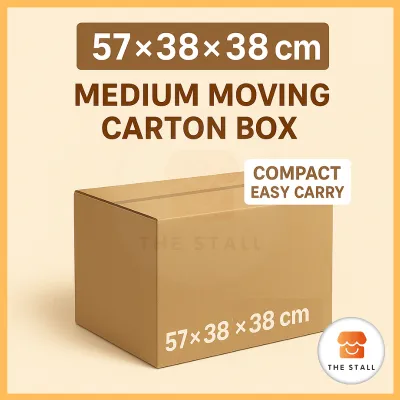
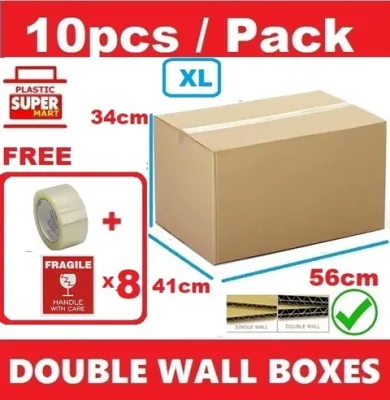
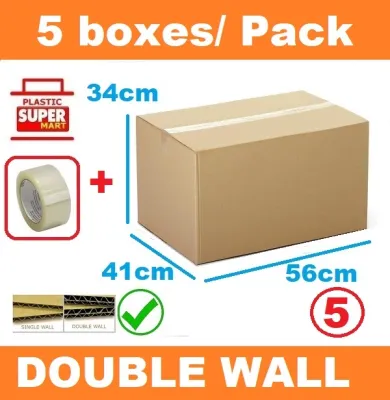
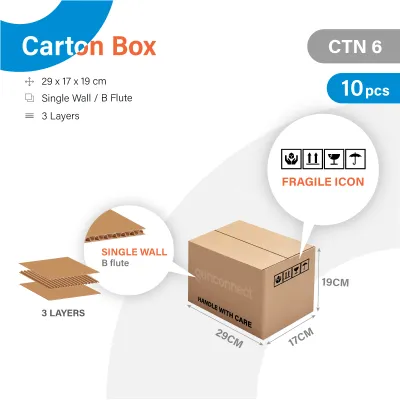
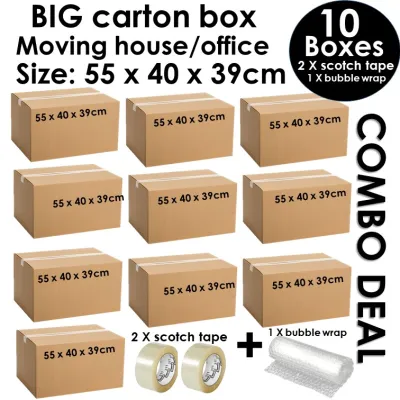
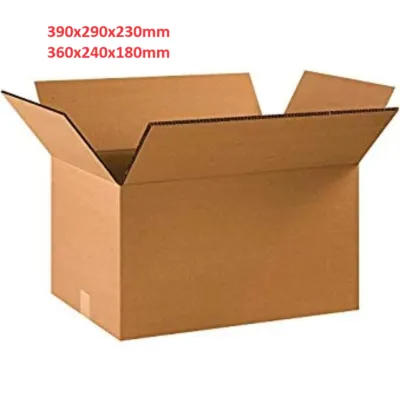
Prices are valid at publication and may change. Please refer to the product page for the latest price.
There is a common misconception that “double-wall” simply means a box made of extra-thick flat cardboard or two boxes nested inside one another. In reality, the structural rigidity comes almost entirely from the dual fluting layers. These wave-like arches act as continuous columns that support vertical weight, while the flat liners hold the flutes in place and provide lateral stability.
Because manufacturers can combine different flute sizes, double-wall boxes are highly customizable. Flutes are categorized by letters, such as A, B, C, or E, each representing a specific height and spacing. A very common combination for moving boxes is a BC-flute, which pairs a thick C-flute for superior stacking strength with a thinner B-flute for high puncture and impact resistance. This hybrid design gives the box a thick, cushioned profile that absorbs external forces exceptionally well.
How Double-Wall Corrugation Protects Your Items
During a move, your boxes are subjected to various physical stresses, including compression, impacts, and vibrations. Double-wall boxes are specifically engineered to withstand these forces through several distinct mechanical advantages.

- Stacking Strength: When boxes are loaded into a moving truck, they are stacked on top of one another to maximize vertical space. The dual fluting layers in a double-wall box distribute vertical pressure evenly across the panels. This prevents the bottom cartons from buckling or collapsing under the weight of the stack, keeping the entire load stable during transit.
- Puncture and Tear Resistance: Sharp corners from furniture, tools, or even the edges of books can easily pierce standard cardboard. The extra layers of linerboard and fluting in a double-wall box create a formidable physical barrier. This resistance protects the contents from external objects that might scrape or pierce the box from the outside, as well as sharp items shifting on the inside.
- Shock Absorption: The air trapped within the two independent layers of fluting acts as a natural shock absorber. When a moving truck travels over uneven roads, vibrations and sudden jolts are transferred through the vehicle. The dual-chambered structure of a double-wall panel dampens these shocks, reducing the amount of energy that reaches fragile items inside.
To verify the actual strength of a box rather than relying on generic marketing claims, look for the circular Box Maker’s Certificate (BMC) printed on one of the bottom flaps. This stamp lists critical quality metrics, such as the Edge Crush Test (ECT) rating or the Bursting Test rating. A typical double-wall moving box will feature an ECT rating of 48 or higher, indicating a high capacity to withstand top-to-bottom compression.
Double-Wall vs. Single-Wall: Which Do You Actually Need?
While double-wall boxes offer superior protection, they are not always necessary for every item in your home. Utilizing them indiscriminately can lead to unnecessary expenses and physical strain.
Double-wall boxes are naturally heavier and more rigid, making them slightly harder to fold and assemble. They also carry a higher price tag, often costing between S$4 and S$8 per box depending on the size, compared to standard single-wall options which typically range from S$2 to S$4. Using heavy-duty boxes for lightweight items like pillows or clothing is an inefficient use of your moving budget.
Environmental conditions also play a major role in your decision. In tropical climates like Singapore, high relative humidity can quickly soften standard cardboard. Cardboard fibers absorb moisture from the air, which can reduce a single-wall box’s stacking strength by up to half over a few weeks. If you are placing items into long-term self-storage units or moving during the monsoon season, the extra structural safety margin of double-wall boxes is highly recommended.
When to Invest in Double-Wall Boxes
You should reserve double-wall boxes for scenarios where the risk of damage or structural failure is high. This includes packing heavy, dense items such as books, hand tools, kitchen small appliances, and canned food, which can easily tear through weaker cardboard. Fragile or high-value items—including desktop computers, kitchen glassware, porcelain tableware, and framed artwork—also require the rigid structural shell and shock absorption of double-wall panels. Finally, use them whenever you plan to stack boxes more than three layers high in a moving vehicle or storage locker.
When Single-Wall Boxes Are Sufficient
Single-wall boxes are perfectly adequate for lightweight, high-volume items that do not exert significant outward pressure on the box walls. Clothing, bed linens, pillows, towels, and plush toys can be safely packed in standard cartons. These items are inherently self-cushioning, meaning they will not break if the box experiences minor flexing. Single-wall boxes are also suitable for short-distance, single-trip moves where boxes are transported in a single layer rather than stacked high.
Quick Guide to Box Selection by Item Type
Use this quick reference matrix to match your household goods with the appropriate box specification:
| Item Category | Recommended Box Type | Primary Reason |
|---|---|---|
| Books and Hand Tools | Double-wall | High weight density requires maximum bottom support and tear resistance |
| Glassware and Electronics | Double-wall | Fragile items need superior shock absorption and rigid walls to prevent crushing |
| Clothing and Bedding | Single-wall | Low weight density makes standard boxes cost-effective and perfectly adequate |
| Kitchen Pots and Pans | Single or Double-wall | Depends on total weight; use double-wall if packing heavy cast-iron cookware |
Packing and Handling Tips for Maximum Protection
Simply purchasing double-wall boxes is not enough; you must pack and seal them correctly to unlock their full protective capabilities.
First, manage the gross weight of each container carefully. While a double-wall box can physically withstand heavy loads, packing it to its absolute limit can make it a severe lifting hazard. Excessively heavy boxes are difficult to carry safely up stairs or through tight doorways, and they can place immense stress on the handles or the bottom tape line. Always check the maximum weight limit printed on the Box Maker’s Certificate and aim to keep the total weight under 20 kilograms for safe manual handling.
Second, apply a secure sealing technique. Because double-wall cardboard is thick and rigid, the flaps have a natural tendency to spring open. Standard office tape or thin stationery tape will not hold these flaps down. Use a high-quality, wide packing tape and apply the “H-tape” method. This involves sealing the center seam of the box and then applying tape along all four exposed edge seams on both the top and bottom of the carton, creating a sealed “H” shape that reinforces the structural corners.
Finally, eliminate all internal void space. A double-wall box prevents external crushing, but it cannot stop items from knocking against each other inside. Fill any empty spaces with crumpled packing paper, bubble wrap, or clean towels to immobilize the contents. Before taping the box shut, give it a gentle shake; if you hear or feel items shifting, add more void fill until the contents are completely secure.
Frequently Asked Questions (FAQ)
Are double-wall moving boxes recyclable in Singapore?
Yes, double-wall corrugated cardboard is highly recyclable. In Singapore, you can dispose of flattened boxes in the blue recycling bins located at HDB estates, or place them in designated cardboard recycling areas in condominium bin centres. Before recycling, make sure to peel off excessive plastic packing tape, shipping labels, and any plastic bubble wrap inside to ensure the paper fibers can be cleanly processed.
Can I reuse double-wall boxes for multiple moves?
Yes, the robust five-layer construction of double-wall boxes makes them highly durable and reusable. To determine if a box is safe to reuse, inspect it for soft spots, crushed corners, or dampness from humidity. If the fluting layers remain rigid and the bottom seams are free of deep tears or water damage, the box can easily be collapsed, stored flat, and reused for future moves or storage needs.

Community discussion
Share your experience or ask a question. Comments are reviewed before publication.