
Quick Answer: Assessing the Need for a Corner Cutter
Whether your child needs a corner cutter for school depends on their current educational stage and the specific hands-on projects they encounter. For daily writing, note-taking, and standard homework submissions, this specialized tool is entirely unnecessary. However, as students progress into upper primary and secondary school, where graded portfolios, design coursework, and laminated study aids become common, a corner cutter transitions from a novelty to a highly practical asset that saves time and elevates presentation quality.
Understanding the Tool: What a Corner Cutter Actually Does
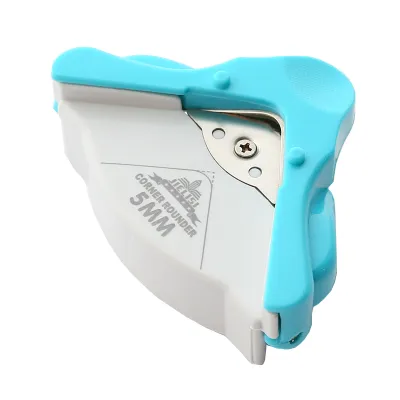
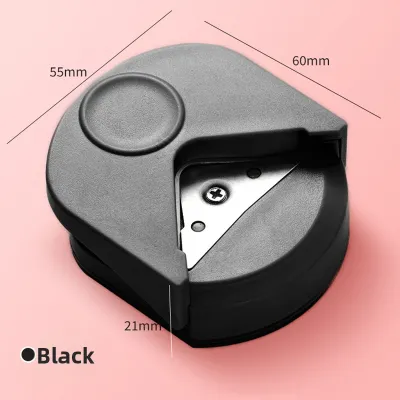
A corner cutter, often referred to as a corner rounder or corner punch, is a compact stationery device designed to shear the sharp 90-degree corners of paper, cardstock, or laminated sheets into smooth, uniform curves. Unlike standard scissors, which require a steady hand and multiple micro-cuts to approximate a curve, a corner cutter uses a guided corner slot and a curved metal blade to slice the paper instantly at a precise radius.

This tool ensures absolute consistency across dozens of pages, which is particularly useful when preparing flashcards, custom booklets, or presentation slides. By replacing jagged, hand-cut edges with clean, machine-like curves, it provides a professional finish that is difficult to replicate manually. It also helps prevent the corners of frequently handled materials from bending or fraying over time.
Products mentioned in this guide
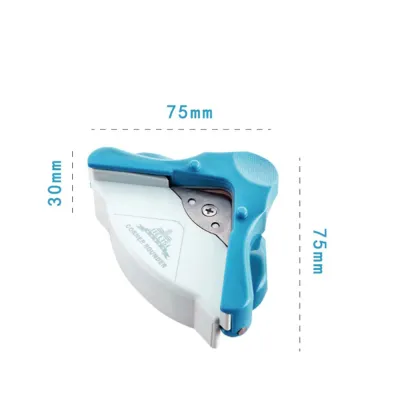
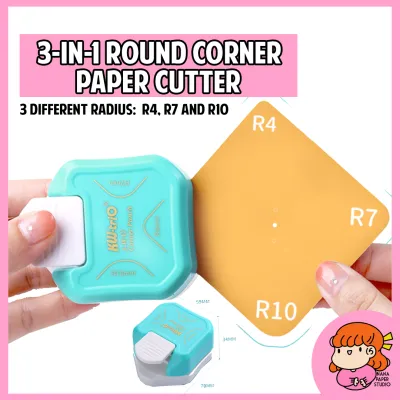
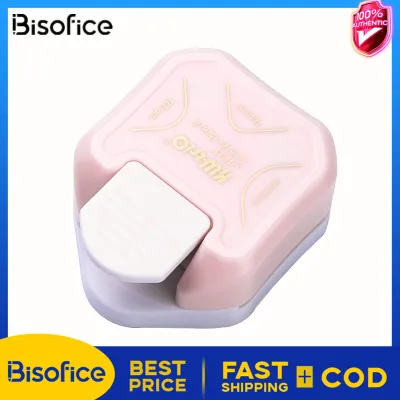
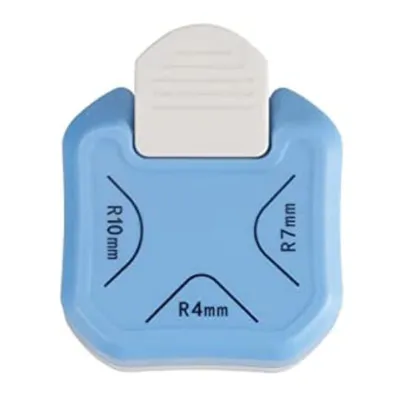
Prices are valid at publication and may change. Please refer to the product page for the latest price.
Evaluating the Need by Grade Level and Project Types
To determine if this tool deserves a spot on your back-to-school shopping list, look closely at your child’s upcoming curriculum and project requirements. School assignments have evolved beyond simple handwritten sheets; many subjects now incorporate physical portfolios, interactive lapbooks, and creative presentations.
You can often spot the need for specialized finishing tools by reviewing teacher-provided supply lists, project rubrics that grade neatness and presentation, or by observing the condition of past projects returned in school bags. If your child frequently works with thick cardstock, laminating film, or multi-page bound reports, a corner cutter can significantly reduce preparation time and improve the durability of their work.
Early Years and Lower Primary (Kindergarten to Primary 2)
During the early years of schooling, children are actively developing their fine motor skills and hand-eye coordination. In Kindergarten through Primary 2, classroom craft activities typically involve basic shape cutting, pasting, and coloring. For these tasks, standard child-safe scissors with blunt tips are the ideal and recommended tool.
Using safety scissors helps young learners practice grip control and bilateral coordination, which are crucial developmental milestones. Introducing a mechanical punch like a corner cutter at this stage is not only unnecessary but can also bypass these important learning opportunities. Furthermore, young children may lack the hand strength required to operate a corner punch safely, and the small waste trays or internal metal parts could present minor pinching hazards if handled unsupervised.
Middle to Upper Primary (Primary 3 to Primary 6)
As students enter Primary 3 and progress toward Primary 6, school projects become more structured and visually demanding. This is the stage where students begin creating science lapbooks, social studies portfolios, and personalized English creative writing booklets. Graded assignments often include a component for neatness, and students take greater pride in the visual appeal of their work.
A corner cutter becomes highly beneficial here for rounding the edges of file covers, flashcards, and presentation dividers. Beyond aesthetics, rounded corners serve a practical purpose: they prevent the corners of paper and cardstock from bending, fraying, or snagging when projects are repeatedly pulled out of crowded school bags. This simple touch keeps graded portfolios looking pristine for evaluation.
Secondary School and Junior College
In secondary school and junior college, academic demands shift toward high-level presentations, comprehensive coursework, and professional-grade portfolios. Students taking subjects like Design and Technology (D&T) or Art must compile extensive design journals and project files where layout and finishing directly impact their marks.
Additionally, older students frequently create their own study aids, such as laminated revision cards or thick, bound reference guides. Sharp, laminated corners can be surprisingly sharp and prone to pricking fingers or catching on clothing. Using a corner cutter to round these edges makes study materials safer and more comfortable to handle, while ensuring that thick, bound reports slide smoothly into folders without catching or tearing.
Crucial Selection Criteria for Student Use
If you decide that a corner cutter is a worthwhile addition to your child’s stationery kit, several key specifications should guide your purchase. First, prioritize safety features. Look for models with fully enclosed blade housings that prevent small fingers from coming into contact with the cutting edge. A non-slip base or grip is also essential to keep the tool stable on a desk, reducing the risk of slips and uneven cuts.
Second, verify the paper compatibility and capacity. Most compact student models are designed to cut one to three sheets of standard 80 gsm copy paper at a time, or a single sheet of light cardstock. If your child plans to use the tool on thick laminating pouches or heavy cardstock, ensure the manufacturer’s specifications explicitly state compatibility with those materials to prevent jamming.
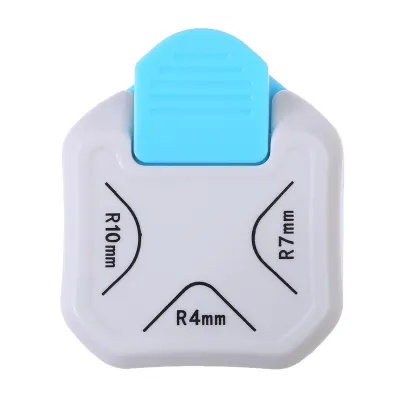
Finally, consider the cutting radius and style. Many student-friendly corner cutters are 3-in-1 devices offering three different radius options—typically small (4mm), medium (7mm), and large (10mm). A smaller radius is ideal for standard business-card-sized flashcards, while a larger radius works best for full-sized presentation covers and thick folders.
Safe Operation and Maintenance for School Environments
To ensure the corner cutter remains safe and functional throughout the school year, teach your child proper operational habits. Always use the tool on a flat, stable surface like a study desk rather than holding it in mid-air, as flat placement ensures correct alignment and even pressure. Keep fingers well away from the entry slot, feeding the paper in until it rests flush against both guide walls before pressing down firmly.
If the paper jams, instruct your child to stop pressing immediately to avoid damaging the internal spring mechanism. They should check if the device has a manual release lever or gently slide the paper out backward; never use metal scissors or rulers to pry a jam out of the slot. Lastly, maintain the tool by regularly emptying the paper waste compartment to prevent buildup, which can cause uneven cuts or jams, and wipe the exterior with a dry cloth to remove paper dust.
Frequently Asked Questions (FAQ)
Can regular scissors replace a corner cutter for school projects?
While you can technically use regular scissors to round paper corners, achieving a perfectly uniform and smooth curve is incredibly difficult. Hand-cutting corners often results in jagged edges, asymmetrical curves, and visible scissor marks, especially when working with thick cardstock or laminated sheets. For rough drafts or casual classroom activities, scissors are perfectly adequate. However, for final project submissions, graded portfolios, or professional presentations where visual consistency and neatness are evaluated, a dedicated corner cutter is highly recommended to achieve a clean, polished finish.
What should I do if the corner cutter gets stuck on thick paper?
If the corner cutter jams or gets stuck on thick paper, do not force the lever down, as this can permanently bend the blade or break the plastic housing. First, gently pull the paper backward to see if it slides out of the guide slot. If it remains stuck, check the bottom or side of the tool for a built-in paper release lever or button. If the tool lacks a release mechanism, consult the manufacturer’s instruction manual for safe clearing procedures. To prevent future jams, always verify that the paper or cardstock thickness does not exceed the maximum limit specified by the manufacturer.

Community discussion
Share your experience or ask a question. Comments are reviewed before publication.