
To find the ideal daily planner notebook for your writing routine, you must match your preferred writing instrument—whether a fountain pen or a gel pen—to the paper’s weight, texture, and surface treatment. Fountain pens require highly sized, coated papers that resist liquid ink spreading, while gel pens demand balanced absorbency to ensure quick drying without smudging. By understanding how different paper types interact with these distinct ink formulas, you can select a planner that keeps your daily schedules clean, legible, and free from distracting bleed-through.
Choosing a planner is more than just selecting a layout; it is an investment in your daily productivity. When your pen glides smoothly and the ink dries instantly, planning becomes a satisfying ritual. Conversely, using the wrong pen-and-paper combination can turn your daily log into a messy, illegible chore.
Understanding Paper Performance: Bleed-Through, Feathering, and Ghosting
To evaluate how a daily planner notebook will handle your writing tools, you must first understand the three primary paper flaws that disrupt clean layouts: bleed-through, feathering, and ghosting. Bleed-through occurs when ink fully penetrates the paper fibers, emerging as spots or pools on the reverse side of the page. This issue is particularly problematic for daily planners, where you rely on using both sides of a single sheet to track consecutive days. When ink bleeds through, it renders the back of the page virtually unusable, forcing you to skip pages or write around dark stains.
Products mentioned in this guide
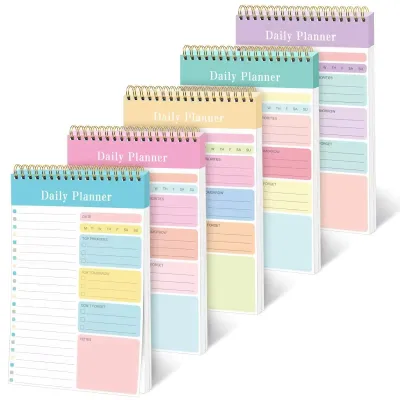
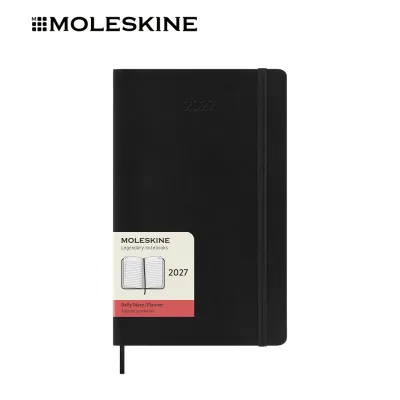
Prices are valid at publication and may change. Please refer to the product page for the latest price.
Feathering refers to the uncontrolled spreading of ink along the paper’s internal fibers, resulting in fuzzy, spider-web-like edges around your letters. This phenomenon ruins fine lines, distorts detailed layouts, and makes small handwriting illegible. Feathering is highly dependent on the paper’s surface treatment; untreated fibers act like tiny straws, drawing liquid ink outward from the point of contact. If you use a fine-nib pen to fit detailed schedules into tight hourly slots, feathering will quickly turn your precise notes into a blurry, illegible smear.
Ghosting, also known as show-through, occurs when the shadow of your writing is visible on the reverse side of the page, even though the ink has not physically broken through the paper surface. While ghosting does not ruin the paper’s texture, heavy ghosting can create visual clutter that makes reading the reverse side difficult. In ultra-thin daily planners designed for portability, a moderate level of ghosting is often considered an acceptable trade-off for a lighter book. However, if you prefer high-contrast, pristine pages, minimizing ghosting should be a primary goal when selecting your notebook.
Fountain Pens vs Gel Pens: Matching Ink Demands to Paper
Fountain pens and gel pens utilize fundamentally different ink chemistries, meaning they place entirely opposite demands on planner paper. Fountain pens use highly fluid, water-based inks that flow generously from a metal nib. To handle this liquid volume without feathering, the paper must feature a high level of sizing—a chemical treatment applied during manufacturing that limits water absorption. Sizing keeps the ink sitting on top of the paper surface, allowing it to dry slowly and showcase unique characteristics like shading and sheen. Without adequate sizing, even thick paper will absorb fountain pen ink too quickly, causing severe feathering and bleed-through.

Gel pens, on the other hand, use a water-based gel containing suspended pigments. This ink is thicker than fountain pen ink when at rest, but it thins out under the physical pressure of the rolling ball tip. Gel ink requires a paper surface with balanced absorbency or specialized micro-coatings. If the paper is too non-porous or heavily coated, the gel ink cannot bind to the fibers, leading to prolonged drying times and a high risk of smudging as you turn the page. Conversely, if the paper is too absorbent, the gel ink may sink too deeply, causing minor ghosting and a scratchy writing sensation.
Paper weight, measured in grams per square meter (GSM), is a helpful indicator of ink capacity, but it does not solely guarantee performance. While a higher GSM generally indicates a thicker sheet that resists ghosting, a 120 GSM uncoated paper can still feather badly under a wet fountain pen if it lacks proper surface sizing. Conversely, a highly engineered 52 GSM paper can handle wet fountain pen inks beautifully without any bleed-through, though it will exhibit significant ghosting. Therefore, you must look beyond the GSM rating and evaluate the paper’s surface treatment and manufacturing origin.
Evaluating Popular Daily Planner Brands for Ink Compatibility
When shopping for a daily planner notebook, you cannot rely on brand reputation alone, as paper formulations can change between production batches. To make an informed decision, start by verifying the manufacturer’s technical specifications. Look for details regarding the paper’s GSM, its country of origin, and any specific callouts regarding sizing or coatings. Japanese-made papers are highly regarded for their fountain pen compatibility due to advanced sizing techniques, while European papers often offer a balanced, slightly textured feel that suits a wide variety of pen types.
Next, consult recent user reviews and community forums, focusing specifically on feedback from writers who use your exact pen and ink combination. A paper that performs flawlessly with an extra-fine gel pen may struggle under a medium-nib fountain pen filled with highly saturated ink. Pay close attention to reviews that mention changes in paper quality for the current year’s edition, as manufacturers occasionally source paper from different mills to manage production costs.
Finally, consider how the planner’s physical binding style interacts with your writing habits and ink flow. Lay-flat bindings, such as thread-bound, disc-bound, or spiral-bound designs, ensure that the paper remains perfectly flat while you write. If a notebook does not lay flat, ink can pool in the gutter or crease, leading to localized bleed-through and extended drying times. A flat writing surface also ensures consistent hand pressure, which prevents gel pens from skipping and keeps fountain pen nibs in optimal contact with the paper.
Evaluating Ultra-Thin, Highly Sized Paper Planners
Ultra-thin daily planners often feature specialized Japanese papers ranging from 52 GSM to 68 GSM, engineered to keep a 365-day planner incredibly compact and lightweight. When evaluating these planners, you must verify their resistance to feathering and bleed-through. Despite their delicate feel, these papers are heavily sized, allowing them to handle wet fountain pen inks with surprising ease. The ink sits on the surface, preserving crisp lines and vibrant colors without penetrating to the other side.
However, this surface treatment presents a significant challenge for gel pen users. Because the paper is highly non-porous, gel inks cannot penetrate the surface quickly, resulting in exceptionally long drying times. If you write quickly or close your planner immediately after jotting down a note, you run a high risk of smudging your work. Additionally, you must decide if you can tolerate high levels of ghosting, as the ultra-thin sheets will inevitably show a clear shadow of your writing on the reverse side.
Evaluating Standard to Heavyweight Paper Planners
Standard to heavyweight planners typically utilize paper ranging from 80 GSM to 120 GSM, offering a more traditional, substantial feel. These papers generally feature moderate natural absorbency, making them highly compatible with standard gel pens. The ink dries quickly, allowing you to write rapidly and turn pages without fear of smudging. The added thickness also provides excellent resistance to ghosting, ensuring that the reverse side of each page remains clean and easy to read.
The trade-off with heavyweight paper lies in its physical bulk and potential for feathering with fountain pens. A daily planner with 100 GSM paper covering an entire year will be thick, heavy, and less convenient to carry in a daily bag. Furthermore, unless the manufacturer has explicitly added sizing agents, these thicker papers can act like a sponge for wet fountain pen inks. You may experience significant feathering and even localized bleed-through if you use medium or broad nibs, as the fibers absorb the liquid ink too rapidly.
Evaluating Heavily Coated, Ultra-Smooth Paper Planners
Heavily coated planners feature ultra-smooth, vellum-finish papers designed to offer a frictionless writing experience. When writing on these surfaces, your pen glides effortlessly, which can reduce hand fatigue during long planning sessions. For fountain pen users, this smoothness can be highly enjoyable, though you should note that some heavy coatings can actually reduce ink shading and sheen by preventing the ink from pooling naturally on the surface.
For gel pen users, heavily coated paper requires careful management. The slick, non-porous coating can cause gel ink to bead up or skip if the pen is held at a steep angle. Drying times are also prolonged, meaning you must allow the ink to set before closing the notebook. If you have a fast, expressive writing style or prefer to write on the go, the slippery feel and smudging potential of heavily coated paper may feel frustrating and require you to adjust your writing speed.
How to Test Your Planner Paper Before Committing
Investing in a full-year daily planner can be expensive, with premium options often costing between S$30 and S$70. To avoid the frustration of purchasing a planner only to find it incompatible with your favorite pens, you should perform a controlled paper test before committing. Many stationery brands sell smaller, inexpensive pocket notebooks or memo pads that utilize the exact same paper stock as their larger daily planners. Purchasing one of these budget-friendly alternatives allows you to run comprehensive tests without risking your main planner.
Once you have a sample sheet, perform a standardized writing test using the exact pens, nib sizes, and ink colors you plan to use daily. Write out a few sentences using your normal writing speed and pressure, then draw a series of intersecting lines and a small, solid ink swatch to test heavy saturation. This saturation test is crucial, as it simulates what happens when you pause your pen on the page or use a wet-flowing ink. Let the page dry completely, noting how long it takes for each ink to become smudge-resistant.
After the ink has dried, examine both sides of the page under direct, bright light and at an angled perspective. Look closely for any signs of feathering along the edges of your letters, and check the reverse side for physical bleed-through or distracting ghosting. If you plan to use highlighter pens or color-coding markers in your daily layout, include them in your test as well. This simple, low-cost verification step ensures that your final planner purchase will perfectly support your daily writing tools.
Decision Framework: Choosing Your Ideal Daily Planner
To finalize your choice, you must weigh your primary writing instrument against your tolerance for paper trade-offs and physical notebook bulk. If you primarily write with fine-nib fountain pens and prioritize a lightweight, highly portable planner that you can carry everywhere, choose an ultra-thin, highly sized paper planner. You will need to accept a moderate amount of page ghosting and slightly longer drying times, but your fountain pen lines will remain incredibly sharp and vibrant.
If your daily tool of choice is a broad-nib fountain pen or a heavy-flowing gel pen, and you demand pristine, high-contrast pages with zero ghosting, select a heavyweight paper planner. While this choice results in a thicker, heavier book that may remain on your desk rather than traveling in your bag, the robust paper will easily handle heavy ink volumes without bleeding. Just be sure to verify that the paper has sufficient sizing to prevent feathering if you are using fountain pens.
If you prioritize a luxurious, frictionless writing experience above all else, choose a heavily coated, ultra-smooth paper planner. This option is ideal for those who enjoy the sensation of a pen gliding effortlessly across the page, though you must be willing to manage longer drying times and potential gel ink smudging. Whichever path you choose, always verify your specific ink and pen combination on a test sheet first, ensuring your daily planning remains a seamless, productive, and enjoyable part of your day.

Community discussion
Share your experience or ask a question. Comments are reviewed before publication.