
Choosing between a cross-cut and a strip-cut paper shredder comes down to balancing your budget against the level of confidentiality your documents require. For most home offices and businesses, a cross-cut shredder offers significantly better security for the price. While strip-cut models are generally less expensive upfront and process paper quickly, they only slice documents into long, vertical strips that can be reassembled with relatively little effort. In contrast, cross-cut machines slice paper both horizontally and vertically, turning sensitive information into tiny, unreadable confetti.
When evaluating the true value of these machines, you must look beyond the initial price tag. A cheaper strip-cut shredder might save you money today, but it may leave your personal data, financial statements, or client records vulnerable to identity theft or compliance breaches. Investing a slightly higher amount in a cross-cut shredder provides peace of mind and robust data protection, making it the more cost-effective choice for anyone handling sensitive information.
How Cross-Cut and Strip-Cut Mechanisms Work
To understand why these two types of shredders differ so greatly in security and price, it helps to examine their internal cutting mechanisms. The physical design of the blades dictates not only how fast the machine can process paper but also the final shape and size of the waste material.
Products mentioned in this guide
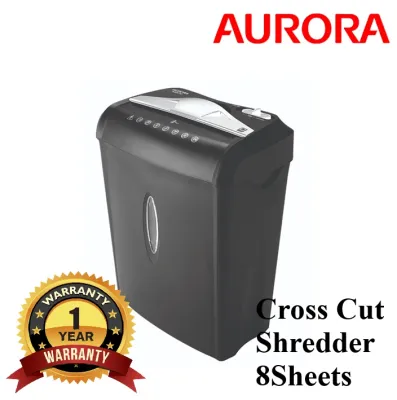
![[SG] Aurora AS600SB Strip Cut Paper Shredder [Evergreen Stationery]](https://img.lazcdn.com/g/p/a83d00938a5835ef19bbb5b828e93374.jpg_400x400q80.jpg_.webp)
![[SG] Aurora AS1060SB Strip Cut Paper Shredder [Evergreen Stationery]](https://img.lazcdn.com/g/p/0bd74e1f679249d59f38b5a66680ac6c.jpg_400x400q80.jpg_.webp)
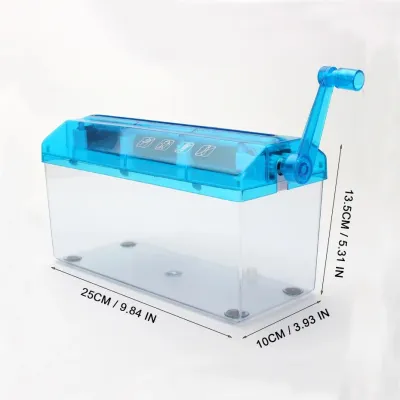
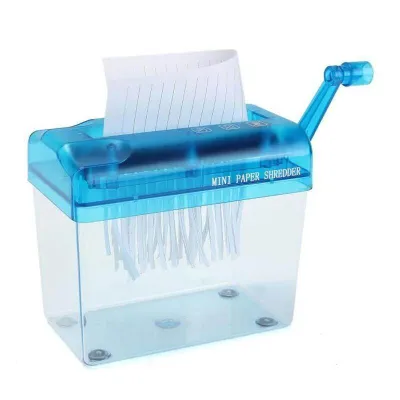
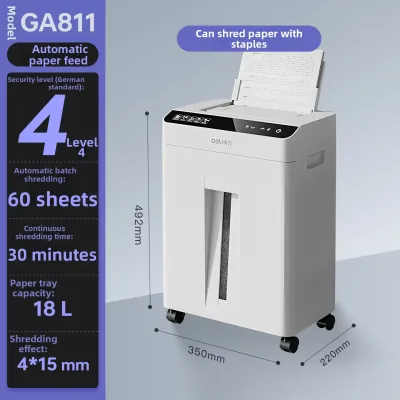
Prices are valid at publication and may change. Please refer to the product page for the latest price.
Strip-cut shredders utilize a relatively simple cutting mechanism consisting of a single set of rotating, parallel blades. As you feed a sheet of paper into the slot, these blades act like multiple pairs of scissors cutting in a single, vertical direction. The result is a series of continuous, long ribbons that run the entire length of the original page. Because the paper is only cut along one axis, the mechanical design is straightforward, requiring less motor power and fewer moving parts to operate effectively.
Cross-cut shredders, on the other hand, employ a more complex dual-blade action. These machines feature two counter-rotating shafts with interlocking blades that cut the paper from two directions simultaneously. As the paper passes through, the blades slice it vertically into strips and then chop those strips horizontally into short, rectangular pieces. This multi-directional cutting action requires a more robust motor and precisely aligned cutting cylinders, which contributes to the slightly higher manufacturing cost and retail price of cross-cut models.
The physical mechanism directly dictates the final particle shape, size, and reconstruction difficulty. A single sheet of A4 paper processed through a standard strip-cut shredder typically yields around 30 to 40 long strips. The same sheet fed into a cross-cut shredder is transformed into upwards of 300 to 400 tiny confetti-like particles. This dramatic difference in particle count makes manual or digital reconstruction of cross-cut waste exceptionally difficult, whereas strip-cut ribbons can often be pieced back together with basic patience or automated scanning software.
Matching Security Levels to Document Sensitivity
When selecting a shredder, matching the machine’s output to your document confidentiality needs is crucial. Not all shredded paper is created equal, and understanding the security standards will help you avoid overpaying for unnecessary features or underestimating your security risks.

Strip-cut shredders leave long, continuous strips that present a moderate security risk. If you are only shredding non-sensitive materials, such as junk mail, expired utility bills with no personal identifiers, or general office memos, a strip-cut model may suffice. However, because the text on the strips remains intact along the vertical axis, anyone with enough time and motivation can reassemble the pages. In professional environments or home offices handling tax documents, medical records, or bank statements, this level of protection is rarely sufficient.
Cross-cut shredders produce small, confetti-like particles that are highly resistant to manual or digital reconstruction. Because the paper is chopped into tiny rectangles, individual words and numbers are severed across multiple axes, rendering the text completely illegible. This makes cross-cut shredders the standard choice for destroying highly sensitive personal identification data, payroll records, and proprietary business information. The sheer volume of tiny pieces generated from a single document makes reconstruction practically impossible without specialized forensic equipment.
To make an informed decision, you should check the official manufacturer security ratings on the product label or specification sheet rather than relying solely on the general cut type. The international standard DIN 66399 classifies shredder security levels from P-1 to P-7, with higher numbers indicating smaller particle sizes. Strip-cut shredders typically fall under P-1 or P-2 levels, which are suitable only for general data. Cross-cut shredders generally offer P-3 or P-4 security levels, which are widely accepted as the benchmark for confidential business and personal documents. For highly classified government or military data, specialized micro-cut shredders (P-5 to P-7) are used, though these come at a much higher price point.
Comparing Speed, Bin Capacity, and Daily Usability
Beyond security, daily usability and operational efficiency are key factors that influence which shredder mechanism is right for your workflow. The mechanical differences between cross-cut and strip-cut models directly impact how quickly you can work and how often you will need to maintain the machine.
When comparing processing speeds and sheet-per-pass capacities, strip-cut models often hold an advantage. Because their single-direction cutting mechanism encounters less physical resistance, strip-cut shredders can typically handle more sheets of paper at once and pull them through the blades faster. If your primary goal is to clear out large archives of non-sensitive files as quickly as possible, a strip-cut machine will complete the task with fewer pauses. Cross-cut models, due to their dual-cutting action, require more torque and may have slightly lower sheet capacities or slower feed speeds in the same price bracket.
However, cross-cut shredders offer a distinct advantage when it comes to bin capacity and emptying frequency. Because strip-cut ribbons are long and rigid, they do not settle flat in the waste bin. Instead, they curl and tangle, creating large air pockets that cause the bin to fill up rapidly, even if the actual volume of paper shredded is low. You will find yourself frequently opening the bin to compress the strips or emptying it long before it is truly full. Cross-cut particles, being small and flat, compact much more densely under their own weight. This means a cross-cut bin can hold significantly more shredded documents before requiring a trip to the recycling bin, saving you time and effort during busy workdays.
Maintenance needs also vary based on the complexity of the cutting mechanism. Both types of shredders require regular attention to prevent paper jams and blade obstructions. Because cross-cut shredders have more intricate, interlocking blades, they are slightly more prone to paper dust buildup and require more frequent oiling to maintain smooth operation. Strip-cut models, with their simpler blade design, are generally more forgiving of neglect, though they still benefit from occasional cleaning. Regardless of the type you choose, keeping the blades clear of paper debris is essential for preventing motor strain and extending the lifespan of the machine.
Evaluating Upfront Price and Long-Term Value
To determine which shredder offers the best value for your money, you must weigh the upfront purchase price against the long-term operational costs and the potential financial consequences of a security breach.
In terms of upfront pricing, strip-cut models are typically the most budget-friendly option. In local retail stores and online marketplaces, basic strip-cut shredders designed for light home use can often be found for under S$50. These entry-level machines are highly accessible for students or households with minimal shredding needs. Cross-cut shredders generally start at a slightly higher price point, with reliable home-office models typically ranging from S$80 to S$150, while heavy-duty commercial units can cost significantly more.
Despite the higher initial investment, the cost-to-security ratio of a cross-cut shredder is highly favorable. Paying a modest premium of S$30 to S$100 for a cross-cut model is easily justified when you consider the value of the data you are protecting. In Singapore, where the Personal Data Protection Act (PDPA) mandates strict guidelines for safeguarding personal data, a data leak resulting from improperly disposed documents can lead to severe financial penalties and reputational damage. For businesses and self-employed professionals, the small extra cost of a cross-cut machine is a minor price to pay to ensure full compliance and protect client trust.
You should also factor in long-term operational costs when making your decision. While both types of shredders consume relatively little electricity during standard operation, cross-cut models may require a small ongoing investment in specialized shredder oil or lubricant sheets to keep the dual-blade mechanism running smoothly. Additionally, consider the durability of the machine; a cross-cut shredder that is regularly maintained can last for years, whereas an overworked, cheap strip-cut model may need to be replaced sooner if pushed beyond its light-duty limits. Ultimately, the financial risk of a single identity theft incident or data breach far outweighs the minor savings of choosing a lower-security machine.
Decision Framework: Which Shredder Fits Your Workflow?
To finalize your purchase, it is helpful to evaluate your specific daily routine, document types, and budget constraints against a clear decision framework.
You should choose a strip-cut shredder if your primary requirement is processing high volumes of non-sensitive, general office waste quickly on a strict budget. This option is ideal for classrooms, retail backrooms, or home offices where the documents being destroyed contain no personal identification, financial details, or proprietary business information. If your main goal is simply to reduce the physical bulk of paper waste before recycling, a strip-cut model provides a fast, economical solution.
You should choose a cross-cut shredder if you regularly handle financial records, tax documents, personal identification data, medical files, or confidential business agreements. If the reconstruction of your discarded documents could lead to identity theft, financial loss, or legal liability, the superior security of a cross-cut machine is non-negotiable. It is the standard recommendation for modern home offices and corporate environments alike.
Before making your final purchase at a local stationery supplier or online marketplace, always verify the product specifications. Check the specific DIN security level (aim for P-3 or P-4 for general confidential use), the continuous run time (how long the machine can operate before needing to cool down), and the sheet capacity per pass. Ensuring these specifications align with your typical daily volume will guarantee that your chosen shredder performs reliably without overheating or jamming.
Frequently Asked Questions (FAQ)
Can I shred staples and paper clips in both types of shredders?
Whether a shredder can handle metal fasteners depends entirely on the specific model’s motor strength and blade hardness, rather than whether it is a cross-cut or strip-cut type. While many modern mid-range and heavy-duty shredders are designed to chew through staples and small paper clips without issue, smaller, budget-friendly models may suffer immediate blade damage or motor strain if they encounter metal. Always check the manufacturer’s instruction manual for explicit approval before feeding stapled documents into the machine, as shredding unauthorized materials can dull the blades and void your warranty.
How often should I oil the shredder blades?
The frequency of oiling depends on how often you use the machine and the specific recommendations provided by the manufacturer. As a general rule, cross-cut shredders require more frequent lubrication than strip-cut models because of their complex dual-blade design; oiling them every time you empty the waste bin or at least twice a month is highly recommended for regular users. To maintain your machine safely, use only manufacturer-approved shredder oil or specialized lubricant sheets, and avoid aerosol lubricants or household oils, which can attract paper dust, gum up the gears, and create a potential fire hazard.

Community discussion
Share your experience or ask a question. Comments are reviewed before publication.