
Selecting the correct courier bag size is a balancing act between protecting your items and managing shipping costs. In busy e-commerce environments, using a bag that is too small leads to split seams and damaged goods, while an oversized bag wastes material and can incur higher volumetric shipping fees. To find the right fit, you must calculate how your item’s three-dimensional volume translates to a flat bag’s dimensions, leaving enough room for secure sealing.
By understanding how thickness affects usable space and applying simple measurement formulas, you can standardise your packaging process. This guide explains how to measure your products accurately, account for different packaging materials, and select the right courier bag dimensions for safe transit.
Understanding Courier Bag Dimensions and Measurements
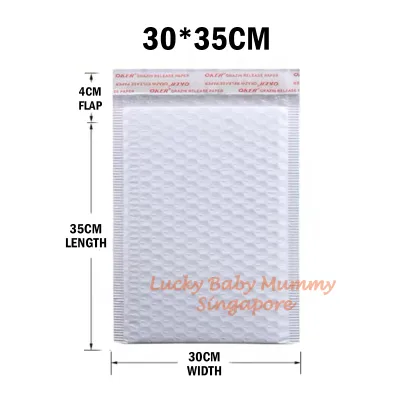
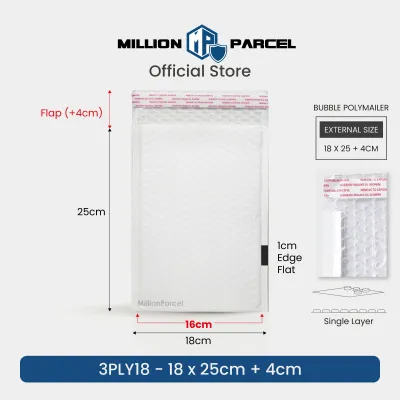
When browsing packaging supplies, you will notice that courier bags are typically listed by their flat outer dimensions, represented as Width x Length. It is a common mistake to assume that a bag measuring 250 mm by 300 mm can comfortably hold an item of those exact dimensions. The listed size represents the bag when it is completely flat and empty, before any object is inserted.
Products mentioned in this guide
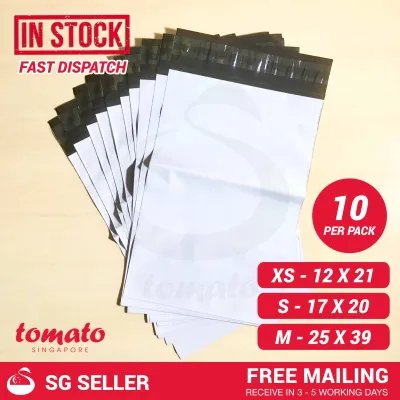
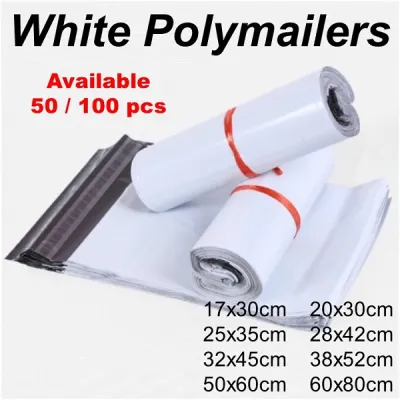
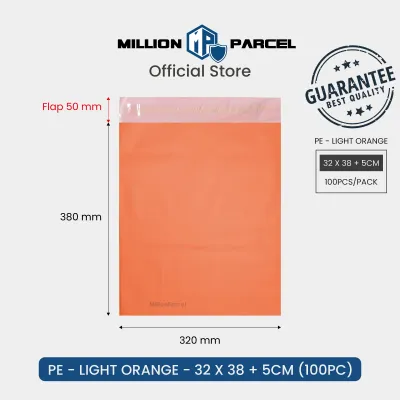
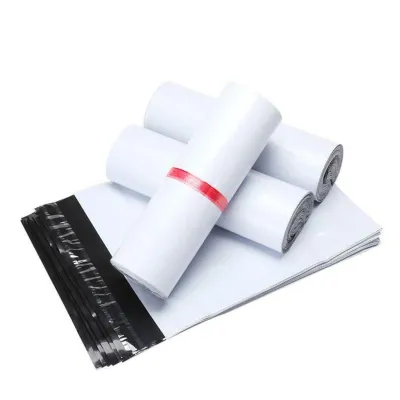
![[SG] ⭐CHEAPEST⭐ Rose Pink Polymailers / Courier Bag / Mailer bag 100pcs shipping mailing](https://img.lazcdn.com/g/p/3ae4169151b5911445ec0160a91b2a22.png_400x400q80.png_.webp)
Prices are valid at publication and may change. Please refer to the product page for the latest price.
Furthermore, the listed length may or may not include the self-sealing adhesive flap. Some manufacturers specify the usable length (excluding the flap), while others list the total length including the flap. Always verify the manufacturer’s specification sheet to confirm whether the flap length is included in the primary dimensions, as this flap typically requires an additional 40 mm to 50 mm of material to fold over and seal.
When a three-dimensional object is placed inside a flat plastic or paper mailer, the bag must expand outward to accommodate the item’s height. This expansion pulls the sides of the bag inward, which significantly reduces both the usable width and the usable length. Consequently, the thicker your item, the larger the flat bag dimensions must be to accommodate it.
Step-by-Step Guide to Measuring Your Items
To determine the minimum courier bag size required for your shipments, you need to measure your items when they are fully prepared for packing. If you wrap your products in protective layers like bubble wrap, foam sheets, or tissue paper, perform these measurements after the wrapping has been applied.

First, use a reliable ruler or measuring tape to find the maximum dimensions of your item or its retail box. Record the maximum Length, Width, and Height (or thickness) at the widest points. Even minor protrusions or irregular corners must be included in these measurements to prevent seam stress.
Once you have these three measurements, you can calculate the minimum required flat width of the courier bag using the following formula:
Required Bag Width = Item Width + Item Height + Seam Allowance
The seam allowance should be at least 15 mm to 20 mm. This extra space accounts for the welded side seams of the poly mailer and ensures the bag does not split under tension when the item is inserted.
Next, calculate the minimum required flat length of the bag using this formula:
Required Bag Length = Item Length + Item Height + Flap and Slack Allowance
The flap and slack allowance should be at least 25 mm to 30 mm, excluding the actual adhesive flap itself. This ensures that the bag can fold over the top of the item and seal flat against the back of the mailer without stretching the material to its breaking point.
Matching Bag Sizes to Common Product Categories
Different types of products require different sizing considerations based on their rigidity and compressibility. Flat or highly flexible items, such as documents, single t-shirts, and soft textiles, are the easiest to pack because they have minimal height and can conform to the shape of the bag.
For flat paper items and stationery, matching the bag to standard paper sizes is a helpful starting point. An A4-sized document stack or a thin notebook (210 mm x 297 mm) will not fit in a bag of the exact same size. Instead, a standard courier bag measuring approximately 250 mm x 340 mm is required to allow the paper to slide in smoothly without bending the corners or tearing the edges.
Rigid or bulky items, such as hardcover books, boxed cosmetics, small electronics, and toys, require much stricter adherence to the sizing formulas. Unlike apparel, rigid objects do not compress or flex. If a rigid box is forced into a mailer that is slightly too small, the sharp corners will concentrate pressure on the heat-sealed seams, leading to punctures or complete seam failure during sorting and transit.
If you run a home-based business or ship regularly within Singapore, keeping a small inventory of three standard bag sizes—such as small (approx. 150 mm x 230 mm), medium (approx. 250 mm x 350 mm), and large (approx. 350 mm x 450 mm)—will allow you to pack the vast majority of common consumer goods efficiently without excessive empty space.
Factoring in Material Thickness and Sealing Requirements
The physical properties of the courier bag material play a significant role in how much usable space is available inside. Standard single-layer poly mailers offer the most flexibility and stretch, but they provide minimal puncture resistance. Co-extruded poly mailers, which feature multiple layers of bonded plastic, are much tougher but slightly stiffer, reducing their ability to stretch around bulky corners.
If you are using padded bubble mailers to protect fragile stationery, electronics, or cosmetics, you must account for the thickness of the internal bubble lining. The bubble padding occupies a significant amount of internal volume. When using padded mailers, it is necessary to subtract approximately 10 mm to 15 mm from both the listed width and length to find the true usable flat space. If your calculations place your item close to the limit, always choose the next size up.
Proper sealing is critical to ensuring your package remains tamper-evident and weather-resistant during transit. The self-sealing adhesive strip on a courier bag relies on full, flat contact with the bag’s surface to form a permanent bond. If a bag is overstuffed, the sealing flap will wrinkle or seal at an angle, leaving small gaps. In humid or rainy tropical climates, these gaps can allow moisture, dust, or rainwater to enter, potentially damaging the contents.
Sizing up slightly is always the safer choice when your item’s calculated requirements are within 10 mm of a specific bag size. A slightly larger bag allows for faster packing, reduces staff fatigue, ensures a clean and professional seal, and minimises the risk of transit damage, saving you from costly returns and replacement shipping fees.
Frequently Asked Questions (FAQ)
Should I size up if my item is exactly the same size as the bag's listed dimensions?
Yes, you should always size up. If your item’s physical dimensions match the flat dimensions of the courier bag, the item will not fit inside. The bag requires extra width and length to expand around the thickness of the item, plus additional space for the side seams and the sealing flap. Choosing a bag that is at least one size larger ensures the item fits easily and seals securely.
How do I measure irregularly shaped items for a courier bag?
To measure an irregularly shaped or asymmetrical item, use the bounding box method. Place the item on a flat surface and measure its absolute maximum length, width, and height as if it were enclosed in a tight rectangular box. Use these maximum measurements in the standard sizing formulas to ensure the courier bag can accommodate the widest and thickest parts of the object without tearing.

Community discussion
Share your experience or ask a question. Comments are reviewed before publication.