
When purchasing office supplies, selecting a single 1 ream of paper might seem like a straightforward task, but the brand and specifications you choose directly impact your printing efficiency, machine longevity, and document presentation. In Singapore’s competitive commercial landscape, there is no single universal winner; instead, the ideal choice depends on your specific hardware, volume, and output goals.
Choose premium, high-smoothness brands if your priority is preventing paper jams in high-volume laser printers and ensuring crisp, clean double-sided prints. These brands are engineered with high-density fibers that resist heat and mechanical stress.
Choose high-brightness, eco-certified brands if you frequently print client-facing presentations, color graphics, or marketing materials where visual contrast and environmental compliance are paramount.
Products mentioned in this guide
![PaperOne A4 Printing Paper - Copier Paper 70gsm - 75gsm [Available in Single Ream / Box]](https://img.lazcdn.com/g/p/8b1532a731f2e376630ddd65374d9b96.png_400x400q80.png_.webp)
![PaperOne A4 Printing Paper - All Purpose Paper 80gsm [Available in Single Ream / Box]](https://img.lazcdn.com/g/p/27dcdcd07b80cf8dfb582f4178a0997b.png_400x400q80.png_.webp)
Prices are valid at publication and may change. Please refer to the product page for the latest price.
Choose standard budget brands if you primarily print internal drafts, single-sided text documents, or high-volume archival records where cost-efficiency is the main driver.
Ultimately, finding the best brand is a matter of matching the specific paper weight (GSM) and brightness to your printer type and output requirements.
Key Specifications to Check Before Buying a 1 Ream of Paper
To make an informed decision, you must look beyond the brand logo on the wrapper and understand the technical specifications that dictate how a sheet of paper behaves inside your machine.
Paper Weight (GSM) GSM stands for Grams per Square Meter, which measures the density and weight of the paper.
- 70gsm: This is a lightweight, highly economical paper. It is ideal for high-volume single-sided drafts and everyday internal printing. However, because it is thinner, it is more prone to show-through and can curl under the intense heat of laser printers.
- 80gsm: This is the universal standard for general office use. It offers an optimal balance of thickness, opacity, and stiffness, making it highly versatile for both inkjet and laser printers.
- 100gsm and above: These are premium, heavy-duty sheets. They provide a substantial, tactile feel of quality and are highly opaque, making them the preferred choice for formal correspondence, resumes, and high-profile presentations.
Brightness and Whiteness While these terms are often used interchangeably, they measure different visual aspects. Brightness refers to the percentage of blue light reflected from the paper’s surface, typically rated on a scale up to 100. Whiteness, often measured using the CIE index (ranging from 140 to over 170), represents how white the paper appears to the human eye under full-spectrum light. Higher whiteness (e.g., 160+ CIE) creates a stark, high-contrast background that makes black text appear sharper and colors more vibrant. For routine internal documents, a standard whiteness of 140-150 CIE is perfectly adequate and reduces eye fatigue.
Smoothness and Opacity Surface smoothness is critical for print quality and machine maintenance. A smoother paper surface ensures even toner transfer and ink absorption, preventing faded text or patchy images. It also reduces friction as the paper passes over the printer’s pickup rollers, minimizing mechanical wear. Opacity measures how much light is blocked from passing through the sheet. High opacity is essential for double-sided (duplex) printing; low opacity results in “ghosting” or bleed-through, which makes the text on the reverse side difficult to read.
Moisture Content and Curl Resistance Paper is highly hygroscopic, meaning it naturally absorbs moisture from the surrounding atmosphere. In Singapore’s tropical climate, where relative humidity levels frequently exceed 80%, uncontrolled moisture absorption is the leading cause of paper curling, misfeeds, and severe jams. Premium copy papers are manufactured with strict moisture control and sealed in moisture-barrier wrappers to maintain an optimal internal moisture level (typically between 4.5% and 5.5%). Always verify these specifications on the physical wrapper or official product listing before purchasing.
Comparing Popular Copy Paper Brands in Singapore
When browsing local office supply stores or online marketplaces in Singapore, you will encounter a few dominant brands that cater to different market segments. Understanding their positioning helps you select the right fit for your office or home setup.

Premium and High-Volume Options
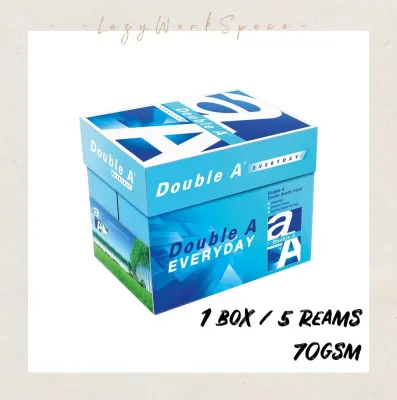
Brands positioned in the premium segment, such as Double A, are engineered specifically for high-speed, high-volume printing environments. Double A utilizes high-quality short fibers derived from farmed eucalyptus trees, which results in a highly dense and exceptionally smooth sheet. This smooth surface reduces friction against printer rollers, significantly lowering the risk of paper jams during rapid print runs. The paper’s high stiffness and excellent opacity (typically exceeding 95% for 80gsm sheets) make it an outstanding choice for double-sided laser printing, ensuring professional-grade documents with zero bleed-through.
High-Brightness and Eco-Friendly Options
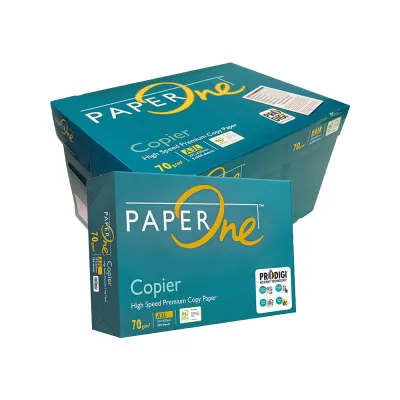
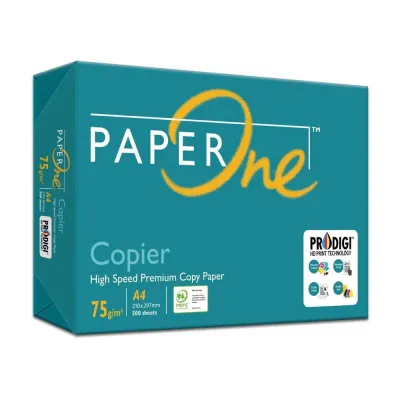
For businesses that prioritize vibrant color output and corporate social responsibility, brands like PaperOne are highly favored. PaperOne features ProDigi HD Print Technology, a specialized surface treatment that enhances ink retention, prevents feathering, and ensures faster drying times on inkjet printers. With a high CIE whiteness rating (often between 160 and 165), it provides excellent contrast for color graphics and marketing drafts. Additionally, PaperOne carries PEFC (Programme for the Endorsement of Forest Certification) certification, verifying that the wood pulp is sourced from sustainably managed forests, making it a staple for environmentally conscious corporate procurement.
Standard and Budget-Friendly Options
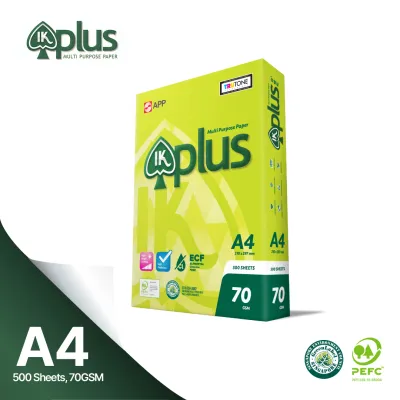
For everyday utility printing where cost control is the primary objective, standard brands like IK Plus or local generic house brands offer excellent value. IK Plus is a reliable, cost-effective workhorse that provides consistent feeding performance and acceptable contrast for daily text documents. While these brands may have a slightly lower CIE whiteness rating (typically around 145 to 150) and a slightly rougher texture than premium options, they perform reliably in standard office copiers for single-sided drafts, internal memos, and bulk archival filing.
| Brand Category | Representative Brand(s) | Typical GSM Range | Best Use Case | Relative Price Positioning | Key Feature Focus |
|---|---|---|---|---|---|
| Premium & High-Volume | Double A | 80gsm, 90gsm | High-speed laser, duplex printing, formal reports | Premium | Superb smoothness, high stiffness, jam prevention |
| High-Brightness & Eco-Friendly | PaperOne | 70gsm, 80gsm, 100gsm | Inkjet color printing, marketing drafts, green procurement | Mid-range | ProDigi technology, PEFC certified, high whiteness |
| Standard & Budget-Friendly | IK Plus / House Brands | 70gsm, 80gsm | Internal drafts, single-sided copying, bulk archiving | Budget | Cost-efficiency, reliable everyday feeding, standard contrast |
Matching Paper Specs to Your Specific Print Jobs
To avoid overpaying for premium features or encountering print failures on critical documents, you should map your specific printing tasks to the appropriate paper specifications.
Everyday Office Documents & Drafts For daily emails, internal memos, and simple text drafts, 70gsm to 80gsm paper with standard brightness (140-150 CIE) is the most practical choice. It balances cost-efficiency with reliable feeding. Since these documents are rarely printed double-sided or kept for long-term external display, there is no practical benefit to paying a premium for high whiteness or maximum opacity.
Client Presentations & Proposals When presenting proposals, pitches, or financial portfolios to clients, the physical touch of the document influences perception. Opt for 100gsm or heavier paper with high brightness (160+ CIE). The added weight provides a substantial, professional tactile feel, while the high brightness ensures that colorful charts, logos, and high-resolution graphics stand out with maximum contrast and sharp detail.
High-Volume Duplex (Double-Sided) Printing Duplex printing is excellent for reducing paper waste, but it demands specific paper characteristics. Never use thin, low-opacity paper (such as standard 70gsm) for high-volume duplex printing. Doing so causes severe show-through, making the text on both sides overlap and become unreadable. Ensure you select at least 80gsm paper with a verified opacity rating of 94% or higher to guarantee clean, crisp, and readable double-sided pages.
Archival and Legal Records For legal contracts, historical records, or documents that must be stored for several decades, standard acidic wood-pulp paper will deteriorate, turn yellow, and become brittle over time. Look specifically for packaging labeled “acid-free” or “archival quality” (often conforming to the ISO 9706 standard). These papers are manufactured with an alkaline reserve (such as calcium carbonate) that neutralizes acidic compounds, ensuring the document remains intact and legible for generations.
Printer Compatibility Checklist Before purchasing heavier paper weights, check your printer’s physical manual or manufacturer specifications. Most standard office multi-function printers handle up to 120gsm through their main paper trays and up to 220gsm through the manual bypass tray. Attempting to feed heavy cardstock or thick 100gsm+ paper through standard drawers can cause severe roller slippage, misfeeds, and internal mechanical damage.
Maximizing Value and Storing Paper in a Humid Climate
To truly optimize your office budget, calculate the cost per sheet rather than focusing solely on the upfront price of a single 1 ream of paper. Buying paper in bulk cartons—which typically contain 5 reams (2,500 sheets)—usually offers a significant discount per sheet compared to buying individual reams. For high-volume offices, purchasing by the pallet or half-pallet can drive costs down even further, though this requires adequate storage space.
Storage Best Practices Singapore’s tropical climate, characterized by high humidity and temperature fluctuations, is the natural enemy of paper. To prevent moisture absorption, keep each ream sealed in its original moisture-proof wrapper (which is lined with a thin plastic barrier) until the exact moment you load it into the printer. Once a ream is opened, store any unused sheets in a tightly closed plastic container or a dedicated dry cabinet. Always store paper reams completely flat on a shelf, pallet, or raised platform—never directly on concrete floors, which can transfer dampness, and away from direct sunlight or air conditioning vents that cause uneven drying and warping.
Acclimatization When new paper is delivered to your office, do not open and load it immediately. Large temperature and humidity differences between the delivery vehicle, warehouse, and your air-conditioned office can cause rapid moisture exchange, leading to immediate paper curl. Allow the newly delivered cartons to acclimatize in the printer room for 24 to 48 hours before breaking the seals. This simple step ensures the paper’s internal moisture stabilizes, dramatically reducing static-induced double-feeding and printer jams.
Frequently Asked Questions (FAQ)
What exactly is included in 1 ream of paper?
A standard ream of paper universally contains exactly 500 sheets. In Singapore and most of Asia, the standard size for office copy paper is A4 (210mm x 297mm), which is the default format for business correspondence and official documents. However, other sizes like A3 (twice the size of A4) are also sold by the ream of 500 sheets, primarily used for large spreadsheets, architectural drafts, and posters.
Can I use 70gsm paper for double-sided printing?
While it is technically possible to run 70gsm paper through a duplex printer, it is generally not recommended. Because 70gsm paper is thin, it has lower opacity, meaning ink or toner will easily show through to the opposite side (ghosting). This makes reading the document highly distracting and unprofessional. Additionally, the heat from laser printers can cause lightweight 70gsm paper to curl excessively after the first pass, increasing the likelihood of a jam during the second pass. If you must use 70gsm, run a small test batch first, but for reliable double-sided printing, upgrading to at least 80gsm is highly recommended.
Why does my new paper keep jamming in the printer?
Persistent paper jams with new paper are rarely due to a defective printer alone; they are usually caused by environmental or handling factors. First, high humidity in Singapore can cause paper edges to absorb moisture and swell, leading to misfeeds. Second, failing to fan the paper stack before loading can leave sheets stuck together by static electricity or cutting dust. Third, overfilling the paper tray beyond the maximum fill line prevents the pickup rollers from grabbing a single sheet cleanly. Finally, ensure the paper size and weight settings in your printer’s print driver match the actual paper loaded in the tray, as incorrect speed and heat settings can cause the paper to warp and jam mid-cycle.

Community discussion
Share your experience or ask a question. Comments are reviewed before publication.