
Because Snoopy and the Peanuts characters are licensed to various stationery manufacturers globally, there is no single “best” brand for a Snoopy notebook. The paper quality you experience depends entirely on the specific manufacturer holding the license for that particular product line. To find a notebook that handles your favorite pens without bleeding or feathering, you must look past the cover illustration and evaluate the underlying paper specifications, binding methods, and manufacturing origins.
By understanding how licensing works and what technical paper specifications to look for, you can easily select a Snoopy notebook that matches your writing style. Whether you prefer the smooth glide of a fountain pen, the quick drying of a gel pen, or the textured feel of a graphite pencil, matching your tools to the right paper grade will ensure a pleasant journaling experience.
Understanding Snoopy Notebook Licensing and Paper Variations
The Peanuts brand licenses its characters to a wide array of stationery manufacturers, ranging from high-end global paper mills to local novelty gift producers. This decentralized licensing model means that two notebooks featuring the exact same Snoopy illustration on the cover can have completely different paper quality inside. One might feature premium, fountain-pen-friendly paper, while the other contains thin, absorbent paper that bleeds easily.
Products mentioned in this guide
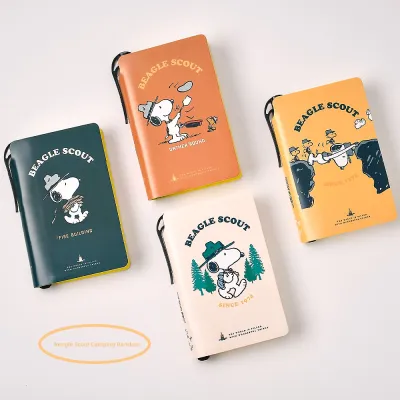
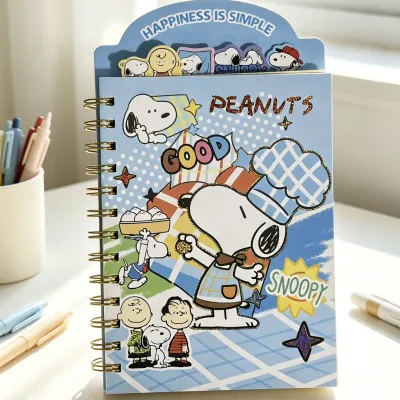
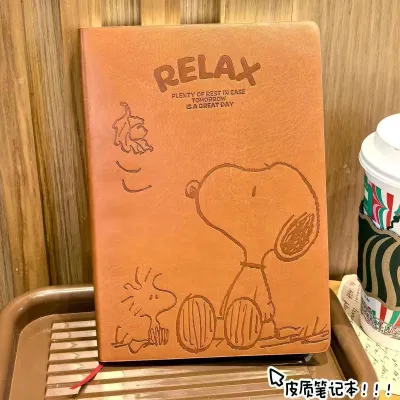
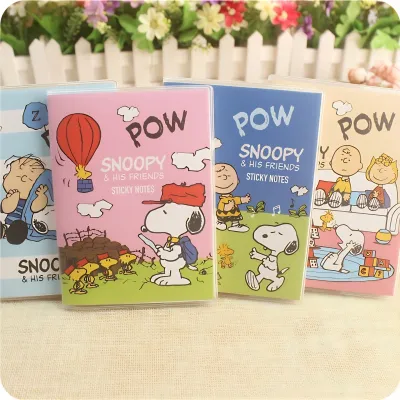
Prices are valid at publication and may change. Please refer to the product page for the latest price.
To make an informed choice, distinguish between premium stationery collaborations and standard mass-market licensed products. Premium collaborations occur when established stationery brands partner with Peanuts. These manufacturers use their signature, high-grade paper stocks, which are already well-regarded in the writing community. On the other hand, mass-market licensed notebooks are often produced by general novelty manufacturers who prioritize cover aesthetics and affordability over paper performance.
To identify the actual manufacturer behind a Snoopy notebook, check the back cover, the packaging wrap, or the fine print in online product listings. Look for the names of recognized stationery brands or paper manufacturers alongside the official Peanuts copyright notice. If a notebook is produced by a reputable paper brand, they will almost always display their name proudly. If the manufacturer is unnamed or listed as a general toy or novelty distributor, the paper inside is likely standard utility paper intended for basic ballpoint use.
Key Paper Specifications to Check Before Buying
When shopping for a Snoopy notebook, understanding key paper specifications will help you predict how the pages will handle your writing instruments. The most critical metric to look for is paper weight, measured in grams per square meter (GSM). Standard notebook paper typically ranges from 70 GSM to 80 GSM, which is suitable for ballpoint pens but prone to ghosting with wetter inks. For journaling with gel pens or light markers, look for paper weights between 90 GSM and 120 GSM. If you plan to use heavy ink or light watercolor washes, you will need specialized paper of 150 GSM or higher.

Beyond weight, the paper finish and coating play a significant role in your writing experience. Coated papers have a smooth, slick surface that resists ink absorption, which helps prevent feathering and keeps ink colors vibrant. However, this coating also extends drying times, which can be a challenge in humid climates like Singapore, where moisture in the air already slows down ink evaporation. Uncoated papers absorb ink more quickly, reducing the risk of smudging, but they are more susceptible to feathering if the paper fibers are loose or of lower quality.
Finally, consider the binding style and how it affects the usability of the pages. A high-quality notebook should feature a lay-flat binding, such as thread-bound or section-sewn binding. This allows the notebook to open completely flat on your desk, giving you full access to the writing area near the center gutter without having to fight the springiness of the spine. Spiral-bound Snoopy notebooks also offer excellent lay-flat performance, though the metal or plastic coils can sometimes get in the way of your hand while writing.
Matching Paper Quality to Your Writing and Journaling Tools
Your choice of writing instrument should dictate the type of paper you seek out in a Snoopy notebook. Fountain pens and other wet-ink pens are the most demanding. They require high-density, well-sized paper that prevents the ink from spreading sideways (feathering) or soaking through to the other side of the page (bleed-through). If you use fountain pens, look for premium collaborations that specify fountain-pen-friendly paper, which often features a smooth, hard finish that allows the nib to glide effortlessly.
For daily writing with gel pens, ballpoints, and fineliners, you have more flexibility. Gel pens glide smoothly on medium-weight paper (around 80 to 100 GSM) with a semi-smooth finish. Because gel ink is water-based, it can still ghost on very thin paper, so avoiding anything under 80 GSM is advisable if you dislike seeing your writing on the reverse side of the page. In humid environments, pairing a quick-drying gel pen with slightly absorbent, uncoated paper can help prevent accidental hand smudges as you write.
If you prefer using pencils, colored pencils, or sketching tools in your Snoopy journal, look for paper with a slight texture, often referred to as “tooth.” Textured paper grabs the graphite or pigment from the pencil core more effectively, resulting in richer lines and better shading. Highly coated, ultra-smooth papers are less ideal for pencil work, as the lead can slide without leaving a clear mark, and repeated erasing can easily smudge the graphite or damage the smooth coating.
For mixed-media journaling—which involves adding stickers, washi tape, photos, and perhaps light watercolor washes—the structural integrity of the paper is paramount. Standard licensed notebooks are rarely designed to handle the moisture of watercolors or the weight of heavy embellishments. If you enjoy this style of journaling, look for Snoopy notebooks that specifically feature thick mixed-media paper, or consider using a traveler’s notebook system where you can insert high-quality blank refills inside a durable Snoopy-themed cover.
How to Evaluate and Test Paper Quality In-Store or Online
If you have the opportunity to shop in person at a local stationery store, you can perform a few quick, non-destructive checks to evaluate paper quality. Start by holding a single page up to the light to assess its opacity; if you can clearly see the silhouette of your hand through the page, the paper is thin and will likely suffer from significant ink ghosting. Run your fingers across the page to feel the texture and thickness, and gently flex the spine to see if the binding feels secure or if the pages strain against the glue.
When shopping on online marketplaces or ecommerce platforms, you must rely on product descriptions and customer feedback. Look closely at the specifications list for the exact GSM rating and binding type. If the listing only describes the cover design and omits the paper specifications entirely, it is safest to assume the paper is standard, lightweight utility paper. Scroll down to the customer reviews and search for keywords like “bleed,” “ghosting,” “fountain pen,” or “thin” to see how the paper performed for other buyers.
Be on the lookout for red flags that indicate low-quality paper. Extremely low prices (such as notebooks priced under S$3) often point to mass-produced novelty items with thin, highly acidic paper. Acidic paper is prone to yellowing and becoming brittle over time, which is highly undesirable for journals you wish to preserve for years. If a listing uses generic terms like “high-quality paper” without providing concrete details like GSM, origin, or manufacturer identity, proceed with caution and verify with the seller if possible.
Decision Framework: Choosing the Right Snoopy Notebook for Your Needs
To simplify your decision, use this conditional framework to match your writing habits with the right category of Snoopy notebook:
- Choose Premium Stationery Collaborations if: You primarily write with fountain pens, wet gel inks, or fine-tip markers. These notebooks offer the archival-quality, high-GSM, and lay-flat binding necessary to prevent bleeding and ensure a comfortable, long-lasting journaling experience.
- Choose Standard Mass-Market Licensed Notebooks if: You write mostly with ballpoint pens, pencils, or quick-drying fineliners, and you prioritize cute cover designs and budget-friendliness over specialized paper performance. These are excellent for casual note-taking, daily to-do lists, or schoolwork.
- Verify Specifications First if: You are purchasing online and the listing lacks clear details about paper weight, page count, or binding. Reach out to the seller or look up the manufacturer's official website to confirm the specifications before committing to the purchase.
- Consider Alternative Solutions if: You require heavy mixed-media, thick cardstock, or watercolor paper. Since standard licensed Snoopy notebooks rarely feature these specialized paper types, you may want to purchase a high-quality, non-licensed mixed-media journal and customize it yourself using official Peanuts stickers, stamps, and washi tape.
Frequently Asked Questions (FAQ)
Can I use highlighters and markers in standard Snoopy notebooks?
Standard Snoopy notebooks, which typically feature paper weights between 70 GSM and 80 GSM, are prone to bleed-through when used with heavy ink-volume tools like alcohol-based markers or wet highlighters. To minimize this risk, opt for dry highlighters, pastel mild-liners, or gel-based highlighters that do not saturate the paper fibers. If you must use standard highlighters, place a thick sheet of scrap paper or a plastic pencil board (shitajiki) directly underneath the page you are writing on to protect the subsequent pages from accidental ink transfer.
How do I prevent ink smudging when journaling in a Snoopy notebook?
Ink smudging is a common issue, particularly on smooth, coated papers or when writing in humid climates. To prevent smudges, pair your notebook with quick-drying gel pens or classic ballpoint pens that dry almost instantly upon contact with the page. Additionally, place a clean sheet of blotting paper or a guard sheet under your writing hand as you move across the page. This not only absorbs any excess wet ink but also protects the paper surface from the natural oils on your skin, which can sometimes cause ink to skip or pool unevenly.

Community discussion
Share your experience or ask a question. Comments are reviewed before publication.