
Finding the perfect refillable notebook paper requires looking beyond brand names and focusing on how paper specifications interact with your writing tools. The ideal refillable paper is not a one-size-fits-all product; instead, it is a balance of weight, surface treatment, and binding compatibility. In humid climates like Singapore, where ambient moisture can alter how paper absorbs ink and how quickly it dries, understanding these technical details becomes even more critical to preventing feathering and smudging. By evaluating these physical properties, you can select refills that elevate your writing experience while maintaining the structural integrity of your notebook system.
Decoding Paper Specifications for Refillable Notebooks
To make an informed choice among refillable notebook inserts, you must first decode the technical specifications listed on product packaging or brand websites. The most common metric you will encounter is GSM, which stands for grams per square meter. This measurement indicates the weight of the paper sheet, which directly correlates with its physical thickness and opacity. While a higher GSM generally suggests a thicker, more opaque sheet that resists light show-through, it does not automatically guarantee that the paper will handle wet inks without bleeding.
Another critical factor is paper sizing, which refers to the chemical treatments applied during manufacturing to control how the paper absorbs liquid. Sizing can be internal, where additives are mixed into the paper pulp, or external, where a starch or gelatin coating is applied to the surface of the finished sheet. Well-sized paper resists ink penetration, allowing wet inks from fountain pens or gel pens to sit on the surface and dry sharply rather than spreading into the paper fibers. Without adequate sizing, even a thick sheet can suffer from feathering, where the ink spreads outward in tiny, spider-web patterns.
Products mentioned in this guide
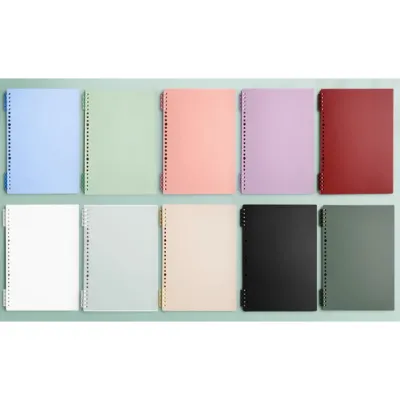
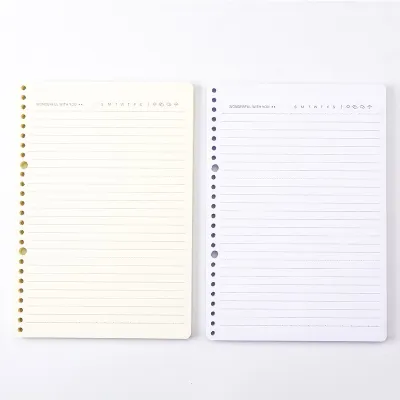
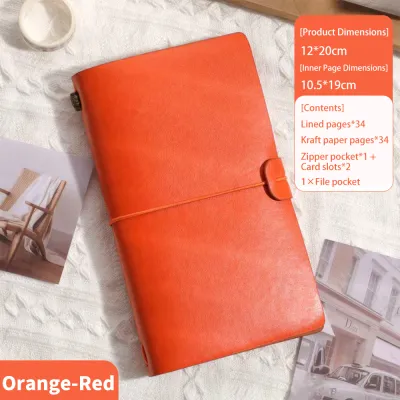
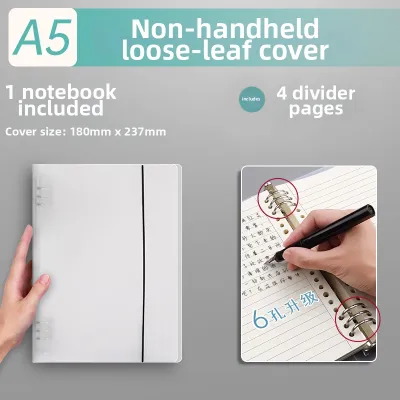
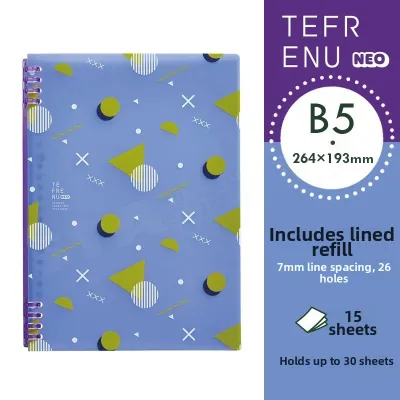
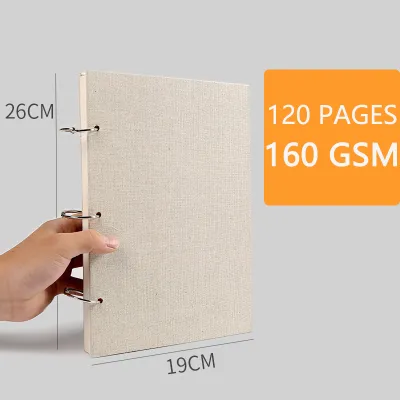
Prices are valid at publication and may change. Please refer to the product page for the latest price.
When shopping on an online marketplace or browsing a local stationery shop, look for these specifications in the product description. Manufacturers who cater to stationery enthusiasts often explicitly state the GSM, the surface finish, and whether the paper is optimized for specific writing instruments. If these details are missing, you can often infer the paper quality by checking if the brand specifies the source of their pulp or mentions acid-free archival properties, which typically indicate a higher standard of production.
Evaluating Paper Weight and Thickness
Choosing the right paper weight involves balancing the physical bulk of your notebook with your specific ink-handling requirements. Standard refillable paper typically ranges from 52 GSM to 80 GSM. These lighter weights are highly portable, allowing you to pack more pages into a single binder without creating an excessively heavy or thick profile. However, very light papers, particularly those around 52 GSM, are prone to ghosting—a phenomenon where the writing on one side of the page is visible from the reverse side, even if the ink does not actually break through the surface.

Premium refillable papers generally range from 90 GSM to 120 GSM or higher. These heavier sheets offer excellent opacity and a substantial, luxurious tactile feel under the pen. The trade-off is physical volume; a binder filled with 120 GSM paper will hold significantly fewer pages than one filled with 80 GSM paper. In ring-bound or discbound systems, excessive paper thickness can crowd the binding mechanism, preventing the pages from turning smoothly or causing the notebook to pop open unexpectedly during transport.
To verify manufacturer claims regarding bleed-through and ghosting before committing to a large purchase, use this simple checklist:
- Check the paper's fiber composition; cotton-blend or highly refined wood pulp papers tend to handle ink better at lower weights.
- Look for user reports regarding show-through rather than just bleed-through, as ghosting can occur even on high-quality thin papers.
- Assess the binding capacity of your specific notebook cover; measure the inner diameter of your rings or discs to calculate how many sheets of your chosen GSM will comfortably fit while leaving room for page turning.
Matching Paper Finish to Your Writing Instruments
The surface finish of your refillable paper dictates how your writing instrument glides across the page and how the ink behaves once applied. Smooth, coated finishes—often described as satin, vellum, or hot-press—provide minimal friction. This ultra-smooth surface is ideal for fine-nib fountain pens, gel pens, and technical drawing pens, as it prevents the tip from catching on paper fibers. However, because coated surfaces limit ink absorption, wet inks will take longer to dry. In Singapore’s humid climate, this extended drying time can easily lead to accidental smudging if you close the notebook too quickly or brush your hand across the page.
Conversely, textured or toothy finishes—such as cold-press, laid, or uncoated papers—offer more resistance. This texture is highly desirable for pencil users, ballpoint pens, and certain felt-tip markers, as the friction helps control the stroke and allows graphite or ink to adhere evenly to the surface. The open fibers of uncoated paper absorb ink rapidly, resulting in incredibly fast drying times. The downside is that highly absorbent, textured papers are more prone to feathering when paired with wet fountain pen inks or broad gel pens, which can make your handwriting appear fuzzy.
Before purchasing refills in bulk, it is highly recommended to test paper samples using your daily writing tools. You can often buy small sample packs or single inserts to conduct a personal trial. Write a few test lines using varying pressure and ink flow, then observe the drying time, line crispness, and whether the ink bleeds through to the back. This hands-on verification ensures that the specific combination of your pen, ink, and paper finish performs reliably under your local environmental conditions.
Navigating Paper Options Across Refillable Formats
The physical format of your refillable notebook plays a major role in determining which paper types and thicknesses you can use. Different binding mechanisms impose strict limits on page capacity, punch styles, and paper dimensions, which directly affects your freedom to customize your setup.
Ring-Bound and Planner Systems
Traditional ring-bound planners and notebooks rely on standardized hole configurations, such as the classic six-ring layout for A5 or personal sizes. While these standards make it easier to find third-party inserts, you must pay close attention to the margin width around the punched holes. If the paper is too thin or the margins are too narrow, the pages can easily tear away from the rings during daily use. Standard daily planner inserts often use lighter 70 to 80 GSM paper to maximize page capacity, whereas premium journaling inserts utilize heavier 100 GSM paper to accommodate creative layouts and wet media.
Discbound and Modular Systems
Discbound systems offer exceptional flexibility, allowing you to insert, remove, and rearrange individual sheets of varying sizes and weights within the same notebook. However, this modularity relies on specialized mushroom-shaped punches that grip the plastic or metal discs. Because the paper is held in place solely by these small tabs, heavy paper weights (such as 100 to 120 GSM) are highly recommended to prevent the pages from tearing or slipping off the discs. Extremely thin paper will quickly wear out at the punch points if you frequently rearrange your pages.
Elastic-Bound and Wrap Systems
Elastic-bound notebooks, often referred to as traveler’s journals or wrap systems, hold separate, pre-bound booklets in place using elastic bands. This design allows you to mix and match different paper types—such as a grid booklet for planning and a heavy sketch booklet for drawing—within a single leather or fabric cover. The primary limitation of this system is physical bulk. Stacking multiple booklets containing thick, high-GSM paper will cause the notebook to fan out or exceed the width of the protective cover, exposing the edges of your pages to wear and tear.
Decision Framework: Choosing Your Ideal Refillable Paper
To select the right paper for your refillable notebook, you can use a simple decision framework based on your primary writing instrument and daily usage patterns.
If you primarily write with fountain pens or wet gel pens, prioritize paper with a smooth, coated finish and robust external sizing. Look for weights between 80 GSM and 100 GSM to balance ink resistance with drying times. Be prepared to allow a few extra seconds for the ink to dry, or use blotting paper to prevent smudging in humid conditions.
If you are a heavy-press writer who uses ballpoint pens or mechanical pencils, opt for uncoated, toothy paper with a weight of 90 GSM or higher. The added thickness will prevent the tip of your pen or pencil from embossing deep ridges into the subsequent pages, while the textured surface will provide the necessary friction for clean, controlled lines.
For minimalists who prioritize portability and maximum page capacity, standard 64 GSM to 80 GSM paper is the most practical choice. This allows you to carry a year’s worth of notes or planning pages in a single, slim binder. To mitigate ghosting on these lighter sheets, pair them with fine-liner pens, dry ballpoints, or hard-lead pencils.
Before finalizing any purchase, always verify the proprietary punch patterns and exact dimensions of your notebook cover. Measure the spacing between the rings or discs and compare them to the manufacturer’s product specifications. Purchasing a small, single-pack refill for a test run is the safest way to ensure compatibility before investing in bulk quantities.
Frequently Asked Questions (FAQ)
Can I use third-party paper in branded refillable notebooks?
Yes, you can use third-party paper, but compatibility depends entirely on matching the exact hole punch pattern, spacing, and margin dimensions of your binder. Many brands use proprietary spacing to encourage customers to buy their own refills. If you want to use custom or third-party paper, measure your notebook’s binding mechanism carefully or invest in an adjustable hole punch designed specifically for your system. Additionally, check the manufacturer’s specifications for the maximum stack height of your binder to ensure that adding thicker third-party sheets does not strain or damage the rings or discs.
Does thicker paper always mean better quality for fountain pens?
No, thicker paper does not automatically guarantee better performance with fountain pens. The key to fountain pen compatibility is paper sizing (the chemical treatment that resists liquid absorption) rather than sheer weight or thickness. A highly sized, lightweight paper (such as certain 52 GSM or 68 GSM specialty papers) can handle wet fountain pen inks beautifully without any feathering or bleed-through. Conversely, a thick, unsized 120 GSM paper can act like blotting paper, absorbing the ink rapidly and causing severe feathering and bleed-through despite its physical thickness.

Community discussion
Share your experience or ask a question. Comments are reviewed before publication.