
Finding the perfect A5 notebook is a highly personal journey that depends entirely on how your chosen writing instrument interacts with the paper surface. Whether you are a student taking rapid lecture notes, a professional organizing daily tasks, or a dedicated journaler capturing thoughts, the tactile feedback of pen on paper dictates your writing comfort. An A5 notebook, measuring 148mm by 210mm, offers the ideal balance between portability and writing space, making it a popular format for daily carry. However, the sheer variety of options available in local stationery stores and online marketplaces means that paper quality can vary dramatically.
To evaluate these notebooks effectively, you must look beyond aesthetic covers and focus on the technical specifications of the paper itself. The primary criteria that define a premium writing experience include paper weight, surface texture, opacity, and the structural binding of the notebook. Because there is no single “perfect” paper, the ideal choice is always subjective. A dense, coated paper that makes a fountain pen glide effortlessly might cause a gel pen to smudge, while a highly absorbent sheet that dries gel ink instantly might cause a fountain pen to feather and bleed. Understanding these interactions is the key to selecting a notebook that complements your daily writing tools.
Evaluating Paper Quality: Weight, Texture, and Opacity
When assessing an A5 notebook, the first specification to examine is the paper weight, measured in grams per square meter (GSM). You can typically find this number printed on the notebook’s belly band, back cover, or online product listing. Standard office notebooks usually range from 60 GSM to 80 GSM, which is lightweight and suitable for basic ballpoint pens but highly prone to ink bleed-through. Medium-weight paper, ranging from 80 GSM to 100 GSM, offers a versatile middle ground for most daily writing tools. Premium notebooks often feature heavy paper from 100 GSM up to 160 GSM, providing a thick, card-like feel that resists almost all ink penetration but adds significant weight and bulk to your daily carry.
Products mentioned in this guide
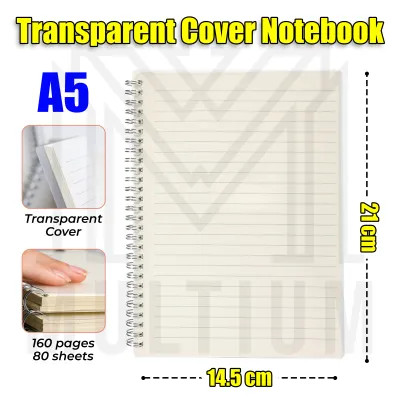
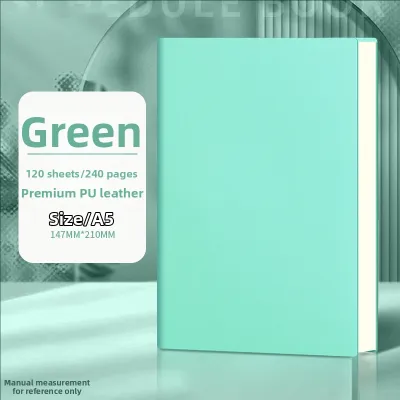
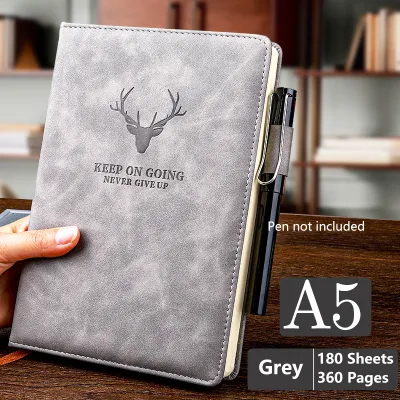
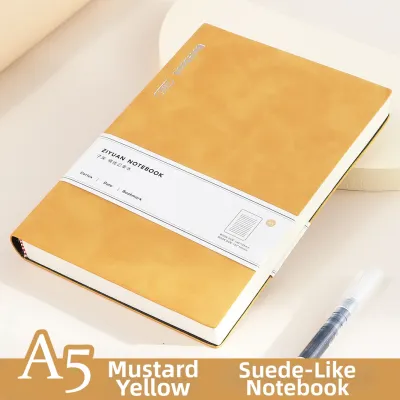
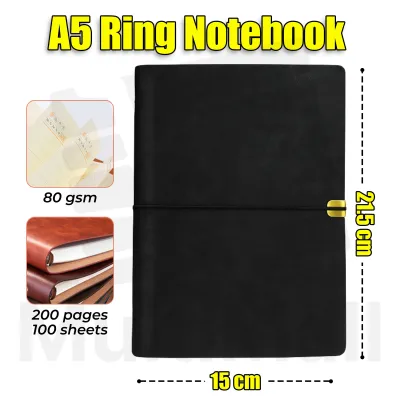
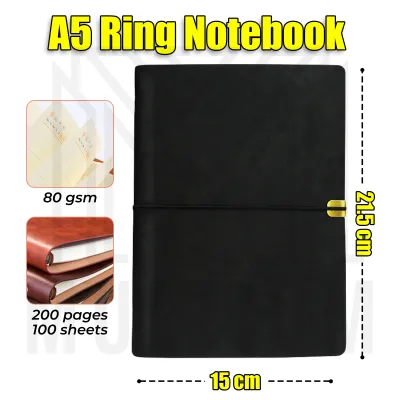
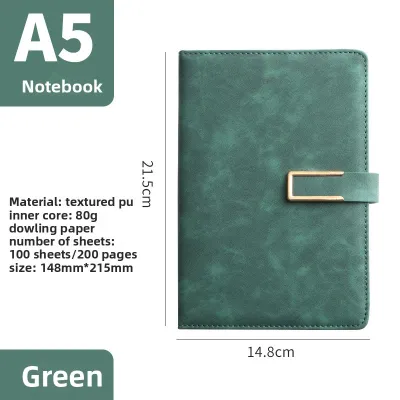

Prices are valid at publication and may change. Please refer to the product page for the latest price.
Surface texture, or the “tooth” of the paper, is another critical factor that you can verify through physical touch. Coated or highly calendered papers undergo a manufacturing process that presses the fibers between heavy rollers, resulting in an ultra-smooth, satin-like finish. This smooth surface minimizes friction, allowing fine-nibbed pens to glide without catching, though it also extends ink drying times. Conversely, toothy or uncoated papers retain a natural fiber texture, providing a satisfying tactile resistance that helps control your pen strokes. When shopping in person, gently run your fingertips across a sample page; a velvety feel indicates a coated surface, while a slight grain suggests an uncoated, high-friction sheet.
Opacity refers to how much light passes through the paper, which directly determines the level of “ghosting” or show-through on the reverse side of a page. High-opacity paper ensures that your writing remains legible on both sides without the distracting shadow of previous entries. To test opacity in a retail store, hold a single page up to the overhead lighting; if you can clearly see the outline of your hand or the text on the subsequent page, the paper has low opacity. For online purchases, look for terms like “high opacity” or “bleed-resistant” in the specifications, and verify if the manufacturer uses specific additives, such as clay fillers, which enhance opacity without excessively increasing the paper’s thickness.
Matching Paper to Your Preferred Writing Instruments
To achieve a seamless writing experience, you must match the physical properties of the paper to the specific ink delivery system of your favorite pens. Fountain pens and wet rollerballs deposit a significant volume of liquid, water-based ink onto the page. If the paper fibers are too absorbent or lack proper sizing (a chemical treatment that controls liquid absorption), the ink will spread outward along the fibers—a phenomenon known as feathering—or soak completely through to the next page. To prevent this, fountain pen enthusiasts should look for hard-sized, high-density papers, often manufactured in Japan or France, which keep the ink on the surface to showcase shading and sheen.

Gel pens and standard rollerballs utilize water- or oil-based gel inks that require a balance between absorption and smoothness. If the paper is too coated, the gel ink will pool on the surface and smudge easily under your hand, which is a common frustration for left-handed writers. For these instruments, a smooth but moderately absorbent paper of 80 GSM to 100 GSM is ideal, as it allows the ink to dry within a few seconds while maintaining clean, crisp lines. If you prefer ballpoint pens or graphite pencils, your needs are much simpler; these dry-writing tools perform exceptionally well on standard, slightly toothy paper, where the friction helps transfer the wax, oil, or graphite smoothly onto the page without slipping.
The following table summarizes how different writing instruments pair with specific paper characteristics, helping you identify the right specifications before making a purchase:
| Pen Type | Ideal Paper Texture | Recommended GSM Range | Key Performance Check |
|---|---|---|---|
| Fountain Pen | Ultra-smooth, coated, or hard-sized | 80 GSM to 120 GSM | Check for zero feathering and minimal bleed-through |
| Gel / Rollerball | Smooth, semi-absorbent | 80 GSM to 100 GSM | Verify dry time to prevent smudging |
| Ballpoint Pen | Medium tooth, uncoated | 70 GSM to 90 GSM | Ensure sufficient friction for consistent ink flow |
| Pencil / Graphite | Toothy, textured | 80 GSM to 120 GSM | Check erasability and smudge resistance |
Beyond the Paper: Binding, Lay-Flat Ability, and Durability
While paper quality is paramount, the physical construction of the notebook determines how comfortably you can actually write on those pages. The binding method directly influences the “lay-flat” ability of the notebook, which is crucial for utilizing the entire width of an A5 page. Thread-sewn bindings, where folded groups of pages (signatures) are stitched together before being attached to the spine, are the gold standard for lay-flat performance. This construction allows the notebook to open completely flat at any page, ensuring you can write comfortably near the inner gutter without having to constantly hold the pages down with your non-dominant hand.
In contrast, perfect-bound or glued notebooks rely entirely on adhesive to secure individual sheets to the spine. While often more affordable, these notebooks tend to spring closed automatically and require you to break the spine to write near the center, which can eventually cause pages to detach. Cover materials also play a significant role in the durability and usability of your notebook. Hardcovers provide a built-in writing surface, making them excellent for taking notes on your lap or while standing, and they offer maximum protection for the page edges inside a crowded bag. Softcovers, typically made of flexible cardstock or polyurethane, are lighter, more pocket-friendly, and conform easily to tight spaces, though they offer less structural support.
When inspecting an A5 notebook in a local stationery shop or upon receiving an online delivery, use this quick quality checklist to ensure the construction matches your expectations:
- Spine Flexibility: Open the notebook to the exact middle and check if the pages lie flat without requiring excessive pressure.
- Stitching Quality: Look closely at the inner gutter for visible, tight threads; loose threads or excess glue residue indicate poor manufacturing.
- Page Alignment: Close the notebook and inspect the outer edges; the pages should be perfectly flush with one another and neatly aligned within the cover boundaries.
- Corner Finishing: Check if the corners of both the cover and the inner pages are rounded, which prevents dog-earing and wear when sliding the notebook into a bag.
Decision Framework: Choosing the Right A5 Notebook
To finalize your decision, you must weigh your primary writing tools against your budget and daily environment. If your routine involves fountain pens, calligraphy inks, or heavy highlighting, prioritize premium notebooks featuring specialty, high-density paper. These options are more expensive, often costing upwards of S$15 to S$35 per notebook in Singapore, but they guarantee that your wet inks will not ruin the reverse side of your pages. For those who rely on standard ballpoints, pencils, or quick-drying gel pens for rapid note-taking, a standard office-grade or mid-range notebook of 80 GSM is a highly practical and cost-effective daily driver.
However, you may find that standard brand offerings do not fit your specific workflow if you require highly specialized layouts. For instance, if you need a very specific dot grid spacing (such as 3mm or 7mm instead of the standard 5mm) combined with ultra-high GSM paper for watercolor sketching, you may need to look beyond mainstream stationery brands toward bespoke or artistic journals. Additionally, when purchasing notebooks online, always verify the retailer’s return and exchange policies. Because paper feel is highly tactile, checking if the seller accepts returns for unopened or gently inspected items provides an essential safety net in case the paper texture does not match your writing style.
Frequently Asked Questions (FAQ)
How can I test a notebook's paper quality before buying in bulk?
To avoid committing to a large order of notebooks that may not suit your writing style, start by purchasing a single unit as a test sample. If you are ordering from a corporate supplier or a specialty stationery boutique, ask if they can provide a paper swatch or a single sample sheet. Once you have the sample, conduct a comprehensive pen test using the exact pen and ink combinations you plan to use daily. Write a few lines on the first and last pages of the notebook, paying close attention to ink drying times, line crispness, and whether the ink feathers or bleeds through to the back of the sheet.
Does paper color affect the writing experience and eye strain?
Yes, the color of the paper plays a significant role in visual comfort during long writing or reading sessions. Bright white paper provides high contrast, making black and dark blue inks stand out vividly, which is excellent for scanning notes quickly. However, under bright fluorescent office lights or direct sunlight, bright white paper can reflect significant glare, leading to eye strain over time. Cream, ivory, or off-white papers offer a softer contrast that is much gentler on the eyes during extended use. Keep in mind that paper color is purely aesthetic and does not alter the physical ink absorption, drying time, or bleed resistance of the sheet.

Community discussion
Share your experience or ask a question. Comments are reviewed before publication.