
There is no single “best” paper among popular A7 notebook brands; the right choice depends entirely on your primary writing instrument and tactile preferences. Because pocket-sized A7 formats prioritize portability, brands make different trade-offs between paper thickness, surface coating, and page count. To select the ideal notebook, you must match the paper’s weight and texture to your ink type—whether you need a heavily sized surface for fountain pens, a quick-dry finish for gel pens, or a toothy texture for ballpoints and pencils. This guide provides a practical framework to compare paper specifications, verify quality in-store or online, and choose the right A7 notebook for your daily carry.
The A7 format, measuring exactly 74 mm by 105 mm, is designed for ultimate portability, fitting easily into a shirt pocket, small clutch, or everyday carry pouch. However, this compact size means every square millimetre of the page must perform efficiently. In Singapore’s humid climate, paper fibers can absorb ambient moisture over time, which directly impacts how ink behaves on the surface. Understanding the physical properties of the paper prevents issues like feathering, bleed-through, and slow drying times that can ruin quick on-the-go notes. Whether you are spending S$3 on a basic pocket pad or S$15 on a premium bound notebook, knowing what to look for ensures your writing experience remains smooth and reliable.
Key Paper Specifications to Compare Across Brands
To make an informed choice, you must look past marketing buzzwords and focus on measurable paper specifications. The physical attributes of paper determine how it handles different inks, how heavy the notebook feels in your pocket, and how long your notes will last without degrading.
Products mentioned in this guide
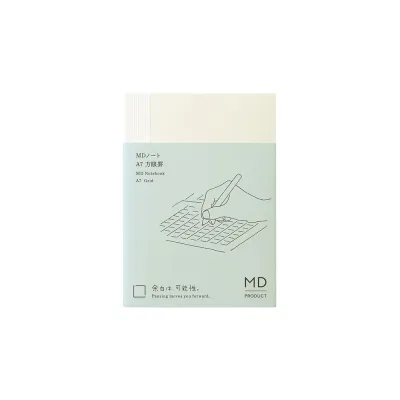
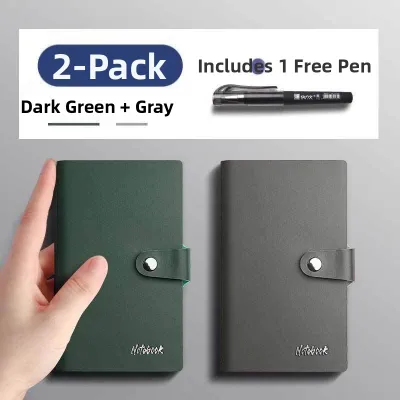
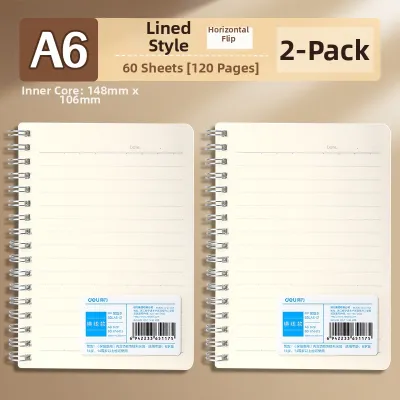
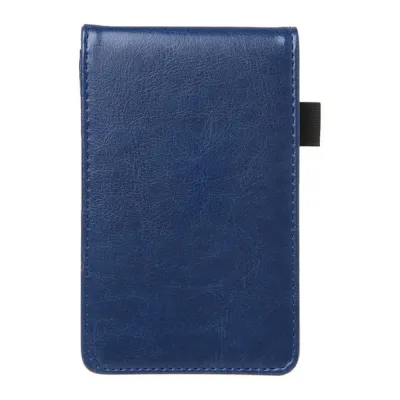
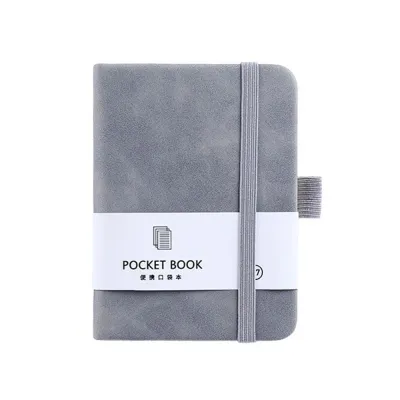
Prices are valid at publication and may change. Please refer to the product page for the latest price.
Paper weight, measured in Grams per Square Metre (GSM), is the standard metric for paper thickness and density. In A7 notebooks, you will typically encounter weights ranging from 52 GSM to 120 GSM. Lower-weight papers (52 GSM to 70 GSM) are thin and lightweight, allowing manufacturers to pack more pages into a slim pocket profile, though they are highly susceptible to ghosting and bleed-through. Medium-weight papers (80 GSM to 90 GSM) represent the industry standard for everyday writing, offering a balanced compromise between thickness and portability. Heavyweight papers (100 GSM to 120 GSM or higher) provide a sturdy, card-like feel that easily resists ink penetration, though they result in a much thicker notebook with fewer total pages.
The tactile feel of the page is determined by its finish, which ranges from highly smooth (coated or heavily sized) to toothy (uncoated). Smooth papers often undergo a calendering process, where the paper is pressed between heavy rollers to flatten the fibers, or they are treated with surface sizing agents like starch or clay. This smooth finish prevents ink from spreading, preserving sharp lines and vibrant ink colors, which is highly desirable for fine-tip gel pens and fountain pens. Conversely, toothy papers retain their natural fiber texture, providing a pleasant resistance or “bite” when you write. This friction is essential for graphite pencils and standard ballpoint pens, as it helps transfer the writing medium onto the page without slipping.
Opacity refers to how much light passes through the paper, which dictates the level of “ghosting” or show-through you experience on the back of a page. Bleed-through occurs when ink completely penetrates the paper fibers and emerges on the other side, rendering the reverse page unusable. While higher GSM generally correlates with better opacity, the chemical composition and sizing of the paper play a massive role. Sizing acts as a water-resistant barrier within the paper fibers; a well-sized 68 GSM paper can resist bleed-through better than an unsized 90 GSM paper when exposed to wet inks.
Matching A7 Paper Profiles to Your Writing Instruments
Your choice of writing instrument should dictate the paper profile of your A7 notebook. Because pocket notes are often written quickly while standing or traveling, matching the ink chemistry to the paper surface is critical to avoid smudges and messy transfers.

Fountain pens, rollerballs, and liquid ink pens lay down a significant volume of water-based ink. On standard, highly absorbent paper, this wet ink spreads rapidly along the paper fibers—a phenomenon known as feathering—resulting in fuzzy, bloated lines. To prevent feathering and bleed-through, fountain pen users require paper with high sizing or specialized coatings that slow down ink absorption. Look for notebooks that explicitly state compatibility with fountain pens or feature dense, smooth paper. Keep in mind that in Singapore’s humid environment, water-based inks on coated, non-absorbent papers will take significantly longer to dry, increasing the risk of smudging when you close the notebook quickly.
Gel pens are incredibly popular for A7 notebooks due to their vibrant colors and smooth flow, typically utilizing tips ranging from ultra-fine 0.38 mm to bold 0.7 mm. Because gel ink is water-based but suspended in a gel medium, it requires a paper surface that balances absorption with smoothness. If the paper is too coated, the gel ink will sit on top of the page and smudge the moment your hand brushes past. For rapid note-taking, look for medium-weight (80 GSM to 90 GSM) paper with a semi-smooth finish that allows the gel ink to dry within a few seconds while maintaining a crisp, clean line.
Oil-based ballpoint pens and graphite pencils rely on physical friction to transfer their medium to the page. If you write on heavily coated, ultra-smooth paper with a ballpoint pen, the ball may fail to grip the surface, leading to skipping, uneven ink delivery, and hand fatigue. Similarly, pencils require a certain amount of “tooth” to shave off the graphite core and leave a dark mark. Standard uncoated paper, typically around 70 GSM to 80 GSM, is ideal for these instruments. The natural texture of the paper fibers provides the necessary grip, ensuring reliable, skip-free writing every time.
How to Verify Paper Quality When Shopping
Whether you are browsing local stationery boutiques in Singapore or shopping via online marketplaces, you can use specific verification strategies to ensure you get the paper quality you expect.
When examining packaging, look for technical terms rather than generic marketing claims like “premium quality.” Look for “acid-free” or “archival” labels, which indicate the paper will not yellow or become brittle over time. Check for specific certifications such as FSC (Forest Stewardship Council) or PEFC, which verify sustainable sourcing. Pay close attention to the binding type listed on the label: thread-bound (or Smyth-sewn) bindings offer the greatest durability and allow the notebook to lay flat, whereas simple glue bindings in cheap A7 pads may crack and shed pages over time.
If you can handle the notebook in person, perform a few quick physical checks. Gently flex the notebook to assess page stiffness; high-quality paper feels resilient and springy, while low-grade paper feels limp or excessively stiff like cardboard. Examine the edges of the pages; they should be cleanly cut without any fraying, fuzziness, or fiber separation. Open the notebook to the center and check the binding flatness. For an A7 notebook, being able to write comfortably near the inner gutter is crucial; if the binding resists opening or forces the pages to curve sharply, writing in such a small format will be frustrating.
When shopping online where you cannot touch the paper, look for detailed product specifications that list the exact GSM and paper origin. Scan user reviews specifically for photos of ink tests. Many stationery enthusiasts post close-up images showing how the paper handles fountain pens, gel pens, and highlighters on both sides of the page. Avoid listings that only use generic keywords like “thick paper” without specifying the actual GSM or paper type, as these often hide lower-quality materials.
Decision Framework: Choosing the Right A7 Notebook
To simplify your selection process, use this conditional framework to match your writing style to the correct A7 notebook specifications.
For fountain pen and wet ink users, prioritize heavily sized, smooth paper with a weight of 80 GSM to 100 GSM. Ensure the binding is thread-bound so the notebook lays completely flat, allowing you to use the entire page surface without pooling ink in the gutter. Accept that drying times may be slightly longer in humid conditions.
For gel pen and rapid note-takers, choose a semi-smooth, medium-weight paper (80 GSM) that offers a balance of quick drying and line sharpness. Look for staple-bound or twin-ring spiral bindings that allow you to flip pages quickly and write on the go without waiting for ink to dry.
For ballpoint, pencil, and maximum portability users, opt for uncoated, toothy paper in the 70 GSM to 80 GSM range. This allows for a higher page count (often 80 to 100 sheets) in a very slim profile, giving you a lightweight daily carry that resists skipping and handles basic notes perfectly.
Before finalizing your purchase, verify that the binding style matches your usage scenario. If you plan to tear out pages frequently, look for micro-perforated sheets. If you want a permanent archive of your pocket notes, a thread-bound notebook with a durable cover is essential to protect the small pages from wear and tear.
Frequently Asked Questions (FAQ)
Does a higher page count always mean better paper quality in A7 notebooks?
No, a higher page count in a pocket-sized A7 notebook often indicates the opposite. To keep the notebook slim and portable, manufacturers must use thinner paper (typically 52 GSM to 60 GSM) to accommodate a large number of pages. While this gives you more writing space per notebook, the thinner pages are much more prone to ghosting and ink bleed-through. If you use wet inks or gel pens, it is usually better to choose a notebook with a lower page count but higher-quality, thicker paper.
Can I use highlighters on standard A7 notebook paper without ruining the next page?
Most standard uncoated A7 paper will experience significant bleed-through when used with wet, liquid-ink highlighters. Because pocket notebooks often use thinner paper to remain compact, the heavy moisture of a highlighter quickly saturates the fibers. To highlight key points in your pocket notes without ruining the reverse page, look for notebooks with at least 90 GSM paper, or switch to dry highlighter pencils or wax-based highlighters which do not wet the paper.

Community discussion
Share your experience or ask a question. Comments are reviewed before publication.