
Comparing paper quality in A6 and pocket-sized mini notebooks requires looking beyond brand names to evaluate weight, surface sizing, and fiber composition. The ideal paper depends entirely on your writing instrument and portability needs. While some pocket notebooks prioritize thick, ink-resistant paper that prevents ghosting, others focus on lightweight, compact sheets that maximize page count in a pocket-friendly profile. Finding the perfect match involves balancing these physical trade-offs against your daily writing habits.
Because mini books are designed to be carried everywhere, their paper must withstand diverse environments while remaining functional. A notebook that works perfectly with a ballpoint pen on a dry day might feather or smudge when paired with a fountain pen in a humid climate. By understanding the technical specifications of paper and learning how to perform simple, observable tests, you can confidently select a mini notebook that fits your everyday carry setup.
Key Paper Specifications to Check Before Buying
When browsing mini notebooks, the first specification to examine is the paper weight, measured in grams per square meter (GSM). In pocket-sized formats, GSM directly dictates the balance between the notebook’s thickness and its resistance to ink penetration. Typical pocket notebooks range from a lightweight 52 GSM to a heavy 120 GSM. Lower GSM papers allow manufacturers to pack more pages into a slim, pocket-friendly spine, but they are highly susceptible to ghosting—where writing is visible on the reverse side of the page. Conversely, high-GSM papers offer excellent opacity and ink resistance, but they result in a much thicker, heavier notebook that may feel bulky in a pocket.
Products mentioned in this guide
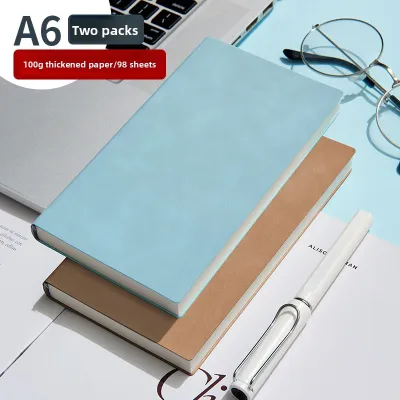
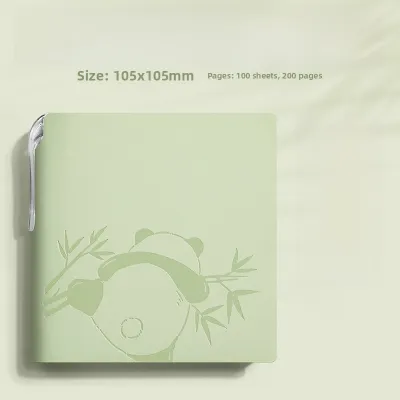
Prices are valid at publication and may change. Please refer to the product page for the latest price.
Beyond weight, the paper’s composition and surface sizing play a critical role in how it interacts with ink. Most everyday notebooks use wood pulp paper, which can be either acid-free (archival) or standard. Acid-free paper resists yellowing and degradation over time, making it essential for long-term journaling. Sizing refers to the chemical treatment applied to paper fibers during manufacturing to control water absorption. Highly sized papers keep ink on the surface longer, which prevents feathering and preserves sharp line edges, though it increases drying times. Unsized or lightly sized papers absorb ink rapidly, which prevents smudging but can cause the ink to spread out into the fibers.
Finally, the ruling format of a mini notebook significantly influences how efficiently you can use its limited surface area. In compact A6 or pocket sizes, standard 7mm lined ruling can feel restrictive, limiting the amount of information you can fit on a single page. Many writers prefer 5mm or 3.5mm grid or dotted formats for mini books. These tighter layouts provide subtle structural guidance for small handwriting, allowing you to maximize every square centimeter of the page. Blank pages offer the ultimate freedom for sketching and quick diagrams, but they require more control to keep horizontal lines straight in a small format.
How to Test Paper Performance for Everyday Writing
If you want to verify paper quality before committing to a specific brand for your daily journaling, performing a standardized ink test on a single page is the most reliable method. Start by testing for bleed-through and ghosting using your preferred writing instruments. Draw a single line, a double-layered line, and a small, saturated block of ink on an inconspicuous page at the back of the notebook. Allow the ink to dry completely, then turn the page. Ghosting is normal for lightweight papers, but if the ink has physically penetrated the paper fibers to create spots on the reverse side, the paper lacks the density or sizing required for that specific pen.

Next, evaluate the paper for feathering and drying times. Write a few words quickly and observe the edges of the letters under a bright light or a magnifying lens. If the ink spreads outward into the paper fibers, creating fuzzy, branch-like edges, the paper is feathering. To test drying times, write a series of lines and smudge them with your finger at one-second, three-second, and five-second intervals. In humid environments like Singapore, the moisture in the air can slow down ink drying times significantly. If you find that ink remains wet on highly sized, coated papers for more than five seconds, you may need to pair that notebook with a faster-drying ink or a finer pen tip to avoid smudging your notes on the go.
Lastly, assess the paper’s “tooth,” which refers to the physical texture of the page surface. Run your fingertips gently across the sheet to feel its roughness. You can verify the tooth by writing with a medium-grade graphite pencil, such as an HB or 2B. Paper with a high tooth will grip the graphite, producing a dark, consistent line with excellent tactile feedback, which is ideal for sketching and pencil notes. Extremely smooth paper, while pleasant for gel pens, can feel slippery under a pencil and may cause ballpoint pens to skip if the pen’s rollerball cannot grip the surface to rotate properly.
Matching Paper Types to Your Preferred Pens
Choosing the right mini notebook paper requires matching its physical characteristics to the specific ink delivery system of your favorite pen. Fountain pens and high-saturation gel pens deposit a large volume of liquid ink onto the page, requiring paper that can manage moisture without failing. For these instruments, look for papers with a weight of 80 GSM or higher that feature a smooth, coated surface finish. The coating prevents the liquid ink from sinking too deeply into the fibers, preserving the vibrant color, shading, and sheen of the ink while preventing bleed-through.
Standard ballpoint pens and rollerballs are far more forgiving and work exceptionally well on mid-weight, uncoated papers ranging from 70 to 80 GSM. Because ballpoint ink is oil-based and viscous, it does not require heavy sizing to prevent bleeding. In fact, ballpoints often perform better on papers with a moderate tooth, as the texture helps pull the ink from the ball tip. Rollerballs, which use water-based ink, benefit from the quick absorption of uncoated mid-weight paper, which helps prevent smudging during rapid, on-the-go note-taking.
For those who prefer pencils, fine-liners, or colored markers, paper texture and tip wear are the primary considerations. Fine-liners have delicate plastic or felt tips that can wear down quickly on highly abrasive, high-tooth papers. A smooth to medium finish with a weight of 80 GSM is ideal for fine-liners, ensuring clean lines without premature tip degradation. Pencils, on the other hand, require that tactile tooth to shave off graphite particles effectively. The table below outlines the ideal paper specifications for common writing instruments in mini books:
| Pen Type | Ideal Paper Weight (GSM) | Surface Finish | Key Benefit |
|---|---|---|---|
| Fountain Pen | 80 – 120 | Smooth / Coated | Prevents feathering and bleeding |
| Gel Pen (0.7mm+) | 80 – 100 | Smooth to Medium | Fast drying with minimal ghosting |
| Ballpoint Pen | 60 – 80 | Medium / Uncoated | Quick drying, reliable ink transfer |
| Rollerball Pen | 70 – 90 | Medium / Lightly Coated | Balances absorption and line clarity |
| Graphite Pencil | 70 – 100 | Textured (High Tooth) | Excellent grip and graphite retention |
| Fine-liner | 80 – 100 | Smooth to Medium | Sharp lines without tip wear |
How to Build Your Conditional Shortlist
To build your personal shortlist of mini notebooks, start by identifying your primary writing instrument and portability constraints. If your daily carry relies on fountain pens, heavy gel pens, or wet rollerballs, prioritize high-GSM, coated papers. This choice ensures your writing remains crisp and legible on both sides of the page, even if it means carrying a slightly thicker notebook with a lower total page count. If you prefer to carry your notebook in a tight pocket and write primarily with ballpoint pens or pencils, shift your focus to lightweight, uncoated papers. These thinner sheets allow for a high page capacity in an incredibly slim profile that conforms easily to your pocket.
Beyond the paper itself, you must verify how the notebook’s binding interacts with the paper weight in a small format. Thicker, high-GSM papers are naturally stiffer, which can create significant tension near the spine of an A6 or pocket notebook. If the notebook uses a rigid, glued perfect binding, the stiff pages may resist laying flat, forcing you to hold the book open with one hand while writing. This stiffness severely restricts your usable writing space near the inner margins, which is already limited in a mini book. Look for thread-bound or staple-bound mini notebooks, as these construction methods allow even heavier papers to lay flat.
Ultimately, a notebook’s binding and paper weight must work in harmony. If a pocket notebook’s binding prevents it from laying flat while utilizing stiff, high-GSM paper, you will struggle to use both sides of every page comfortably. Before purchasing, verify the binding style and page flexibility. If you plan to write on the go without a hard desk surface underneath, a slightly stiffer cover paired with flexible, thread-bound paper will provide the best mobile writing experience.
Frequently Asked Questions (FAQ)
Does higher GSM always mean better paper for pocket notebooks?
No, higher GSM does not automatically make a paper superior for pocket-sized use. While a higher GSM reduces ink bleed-through and ghosting, it also increases the physical thickness and weight of the notebook. For an everyday carry item meant to fit comfortably in a shirt or trouser pocket, a high-GSM notebook will either be excessively thick or contain very few pages. If maximum portability and page capacity are your priorities, a lower GSM paper with high-quality surface sizing can offer excellent ink resistance while keeping the notebook thin and lightweight.
How can I test a mini notebook's paper before committing to a bulk purchase?
To avoid spending money on a bulk pack of notebooks that may not suit your writing style, always purchase a single unit first to test. When the notebook arrives, perform your ink and pencil tests on the very last page. Testing the final page is crucial because it allows you to evaluate how the paper handles your pens while also checking how the binding behaves under maximum tension. This helps you observe whether the page curves excessively near the spine or if the notebook resists laying flat when you reach the end of the book, ensuring a comfortable writing experience from cover to cover.

Community discussion
Share your experience or ask a question. Comments are reviewed before publication.