
Finding the best hardcover notebook depends entirely on your preferred pen and writing style, as there is no single universal winner for paper quality. While one writer might prize a glassy, ultra-smooth surface that allows fountain pen inks to shade and sheen, another might prefer a toothy, textured page that grabs graphite or dries gel ink instantly. Understanding how different paper characteristics interact with your writing instruments is the key to choosing a notebook that feels effortless to use. By evaluating physical properties like weight, sizing, and texture, you can move past brand marketing and select a notebook tailored to your daily writing habits.
Key Dimensions for Evaluating Notebook Paper Quality
Grams per square meter, commonly abbreviated as GSM, is the standard metric used to measure the weight of paper. While it is tempting to assume that a higher GSM always indicates a thicker or more durable page, GSM actually measures the weight of a single square meter of the paper, meaning that density and fiber composition play a significant role in the final feel. For daily writing, most hardcover notebooks range from 70 GSM to 120 GSM, with lighter papers offering a slimmer profile and heavier papers providing greater opacity.
Opacity is directly linked to GSM and determines how much of your writing will show through to the opposite side of the page, a phenomenon known as ghosting. If you prefer to write on both sides of a sheet, aiming for a notebook with at least 80 GSM to 100 GSM is generally recommended to keep your pages clean and legible. However, opacity is also influenced by the color and density of the paper fibers, meaning that some highly compressed, lightweight papers can perform surprisingly well.
Products mentioned in this guide
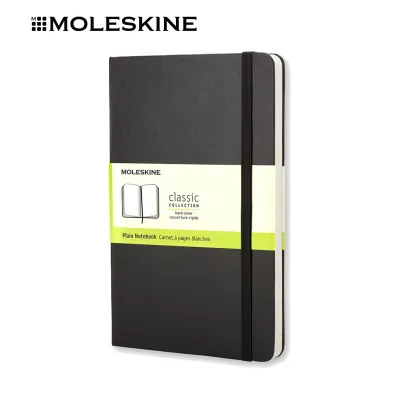
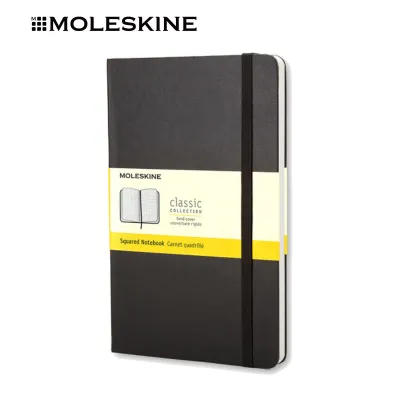
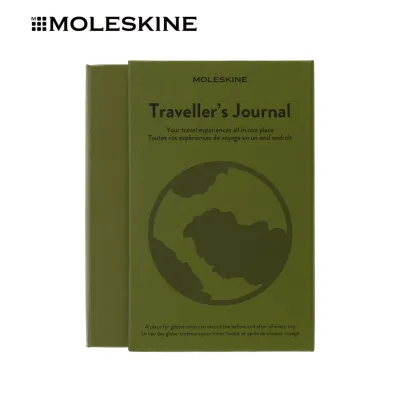
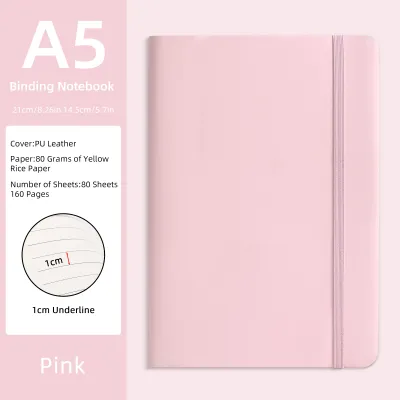
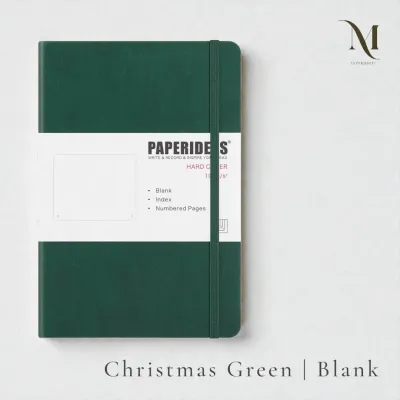
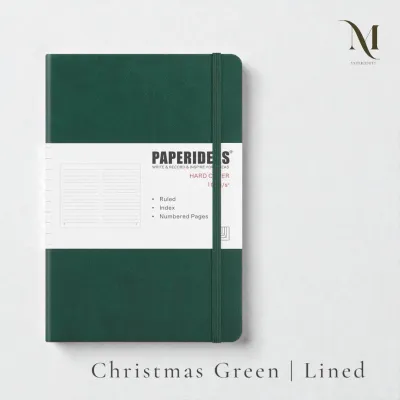
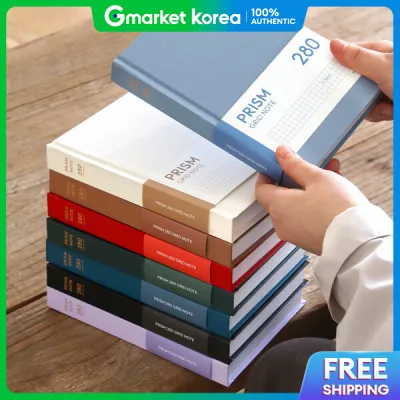
Prices are valid at publication and may change. Please refer to the product page for the latest price.
Sizing refers to the chemical treatments applied to paper during manufacturing to control its liquid absorption. Internal sizing is mixed directly into the paper pulp, while surface sizing is applied to the dried sheets to create a protective barrier. Without proper sizing, paper acts like a paper towel, rapidly drawing liquid ink into its fibers and causing the lines to spread out into fuzzy, spiderweb-like patterns known as feathering.
The surface texture, or “tooth,” of the paper dictates how much friction you feel as your pen glides across the page. Highly calendered papers are pressed between heavy rollers during manufacturing to create an ultra-smooth, almost glossy finish that minimizes drag. Conversely, uncoated papers retain a natural, microscopic texture that provides tactile feedback, which can significantly alter your writing speed and control depending on the instrument you use.
Paper color is another crucial dimension that affects both visual contrast and eye comfort during long writing sessions. Bright white papers reflect a high amount of light, making colored inks appear vibrant and true to tone, though this high contrast can lead to eye strain under bright desk lamps. Cream, ivory, and off-white shades soften the reflected light, offering a warmer, more comfortable background that is gentler on the eyes over extended periods.
Matching Paper Properties to Your Pen and Ink Type
Fountain pens and wet rollerballs deposit a relatively large volume of water-based ink onto the page, requiring paper that can handle moisture without failing. To prevent this ink from soaking through the sheet, you need paper with high surface sizing and a moderate-to-heavy weight, typically between 80 GSM and 120 GSM. Coated papers are particularly excellent for fountain pens because they keep the ink on the surface, allowing unique ink properties like shading and metallic sheen to develop fully as the liquid evaporates.

Gel pens and fine-liners utilize water-based or pigment-based inks that flow easily but require a balance of absorption and drying speed. If you write on highly coated, non-absorbent paper with a gel pen, the ink will pool on the surface and remain wet for a long time, leading to accidental smudges when you turn the page or rest your hand. For these everyday pens, a smooth, uncoated paper around 80 GSM to 90 GSM provides enough absorption to dry the ink within seconds while maintaining clean, sharp lines.
Ballpoint pens rely on thick, oil-based inks that require physical pressure to transfer from the rotating ball to the page. If the paper surface is too slick or heavily coated, the ballpoint tip may slide without spinning, resulting in skipped lines and uneven ink distribution. A paper with a slight texture or a standard uncoated finish provides the necessary friction to keep the ball rolling smoothly, ensuring a consistent line with minimal hand fatigue.
Pencils, colored pencils, and charcoal require a distinct paper texture to function effectively, as these dry mediums rely on friction to shave microscopic particles off the core. Ultra-smooth, coated papers lack the necessary tooth to grip graphite, resulting in faint, slippery lines that are difficult to read and easy to smudge. For sketching or pencil journaling, look for medium-weight, uncoated papers with a visible texture that can hold the dry pigments securely within the fibers.
How to Verify Paper Quality Before and After Purchase
When shopping for a hardcover notebook online or in a stationery boutique, start by carefully reading the manufacturer’s technical specifications. High-quality brands will explicitly list the GSM, the paper origin, and whether the paper is acid-free or archival-grade. Acid-free paper is manufactured with a neutral or slightly alkaline pH, which prevents the pages from yellowing, becoming brittle, or deteriorating over decades of storage.
If you are able to inspect the notebook in person, take a close look at the physical construction and binding quality. Open the notebook to the center and check if the pages are sewn together in sections, a method known as Smyth-sewn binding, which allows the book to lay completely flat on your desk. Avoid notebooks that rely solely on thick layers of stiff glue along the spine, as these are difficult to keep open and are prone to cracking, which can cause individual pages to fall out over time.
Gently run your fingers across the pages to assess the smoothness and consistency of the paper surface. Hold a single page up to a light source to examine the fiber distribution, looking for a uniform, even appearance rather than a blotchy or cloudy pattern. A uniform fiber distribution ensures that ink will absorb consistently across the entire page, preventing unexpected dry spots or localized bleeding.
Once you have purchased a notebook, perform a controlled ink test on one of the very last pages before committing to daily use. Write a few lines with each of your favorite pens, varying your writing speed and pressure, and draw a small solid block of ink with your wettest pen. Allow the ink to dry completely, then inspect the page for feathering, flip the sheet to check for ghosting, and look closely for any physical ink spots that have bled through to the next page.
Decision Framework: Choosing the Right Hardcover Notebook
To find the ideal hardcover notebook, align your primary writing instrument with the specific paper characteristics that support it. If you write exclusively with fountain pens or wet rollerballs and enjoy using both sides of the page, prioritize notebooks with heavy, coated paper ranging from 90 GSM to 120 GSM. This combination ensures that your ink remains crisp, colors stay vibrant, and the reverse side of the page remains entirely clean and usable.
For those who prefer the convenience of ballpoint pens or fine gel pens and need a portable notebook for daily commuting, a lighter paper between 70 GSM and 80 GSM with a smooth, uncoated finish is highly practical. These papers dry almost instantly, minimizing the risk of smudging when you close the notebook quickly, and they keep the overall weight of the hardcover book manageable in a bag.
If your creative work involves high-saturation markers, heavy brush pens, or light watercolor washes, standard notebook paper will likely struggle to handle the moisture. In these scenarios, look for specialized notebooks featuring heavy-weight mixed-media paper, and verify the retailer’s return policies or check user-submitted tests regarding marker bleed-through before making a purchase.
When evaluating the price-to-value ratio of a hardcover notebook, consider the cost in S$ relative to the page count, binding durability, and paper performance. A premium hardcover notebook priced between S$25 and S$45 should offer a durable sewn binding and high-grade paper that resists feathering under normal use. If a notebook carries a high price tag but uses cheap glued binding or thin paper that bleeds with basic gel pens, the value proposition is low, regardless of how attractive the cover design appears.
Frequently Asked Questions (FAQ)
Does a higher GSM always mean better paper quality?
No, a higher GSM does not automatically guarantee a superior writing experience. While a higher GSM makes the paper thicker and more opaque, preventing ghosting, it does not control how the ink behaves on the surface. If the paper lacks proper sizing or coating, even a thick 120 GSM page can suffer from severe feathering, causing your fine pen lines to look fuzzy and bloated. Additionally, very high GSM paper makes a hardcover notebook significantly heavier and bulkier, reducing its portability for daily carry. The quality of the raw pulp and the surface treatment are far more critical for ink performance than weight alone.
How can I prevent ghosting when writing on both sides of the page?
To minimize ghosting, you can adjust your writing tools and techniques to reduce the amount of ink absorbed by the paper. Using a finer pen nib or a drier ink formulation reduces the volume of liquid deposited on the page, which immediately lowers visibility on the back. You can also place a dark-colored blotter sheet or a piece of heavy cardstock directly behind the page you are writing on; this absorbs excess pressure and prevents the shadow of the writing from catching the light. Ultimately, selecting a notebook with higher opacity or a cream-colored page can also make ghosting less noticeable to the eye.

Community discussion
Share your experience or ask a question. Comments are reviewed before publication.