
Kakao Friends notebooks are highly popular for their charming character designs featuring beloved figures like Ryan, Apeach, Neo, and Muzi. However, stationery enthusiasts know that a cute cover is only half the equation; the paper quality inside determines how enjoyable the notebook is for daily writing. Because these notebooks are produced across various collections, licensing agreements, and manufacturing batches, the paper weight, texture, and ink compatibility can vary dramatically. Choosing the right notebook requires looking beyond the cover illustration to evaluate the physical properties of the pages. By understanding how these collections are structured and matching their specifications to your writing tools, you can find a notebook that looks delightful and performs beautifully with your favorite pens.
Understanding Kakao Friends Notebook Collections
Kakao Friends stationery items are released in diverse formats, ranging from standard character-themed school notebooks to premium collaborative editions and functional daily planners. The paper specifications within these lines are rarely uniform. Instead, the paper quality often depends on the specific release year, the manufacturing partner, and the intended purpose of the collection. For instance, a notebook designed for quick, casual notes may use lighter paper than a structured journal meant to last a full year.
Standard character-themed lines are typically designed for casual note-taking, quick lists, or schoolwork. These notebooks often prioritize lightweight portability and vibrant cover art, which sometimes means they feature thinner paper suited for basic ballpoint pens. Because these are mass-produced to keep them accessible, the paper characteristics can change from one batch to another depending on the factory of origin.
Products mentioned in this guide
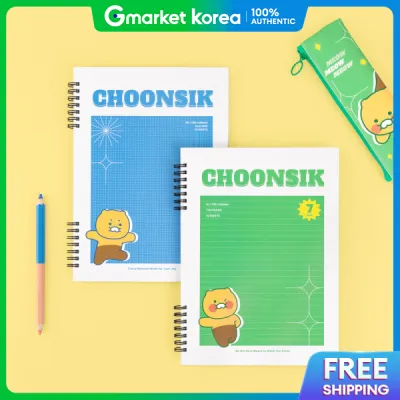
Prices are valid at publication and may change. Please refer to the product page for the latest price.
Premium collections, limited-edition collaborations, and structured planners often utilize thicker, higher-grade paper. These editions are tailored for individuals who use a wider variety of writing instruments, including gel pens, brush pens, and light markers. When researching these notebooks on an online marketplace, it is essential to check the specific product SKU or collection name rather than assuming all items featuring a specific character share the same paper quality.
Key Paper Specifications to Check on the Label
To determine how a Kakao Friends notebook will handle your writing, you must look closely at the paper specifications listed on the packaging or product detail page. The most critical metric is the paper weight, measured in grams per square meter (GSM). Standard notebooks often range from 70 GSM to 80 GSM, which is ideal for light, everyday writing, while premium editions may feature 100 GSM to 120 GSM to provide a sturdier writing surface that resists ink penetration.

The color of the paper also plays a significant role in your writing experience and eye comfort. Bright white paper offers high contrast, making colorful gel pens stand out vividly, but it can cause eye strain during long study sessions under bright desk lamps. Off-white and cream-colored pages offer a softer background that reduces glare, which is often preferred for journaling, creative writing, and extended reading.
Surface texture, or the “tooth” of the paper, affects how your pen glides across the page. Very smooth paper allows gel pens and ballpoints to slide effortlessly, which can increase writing speed but may slightly extend drying times for wet inks. Toothy paper has a subtle roughness that provides tactile feedback, which is highly satisfying for pencil users and helps control the flow of ink from fountain pens.
Matching Paper Traits to Your Preferred Pens
Your choice of writing instrument should directly influence the type of Kakao Friends notebook you select. Everyday ballpoint pens and standard gel pens are highly versatile and perform exceptionally well on almost any paper weight. If you primarily use these tools, a standard 75 GSM or 80 GSM notebook will provide a smooth, reliable surface without adding unnecessary bulk or weight to your bag.
Fountain pens and wet rollerball inks require much more robust paper characteristics to prevent feathering and bleed-through. For these instruments, look for premium notebook lines that specify a higher GSM and a surface treatment designed to resist ink absorption. Without these traits, wet inks can spread across the paper fibers, creating fuzzy lines and ghosting on the reverse side of the page, making it impossible to write on both sides.
Highlighters and felt-tip markers also demand careful paper matching. Standard notebook paper can easily allow heavy ink applications to bleed through to the next page, ruining clean notes and layouts. If you rely on color-coding or bullet journaling with markers, prioritizing a notebook with thicker, denser pages is crucial for maintaining clean, readable layouts.
How to Verify Paper Performance Before Buying
When shopping online through an ecommerce platform, verifying paper quality requires a bit of detective work. Look closely at the product description for explicit mentions of paper weight, page count, and paper origin. If the listing lacks these details, searching for the specific model number or SKU on official stationery forums or collector blogs can often reveal the exact specifications.
User reviews and customer-uploaded photos are invaluable resources for assessing real-world performance. Look for close-up images of the back of a written page to check for ghosting or show-through under normal lighting conditions. Reviewers often share their experiences with different pen types, providing practical insights into how the paper behaves with various inks and whether it tends to tear easily.
If you are browsing in a physical stationery shop, you can perform a few quick, non-destructive checks. Hold a page up to the light to assess its opacity; more opaque paper is less likely to suffer from distracting show-through. Gently run your fingertips over the page to feel the grain, and flex the spine to ensure the binding allows the notebook to lie flat for comfortable writing without cracking.
Making Your Final Selection
Selecting the perfect Kakao Friends notebook comes down to balancing your aesthetic preferences with your functional writing needs. If you prioritize portability, lightweight design, and casual writing with ballpoint pens, the standard character lines offer excellent value and a wide variety of cute covers. These are perfect for quick reminders, school notes, or daily task lists where paper thickness is not a primary concern.
For those who enjoy using fountain pens, heavy gel pens, or creative layouts with highlighters, investing in premium editions or structured planners is the better path. While these options may carry a higher price tag, the thicker paper ensures your writing remains clean and legible on both sides of the page. This prevents the frustration of ruined pages and allows you to enjoy the artwork without compromising on usability.
Finally, consider how the binding style affects your writing habits. A lay-flat thread binding is highly recommended for long journaling sessions, as it allows you to write comfortably near the center spine without fighting the pages. Spiral-bound notebooks offer excellent flexibility for sketching on the go, while perfect-bound options are sleek but may require some effort to keep open during extended writing sessions.
Frequently Asked Questions (FAQ)
Do all Kakao Friends notebooks use the same paper weight?
No, paper weight and quality vary significantly across the Kakao Friends stationery catalog. The specifications depend on the specific collection, the manufacturing batch, and the target price point of the product. It is always best to verify the GSM rating for each individual notebook rather than assuming all character-themed lines perform identically.
Are Kakao Friends notebooks suitable for watercolor or heavy mixed media?
Standard Kakao Friends notebooks are not designed to handle watercolor or heavy wet media. The paper in these collections is typically optimized for dry writing instruments and standard inks, meaning wet paint will cause the pages to warp, buckle, and bleed. For mixed-media projects, look for dedicated sketchbooks or art pads with heavy, high-GSM paper specifically rated for wet techniques.

Community discussion
Share your experience or ask a question. Comments are reviewed before publication.