
Identifying the best paper quality in a children stationery set requires looking past bright cover designs and focusing on the physical characteristics of the paper itself. Because bundled stationery sets often prioritize visual themes and popular characters over technical paper specifications, the notebooks included can vary widely in performance. To find a notebook that handles fountain pens, gel pens, and heavy school use without messy bleed-through, parents and students must evaluate key physical indicators like paper weight, surface sizing, and texture.
In many school environments, students transition from pencils to ink pens as they progress through primary and secondary school. This transition demands paper that can handle liquid ink without turning a homework assignment into a smudged, illegible sheet. Furthermore, in humid tropical climates like Singapore, ambient moisture can naturally soften paper fibers over time, making low-quality paper even more absorbent and prone to ink feathering. Understanding how to evaluate these factors ensures that the notebooks in your child’s stationery set are actually fit for their daily academic tasks.
Understanding Paper Properties in Stationery Set Notebooks
Paper weight, measured in grams per square meter (GSM), is the most common indicator of paper thickness and density. Most standard notebooks bundled inside a children stationery set feature paper weights ranging from 60 GSM to 70 GSM. While this weight is perfectly adequate for graphite pencils and standard ballpoint pens, it is generally too thin to handle the high volume of liquid ink deposited by fountain pens or heavy gel pens. For a reliable writing experience with liquid inks, a paper weight of 80 GSM or higher is typically required to prevent the ink from soaking through to the opposite side.
Products mentioned in this guide
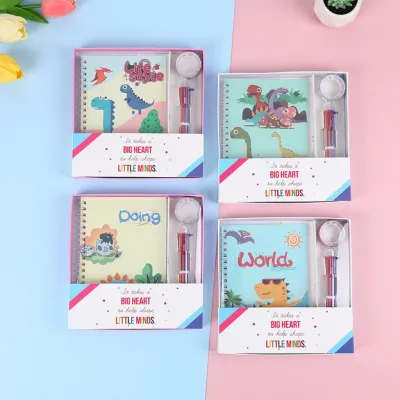
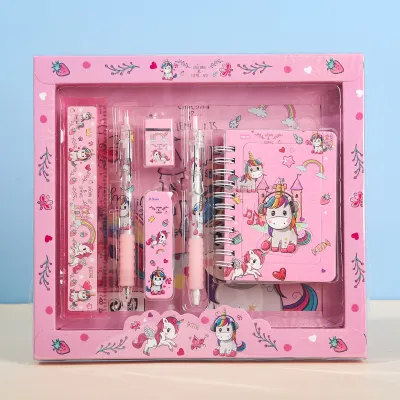
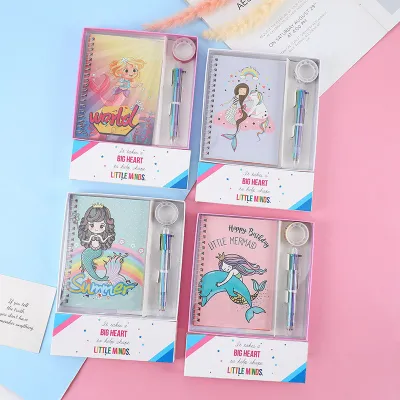
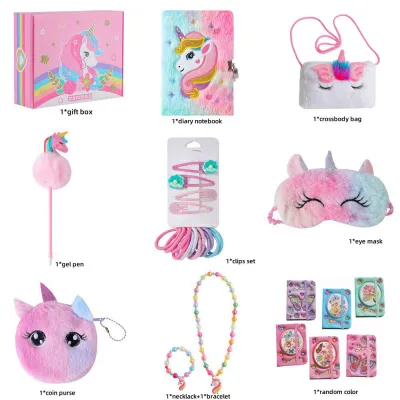
Prices are valid at publication and may change. Please refer to the product page for the latest price.
Beyond weight, the presence of surface sizing plays a critical role in how paper reacts to ink. Sizing is a chemical treatment applied during the paper manufacturing process to control absorbency. Unsized paper acts like a paper towel, drawing liquid ink rapidly into its fibers through capillary action, which causes the written lines to spread out and look fuzzy—a phenomenon known as feathering. Well-sized paper resists rapid liquid penetration, allowing the ink to sit on the surface and dry cleanly, preserving the sharp, crisp lines of the student’s handwriting.
It is also important to recognize that generic “fountain pen friendly” marketing labels on stationery sets are not universal guarantees. A paper that performs beautifully with a fine-nibbed fountain pen paired with a dry, quick-drying ink may still fail when subjected to a medium or broad nib dispensing a highly saturated, wet ink. Because stationery sets rarely list their exact sizing agents or GSM on the outer packaging, parents must rely on physical inspection and simple home testing rather than brand promises alone.
Core Dimensions for Evaluating Paper Quality
When comparing the notebooks found in various stationery sets, the first dimension to evaluate is the balance between ink absorption and drying time. Ideally, school paper should absorb ink quickly enough to prevent smudging when a student’s hand moves across the page, yet slowly enough to prevent the ink from spreading laterally. If the paper absorbs ink too slowly, left-handed students in particular will struggle with constant smearing; if it absorbs too quickly, the writing will lose its definition and bleed through the sheet.

This brings us to the crucial distinction between show-through and bleed-through. Show-through, often called ghosting, occurs when the writing on one side of the page is visible as a shadow on the reverse side, but the ink itself remains bound to the front surface. This is common in thin, high-quality papers and is generally acceptable for double-sided note-taking. Bleed-through, however, occurs when the ink physically penetrates the paper fibers and emerges as distinct spots or pools on the back of the page. True bleed-through makes writing on both sides of the sheet impossible and can ruin subsequent pages in the notebook.
Surface texture, or “tooth,” is the final core dimension to consider. The paper surface must strike a balance between smoothness and resistance. Extremely smooth, coated papers can feel pleasant to the touch, but they often cause gel pens to skip and fountain pens to suffer from “hard starts” because the nib cannot grip the surface to pull the ink down. Conversely, paper with too much tooth feels scratchy, catches fine pen tips, and can even trap loose paper fibers in the feed of a fountain pen, disrupting the ink flow during important school exercises.
How to Test and Verify Paper Before School Use
Before committing a new stationery set notebook to daily schoolwork, conducting a localized pen test is the most reliable way to verify its paper quality. Open the notebook to the very last page to avoid ruining any official work space. Have your child write a few sample sentences using the exact writing instruments they plan to use in class, including their preferred fountain pen, gel pen, highlighter, and pencil.
Once the sample lines are written, allow them to sit for a full minute to observe the drying speed. Next, examine the reverse side of the page under a bright desk lamp or near a window. Look closely for any pinpoint dots of ink that indicate the beginning of structural bleed-through. If you only see a faint shadow of the letters without any actual ink breaking through the surface, the paper is suitable for double-sided writing with that specific pen and ink combination.
Finally, test the paper’s structural integrity by writing a few words in pencil and erasing them firmly with a standard plastic eraser. Lower-quality paper found in cheap stationery sets will often pill, tear, or thin out dramatically under the friction of an eraser. If the paper fibers bunch up or the surface becomes rough and fuzzy after erasing, the notebook will not hold up well in subjects like mathematics or spelling, where frequent corrections are a normal part of the learning process.
Decision Framework: Matching Paper to Writing Needs
You should keep and use the notebooks included in your children stationery set if your child’s primary writing tools are graphite pencils, colored pencils, or standard ballpoint pens. These dry writing instruments do not rely on liquid solvents, meaning they will not cause feathering or bleed-through even on thin 60 GSM paper. Using the bundled notebooks for these purposes is highly economical and prevents perfectly usable stationery from going to waste.
Conversely, you should swap the set notebooks for dedicated, high-quality alternatives if your child’s school curriculum requires the daily use of wet fountain pens, broad gel pens, or water-based felt-tip markers. For these tools, look for standalone school notebooks that explicitly specify a paper weight of 80 GSM to 100 GSM and feature a smooth, satin finish. Investing in separate, high-quality paper for ink-heavy subjects reduces visual clutter on the page and helps students maintain neat, legible homework.
If the stationery set packaging lacks any technical specifications and you are unsure of the paper’s origin, always default to the verification test. Do not assume that a higher retail price for a themed stationery set automatically correlates with superior paper quality; often, the premium price reflects licensing fees for popular characters rather than the grade of the paper pulp used inside the notebooks.
Practical Adjustments When Set Notebooks Fall Short
If you find that the paper in your stationery set notebook is prone to mild bleed-through but you still want to use it, inserting a plastic writing board or a heavy sheet of cardstock directly beneath the active page is an excellent workaround. Often referred to as a pencil board or blotter sheet, this simple barrier absorbs any excess ink that penetrates the page, preventing it from staining the clean sheets underneath while providing a perfectly flat, stable writing surface.
Another effective adjustment is modifying the writing tools to match the limitations of the paper. If your child is using a fountain pen, try switching to an extra-fine or fine nib, which deposits significantly less ink onto the page than a medium or broad nib. Additionally, opting for a drier, fast-drying ink formula can dramatically reduce both feathering and bleed-through on lower-grade school paper. For gel pens, switching from a 0.7mm tip to a finer 0.5mm or 0.38mm tip will achieve a similar protective effect.
Lastly, consider repurposing the notebooks based on subject matter. Allocate the thinner, more absorbent notebooks from the stationery set for rough calculations, spelling drills, or drafting creative writing ideas where only one side of the page needs to be used. Save your premium, high-GSM standalone notebooks for formal assignments, language portfolios, and final project submissions where presentation and double-sided legibility are paramount.
Frequently Asked Questions (FAQ)
Can I use highlighters on standard notebooks from children's stationery sets?
Standard highlighters use water-based inks that deposit a significant amount of moisture onto the paper surface. On the typical 60 to 70 GSM paper found in many bundled stationery sets, this high moisture volume will often cause the highlighter ink to bleed through to the back of the page and smudge the underlying pen ink. To prevent this, always allow the base writing ink to dry completely before highlighting, apply the highlighter with a single light stroke rather than multiple passes, or switch to dry, wax-based highlighters which do not wet the paper fibers.
Does the binding type of a stationery set notebook affect paper quality?
No, the physical binding method—whether spiral-bound, thread-stitched, or glue-bound—has no direct impact on the chemical composition, weight, or ink resistance of the paper sheets inside. However, the binding type does significantly affect how flat the notebook lies when opened. Stitched or lay-flat bindings allow the student to write comfortably across the entire width of the page without having to apply excessive hand pressure near the center margin, which helps maintain a consistent pen angle and prevents sudden pools of ink that can lead to localized bleed-through.

Community discussion
Share your experience or ask a question. Comments are reviewed before publication.