
Finding the right money budget planner in Singapore requires looking beyond the cover design to the actual paper inside. Daily financial tracking involves frequent writing, quick calculations, and often color-coded highlighting, which can easily turn into a smudged mess on low-quality paper. The ideal planner must feature paper that balances ink absorption with drying speed, especially in Singapore’s humid climate where gel inks tend to linger wet on the page. By understanding paper specifications like weight, finish, and binding, you can select a notebook that keeps your financial records clean, legible, and intact for years to come.
Understanding Paper Specifications for Daily Expense Tracking
To choose a money budget planner that handles daily writing without turning into an illegible blur, you must first understand paper weight, measured in Grams per Square Meter (GSM). Standard office paper typically ranges from 70 GSM to 80 GSM, which is highly prone to ghosting—where writing is visible on the reverse side—and bleed-through, where ink actually leaks through the fibers. For financial tracking, where you write on both sides of a page, a minimum of 90 GSM is generally recommended, while 100 GSM to 120 GSM provides a sturdy, opaque canvas that easily handles heavy ink loads and highlighters.
The finish of the paper, ranging from highly coated and smooth to uncoated and toothy, directly dictates how your pen behaves. Smooth paper, often found in premium planners, reduces friction, allowing fine-tip gel pens and fountain pens to glide effortlessly. However, this smooth surface can significantly extend ink drying times because the ink sits on top of the paper rather than absorbing immediately. Conversely, toothy or textured paper absorbs ink rapidly, which prevents smudging but can cause fine lines to feather or spread, making small numbers harder to read.
Products mentioned in this guide
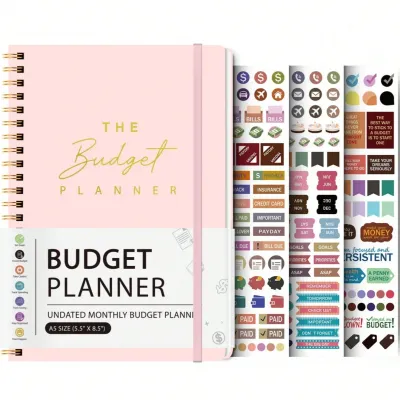
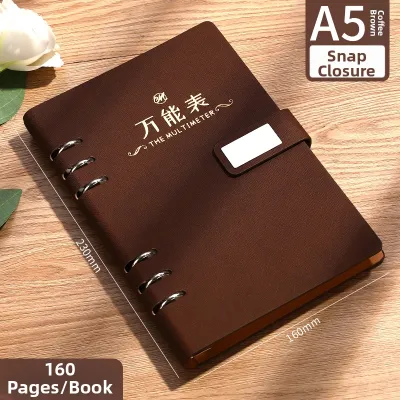
![[SG Ready Stock] A6 Currency Organizer Budget Planner Cash Envelope Savings Money 6 Holes Binder Creative Loose-leaf Notebook](https://img.lazcdn.com/g/p/2f981d6a7911f452ce259749145cdf15.jpg_400x400q80.jpg_.webp)
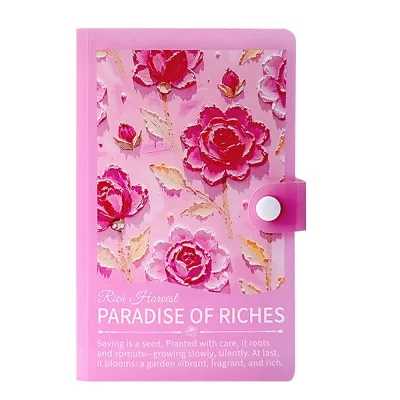
![[SG Ready Stock] A6 Currency Organizer Budget Planner Cash Envelope Savings Money 6 Holes Binder Creative Loose-leaf Notebook](https://img.lazcdn.com/g/p/f1e12806b5b43fedea81eadb2794ace9.jpg_400x400q80.jpg_.webp)
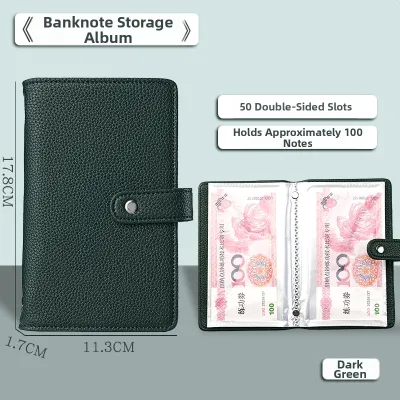
![[Can Hold 100 Sheets] Large Capacity Money Saving Book Genuine Leather Cash Binder Waterproof Financial Management Reusable Wallet-152c4c8b](https://img.lazcdn.com/g/p/aadb744c778406bd76c39a461ea27009.jpg_webp_400x400q80.jpg_.webp)
Prices are valid at publication and may change. Please refer to the product page for the latest price.
Your choice of writing instrument should dictate your paper selection. If you prefer gel pens (such as 0.5mm or 0.38mm tips) for precise numerical entry, you need a balanced paper that absorbs quickly enough to prevent hand-smudging as you move down a column of figures. Ballpoint pens are highly forgiving and work well on almost any paper weight, but they require more downward pressure, which can leave deep physical indentations on thin paper. Fountain pens and liquid-ink rollerballs demand high-density, well-sized paper to prevent the ink from spreading along the paper fibers.
Key Dimensions for Comparing Budget Planner Brands
When comparing different money budget planner options, the physical construction of the notebook is just as critical as the paper itself. The binding method determines how comfortably you can write near the margins and whether the book will stay open on your desk while you reference receipts or bank statements. Thread-sewn binding, often found in high-end journals, allows the notebook to lay completely flat without requiring you to hold the pages down. Spiral or wire-bound planners also lay flat and allow you to fold the book back on itself, though the central rings can sometimes obstruct your hand during writing. Glued or perfect-bound notebooks are the least ideal for tracking, as they tend to spring shut and require constant pressure to keep open.

The layout format of the pages shapes how you organize your financial data. Lined pages are excellent for chronological expense lists and traditional ledger entries, keeping your handwriting neat and aligned. Dot grid layouts offer a flexible middle ground, providing subtle alignment guides for drawing custom monthly budget charts, bar graphs, or savings trackers without the visual clutter of solid lines. Blank pages offer complete freedom but can make it challenging to maintain straight columns of numbers without a guide sheet underneath.
Because a budget planner is handled daily and often carried in a bag, cover durability is essential for protecting your records. Hardcover planners, made from thick cardboard wrapped in book cloth, leatherette, or vinyl, provide a stable writing surface when you are tracking expenses on the go without a desk. Softcover options are lighter and more flexible, making them easier to slip into a compact bag, but they are more susceptible to dog-eared corners and creasing over a twelve-month tracking cycle.
| Paper Finish | Binding Type | Best Pen Compatibility | Ideal Tracking Use Case |
|---|---|---|---|
| Smooth (Coated) | Thread-Sewn | Gel pens, fountain pens, fine-liners | Detailed monthly ledgers and multi-colored expense categorization |
| Toothy (Uncoated) | Spiral / Wire-Bound | Ballpoint pens, quick-dry gel pens | Rapid, on-the-go daily expense logging and receipt tallying |
| Medium (Satin) | Glued / Perfect-Bound | Standard ballpoint, hybrid ballpoint | Budget planning at a desk with minimal page-flipping |
Evaluating Notebook Categories by Paper Performance
Navigating the stationery aisle or online marketplaces requires a critical eye to separate marketing jargon from actual paper performance. Manufacturers often highlight terms like “ink-proof” or “premium quality” without providing technical specifications. To verify these claims, look closely at the product packaging or online specifications for the exact GSM rating and paper origin. High-quality paper mills in Japan and Europe are known for consistent fiber density, which prevents ink from spreading even on thinner sheets.
When selecting a planner, you must balance paper thickness against the overall weight and portability of the notebook. A 12-month planner featuring ultra-thick 120 GSM paper will be significantly heavier and bulkier than an 80 GSM counterpart. If you plan to keep your money budget planner permanently on your home desk, a heavier, high-GSM notebook is an excellent choice. However, if you need to carry the planner daily to log transactions immediately, a slimmer notebook with highly compressed, medium-weight paper (around 90 GSM) offers the best compromise between portability and ink resistance.
Premium and Specialty Stationery Brands
Premium and specialty stationery brands typically cater to enthusiasts who use a variety of writing instruments, including fountain pens, brush pens, and heavy highlighters. These notebooks often feature paper that has undergone specialized surface sizing—a manufacturing process where starch or other compounds are applied to the paper to control its absorbency. This sizing ensures that wet inks pool slightly on the surface rather than soaking deep into the fibers, resulting in crisp, sharp lines with zero feathering or bleed-through.
When evaluating premium options, check the product specifications for “acid-free” or “archival-grade” labels. Acid-free paper is processed using an alkaline technology that prevents the paper from yellowing, becoming brittle, or deteriorating over time. Since financial records and budget histories are often kept for several years for tax or personal reference, choosing archival-quality paper ensures that your written figures remain perfectly legible and the paper remains intact decades into the future.
Mass-Market and Everyday Office Brands
Mass-market and everyday office planners are widely available in local bookstores and department stores, offering a highly cost-effective solution for straightforward tracking. These notebooks typically feature paper weights ranging from 70 GSM to 80 GSM, which is optimized for standard ballpoint pens and fine-point gel pens. Because these papers are less dense and rarely feature specialized coatings, they absorb ink very quickly, which virtually eliminates smudging—a major benefit for left-handed writers or those who need to close their planner immediately after writing.
However, this high absorbency comes with a risk of ghosting and bleed-through, especially if you use wet gel pens, rollerballs, or broad-tipped highlighters. Before purchasing mass-market planners, particularly when sold in bulk packs where you cannot test the paper beforehand, inspect the paper against a bright light if possible to gauge its opacity. If the paper appears highly translucent, plan to use fine-tip ballpoint pens with dry ink formulas, and avoid using dark-colored highlighters to categorize your expenses.
How to Test Paper Quality Before Committing
Before you commit to writing an entire year’s worth of financial data in a new money budget planner, it is wise to perform a structured paper test on an inconspicuous page, such as the very last index or notes page. Start with a swipe test to evaluate ink drying times, which is particularly important in Singapore’s humid environment where moisture in the air can delay drying. Write a series of numbers using your preferred tracking pens, then immediately swipe your finger across the ink at intervals of one, three, and five seconds. This test will tell you exactly how long you must wait before turning the page or closing the notebook to avoid smudging your figures.
Next, conduct a bleed-through and ghosting assessment on the reverse side of your test page. Write normally on the front, applying your typical writing pressure, and use any highlighters or color-coding pens you plan to employ for expense categorization. Flip the page to inspect the back: “ghosting” appears as a faint shadow of your writing, which is generally acceptable if you can still read text written over it, whereas “bleed-through” occurs when actual spots of ink penetrate to the other side, rendering the reverse page unusable. If you observe significant bleed-through, you will need to adjust your pen choice or limit your writing to one side of each sheet.
If your preferred pens perform poorly during these tests—causing excessive feathering, bleeding, or smudging—it is best to stop testing and adjust your stationery pairing. Many notebook manufacturers provide recommended pen types or sell matching writing instruments optimized for their specific paper formulation. Alternatively, switching to a drier ballpoint pen or a finer gel pen tip (such as a 0.38mm needle point) can instantly resolve bleed-through issues on medium-weight paper without requiring you to discard the planner.
Choosing the Right Money Budget Planner for Your Needs
Selecting the ideal money budget planner depends entirely on your personal writing habits, your preferred tools, and how you intend to use the tracker. If you enjoy using fountain pens, wet gel pens, or multiple colors of highlighters to categorize your spending, prioritize a premium specialty brand featuring high-GSM, acid-free paper. This combination ensures that your detailed financial charts remain sharp, vibrant, and free from distracting bleed-through, providing an enjoyable and visually clean journaling experience.
If your primary goal is straightforward, cost-effective tracking and you prefer using standard ballpoint pens, a mass-market office brand is the most practical choice. The quick-drying nature of standard paper pairs perfectly with dry ballpoint inks, allowing you to log expenses rapidly without worrying about smudges. This approach keeps your financial tracking routine simple, highly portable, and budget-friendly, aligning your planning tools with your saving goals.
Regardless of the brand tier you choose, always verify that the notebook’s binding allows it to lay completely flat on your desk. Financial tracking often involves copying numbers from a phone screen or physical receipts, which requires both hands to be free for typing or sorting paper. A notebook that constantly tries to spring shut will quickly become a source of frustration, creating an unnecessary barrier to maintaining a consistent daily tracking habit.
Finally, if you find that physical paper testing reveals too many limitations for your workflow, or if you require instant calculations and automatic backups, a paper planner may not be the right fit. In such cases, consider transitioning to a hybrid tracking method—using a simple pocket notebook for quick daily notes alongside a digital spreadsheet—or adopting a digital-first budgeting application that eliminates paper-and-ink compatibility concerns entirely.
Frequently Asked Questions (FAQ)
Does thicker paper always mean better quality for budget tracking?
Not necessarily. While a higher GSM rating indicates thicker, heavier paper that is highly effective at preventing ink bleed-through, it does not guarantee a smooth or pleasant writing experience. The quality of paper for budget tracking also depends heavily on the fiber composition, the manufacturing process, and the surface treatment or sizing. A well-engineered 90 GSM paper with a high-quality satin finish can handle fountain pens and gel inks much better than a rough, poorly sized 120 GSM paper that causes ink to feather and spread.
How can I prevent ink from smudging in my expense tracker?
To minimize smudging in your money budget planner, pair your paper finish with the correct ink type. If your planner has smooth, coated paper, use fast-drying gel pens or hybrid ballpoint inks that set quickly on the surface. You can also place a sheet of blotting paper or a simple piece of cardstock under your hand as you write; this absorbs any excess oils from your skin and acts as a barrier to prevent wet ink from transferring to other parts of the page when you close the notebook.

Community discussion
Share your experience or ask a question. Comments are reviewed before publication.