
Magnet tape is an incredibly versatile tool in both home and professional environments, serving as the invisible link that transforms ordinary paper, signs, and lightweight tools into repositionable magnetic items. However, when comparing different brands, you will quickly find that performance is not uniform. A tape that holds securely in a dry, air-conditioned office may fail completely when applied to a classroom whiteboard or a warehouse shelf in Singapore’s humid climate. This variation exists because magnet tape is a composite product, combining a flexible magnetic strip with a pressure-sensitive adhesive backing.
To find the right product for your project, you must look beyond generic marketing claims like “super strong” or “industrial grade.” Instead, a systematic comparison requires evaluating the physical properties of the magnetic compound, the chemical formulation of the adhesive, and how these components interact with your target surfaces. By understanding these technical specifications and knowing how to perform simple verification tests, you can avoid the frustration of falling signs and peeling adhesives.
Decoding Magnetic Strength Specifications
When comparing the magnetic capability of different tape brands, the first technical specification to analyze is the physical dimension of the tape, specifically its thickness and width. Magnetic pull force is directly proportional to the volume of magnetic material present. Thicker tapes contain a higher concentration of strontium or barium ferrite powder embedded within the flexible polymer matrix. Consequently, a 1.5mm thick tape will inherently offer greater holding power than a 0.5mm thick tape of the same width. Width also plays a critical role; a wider tape increases the contact surface area, distributing the weight of the mounted object and reducing the likelihood of shear failure.
Products mentioned in this guide
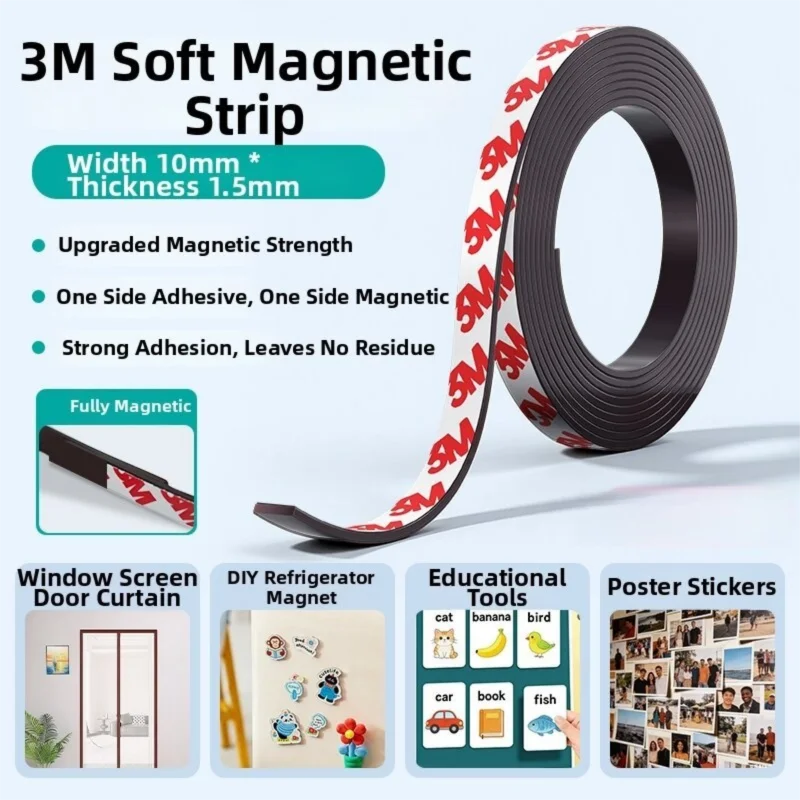
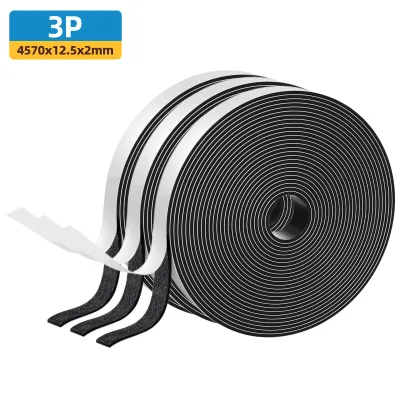
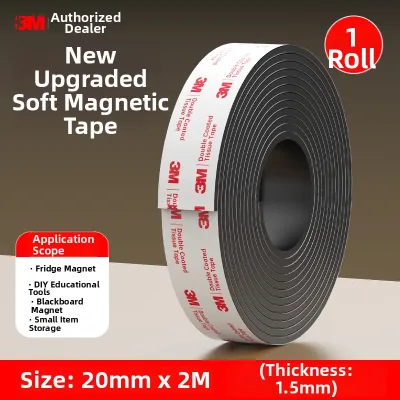
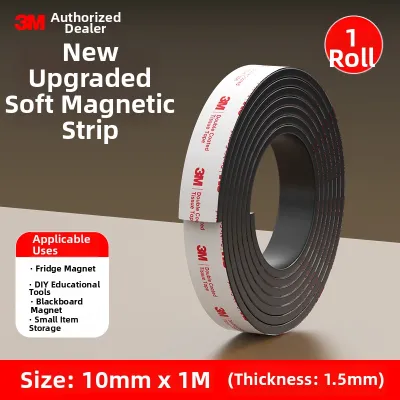
Prices are valid at publication and may change. Please refer to the product page for the latest price.
Beyond physical dimensions, the internal magnetic structure determines how the tape behaves. Most consumer-grade magnet tapes are isotropic, meaning the magnetic particles are unaligned during manufacturing and then magnetized in a multi-pole pattern on one face. This multi-pole configuration consists of alternating north and south magnetic poles running in parallel stripes along the length of the tape. Isotropic tapes are highly flexible, easy to cut with standard stationery scissors, and highly suited for lightweight applications such as paper crafts, calendar markers, and lightweight plastic labels.
For demanding applications, some brands offer anisotropic magnet tapes. During the manufacturing of anisotropic tape, the magnetic particles are aligned using an external magnetic field before the polymer matrix cures. This alignment allows the tape to be magnetized with a much higher magnetic flux density, resulting in significantly stronger pull force—often up to double the strength of standard isotropic tape of equivalent thickness. However, anisotropic tape is stiffer, more resistant to bending, and typically requires heavy-duty shears or a utility knife to cut cleanly.
To make an objective comparison between brands, locate the technical data sheets or packaging specifications for pull force ratings. Reliable manufacturers express this value in grams or kilograms per square centimeter, or as a dead-weight holding capacity per linear meter. Some industrial brands may also list the magnetic flux density in Gauss. When comparing these figures, ensure you are comparing identical testing conditions; a rating tested against a thick, flat steel plate will always be higher than the actual holding power achieved when mounting an object to a thin, painted metal surface or a magnetic whiteboard.
Evaluating Adhesive Quality and Surface Compatibility
A magnet tape is only as reliable as its adhesive backing. Even if the magnetic strip has exceptional holding power, the tape will fail if the adhesive layer peels away from the mounted object. Different brands utilize distinct adhesive chemistries, primarily categorized into acrylic-based, rubber-based, and silicone-based formulations. Understanding these chemical differences is essential for matching the tape to your specific substrate and environmental conditions.

Acrylic-based adhesives are highly regarded for their long-term durability, excellent UV resistance, and reliable performance in warm, humid environments. In Singapore, where relative humidity levels frequently exceed 80% in non-air-conditioned spaces, acrylic adhesives are highly recommended. They form a permanent, chemical bond that actually strengthens over the first 24 to 72 hours after application. While they have lower initial tack—meaning they do not feel incredibly sticky to the touch immediately upon liner removal—their resistance to shear stress and environmental degradation makes them suitable for long-term displays and outdoor applications.
Rubber-based adhesives, conversely, offer exceptionally high initial tack. They bond instantly to a wide variety of surfaces with minimal pressure, making them highly convenient for quick stationery projects, school crafts, and temporary indoor signage. However, rubber-based adhesives are highly sensitive to temperature fluctuations, UV exposure, and moisture. Over time, exposure to Singapore’s ambient heat and humidity can cause the rubber polymer to break down, leading to a sticky, oily residue and eventual bond failure.
Surface texture and porosity also dictate adhesive performance. Smooth, non-porous surfaces like glass, acrylic, and painted metal provide an optimal contact area for thin, high-performance adhesives. Porous surfaces, such as raw wood, cardboard, or textured plaster walls, require a thicker adhesive layer or a conformable foam-backed adhesive that can flow into the microscopic voids of the material. When comparing brands, check the product specifications to see if the adhesive is rated for textured or porous substrates.
Before purchasing or applying a roll of magnet tape, inspect it for physical signs of adhesive degradation. High-quality brands package their rolls with protective liners that prevent air exposure. If you observe adhesive “oozing” from the sides of the roll, a dry or brittle texture along the edges, or “telescoping” (where the inner layers of the roll push outward), the adhesive has likely degraded due to poor storage conditions or age. Such tape should not be used for critical mounting tasks.
Practical Tests to Verify Holding Power and Adhesion
Because laboratory testing conditions rarely match real-world environments, performing practical, low-risk tests on your selected magnet tape is the most reliable way to verify performance before committing to a large project. These tests allow you to evaluate both the magnetic pull force and the adhesive bond strength under your specific operating conditions.
To conduct a standardized shear and peel test, prepare a clean, flat test surface—such as a steel cabinet or a whiteboard—by wiping it with isopropyl alcohol to remove dust and oils. Cut a 10-centimeter strip of the magnet tape and apply it to the back of a rigid test block, such as a small acrylic plate. Press firmly along the entire length of the tape to activate the pressure-sensitive adhesive, and allow it to cure according to the manufacturer’s instructions (ideally 24 hours for acrylic adhesives).
To test shear strength, mount the test block vertically on the steel surface and gradually suspend known weights from it. Note the maximum weight the tape can support before it begins to slide downward. To test peel strength, apply a perpendicular force to the test block to determine how easily the magnetic connection is broken. This simple test establishes a clear baseline of the tape’s real-world capacity, allowing you to calculate exactly how many centimeters of tape are required to support your target object safely.
After completing the weight test, carefully peel the adhesive backing off the test block to evaluate its clean-release properties. High-quality temporary tapes should peel away cleanly without tearing the substrate or leaving a sticky, difficult-to-remove residue. If you are testing a permanent tape, the adhesive should resist removal, and attempting to peel it should result in cohesive failure (the adhesive splitting) or damage to the substrate, indicating a strong, secure bond.
Establish clear stop conditions during your testing phase. If the magnet tape slides under its own weight, or if the adhesive backing begins to lift from the test block within the first few hours of application, halt the test immediately. These failures indicate that either the surface preparation was insufficient, the substrate is incompatible with the adhesive chemistry, or the weight of the object exceeds the physical limits of the tape. Do not attempt to compensate by simply adding more tape without addressing the root cause of the failure.
Decision Framework: Matching Tape Specifications to Your Project
Selecting the right magnet tape is a matter of matching the physical demands of your project with the technical specifications of the tape. By using a structured decision framework, you can ensure that your installation remains secure without overspending on unnecessary industrial-grade materials.
For heavy-duty or long-term installations—such as mounting heavy acrylic photo frames, wooden display boards, or lightweight tools onto steel surfaces—opt for a thick, anisotropic magnet tape. This tape should be paired with a high-performance, permanent acrylic adhesive backing. Ensure that both the target object and the mounting surface are completely flat, clean, and non-porous to allow the acrylic adhesive to achieve its maximum bond strength over its curing period.
For lightweight, temporary, or highly flexible applications—such as creating repositionable whiteboard labels, classroom teaching aids, laminated paper crafts, or seasonal menu boards—a standard isotropic magnet tape is the most practical choice. Look for a tape with a rubber-based adhesive backing, which provides immediate adhesion to paper and plastic laminates without requiring a lengthy curing process. The high flexibility of isotropic tape also ensures it can be easily cut with standard office scissors and will conform to slight surface irregularities.
If your project involves challenging environmental conditions—such as wrapping the tape around tight curves, exposure to direct sunlight near windows, or placement in non-air-conditioned outdoor areas—always verify the manufacturer’s specific environmental ratings. For curved surfaces, choose a thinner, highly flexible tape, as stiff tapes possess a “material memory” that will constantly exert an outward force, eventually pulling the adhesive away from the surface. If the application involves critical safety loads, high-value items, or potential hazards, consult the manufacturer’s technical guidelines and professional installation standards before proceeding.

Community discussion
Share your experience or ask a question. Comments are reviewed before publication.