
Finding the perfect lined notebook is not about chasing a single, universally superior brand. Instead, the ultimate writing experience depends entirely on the compatibility between your specific pen, your chosen ink, and the paper’s physical characteristics. A notebook that feels luxurious with a standard ballpoint might feather uncontrollably under a fountain pen, while a highly coated paper designed for wet inks might cause gel pens to smear endlessly.
To evaluate paper quality beyond marketing buzzwords, you must understand three core technical metrics: weight, sizing, and tooth. Weight is measured in grams per square meter (GSM), which directly influences the paper’s opacity, thickness, and resistance to ink bleeding through to the other side. Sizing refers to the chemical treatments applied to paper fibers during manufacturing to control how much liquid they absorb, preventing ink from spreading outward (feathering). Tooth represents the surface texture of the paper, which dictates how much friction you feel as your pen moves across the page.
Matching Paper Traits to Your Preferred Pens and Inks
Fountain pens require paper that can handle a high volume of liquid ink without failing. If you write with a fountain pen, look for paper with a higher GSM and specialized surface sizing. These treatments keep the ink on top of the page, allowing shading and sheen properties to emerge while preventing the ink from bleeding through or feathering into fuzzy lines.
Products mentioned in this guide
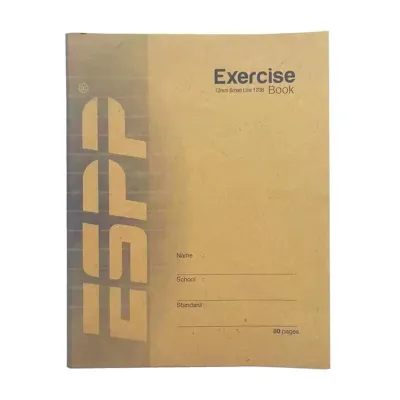
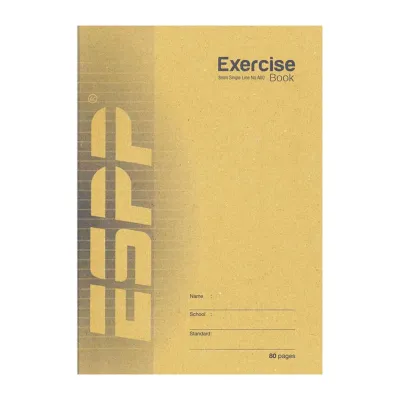
Prices are valid at publication and may change. Please refer to the product page for the latest price.
Gel and rollerball pens use water-based or gel-based inks that flow more freely than oil-based inks. For these instruments, you must balance surface smoothness with drying speed. Extremely smooth, heavily coated papers can cause gel ink to pool and smear under your hand, especially in humid climates like Singapore. A moderately sized paper with a slightly faster absorption rate keeps your lines crisp and dry.
Ballpoint pens and graphite pencils are highly versatile and work well on almost any standard paper. Because ballpoint ink is oil-based and dry, it rarely bleeds or feathers, making high-GSM paper unnecessary. For pencils, a paper with a slight tooth or texture is actually preferred, as it provides the friction needed to wear down the graphite and leave a clear, dark mark.
Comparing Lined Notebook Categories by Paper Characteristics
To simplify your search, lined notebooks can be grouped into distinct categories based on their weight and surface treatments. Understanding these categories helps you match your writing habits to the right notebook class.

Standard Everyday Notebooks (70–80 GSM)
Standard everyday notebooks typically feature paper weights ranging from 70 to 80 GSM. These notebooks are highly practical for quick note-taking, lecture logging, and daily journaling. They perform exceptionally well with dry-ink instruments, low-flow ballpoint pens, and standard pencils, offering a lightweight and portable solution for school or office use.
However, these lighter sheets have clear physical limitations. If you use wet gel pens, rollerballs, or fountain pens, you will likely experience significant show-through (ghosting), where the writing on one side is highly visible on the reverse. In worse cases, the ink may bleed entirely through the sheet, making double-sided writing impossible.
When shopping in this category, check the product labels for specific quality indicators. Look for terms like “acid-free,” which ensures the paper will not yellow or degrade over time. Some manufacturers also specify high brightness ratings or enhanced opacity treatments, which can help mitigate ghosting even at lower weights.
Premium and Fountain-Pen-Friendly Notebooks (90–120+ GSM)
Premium notebooks utilize heavyweight papers, generally starting at 90 GSM and extending up to 120 GSM or more. These papers often undergo specialized coating processes to create a highly smooth, ink-resistant surface. This construction is ideal for heavy ink saturation, broad nibs, and double-sided writing, as it virtually eliminates bleed-through and ghosting.
The structural integrity of heavyweight paper also makes it excellent for archival purposes. Your notes and sketches remain pristine for years without the paper fibers breaking down or absorbing atmospheric moisture. This durability is particularly valuable if you keep long-term journals or professional records.
Despite these benefits, premium paper comes with distinct trade-offs. Heavyweight sheets make the notebook significantly thicker and heavier to carry in a bag. Furthermore, highly coated premium papers slow down ink drying times considerably, which can lead to accidental smudging if you write quickly or are left-handed. They also carry a higher retail cost, often priced at S$15 to S$30 or more depending on the binding.
Practical Testing and Verification Before Committing
Before committing to a new notebook for your daily routine, you can perform a few simple, low-risk tests to verify its paper quality. If you have already purchased the notebook, dedicate the very last page to an ink test. Draw a series of solid lines, heavy dots, and quick scribbles using your favorite pens to see how the paper handles different ink volumes.
Observe the test page closely for feathering, which looks like ink spreading sideways into tiny spiderweb patterns. Flip the page over to check for bleed-through and ghosting. If the ink has soaked through to the other side, or if the shadow of your writing is distracting, the paper is not suited for double-sided use with that specific pen.
Next, inspect the physical construction of the notebook itself. Examine the printed lines to ensure they are consistent in darkness and spacing across every page. Check that the margins align properly and that the lines do not run awkwardly into the binding, which can make writing near the spine difficult.
Finally, always check the return policy of the stationery shop or online marketplace before buying. Many retailers allow returns on unused notebooks, but once you write on a page, it may no longer be eligible for a refund. Performing a gentle pencil test or inspecting a display model in-store can save you from investing in incompatible paper.
Decision Framework: Choosing the Right Lined Notebook
To finalize your choice, consider your primary writing tools and how you plan to use the notebook. If you prioritize portability, write mostly with ballpoint pens or pencils, and do not mind writing on only one side of the page, a standard 70–80 GSM notebook is the most practical and cost-effective option.
If you write with fountain pens, wet gel pens, or fine-liner markers, invest in a premium 90+ GSM coated notebook. This choice ensures your lines remain sharp, colors stay vibrant, and both sides of every page remain fully usable without distracting ghosting.
Be sure to verify your ink type if you use specialized formulas like iron gall, shimmering inks, or highly saturated pigment inks. These specialized liquids can react unpredictably with certain synthetic paper coatings, sometimes resisting the surface entirely or taking hours to dry. Testing a small sample sheet is the only reliable way to guarantee compatibility.
Frequently Asked Questions (FAQ)
Does a higher page count always mean better paper quality?
No, a higher page count does not indicate better paper quality. Page count simply refers to the total number of sheets bound into the notebook, which dictates its thickness and writing capacity. Paper quality is determined by entirely different factors, including the raw fiber source, the weight (GSM), and the surface sizing or coatings applied during manufacturing. A thick notebook with 300 pages of cheap, uncoated 60 GSM paper will perform much worse with wet inks than a slim, 48-page notebook featuring premium 100 GSM fountain-pen-friendly paper.
How does line spacing and ruling style affect the writing experience?
Line spacing directly shapes how you write and which pens you can comfortably use. Narrow ruling (typically 5mm to 6mm) is excellent for small, precise handwriting and fine-tip pens, such as 0.38mm gel pens or extra-fine fountain pens. Medium or college ruling (around 7mm) offers a versatile middle ground for standard handwriting. Wide ruling (8mm or more) accommodates larger, bolder handwriting and works best with broad pen nibs or thick markers, preventing your letters from crowding together and becoming illegible.

Community discussion
Share your experience or ask a question. Comments are reviewed before publication.