
Grid paper quality varies significantly across notebook brands available in Singapore, primarily driven by differences in paper weight, surface treatment, and printing techniques. Because there is no single “best” brand for everyone, the right choice depends entirely on the pens you use and your specific writing or drawing needs. This guide breaks down the core quality dimensions and provides a practical framework to evaluate and select the ideal grid notebook for your workflow.
In Singapore’s humid climate, paper can absorb ambient moisture over time, which alters how it interacts with ink. This environmental factor makes understanding paper specifications and surface treatments even more critical for local students, designers, and professionals. By matching your writing tools to the physical properties of the paper, you can avoid common frustrations like ink feathering, bleed-through, and distracting grid lines.
Key Dimensions for Evaluating Grid Paper Quality
Paper weight, measured in grams per square meter (GSM), is the most common specification you will encounter when comparing notebooks. Standard office paper typically ranges from 70 GSM to 80 GSM, which is sufficient for basic note-taking with ballpoint pens. Premium notebooks often feature paper weights of 90 GSM to 120 GSM, providing a thicker, more opaque sheet that resists tearing and reduces “ghosting”—the phenomenon where writing is visible on the reverse side of the page.
Products mentioned in this guide
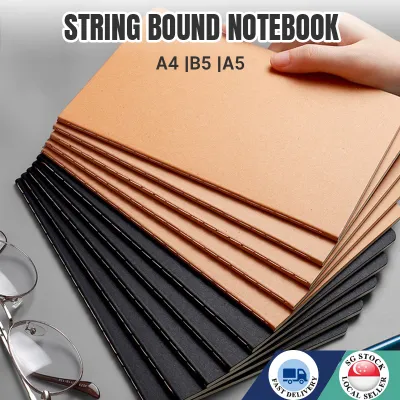
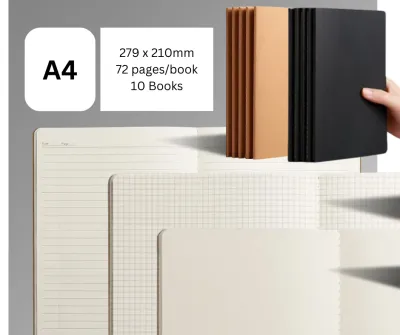
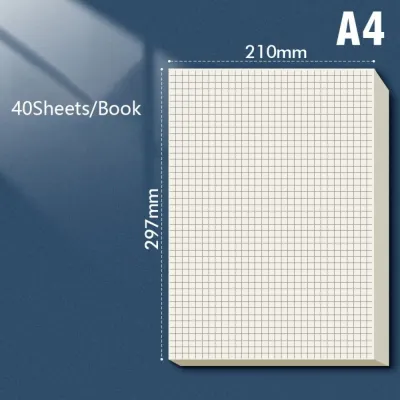
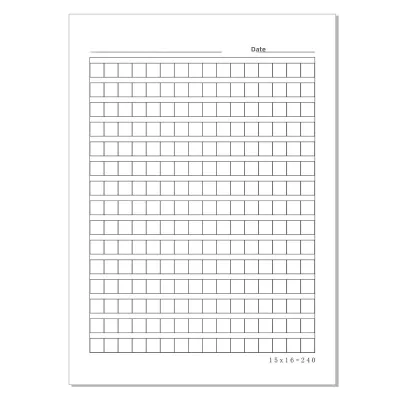
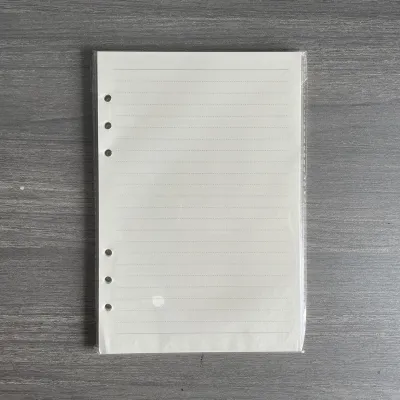
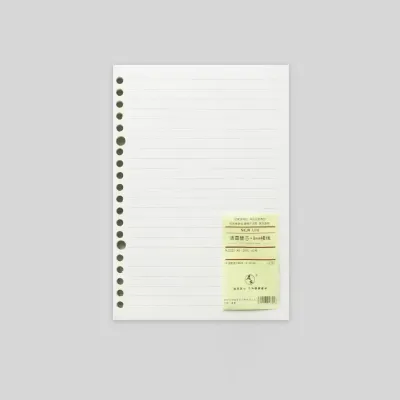
Prices are valid at publication and may change. Please refer to the product page for the latest price.
However, paper weight alone does not dictate how well a notebook handles liquid ink. The presence of surface sizing, a chemical treatment applied during manufacturing, determines the paper’s absorbency. Unsized or lightly sized paper acts like a sponge, drawing ink deep into the cellulose fibers and causing it to spread outward, a problem known as feathering. Highly sized or coated papers keep the ink on the surface longer, allowing it to dry slowly and maintain sharp, crisp lines without bleeding through to the next page.
Grid print clarity is another crucial dimension that affects both visual comfort and utility. Notebook manufacturers use different ink colors, line weights, and printing methods to create their grids. Some brands print heavy, dark blue or black lines that can visually compete with your handwriting or drawing. Other brands opt for pale gray, light violet, or dotted grids that provide structure without cluttering the page. The choice of grid intensity affects how easily your notes can be read, photographed, or digitally scanned.
Matching Grid Paper to Your Pens and Daily Tasks
High-ink flow tools, such as fountain pens, rollerballs, and creative markers, require specialized paper to perform beautifully. If you write with these tools, look for notebooks featuring highly sized, smooth paper, often labeled as “fountain pen friendly” or “ink-resistant.” These papers prevent the liquid ink from penetrating the sheet, preserving the true color of the ink and preventing bleed-through, though they do require a few extra seconds of drying time to avoid smudging.

For standard everyday pens, including gel pens, ballpoints, and fine-tip liners, standard-weight paper of 80 GSM is generally highly reliable. Gel pens lay down more ink than ballpoints, so you may still experience mild ghosting on thinner 70 GSM sheets, but bleed-through is rarely an issue. Ballpoint pens perform consistently across almost all paper types, making them the most forgiving option for budget-friendly or utility-grade notebooks.
Your specific tasks should also dictate the grid spacing and layout you choose. The standard 5mm grid is highly versatile, offering the perfect scale for mathematics, scientific diagrams, and structured handwriting. If you have larger handwriting or use bold brush pens, a 6mm or 10mm grid may feel less restrictive. Conversely, designers and architects often prefer a tighter 3mm or 4mm grid for precise, compact technical drawings and scale layouts.
A Practical Framework for Testing Notebook Paper
To find the perfect match without wasting money on bulk purchases, you can establish a simple verification routine. Start by reading the manufacturer specifications on the notebook’s cover band, packaging, or online product listing. Note the GSM rating and look for terms like “acid-free,” “wood-free,” or “coated,” which indicate higher durability and resistance to yellowing over time.
Once you have a notebook in hand, conduct a controlled ink test on the very last page before committing to daily use. Draw a series of lines and write a few words using your most frequently used pens, applying your typical writing pressure. Let the ink dry completely, then inspect the reverse side of the page. Check for bleed-through, where ink spots physically penetrate the paper, and ghosting, where you can see the shadow of the writing through the sheet.
Finally, evaluate how the grid paper performs under digital reproduction if you plan to archive your work. Take a quick photo or use a mobile scanning application to digitize your test page. Observe whether the grid lines remain distracting in the digital file or if they fade cleanly into the background, allowing your handwriting to stand out as the primary focus.
Decision Guide: Choosing the Right Grid Notebook
Choose notebooks with higher GSM and specialized sizing if you write primarily with fountain pens, wet gel pens, or liquid ink markers. These premium papers ensure that your lines remain sharp, colors stay vibrant, and both sides of every page remain completely usable without any ink bleeding through.
Choose standard, cost-effective grid notebooks if you rely on ballpoint pens, pencils, or fine-tip gel pens for rapid note-taking, lecture drafting, or temporary calculations. In these scenarios, minor ghosting is a reasonable trade-off for a lighter, more portable notebook that fits easily into a daily carry bag.
Verify the grid color and line weight first if you frequently scan your notes for digital archiving, or if you find dark, heavy lines visually distracting. Opting for pale gray or dotted grids ensures that your digital scans remain clean and professional, with the focus entirely on your content.
To assess the true value of a notebook, calculate the cost per page rather than looking only at the retail price. Divide the price in S$ by the total number of sheets or pages. A notebook priced at S$12 with 200 pages may offer better long-term value and a lower cost per page than a S$6 notebook that only contains 60 pages, especially when factoring in the paper’s performance with your favorite pens.
Frequently Asked Questions (FAQ)
Does a higher paper weight always guarantee no ink bleed-through?
No, a higher paper weight does not guarantee resistance to ink bleed-through. While a higher GSM rating means the paper is thicker and will reduce visual ghosting, actual bleed-through is prevented by surface sizing and coating. An unsized, highly absorbent 100 GSM paper can still allow wet fountain pen ink to bleed through, whereas a highly sized, coated 68 GSM paper can resist bleed-through completely.
What is the standard grid size for everyday writing and math?
The standard grid size for everyday writing, mathematics, and general note-taking is 5mm. This spacing provides an optimal balance, offering enough structure to keep handwriting straight and diagrams aligned without feeling too cramped. Smaller 3mm grids are typically used for compact planning, while larger 10mm grids are designed for early learners or bold sketching.

Community discussion
Share your experience or ask a question. Comments are reviewed before publication.