
Finding the perfect B5 notebook is not about finding a single, universally superior brand, but rather about understanding how different paper characteristics interact with your specific writing instruments. The writing experience is a delicate balance of paper weight, surface treatment, and binding style. Whether you are taking extensive lecture notes, sketching diagrams, or journaling with a wet fountain pen, the way ink or graphite behaves on the page determines your daily comfort. By analyzing the physical properties of paper and matching them to your tools, you can avoid common frustrations like ink bleeding, feathering, or excessive hand strain.
In regions with high relative humidity, such as Singapore, paper quality becomes even more critical. Paper fibers naturally absorb moisture from the air, which can drastically alter how ink behaves over time, making a notebook that performed well in a dry climate suddenly prone to feathering. Understanding the technical specifications of notebook paper allows you to make informed decisions, ensuring your thoughts are preserved cleanly and legibly.
Key Factors That Define Paper Quality and Writing Experience
To evaluate any B5 notebook, you must first understand the physical properties that dictate paper performance. The most common specification you will encounter is paper weight, measured in grams per square meter (GSM). Standard office copy paper typically ranges from 70 to 80 GSM, while premium notebook papers generally fall between 80 and 120 GSM. While a higher GSM indicates a thicker, heavier sheet that physically resists ink penetration, it is not the sole indicator of quality. Thicker paper reduces “ghosting”—the shadow of writing visible on the reverse side of a page—and prevents “bleed-through,” where ink completely saturates the sheet and leaks onto the following page.
Products mentioned in this guide
![[SG] Azone A4/A5/B5 Team Ring Notebook [Evergreen Stationery]](https://img.lazcdn.com/g/p/d46716d1b7f895416bbf9bb36cd8fee7.jpg_400x400q80.jpg_.webp)
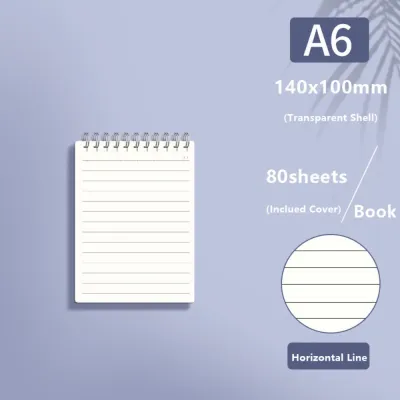
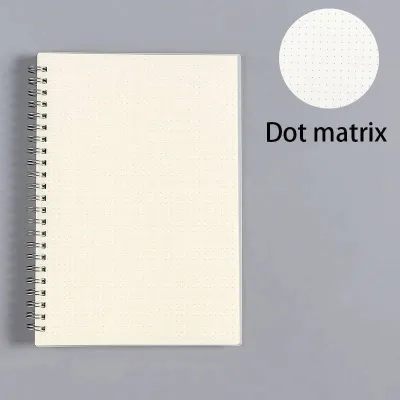
Prices are valid at publication and may change. Please refer to the product page for the latest price.
Beyond weight, the surface texture and coating of the paper play a defining role in how a pen glides across the page. Coated papers feature a microscopic layer of minerals or sizing agents that seal the raw wood fibers. This coating prevents ink from immediately sinking into the paper, allowing it to dry slowly on the surface. This preservation of the ink’s wet state is what allows specialized inks to display unique properties like shading (color variation) and sheen (a metallic secondary color). Conversely, uncoated papers have exposed, natural fibers that create a textured surface known as “tooth.” This texture provides tactile feedback, absorbing ink almost instantly and making it highly resistant to smudging, though it may cause wet inks to spread or feather.
The color and brightness of the paper also significantly impact long-term writing comfort. High-brightness white paper offers sharp contrast, making dark inks stand out vividly, which is highly beneficial for scanning notes or reading in low-light environments. However, under bright fluorescent office lights or study lamps, intense white paper can reflect significant glare, leading to eye strain during extended writing sessions. Cream, off-white, or ivory-toned papers absorb more light and offer a softer contrast. This warmer tone is gentler on the eyes, making it the preferred choice for creative writers, journalers, and students who spend hours transcribing lectures.
How to Evaluate B5 Notebooks for Your Preferred Pens
Different writing instruments require entirely different paper environments to perform optimally. Fountain pens and liquid-ink rollerballs demand paper with high sizing—a chemical treatment applied during manufacturing to resist water absorption. Without adequate sizing, the liquid ink will bleed into the paper fibers, spreading outward to create fuzzy, feathered lines. If you write with wet inks, you must look for highly sized, smooth papers that keep the ink crisp and contained, even if it means waiting a few extra seconds for the page to dry.

Gel pens, which are incredibly popular for color-coded note-taking, use a water-based gel that flows smoothly but can pool on highly coated surfaces. If the paper is too slick and non-absorbent, gel ink can remain wet for an extended period, leading to frustrating smudges when you turn the page or rest your hand on the paper. For gel pen users, a medium-GSM paper with light coating offers the perfect middle ground, providing a smooth glide while absorbing the ink quickly enough to prevent smearing during rapid writing.
Ballpoint pens and pencils operate on a completely different mechanical principle, relying on physical friction to transfer their medium. A perfectly smooth, heavily coated paper can actually cause ballpoint pens to skip, as the tiny metal ball at the tip cannot find enough traction to rotate and release ink. Similarly, pencils require a paper with a distinct “tooth” to physically shave off the graphite core as you write. If you prefer the tactile feedback of a pencil or the reliability of a ballpoint, look for uncoated, slightly textured papers that grip the writing tip and provide satisfying physical feedback.
Before committing to a new notebook for your daily work, it is highly recommended to perform a standardized pen test on the very last page. Draw a small grid and write a few words with every pen, marker, and highlighter in your collection. Note the drying time of each ink by gently running a finger across the line at one-second intervals. Once the ink is dry, flip the page to inspect the reverse side under direct light. This simple test allows you to observe exactly how your specific tools interact with the paper’s weight and coating, preventing any unpleasant surprises on your main pages.
Comparing Common B5 Notebook Bindings and Paper Formats
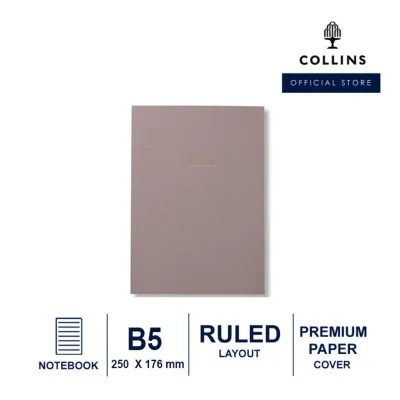
The physical construction of a B5 notebook is just as important as the paper inside it. First, it is crucial to understand that “B5” is not a single, universal size. In the stationery market, you will encounter international standard ISO B5 (176 × 250 mm) and Japanese Industrial Standard JIS B5, often marketed as Semi-B5 (182 × 257 mm). Semi-B5 is slightly wider and taller than its ISO counterpart, making it highly popular for academic note-taking. Because of these dimensional differences, loose-leaf refills, plastic protective covers, and multi-ring binders are rarely cross-compatible. Always check the exact millimeter measurements of your notebook before purchasing external accessories.
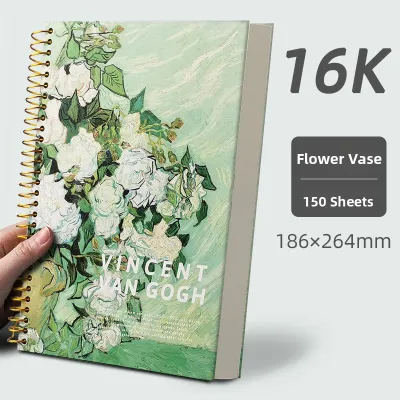
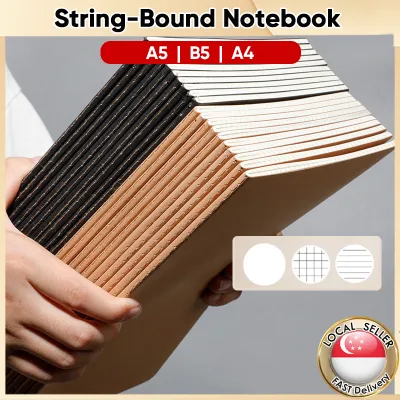
The binding method directly dictates how the notebook sits on your desk and how easily you can write near the margins. Thread-sewn bindings, where folded groups of pages are stitched together, allow the notebook to lie completely flat when opened. This flat profile is essential for comfortable writing, as it eliminates the curved slope near the center spine and allows you to write seamlessly across two pages. Wire-o or spiral bindings use metal or plastic coils to hold individual sheets. This design allows you to fold the notebook completely back on itself, saving valuable desk space in crowded lecture halls or cafes, though the central rings can sometimes obstruct your hand when writing on the inner margins. Glued or perfect-bound notebooks offer a clean, book-like aesthetic and allow for easy page removal, but they often require constant pressure to stay open.
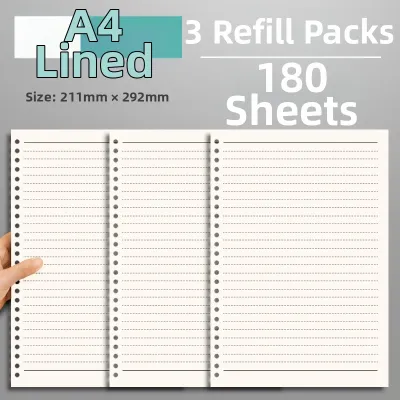
Finally, the ruling format of the paper shapes how you organize your information. Standard lined ruling (usually spaced at 6mm or 7mm) is ideal for structured, linear text. Dot grid and graph patterns (typically featuring 5mm spacing) offer subtle horizontal and vertical guides without the visual clutter of solid lines. These formats are highly versatile, allowing you to switch effortlessly between writing, drawing diagrams, and creating custom layouts. When choosing a ruling, consider your handwriting size and pen tip; fine 0.38mm gel pens or sharp mechanical pencils excel on tight 5mm grids, while broader fountain pens or 0.7mm gel pens require the breathing room of a 7mm or 8mm lined format.
Decision Framework: Choosing the Right B5 Notebook for Your Needs
To streamline your selection process, consider this practical decision framework based on your primary writing tools, environment, and compatibility requirements.
If your primary writing tools are fountain pens, broad gel pens, or heavy highlighters, focus your search on notebooks featuring high-density, heavily coated paper (typically 80 GSM to 100 GSM). This paper style ensures that wet inks remain crisp, colors stay vibrant, and bleed-through is virtually eliminated. While you will need to accommodate slightly longer drying times, the visual quality of your writing will be preserved without feathering.
If you prefer writing with mechanical pencils, wooden pencils, or standard ballpoint pens, choose a notebook with uncoated, medium-weight paper (around 70 GSM to 80 GSM) that offers a subtle texture. The natural tooth of the paper will provide the necessary friction for consistent ink flow and clean graphite transfer, giving you a highly tactile and responsive writing experience without any skipping.
If you frequently write on the go, study in tight spaces, or need to fold your notebook flat on a clipboard, opt for a wire-o or spiral-bound B5 notebook. The ability to fold the cover 360 degrees makes it incredibly space-efficient, allowing you to take notes comfortably even when resting the notebook on your lap or a tiny cafe table.
Before making a final purchase, particularly when browsing online marketplaces, always verify the exact millimeter dimensions of the notebook. If you plan to use a reusable leather cover, a plastic protective sleeve, or loose-leaf binder rings, ensure that the notebook matches the specific standard—either ISO B5 (176 × 250 mm) or JIS Semi-B5 (182 × 257 mm)—to guarantee a perfect fit and avoid the hassle of mismatched stationery.
Frequently Asked Questions (FAQ)
Does a higher GSM always mean better paper quality for writing?
No, a higher GSM (grams per square meter) only indicates that the paper is heavier and thicker, which helps prevent ink from bleeding through to the other side. However, thickness does not guarantee a smooth writing experience or proper ink control. A lightweight 52 GSM paper with high-quality sizing can handle wet fountain pen inks beautifully without feathering, whereas a thick, unsized 100 GSM paper might absorb ink like a sponge, causing lines to spread and smudge.
How can I prevent ink smudging in my B5 notebook?
To prevent smudging, especially on smooth, coated papers that dry slowly, place a sheet of blotter paper or a plastic pencil board (shitajiki) under your writing hand. This sheet absorbs excess hand oils and catches any wet ink before your hand can drag across it. Additionally, matching your coated paper with faster-drying gel inks or switching to a finer pen nib will significantly reduce drying times and minimize smudging.
Are all B5 notebooks the exact same size?
No, B5 notebooks are manufactured under two different regional standards. The international ISO B5 standard measures 176 × 250 mm, while the Japanese Industrial Standard (JIS) B5, often called Semi-B5, measures 182 × 257 mm. Because Semi-B5 is slightly wider and taller, accessories like protective plastic covers, folder sleeves, and loose-leaf binder rings are rarely interchangeable between the two formats. Always check the exact millimeter dimensions before purchasing.

Community discussion
Share your experience or ask a question. Comments are reviewed before publication.