
Finding the right A4 size notebook requires looking beyond the brand name on the cover and examining how the paper interacts with your daily writing tools. Paper quality and ink bleed resistance are not universal standards; they are the result of specific manufacturing choices, including fiber density, surface treatments, and binding methods. While one notebook might handle a standard ballpoint pen beautifully, it may feather or bleed when paired with a wet fountain pen or a heavy gel ink.
To make an informed decision, you must understand how paper specifications translate to real-world performance. Comparing notebooks involves evaluating physical attributes like grams per square meter (GSM), surface texture, and sizing. By matching these technical details to your preferred writing instruments, you can select an A4 notebook that preserves your notes on both sides of the page without unexpected smudges or ink spots.
Understanding Paper Weight and Ink Interaction
When browsing stationery aisles or online listings, the most common specification you will encounter is GSM, or grams per square meter. While GSM is a reliable measure of paper weight, it is important to distinguish weight from actual thickness or opacity. Two different paper types can both be rated at 80 GSM, yet one might feel thicker or block light more effectively due to the density of the wood fibers and the fillers used during manufacturing. Opacity determines how much of your writing is visible from the opposite side of the sheet, which is a critical factor if you plan to use both sides of each page in your A4 size notebook.
Products mentioned in this guide
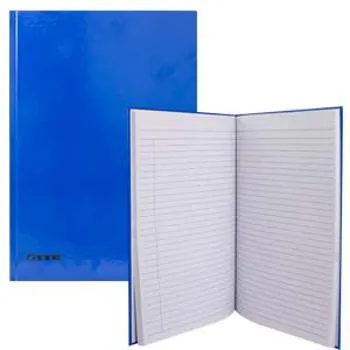
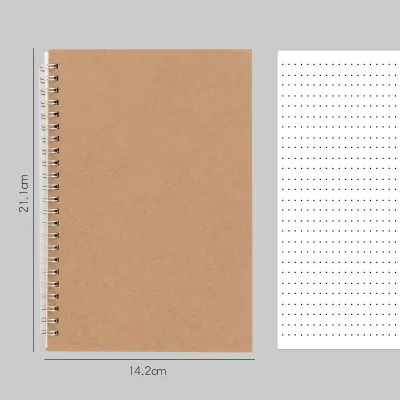
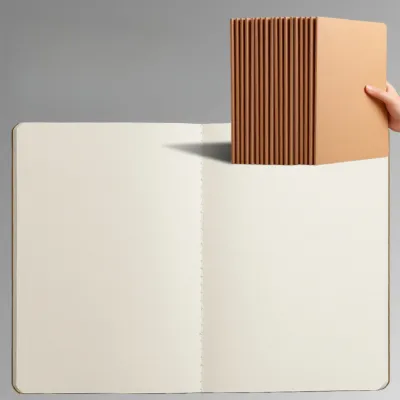

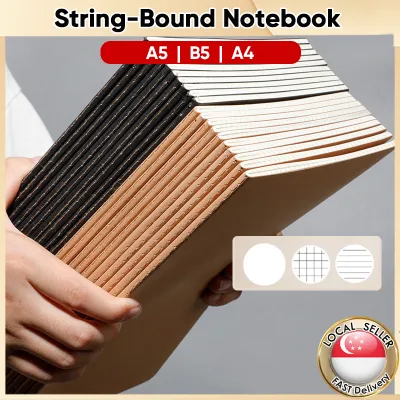
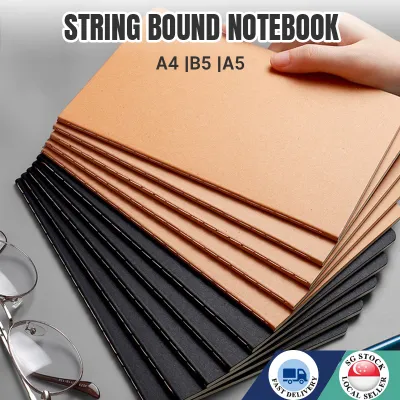
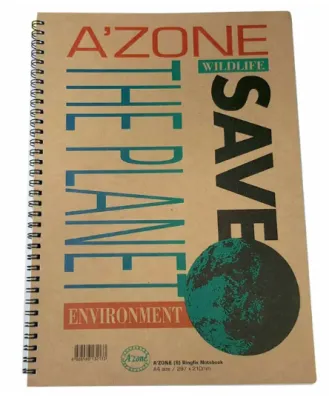
![[SG] Azone A4/A5/B5 Team Ring Notebook [Evergreen Stationery]](https://img.lazcdn.com/g/p/d46716d1b7f895416bbf9bb36cd8fee7.jpg_400x400q80.jpg_.webp)
Prices are valid at publication and may change. Please refer to the product page for the latest price.
Beyond weight, the presence of surface sizing plays a pivotal role in how paper handles liquid ink. Sizing is a chemical treatment applied during the papermaking process—either mixed into the pulp or coated onto the surface—that regulates the paper’s absorbency. Unsized or lightly sized paper acts like a sponge, drawing ink rapidly into its fibers. Well-sized paper, on the other hand, resists immediate absorption, allowing the ink to sit on the surface and dry evenly, which prevents the pigments from sinking through to the next page.
Understanding how ink behaves on paper requires recognizing three distinct visual phenomena: bleed-through, show-through, and feathering. Bleed-through occurs when ink penetrates entirely through the paper fibers, creating visible spots or complete lines on the reverse side of the sheet, often rendering it unusable. Show-through, sometimes called ghosting, refers to the shadow of your writing being visible through the paper without the ink actually breaking the surface; this is primarily an opacity issue rather than a chemical failure. Feathering happens when ink spreads horizontally along the paper fibers, causing sharp pen lines to look fuzzy, distorted, or blurred.
Core Dimensions for Comparing A4 Notebook Paper
To systematically compare A4 notebooks, you should first evaluate the manufacturer’s stated GSM ratings alongside user observations of opacity. Standard office notebooks typically range from 70 GSM to 90 GSM, which is generally sufficient for dry inks but prone to ghosting with wetter pens. Premium notebooks often feature paper weights between 100 GSM and 120 GSM, offering a substantial barrier that significantly reduces show-through. When comparing brands, look for explicit mentions of paper density and opacity levels, as these specifications provide a baseline expectation for how the pages will handle double-sided writing.

Surface texture, often described as the “tooth” of the paper, is another essential dimension that dictates your writing experience. Smooth paper offers minimal friction, allowing gel pens and fountain pens to glide effortlessly across the page, which can reduce hand fatigue during long writing sessions. However, highly smooth surfaces often extend ink drying times because the liquid cannot penetrate the surface quickly, increasing the risk of smearing if you accidentally brush your hand over fresh writing. Conversely, toothy paper has a subtle roughness that provides tactile feedback, which is excellent for pencils and ballpoint pens but can cause fine-liner tips to wear down prematurely and wet inks to feather.
The physical format of an A4 size notebook also introduces unique structural considerations that affect how you write. Because A4 pages offer a large writing surface, the binding style heavily influences your comfort and the behavior of the ink. Thread-bound notebooks that lay completely flat allow you to write comfortably across the entire width of the page without fighting a raised center spine. In contrast, tightly glued bindings can create a steep slope near the center gutter, causing wet ink to pool in the crease or forcing you to hold the book open with one hand while writing with the other. Spiral or wire-bound A4 notebooks eliminate this slope entirely but introduce a physical barrier that can interfere with your hand placement depending on whether you are left- or right-handed.
Matching Paper Specifications to Your Pen Type
Fountain pens and wet liquid inks demand the highest standard of paper quality to perform without bleeding or feathering. Because fountain pens deliver a continuous flow of water-based ink, they require paper with robust surface sizing and a higher GSM, typically 90 GSM or above. Without proper sizing, the wet ink will quickly saturate the paper fibers, leading to severe feathering and bleed-through that ruins the subsequent pages. If you write primarily with fountain pens, look for notebooks specifically labeled as having coated or hard-sized paper, which keeps the ink crisp and preserves the unique shading and sheen of your ink colors.
Gel and rollerball pens are incredibly popular for daily note-taking, but their water- or oil-based gel inks require a careful balance of paper smoothness and absorption. These pens glide smoothly and deposit a relatively thick line of ink, which can easily smudge on highly coated, non-porous paper. For gel pens, a moderately smooth paper rated between 80 GSM and 100 GSM is often ideal, as it provides enough absorption to dry the ink within a few seconds while remaining smooth enough to prevent skipping. If you are left-handed, prioritizing a slightly more absorbent paper can help prevent your hand from smearing the fresh gel ink as you write across the A4 page.
Ballpoint pens and fine-liners are far more forgiving and generally compatible with standard, utility-grade A4 notebooks. Ballpoint pens use a thick, oil-based ink that rarely bleeds or feathers, even on thin 70 GSM paper, making them highly versatile for quick jotting and everyday tasks. Fine-liners, which use water-based or pigment-based ink delivered through a porous plastic tip, also perform well on standard paper, though they can occasionally show through thin sheets if you pause the tip in one spot for too long. If your daily writing relies on these common tools, you can comfortably prioritize notebook layout, binding, and price over premium paper coatings.
Markers, brush pens, and highlighters present a unique challenge because they deposit a large volume of wet pigment or alcohol-based solvents onto the page. Alcohol-based markers will bleed through almost any standard notebook paper, regardless of GSM, requiring specialized bleed-proof paper that features a physical barrier coating on the back of each sheet. Water-based highlighters and brush pens are less aggressive but can still cause significant ghosting or minor bleed-through on standard 80 GSM paper. If you use highlighters extensively for color-coding your A4 notes, selecting a notebook with at least 100 GSM paper or opting for mild, water-based highlighters will help protect the integrity of your pages.
Practical Checks Before Purchasing an A4 Notebook
Before committing to a specific A4 size notebook, especially if you plan to purchase in bulk or invest in a premium brand, take time to analyze the product labels and online specifications. Look for precise details beyond the brand name, such as the exact GSM rating, the country of paper origin, and specific terms like “acid-free,” “coated,” or “fountain pen friendly.” While these terms are not absolute guarantees of performance, they indicate that the manufacturer has designed the paper with ink compatibility in mind, rather than simply producing low-cost utility sheets.
If you are shopping in a physical stationery store, look for display models or sample sheets that allow you to conduct a quick, hands-on test. Bring your favorite daily pens and find an inconspicuous corner of a sample page to perform a simple test pattern: draw a solid circle, write a few words at your normal writing speed, and hold the pen tip in place for two seconds to create a deliberate ink dot. Observe how quickly the ink dries, check the edges of the lines for any signs of feathering, and flip the page to inspect the reverse side for ghosting or direct bleed-through. This hands-on trial is the most reliable way to verify how the paper responds to your specific writing style and ink flow.
When shopping online where physical testing is impossible, leverage the collective experience of the stationery community by filtering customer reviews for highly specific terms. Search the review section for the exact brand and model of the pen you use, or search for keywords like “fountain pen,” “gel ink,” “ghosting,” or “bleed.” Online reviews often contain detailed photos of the back of written pages, providing visual evidence of how the paper performs under real-world conditions. This step is particularly useful for identifying whether a brand has recently changed its paper supplier or manufacturing process, which can cause performance to deviate from historical reviews.
Finally, always review the retailer’s return and exchange policies before finalizing your purchase, particularly when buying premium stationery. Some specialty retailers allow returns only on completely unused, shrink-wrapped items, meaning you cannot return the notebook once you have written on the first page. If you are uncertain about a notebook’s paper quality, consider purchasing a single pocket-sized notebook from the same brand and product line to test the paper before investing in a larger, more expensive A4 size notebook. This cautious approach ensures you do not end up with a stack of unusable notebooks that fail to support your preferred writing instruments.
Frequently Asked Questions (FAQ)
Does a higher GSM always guarantee no ink bleed-through?
No, a higher GSM does not automatically guarantee that paper will resist ink bleed-through. While a higher GSM indicates heavier, thicker paper that naturally reduces show-through or ghosting, bleed-through is primarily prevented by surface sizing and chemical coatings. A highly porous 120 GSM sketch paper may still allow wet fountain pen ink or alcohol markers to bleed through because it lacks the necessary surface treatment to stop ink absorption. Conversely, a well-sized, coated 80 GSM paper can successfully resist bleed-through from wet inks because the coating prevents the liquid from penetrating deep into the paper fibers.
Can I use fountain pens on standard 80 GSM A4 notebooks?
Using fountain pens on standard 80 GSM A4 notebooks is possible, but the results depend heavily on the specific pen nib and ink formulation. Standard 80 GSM paper is typically designed for dry ballpoint pens and photocopiers, meaning it often lacks the surface sizing required to handle wet, water-based fountain pen inks. If you use a fine or extra-fine nib paired with a dry-flowing ink, you may experience minimal ghosting and acceptable performance. However, medium or broad nibs and wet inks will likely cause noticeable feathering and bleed-through, making it advisable to test a small area first or seek out notebooks specifically rated for fountain pen use.

Community discussion
Share your experience or ask a question. Comments are reviewed before publication.