
Quick Answer: Which 80gsm A4 Paper Offers the Best Balance?
Selecting the right 80gsm a4 paper for your home or office in Singapore comes down to a balance between your printing hardware, document purpose, and environmental conditions. The ideal choice is highly situational. Premium-tier brands are best suited for client-facing documents, high-speed multi-function printers, and double-sided printing, where high brightness and structural stiffness are required.
Conversely, standard value-tier brands offer a highly economical alternative for daily internal drafts, single-sided administrative records, and high-volume student worksheets where absolute visual perfection is secondary.
In Singapore’s tropical climate, relative humidity often exceeds 80%. This environmental factor plays a significant role in paper performance. Unprotected paper fibers quickly absorb airborne moisture, causing the sheets to lose their stiffness, curl, and stick together. This leads to frequent multi-feed jams and misaligned prints. Therefore, high-quality moisture-barrier packaging and proper climate-controlled storage are just as critical to seamless printer operation as the brand of paper you select.
Products mentioned in this guide
![PaperOne A4 Printing Paper - All Purpose Paper 80gsm [Available in Single Ream / Box]](https://img.lazcdn.com/g/p/27dcdcd07b80cf8dfb582f4178a0997b.png_400x400q80.png_.webp)
![PaperOne™ All Purpose Premium Quality 80gsm Copy Paper A4 [2 Reams]](https://img.lazcdn.com/g/p/6fe22f63efd1aeac13600887dc29a7da.jpg_400x400q80.jpg_.webp)
Prices are valid at publication and may change. Please refer to the product page for the latest price.
What Defines Quality in 80gsm A4 Paper?
To make an informed purchasing decision, it is essential to look beyond the price tag on a ream of paper and understand the technical specifications that determine its performance. While all 80gsm copy paper shares the same basic dimensions and weight, the manufacturing processes, raw materials, and surface treatments differ significantly between brands. These differences directly impact print quality, printer longevity, and operational efficiency.

Brightness and Whiteness
Brightness and whiteness refer to different optical measurements. Brightness measures the reflectance of a specific blue light wavelength, while whiteness (typically measured using the CIE whiteness index) represents how the paper appears to the human eye under full-spectrum light. Premium papers generally feature a CIE whiteness rating between 160 and 167. This high level of whiteness is achieved through the use of high-quality optical brightening agents and premium bleached wood pulp.
A higher whiteness rating provides a starker contrast against black toner and colored inks. This contrast makes text appear sharper, reduces eye strain during reading, and makes colored graphics and charts look more vibrant. For external business proposals, legal contracts, and official correspondence, high-whiteness paper delivers a polished, professional aesthetic. Value-tier papers, on the other hand, typically have a lower CIE whiteness rating of 145 to 155, which displays a slightly warmer, off-white hue that is perfectly acceptable for internal office use but less striking for formal presentations.
Smoothness and Jam Prevention
The surface smoothness of copy paper is a critical factor in both print clarity and mechanical reliability. Smoothness is commonly evaluated by the rate of air leakage across the paper’s surface under pressure. A smoother paper surface allows for uniform contact with the printer’s drum or inkjet printheads, ensuring even toner transfer and consistent ink absorption without feathering.
To achieve high smoothness, manufacturers apply a process called surface sizing, where a thin layer of starch or specialized polymers is coated onto the paper. This seals the surface fibers, reduces roughness, and increases the paper’s internal bond strength. In Singapore’s humid environment, surface sizing also acts as a primary defense against moisture absorption. When paper absorbs moisture, its fibers swell and lose their structural integrity. High-quality, well-sized paper maintains its stiffness and flatness, allowing it to feed smoothly through high-speed rollers without curling or causing frustrating paper jams.
Opacity and Double-Sided Printing
Opacity is the measure of how impervious a sheet of paper is to light transmission. For double-sided (duplex) printing, high opacity is non-negotiable. A standard 80gsm sheet generally offers an opacity rating between 90% and 94%. The higher the opacity, the less ghosting or show-through you will experience from the printed content on the reverse side of the page.
Premium brands optimize opacity by carefully balancing pulp density and adding mineral fillers like calcium carbonate during the papermaking process. This ensures that even when saturated with wet inkjet inks or subjected to the intense heat of laser printer fusers, the paper remains opaque enough to keep double-sided text legible. Choosing a paper with insufficient opacity for duplex printing often results in messy, unreadable documents, forcing users to print single-sided and effectively doubling their paper consumption.
Dust and Lint Levels
One of the most overlooked aspects of paper quality is the amount of micro-fine paper dust and lint left on the sheets after the cutting process. During manufacturing, large rolls of paper are sliced into A4 sheets using industrial rotary cutters. Premium manufacturers invest in high-precision, regularly sharpened blades and advanced dust-extraction systems to ensure that the edges of every sheet are clean and free of loose fibers.
Lower-cost manufacturing processes often result in duller cuts, leaving microscopic paper dust clinging to the edges of the sheets. As this paper runs through your printer, the dust accumulates on the rubber pickup rollers, transfer belts, and fuser assemblies. Over time, this dust buildup reduces the grip of the rollers, leading to frequent misfeeds, paper slippage, and premature wear of internal printer components. By choosing low-dust paper, you can significantly extend the maintenance intervals and overall lifespan of both laser and inkjet printers.
How Leading 80gsm A4 Paper Brands Compare by Category
To help you navigate the Singapore office supply market, it is helpful to categorize available 80gsm A4 paper brands into two distinct tiers based on their performance, specifications, and target use cases. This categorization allows you to align your budget with your actual printing requirements.
Premium and High-Reliability Brands
Premium-tier 80gsm A4 papers are engineered for demanding corporate environments, high-volume multi-function printers, and professional presentations where quality cannot be compromised. These brands typically command a higher price point but deliver exceptional runnability and visual appeal.
- Double A: Widely recognized in the Singapore market, Double A is famous for its unique raw material source—farmed eucalyptus trees. This specific fiber structure provides a high fiber count per gram, resulting in excellent thickness, high opacity, and an exceptionally smooth surface. With a CIE whiteness rating typically around 165, it offers a bright, crisp background for high-contrast prints. The paper's high stiffness makes it highly resistant to curling, even when subjected to high-temperature duplex laser printing.
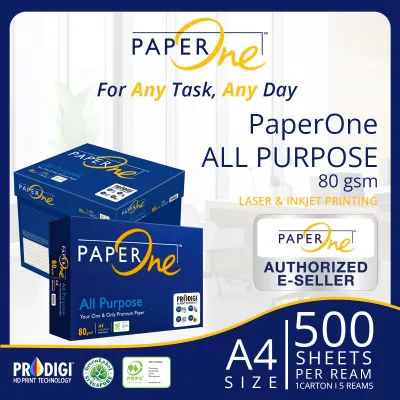
- PaperOne All Purpose: Manufactured by the APRIL Group, PaperOne is another staple in Singaporean offices. This premium paper features ProDigi HD Print Technology, a surface treatment that enhances ink curing on the paper's surface. This technology reduces ink bleeding, sharpens color boundaries, and saves up to 18% of ink usage on compatible inkjet printers. It offers a CIE whiteness of 167, making it one of the brightest options available, and is highly reliable for high-speed, jam-free copying.
- HP Premium: Designed specifically to work seamlessly with high-performance laser and inkjet printers, HP Premium paper offers superior brightness and a heavy, substantial feel. It is engineered to minimize dust accumulation and optimize toner adhesion, making it an excellent choice for archival-quality business documents and high-resolution color prints.
The primary trade-off with premium brands is the higher upfront cost, which generally ranges from S$6.50 to S$8.50 per ream. However, this investment is easily justified for client-facing materials, official legal filings, and high-speed office environments where printer downtime and paper waste must be kept to an absolute minimum.
Standard and Value-Oriented Brands
Standard and value-oriented brands are designed for cost-conscious buyers, everyday administrative tasks, internal drafts, and high-volume school or home printing. While they may lack the extreme whiteness or ultra-smooth finish of premium options, they offer reliable, functional performance at a much lower price point.
- IK Yellow: Produced by Indah Kiat (a subsidiary of Asia Pulp & Paper), IK Yellow is one of the most popular value brands in Singapore. It offers a balanced CIE whiteness (typically around 148 to 150) and a reliable, smooth surface that performs well in standard desktop laser and inkjet printers. It is highly favored by schools, tuition centers, and logistics offices for daily worksheets, delivery orders, and internal memos.
- Lucky Boss: Another common sight in local stationery shops, Lucky Boss is a budget-friendly option that provides acceptable brightness and stiffness for everyday single-sided printing. It is an excellent utility paper for basic copying, scratch pads, and non-critical administrative tasks.
- Local House Brands: Many office supply distributors and major retailers in Singapore offer their own house-branded 80gsm A4 paper. These generic options are specifically sourced to provide the lowest possible price per ream. They are highly suitable for high-volume, single-sided draft printing where paper aesthetics are secondary to cost control.
The trade-off for these value-oriented brands is a slightly lower CIE whiteness, a thinner hand-feel, and a marginally higher risk of show-through when used for heavy double-sided printing. Additionally, in high-speed commercial printers (exceeding 50 pages per minute), value papers may exhibit a slightly higher jam rate compared to premium alternatives. However, for standard home printers and daily office drafts, they offer outstanding cost-efficiency, with prices typically ranging from S$4.50 to S$5.80 per ream.
Calculating True Value: Price Per Sheet and Hidden Costs
When managing office expenses or home budgets, calculating the true value of 80gsm A4 paper requires looking beyond the shelf price of a single ream. A complete financial assessment must factor in bulk purchasing structures, the cost of wasted consumables, and the labor impact of printer downtime.
Cost Per Sheet vs. Cost Per Ream
A standard ream of A4 paper contains 500 sheets, and a standard shipping carton contains 5 reams (2,500 sheets). To understand your actual expenditure, it is helpful to break down the cost to a per-sheet level in Singapore Dollars (SGD).
- Premium Ream (S$7.50): At S$7.50 per ream, the individual sheet cost is S$0.0150.
- Value Ream (S$5.00): At S$5.00 per ream, the individual sheet cost is S$0.0100.
- Premium Carton (S$32.50): Purchasing by the carton often reduces the price per ream to S$6.50, bringing the sheet cost down to S$0.0130.
- Value Carton (S$21.00): Purchasing value paper by the carton can drop the price per ream to S$4.20, resulting in a sheet cost of S$0.0084.
While a difference of a fraction of a cent per sheet may seem negligible, it scales rapidly. An office that prints 10,000 pages per month would spend S$150 on premium single reams, compared to S$84 on bulk-purchased value paper—a savings of S$66 per month or nearly S$800 annually.
The Hidden Cost of Paper Jams
However, focusing solely on the purchase price can lead to false economy. Low-quality paper that lacks proper stiffness, moisture resistance, or clean-cut edges is highly prone to jamming. When a printer jams, the financial loss is not limited to the single ruined sheet of paper.
A jammed sheet often ruins the preceding and succeeding sheets, and any toner or ink already applied to those pages is wasted. With laser toner cartridges often costing upwards of S$100 to S$200, wasted toner adds up quickly.
Furthermore, there is a significant labor and productivity loss. If an employee earning an average salary of S$24 per hour spends five minutes clearing a stubborn paper jam, resetting the print queue, and reprinting the document, that single jam costs the business S$2.00 in lost productivity. If cheap paper causes just three jams a week, the labor cost alone completely wipes out the savings gained from buying the cheaper paper.
Finally, paper dust from low-grade paper coats the printer’s internal sensors and rollers. This leads to more frequent misfeeds and requires professional servicing. A single technician visit in Singapore can easily cost S$80 to S$150 in call-out fees, plus the cost of replacement parts.
Where to Buy for the Best Value
To secure the best rates on 80gsm A4 paper in Singapore, purchasing channels should be chosen based on volume.
For small businesses and home users, local office supply specialists and dedicated B2B stationery distributors offer the best balance of price and convenience. Online marketplaces and ecommerce platforms also feature competitive carton pricing, often with direct-to-door delivery.
Because a single carton of A4 paper weighs approximately 12.5 kilograms, carrying multiple cartons from a physical retail store is highly impractical. Utilizing suppliers that offer free delivery for bulk orders (typically for purchases over S$100 or S$150) is the most efficient way to stock up while avoiding heavy lifting and transport costs.
Which 80gsm A4 Paper Should You Buy?
To make your final purchasing decision, evaluate your specific printing environment, hardware capabilities, and budget constraints against this practical decision framework.
Choose Premium Brands if…
- You print client-facing documents: For business proposals, legal contracts, marketing presentations, and official correspondence, the high whiteness (CIE 160+) and smooth texture of premium paper project a professional image.
- You print double-sided regularly: The superior opacity of premium 80gsm paper minimizes ghosting, ensuring that text on both sides of the sheet remains perfectly legible.
- You use high-speed office copiers: Multi-function printers operating at speeds over 40 pages per minute require the high stiffness and precise moisture control of premium paper to prevent feeding errors and heat-induced curling.
- You require archival quality: Premium papers are typically acid-free, meaning they will not turn yellow or degrade over long-term storage in filing cabinets.
Choose Standard/Value Brands if…
- Your printing is mostly single-sided and internal: For daily draft documents, shipping labels, internal packing lists, and temporary administrative records, value-tier paper is highly cost-effective.
- You manage high-volume educational printing: Schools, tuition centers, and students who print hundreds of pages of practice worksheets weekly will benefit significantly from the lower per-sheet cost of value brands.
- You use standard desktop printers: Low-to-medium speed desktop inkjet or laser printers (under 25 pages per minute) are less sensitive to paper stiffness and run standard value papers with minimal issues.
Verify First if…
Before placing a bulk order for multiple cartons, always perform these two essential verification checks:
First, consult your printer’s user manual or the manufacturer’s online specifications to confirm the recommended paper weight range. While almost all modern office printers are optimized for 80gsm paper, some specialized compact or portable printers may have specific feed requirements.
Second, ensure you have a dry, climate-controlled storage space. In Singapore’s humid climate, buying paper in bulk is only cost-effective if you can keep it sealed in its original moisture-proof wrappers in an air-conditioned room. Storing loose reams in a humid storeroom will lead to moisture absorption, causing even the highest-quality premium paper to warp and jam.
Frequently Asked Questions (FAQ)
Is 80gsm paper thick enough for double-sided printing?
Yes, 80gsm paper is the industry standard minimum weight for reliable double-sided (duplex) printing. It offers a balanced level of opacity (typically between 90% and 94%) that prevents severe text show-through. However, for double-sided documents with heavy ink coverage, such as color charts, graphics, or high-density images, premium 80gsm brands with enhanced opacity or heavier 100gsm options are recommended to eliminate ghosting entirely.
How should I store A4 paper to prevent printer jams in a humid climate?
To maintain the ideal moisture balance of your A4 paper in Singapore’s humid climate, always keep the reams sealed in their original moisture-resistant wrappers until they are ready to be loaded into the printer. Store the paper flat on a shelf or inside a cabinet off the floor, preferably in an air-conditioned room. Avoid leaving large stacks of loose paper in the printer’s paper tray for extended periods of inactivity, such as over weekends, as the exposed sheets will absorb moisture and become prone to misfeeding.
What is the difference between 80gsm and 70gsm A4 paper?
The primary differences between 80gsm and 70gsm A4 paper are thickness, opacity, and structural stiffness. 80gsm paper is thicker and more opaque, making it highly suitable for double-sided printing and high-speed office copiers. 70gsm paper is thinner, lighter, and more translucent, which makes it a highly economical choice for high-volume, single-sided draft printing. However, because 70gsm paper has less structural stiffness, it is more prone to curling under the intense heat of laser printers, leading to a higher risk of paper jams in high-speed machines.

Community discussion
Share your experience or ask a question. Comments are reviewed before publication.