
Selecting a 2027 planner in Singapore is a personal decision that depends on your daily routine, writing instruments, and organizational style. With a diverse range of international and local options available, the most valuable planner is not simply the most expensive or popular brand, but the one that aligns with your specific workflow. To find a planner that is truly worth your investment, you must evaluate key structural elements: layout formats, paper specifications, binding durability, and physical portability.
In Singapore’s fast-paced professional and academic environments, a planner serves as both a time-management tool and a tactile sanctuary. Whether you are navigating back-to-back meetings in the Central Business District or organizing creative projects at home, your choice should withstand daily handling and resist the local humid climate. By focusing on observable quality indicators and functional designs, you can bypass marketing hype and select a 2027 edition that reliably supports your goals throughout the year.
Identifying Your Planning Style and Core Requirements
Before browsing retail shelves or online catalogs, you must define how you intend to use your planner on a daily basis. Planning frequency is the first major filter in this decision process. If your days are packed with hourly appointments, detailed task lists, and personal reflections, a daily planner with dedicated pages for each day offers the necessary depth. Conversely, if you prefer a bird’s-eye view of your week to manage deadlines and high-level goals, a weekly layout prevents empty pages and reduces visual clutter. For those who only need to track major milestones, travel dates, and monthly budgets, a slim monthly overview is often the most efficient choice.
Products mentioned in this guide
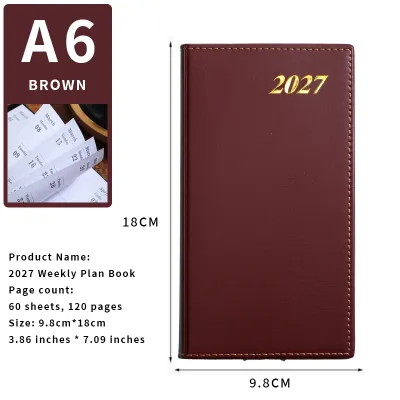
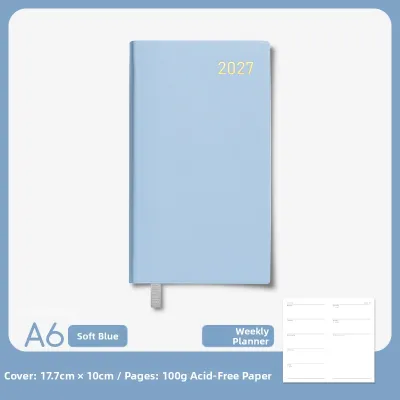
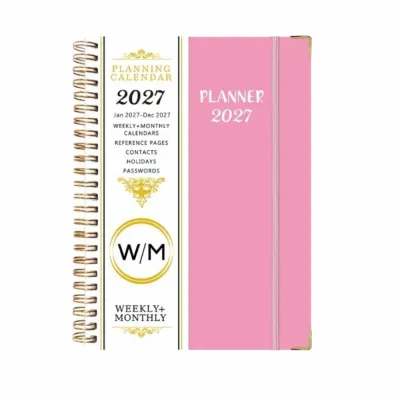
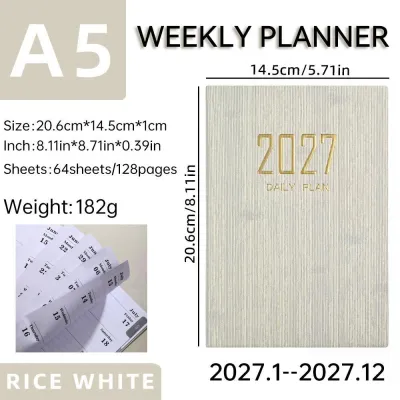
![[2 in 1] 2027 Vincent van Gogh Monthly Planner + Weekly Planner/Notebook - (A5 | 120 pages)|ROYCE PUBLISHING](https://img.lazcdn.com/g/p/167f5ca7dc71bb65dfe551a31e9f4650.jpg_400x400q80.jpg_.webp)
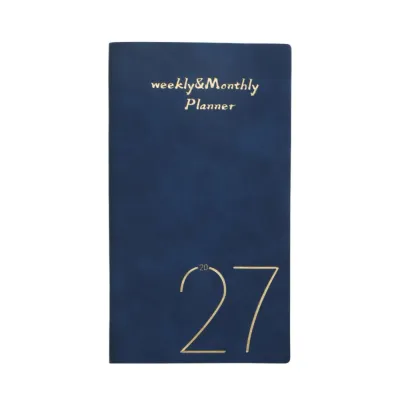
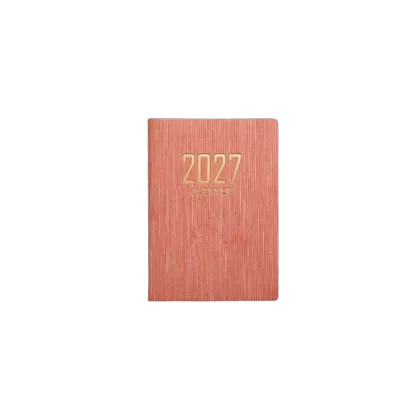
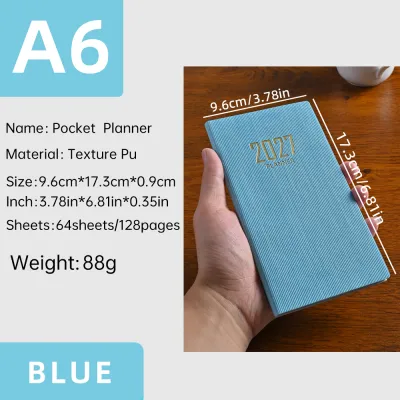
Prices are valid at publication and may change. Please refer to the product page for the latest price.
Physical portability is another critical factor, especially when commuting on the MRT or traveling between workspaces. Large formats like B5 or A5 offer generous writing space, making them ideal for stationary desk use in a home office or corporate headquarters. However, these larger books add noticeable weight to your bag. If you are constantly on the move, a pocket-sized planner (such as A6 or B6 Slim) fits easily into small bags or pockets, ensuring you can jot down thoughts instantly. Balancing writing comfort against carrying weight prevents the common pitfall of purchasing a beautiful planner that ultimately remains unused on your desk.
Finally, consider your need for structured guidance versus creative freedom. Pre-structured planners feature printed dates, hourly grids, and designated sections for goals, which is excellent for users who want immediate, low-effort organization. On the other hand, bullet journal enthusiasts and creative planners often prefer dotted, grid, or blank pages. These open formats allow you to design custom layouts, track habits dynamically, and integrate sketching or hand-lettering. Identifying where you fall on this spectrum ensures you do not feel restricted by rigid templates or overwhelmed by blank pages.
Comparing Internal Layouts and Page Structures
The internal layout of your 2027 planner directly dictates how you process and execute your daily tasks. Time-blocking layouts are highly effective for professionals, freelancers, and students who must manage tight schedules. These designs typically feature vertical columns for each day, divided into hourly or half-hourly increments. When evaluating these layouts, check if the time range matches your active hours; some planners cover a standard 9-to-5 workday, while others offer a full 24-hour timeline. A well-designed time-blocking spread allows you to visualize open gaps in your day, preventing over-commitment and helping you allocate dedicated focus blocks.

If your work is task-oriented rather than appointment-driven, open weekly spreads offer greater flexibility. Horizontal weekly layouts present the week across a two-page spread, providing wide rows for writing daily summaries, journaling, or listing tasks. Vertical weekly layouts without printed hours allow you to divide your day into simple categories, such as morning, afternoon, and evening, or separate work tasks from personal errands. Many modern planners also include dedicated sidebars on these weekly spreads for weekly checklists, habit trackers, and gratitude prompts, helping you maintain a holistic view of your week without needing separate tracking sheets.
Beyond the daily and weekly pages, supplementary sections add significant organizational value to a yearly planner. A robust future log or yearly overview is essential for mapping out long-term projects, exam schedules, and vacation dates months in advance. Project planning pages with Gantt-style charts help you break down complex goals into manageable steps. Additionally, look for planners that include an index page and numbered sheets, which make it easy to locate specific meeting notes or brainstorming sessions later in the year. Verifying these extra pages beforehand ensures your planner can handle both immediate tasks and long-term strategic planning.
Assessing Paper Specifications and Build Quality
The tactile experience of writing is heavily influenced by paper specifications, which also determine how well the planner handles different writing instruments. Paper weight is measured in GSM (grams per square meter), and this figure is a reliable indicator of opacity and thickness. Standard planners often use paper ranging from 52 GSM to 120 GSM. If you prefer using fountain pens, wet gel pens, or heavy markers, look for paper specifically treated to resist ink feathering and bleed-through. While ultra-thin, high-quality papers (around 52 to 68 GSM) can handle fountain pen ink beautifully without bleeding, they do exhibit “ghosting,” where writing is visible on the reverse side of the page. If ghosting distracts you, opt for thicker paper of 80 GSM to 120 GSM.
In Singapore’s humid climate, paper can absorb ambient moisture over time, which sometimes exacerbates ink bleeding and feathering. Choosing a planner with high-quality, coated paper helps mitigate this issue. Furthermore, the binding type is crucial for writing comfort. Thread-sewn bindings, often referred to as lay-flat bindings, are highly recommended because they allow the planner to open completely flat on your desk. This design ensures you can write comfortably near the inner margins without fighting a curving page. In contrast, tightly glued bindings can crack over time, while spiral or wire-bound planners can obstruct your hand when writing on the back of a page.
The cover material protects your planner from daily wear and tear inside your bag. Hardcovers provide a sturdy writing surface when you do not have a desk available, and they offer maximum protection against bent page corners. Softcovers, often made of flexible cardstock or thin plastics, are lighter and conform easily to tight spaces, though they may show wear more quickly. For a premium feel and long-term durability, synthetic leather (polyurethane) and fabric wraps are popular choices. If you select a fabric cover, consider using a clear plastic protective sleeve to shield it from dirt, spills, and humidity-induced stains.
Navigating Availability and Value in the Local Market
Acquiring your chosen 2027 planner in Singapore requires navigating various retail channels to ensure authenticity and timely delivery. To avoid counterfeit products or outdated editions, prioritize purchasing from authorized physical retailers, official brand webstores, or verified sellers on online marketplaces. Visiting a local physical stationery boutique allows you to touch the paper, test the binding, and view the true colors of the covers before committing. If you choose to order online, pay close attention to shipping timelines, especially during the peak planner launch season between September and December, to ensure your planner arrives well before the new year begins.
When evaluating the overall value of a planner, look beyond the initial price tag and calculate the cost per page alongside included features. A planner that includes built-in ribbon bookmarks, an elastic closure band, a pen loop, and an expandable back pocket for loose receipts offers immediate convenience without requiring extra purchases. Refillable planner systems, which utilize a durable outer cover made of leather or canvas paired with replaceable paper inserts, represent an excellent long-term investment. While the initial setup cost for a high-quality cover is higher, the recurring annual cost is significantly lower since you only need to purchase the paper refills for subsequent years.
Finally, review the purchasing and return conditions before finalizing your transaction. Because planners are seasonal items with limited print runs, popular layouts and cover designs can sell out quickly. Check the retailer’s policy regarding manufacturing defects, such as misprinted dates, missing pages, or damaged bindings. A reputable seller should offer a clear exchange or return policy for defective stationery. Securing your planner early in the launch cycle not only guarantees your preferred layout but also gives you ample time to set up your future logs and transition your schedule smoothly into 2027.
Frequently Asked Questions (FAQ)
Can I use an undated planner instead of a specific 2027 edition?
Yes, undated planners are an excellent alternative if your scheduling needs fluctuate throughout the year. They offer complete flexibility, allowing you to skip weeks or months when you do not need to plan, thereby eliminating wasted pages. However, they require you to manually write in the dates and days of the week, which can be time-consuming. A pre-dated 2027 planner provides immediate convenience, pre-printed national holidays, and a structured timeline that helps you visualize the entire year without any setup effort.
How do I prevent ink from bleeding through planner pages?
To prevent ink bleed-through, match your writing instrument to your planner’s paper specifications. If your planner has thin or uncoated paper, use fine-tip ballpoint pens, low-viscosity hybrid inks, or pigment-based gel pens, which dry quickly and sit on top of the paper fibers. Avoid wet fountain pens, broad-tip water-based markers, and permanent alcohol-based markers unless the manufacturer explicitly states the paper is rated for heavy ink. Conducting a small ink test on a back note page is always recommended before writing extensively.
Are refillable planner covers worth the investment?
Refillable planner covers are highly worth the investment if you plan to maintain a consistent planning size and layout over several years. High-quality covers made of leather, canvas, or durable synthetic materials develop a beautiful patina over time and protect your inserts from damage. By purchasing only the paper refills each year, you reduce environmental waste and save money in the long run. However, if you like to change your planner size, layout, or aesthetic every year, a standard all-in-one bound planner is a more practical choice.

Community discussion
Share your experience or ask a question. Comments are reviewed before publication.