
Selecting your first watercolour travel set is a balancing act between portability and paint performance. For a beginner, the ideal set is not necessarily the one with the most colours, but rather one that offers predictable pigment behaviour, reliable mixing space, and a durable case that fits easily into a bag. When painting outdoors or on the move, you face environmental variables like changing light, wind, and varying humidity. A well-designed travel set minimizes these distractions, allowing you to focus entirely on learning how water, pigment, and paper interact. By evaluating key specifications such as pan size, pigment grade, and palette ergonomics, you can avoid common purchasing pitfalls and select a tool that supports your creative growth.
Core Paint and Palette Specifications to Evaluate
When shopping for a watercolour travel set, the paint itself is your most critical consideration. Beginners often face the choice between student-grade and professional-grade pigments. Student-grade paints are highly accessible and cost-effective, making them excellent for low-pressure practice. However, they typically contain higher ratios of fillers and synthetic binders, which can result in a slightly chalky finish or require more effort to re-wet. Professional-grade paints, on the other hand, utilize high-quality gum arabic as a binder and a higher concentration of pure, single pigments. This formulation ensures excellent lightfastness—meaning your artwork resists fading when exposed to light—and allows for vibrant, clean colour mixing. For your first set, look for high-quality student-grade lines from reputable manufacturers, which offer a reliable compromise between performance and budget.
The physical format of the paint pans also dictates your painting experience. Most travel sets utilize half-pans, which measure approximately 1.5cm by 1.9cm. These tiny blocks of dry paint are incredibly space-efficient, allowing manufacturers to pack 12 to 14 colours into a case no larger than a smartphone. While half-pans are ideal for keeping your kit lightweight, they can be challenging to navigate if you prefer using larger brushes, such as a size 8 or 10 round. Repeatedly scrubbing a large brush into a small half-pan can splay and damage the brush hairs over time. Full-pans are twice the size of half-pans, offering a much larger surface area for quick brush loading. However, they double the physical footprint of your palette. For most beginners, starting with a half-pan set is highly practical, provided you pair it with appropriately sized travel brushes.
Products mentioned in this guide
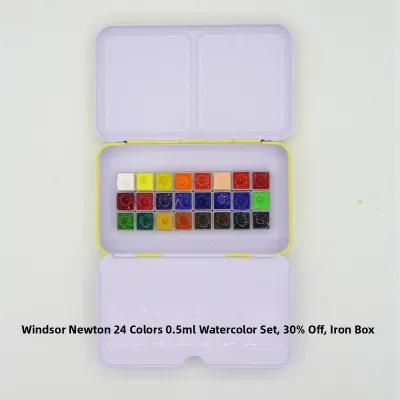
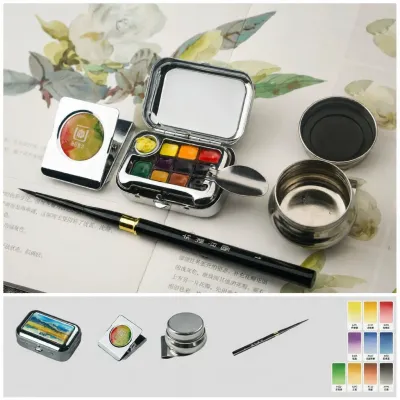
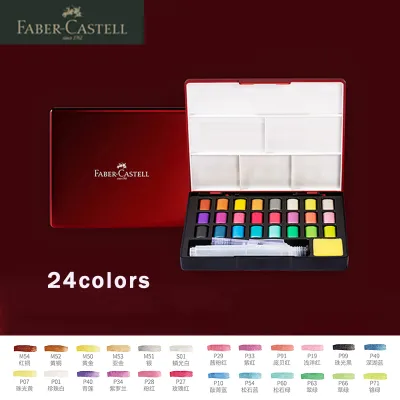
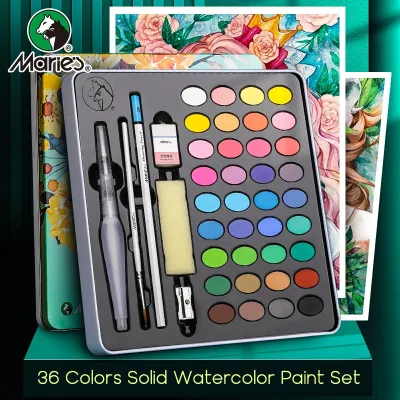
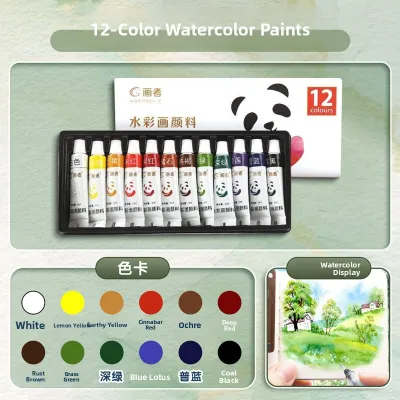
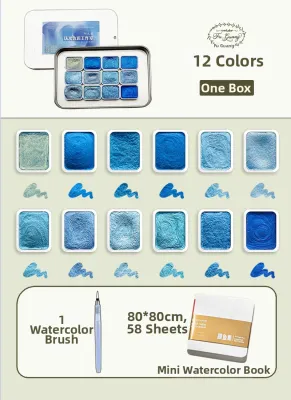
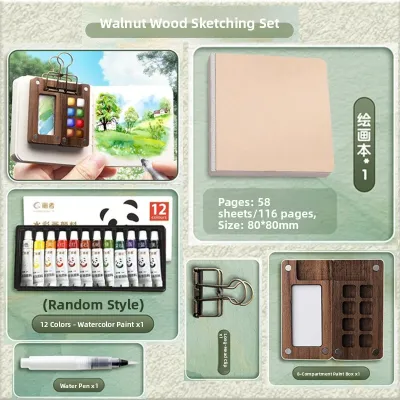
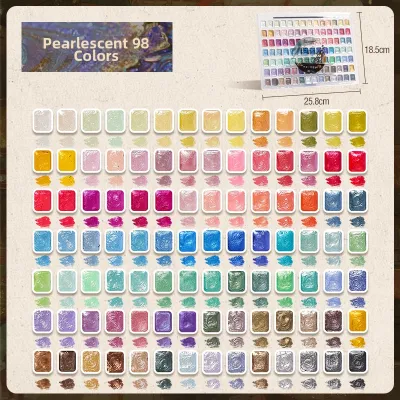
Prices are valid at publication and may change. Please refer to the product page for the latest price.
Beyond the paint, the palette’s mixing area is where your creative work actually happens. A functional travel palette must provide flat, stable mixing wells that prevent your washes from running together. Plastic palettes are lightweight and highly affordable, making them popular for casual sketching. However, brand-new plastic has a smooth, non-porous surface that causes wet paint to bead up into tiny droplets, making it difficult to judge the exact colour and consistency of your mix. Metal palettes, typically made of tin or aluminium coated with a white enamel finish, are heavier but offer superior durability. They hold paint pans securely with metal tension clips and, once broken in, allow washes to lay flat across the mixing surface. When evaluating a palette, check the depth of the mixing wells; deeper wells are essential for holding generous amounts of water without spilling over the edges when you tilt the case.
Assessing Brushes, Paper Needs, and Case Design
A travel watercolour set is only as good as the tools you use alongside it. Many entry-level sets include a complimentary brush, but these are often low-quality plastic brushes that lose their shape quickly. For a reliable travel setup, look for synthetic round brushes. High-quality synthetic fibres mimic the water-holding capacity of natural hair while offering excellent “spring”—the ability of the brush tip to snap back to a sharp point after each stroke. Collapsible travel brushes are particularly useful; they feature a hollow metal or plastic cap that protects the delicate bristles when packed, then slips onto the back of the brush to form a full-length handle during use. Another popular option is the water brush, which features a squeezable plastic barrel filled with water. While water brushes eliminate the need for a separate water cup, they constantly feed moisture to the tip, which can make it difficult to control your water-to-paint ratio.

Your choice of paper is the single most important factor in how your travel set performs. Watercolour painting relies on controlled wetness, and cheap, thin paper will quickly buckle, warp, or pill under the moisture. For outdoor sketching, always choose paper with a minimum weight of 300 gsm (grams per square metre). Sizing—the chemical treatment applied to paper during manufacturing to control its absorbency—is also critical. Cotton paper is internally and externally sized, allowing the paint to sit on the surface longer so you can blend colours smoothly. Cellulose or wood-pulp paper is more budget-friendly and dries faster, which is convenient for quick sketches, but it is less forgiving for wet-on-wet techniques. Because smoothness, bleed resistance, and drying speed depend entirely on the specific combination of paint and paper, perform a simple wash test on a scrap piece of your travel paper to observe how the materials interact before starting a finished piece.
The physical design of the travel case determines how easily you can paint in non-traditional environments. Look for a case with a secure, heavy-duty latch or a tight-fitting snap closure to prevent the palette from opening in your bag and exposing the dry paint to dust or moisture. Hinge durability is another common failure point; metal hinges generally withstand daily wear much better than thin plastic folds. If you plan to paint while standing—such as during urban sketching or hiking—look for a case that features a metal thumb ring on the bottom. This ring allows you to balance the palette securely on one hand while keeping your other hand free to hold your brush and sketchbook. Finally, measure the closed dimensions of the set to ensure it fits comfortably within your preferred travel pouch or pocket.
Building Your Shortlist: Configuration Paths for Beginners
Because every artist has different preferences, there is no single “perfect” travel set. Instead, you can choose from three common configuration paths based on your painting style and portability needs. The first path is the “Minimalist Sketcher.” This setup prioritizes ultra-compact design and speed. It typically consists of a small metal pocket tin containing 6 to 12 essential primary and secondary colours, paired with a single water brush and a pocket-sized, hardbound watercolour journal. This configuration is perfect for quick, spontaneous line-and-wash sketches in cafes, trains, or on hiking trails, where setup and cleanup times must be kept to an absolute minimum.
The second path is the “Studio-to-Go” configuration. This approach is designed for beginners who want to paint more detailed, traditional landscapes or still lifes outdoors. It features a larger folding metal or plastic palette containing 12 to 18 half-pans, providing a broader colour gamut and significantly larger mixing wells. This setup is usually paired with a collapsible water cup, a couple of high-quality travel brushes, and a larger watercolour block or pad. While it requires a flat surface like a park bench or a folding easel to set up, it offers a painting experience that closely mimics the comfort and control of a home studio.
The third path is the “Custom Builder” approach, which offers the highest level of personalization. Instead of buying a pre-filled set, you purchase an empty metal pocket tin and a pack of empty plastic half-pans. You then buy individual tubes of professional or high-quality student-grade watercolour paint and squeeze them into the empty pans, allowing them to dry completely over a few days. This method allows you to curate a highly specific colour palette tailored to your favourite subjects—such as earthy tones for forest landscapes or bright primaries for urban scenes—while also making it incredibly easy to swap out individual colours as your skills develop.
Before finalizing your purchase, use this pre-purchase checklist to verify the quality and compatibility of your chosen travel set:
- Confirm that the paint pans are standard half-pan dimensions (approx. 1.5cm x 1.9cm) so you can easily buy refills from other brands later.
- Check that the pans are held securely in the tray by metal tension prongs or magnetic strips, preventing them from rattling or falling out during travel.
- Verify the retailer's return policy, especially when purchasing online, to ensure you can exchange the set if the hinges are loose or the mixing wells are warped.
- If shopping in Singapore, visit a local art supply store to physically hold the palette, checking its weight and ensuring the latch opens and closes smoothly.
Common Beginner Mistakes to Avoid When Buying
One of the most common mistakes beginners make is purchasing large, inexpensive sets containing 36, 48, or even more colours. While these sets look appealing, they almost always use low-quality pigments mixed with heavy chalk fillers. These paints dry with a dull, chalky texture, do not blend smoothly, and quickly turn into a muddy grey when mixed together. A high-quality set of 12 essential colours—consisting of a warm and cool version of each primary colour, plus a few earth tones—is far superior. It teaches you the fundamentals of colour theory and mixing, resulting in cleaner, more vibrant paintings.
Another frequent pitfall is choosing a set with inadequate mixing space. Some ultra-compact palettes pack as many paint pans as possible into a tiny footprint, leaving almost no room for mixing washes. Other sets feature mixing wells that are too shallow or angled poorly, causing your wet paint mixtures to run off the edges and contaminate adjacent colours. Always prioritize a palette design that dedicates at least half of its physical footprint to clean, deep mixing wells.
Finally, beginners often forget to budget for the essential accessories that make outdoor painting practical. A travel watercolour set cannot function in isolation. When planning your purchase, ensure you have a reliable, collapsible water cup that can clip onto your palette or sit securely on uneven ground. You will also need a roll of low-tack masking tape to secure your paper to a backing board, and a highly absorbent microfibre cloth or small sponge to control the moisture level of your brush and clean your mixing wells on the go.
Frequently Asked Questions (FAQ)
Do I need to wet the pans before painting?
Yes, dry watercolour pans perform best when pre-wetted. Use a small spray bottle to mist the entire palette with clean water a minute or two before you begin painting, or place a drop of clean water onto each pan using your brush. This softens the binder and activates the pigment, allowing you to load your brush easily without scrubbing the dry paint, which can damage your brush bristles.
Can I replace individual pans when they run out?
Most standard travel sets use universal half-pan dimensions, allowing you to easily replace individual colours when they run dry. You can purchase pre-filled half-pans from various brands, or buy empty plastic pans and fill them with tube paint. To secure loose pans in a metal tin, check that the metal retaining clips are bent slightly inward, or apply a small piece of magnetic tape to the bottom of the pan for easy swapping.
How do I clean a metal or plastic travel palette?
Clean your mixing surfaces gently using a damp, soft cloth or a sponge with clean water. Avoid using abrasive scrubbers or harsh chemical cleaners, as these can scratch plastic surfaces—making them bead water even more—or strip the protective white coating from metal palettes. Once clean, leave the palette open to air-dry completely before closing it, which prevents rust on metal hinges and stops mould from growing on damp paint pans.

Community discussion
Share your experience or ask a question. Comments are reviewed before publication.