
Finding your first water colour palette in Singapore is a balancing act between physical convenience, material performance, and your immediate learning goals. The ideal starter palette is one that keeps your paint clean, provides ample space for color mixing, and fits comfortably within your dedicated workspace or sketching bag. Because Singapore’s tropical climate brings high humidity alongside dry, air-conditioned indoor environments, your choice of palette also dictates how well your paints preserve over time. By focusing on how different materials interact with water and how various layouts support your practice, you can avoid common beginner frustrations and build a sustainable painting routine.
Understanding Water Colour Palette Formats
Selecting the right physical format for your water colour palette depends heavily on where and how you plan to paint. Beginners often face a choice between highly portable folding pocket palettes and larger, stationary tray or block palettes. Each format serves a distinct style of learning and dictates how much physical space you have to mix your washes.
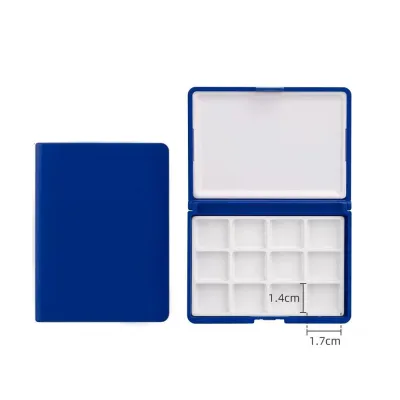
Folding pocket palettes are designed with mobility in mind, making them excellent companions for urban sketching around Singapore’s scenic spots or painting in local cafes. These palettes typically feature a hinged design that folds down into a compact, pocket-sized footprint, protecting your paint pans from dust and damage when closed. When opened, the interior lids and fold-out flaps double as mixing areas. While highly convenient, the mixing spaces on folding palettes are naturally limited in size, which can make it challenging to mix large volumes of wash for broad background washes.
Products mentioned in this guide
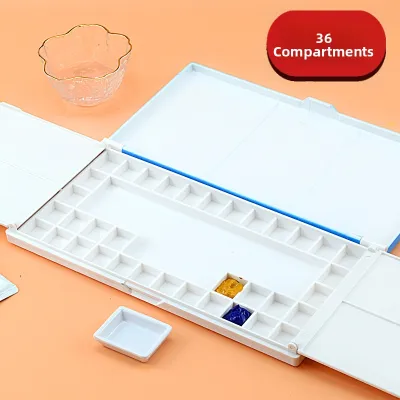
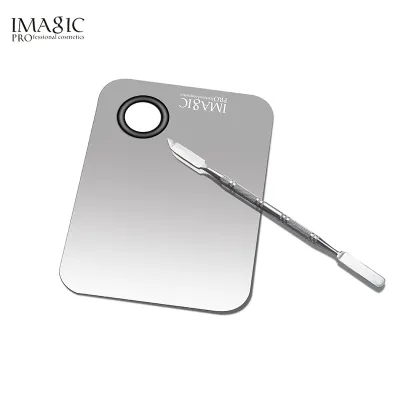
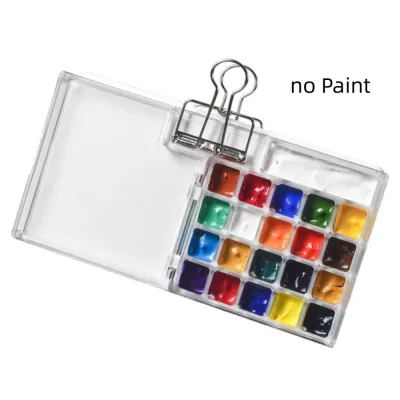
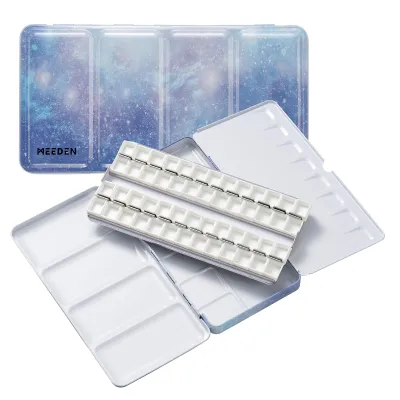
Prices are valid at publication and may change. Please refer to the product page for the latest price.
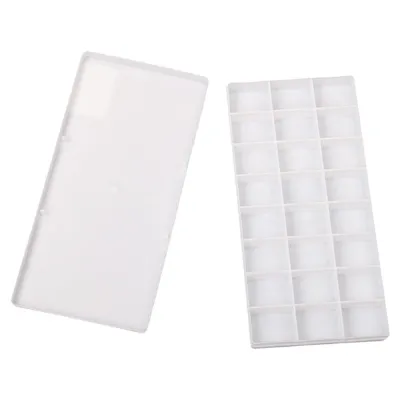
In contrast, traditional tray, well, or block palettes are built for stationary studio or desk use. These palettes offer a flat, expansive layout with numerous deep wells surrounding a large, central mixing area. If you are practicing at a dedicated desk at home, a stationary tray provides the stability and surface area needed to experiment freely with color theory without worrying about paint overflowing. The primary trade-off is portability; these trays are bulky, difficult to transport without spilling residual moisture, and require a flat surface to operate safely.
The material of your palette also plays a fundamental role in how paint behaves on its surface. Plastic palettes are lightweight, highly affordable, and virtually shatterproof, making them the most common entry point for beginners. However, new plastic surfaces possess a high surface tension that causes wet paint to bead up into small droplets rather than spreading smoothly, which can make it difficult to judge the exact color and dilution of your mix. Over time, plastic also tends to absorb pigments, leading to permanent staining.
Ceramic and metal palettes offer distinct performance advantages over plastic. Ceramic mixing surfaces are highly favored by artists because they are completely non-porous; water and paint spread evenly across the surface without pooling or beading, allowing for highly accurate color mixing. Ceramic is also heavy enough to remain perfectly stable on your desk and is incredibly easy to clean without staining, though its weight and fragility make it unsuitable for travel. Metal palettes, often made of lightweight tin or aluminum with an enameled white interior, offer a middle ground. They provide a smooth mixing surface that resists beading better than plastic, while remaining durable and lightweight enough for outdoor use.
For a beginner learning basic wash techniques, the physical size and depth of the mixing wells are just as important as the material. Deep wells allow you to mix a generous amount of water and pigment together, ensuring you do not run out of paint halfway through a large wash. Shallow wells are easier to wipe clean but can easily lead to colors bleeding into adjacent mixing areas if you tilt the palette or use too much water.
Pre-filled Sets vs. Empty Palettes
One of the first decisions you must make when purchasing your first water colour palette is whether to buy a pre-filled set curated by a manufacturer or an empty palette that you fill yourself. Both approaches have clear advantages depending on your budget, your interest in color theory, and how you prefer to manage your art supplies.

Pre-filled palette sets, which typically come loaded with dry half-pans or small tubes of paint, offer immediate usability. For a beginner, these sets remove the guesswork of selecting individual pigments from a confusing wall of options at the art store. Manufacturers design these sets to include a balanced range of primary and secondary colors, often featuring a warm and cool version of red, yellow, and blue. This curation is highly cost-effective upfront, allowing you to start painting immediately and learn the fundamentals of color mixing without a significant initial investment.
However, pre-filled sets do have limitations. You may find yourself rarely using certain colors included in the set, such as black or white, which are less common in traditional transparent watercolor painting. Additionally, replacing a single exhausted color in a pre-filled set can sometimes be difficult if the manufacturer does not sell individual replacement pans in that specific line, forcing you to adapt to different brands or formats.
Empty palettes offer complete flexibility and long-term customization. By purchasing an empty metal tin or plastic folding palette alongside individual tubes of watercolor paint, you can curate your own custom color layout from day one. This approach allows you to invest in high-quality, artist-grade pigments for your primary colors while skipping unnecessary shades. Squeezing tube paint into empty pans and letting it dry also allows you to replenish only the colors you use most frequently, making it a highly economical choice over years of practice.
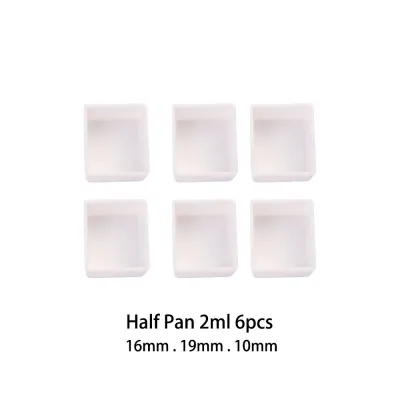
The trade-off with empty palettes is the higher initial setup cost and the effort required to prepare your supplies. Buying individual tubes of paint and an empty palette requires a larger upfront budget in S$ compared to a basic student-grade pre-filled set. Furthermore, you must ensure physical compatibility between your empty palette and the replacement pans you buy. Most empty palettes are designed to hold standard half-pans or full-pans, but minor variations in manufacturing dimensions can sometimes prevent pans from sitting securely in the metal tracks of another brand’s tin.
Essential Features to Evaluate Before Purchase
Before finalizing your purchase, it is essential to evaluate the structural quality and design details of the palette. A poorly designed palette can lead to messy mixing sessions, contaminated colors, and wasted paint. Inspecting a few key features will ensure your chosen tool supports a smooth, frustration-free painting experience.
First, examine the depth, angle, and physical separation of the mixing wells. High-quality palettes feature distinct, raised ridges or sloped walls between the wells to prevent wet paint from migrating and contaminating neighboring colors. If you plan to work with wet-on-wet techniques or large washes, look for a palette with deep, slanted wells that allow you to pool water at the bottom while keeping concentrated pigment near the top slope. This design gives you precise control over the dilution of your paint.
Second, consider the sealing mechanism and airtight capabilities of the palette. In Singapore’s warm and humid climate, paint left exposed to the air can attract dust, while paint sealed in a completely airtight container while still soaking wet can occasionally develop mold if left unused for long periods. Conversely, if you paint in an air-conditioned room, the dry air will rapidly dehydrate your wet paint. An airtight palette with a silicone or rubber gasket seal is highly beneficial for keeping squeezed tube paints moist and pliable between daily painting sessions, but you should allow the palette to air out occasionally if you plan to store it away for several weeks.
Third, review the durability of the physical hardware, particularly the hinges and latches. Folding palettes rely on these moving parts to stay closed and protect your paints during transport. Cheap plastic hinges can easily fatigue and snap after a few months of regular opening and closing. Look for palettes with reinforced metal hinge pins or robust, thick plastic latches that snap shut securely. A loose latch can lead to the palette accidentally opening inside your bag, potentially ruining your other stationery supplies.
Finally, check how easy the surface is to clean and whether it resists staining. While all plastic palettes will eventually stain to some degree when exposed to highly staining pigments (such as phthalo blue or alizarin crimson), higher-quality plastics with smooth, glossy finishes resist staining much better than cheap, textured plastics. If you are buying in a physical store, look for a smooth, glass-like interior finish that suggests easy cleanup.
Matching the Palette to Your Learning Routine
To make your final decision, you should align the physical characteristics of the palette with your specific learning routine, workspace constraints, and budget. There is no single perfect palette for everyone, but there is a format that will fit seamlessly into your daily life.
If your primary practice space is a small desk or a shared dining table at home, space efficiency is key. A compact folding plastic palette or a small, stackable ceramic flower tray is ideal for these scenarios, as they can be easily set up and packed away in minutes without cluttering your living space. For those who enjoy urban sketching or painting outdoors in Singapore’s parks and historic districts, a lightweight metal pocket tin with a built-in thumb ring on the bottom is the gold standard. The thumb ring allows you to hold the palette securely in one hand while holding your brush and sketchbook in the other.
Your budget in S$ will also guide your selection. For absolute beginners testing the waters, a simple plastic folding palette or a basic pre-filled student set costing under S$15 is a low-risk way to start. If you are committed to learning and want a tool that will last for years, investing S$20 to S$40 in a sturdy metal tin with empty half-pans, or a high-quality ceramic mixing tray for home use, offers far better value over time. These mid-range options are widely available at local art supply stores in Singapore, particularly around cultural hubs like Bras Basah Complex, where you can physically handle the palettes to assess their weight and build quality.
Lastly, do not forget to check the physical compatibility of your palette with your other painting tools. Ensure that the mixing wells are wide enough to accommodate the brushes you plan to use; a large flat wash brush will not fit into a tiny half-pan or a narrow mixing well without bending the bristles. Similarly, consider how the palette fits alongside your water cup and paper format on your desk, ensuring a clean, organized workflow that lets you focus entirely on mastering your watercolor techniques.
Frequently Asked Questions (FAQ)
How do I clean dried watercolour paint from a plastic palette?
To clean dried watercolor paint from a plastic palette, start by soaking the palette in lukewarm water for a few minutes to soften the dried pigment. Gently wipe the surface with a soft sponge, microfiber cloth, or cotton ball. Avoid using abrasive scrubbers, steel wool, or harsh chemical solvents like acetone, as these will create micro-scratches on the plastic surface. These tiny scratches ruin the smooth finish, causing paint to bead up even more and making the palette highly susceptible to permanent staining in the future.
Do I need a special wet palette for watercolour painting?
No, you do not need a special wet palette for watercolor painting. Commercial wet palettes, which use a damp sponge and a semi-permeable paper membrane, are specifically designed to keep acrylic paints from drying out and hardening permanently. Watercolor paint behaves differently; it can be easily re-solubilized with water even after it has dried completely rock-hard. To preserve your watercolors between sessions, a standard airtight plastic palette or simply rewetting your dry paint pans with a fine mist from a spray bottle before you begin painting is perfectly sufficient.

Community discussion
Share your experience or ask a question. Comments are reviewed before publication.