
Starting a new craft is an exciting venture, but walking into a craft store or browsing online marketplaces can quickly lead to choice paralysis. With hundreds of colors, materials, and brands available, finding the right embroidery thread is the first critical step toward a successful project. For beginners, the ideal thread is one that is forgiving, easy to manipulate, widely accessible, and gentle on the budget.
To build a reliable starter kit without overspending, you do not need to purchase every color in a premium range. Instead, understanding the physical characteristics of high-quality thread—such as its twist, ply, and material composition—will empower you to make smart, cost-effective decisions. By focusing on versatile, divisible cotton threads and learning how to verify their quality, you can avoid the frustration of tangling, fraying, and color bleeding, ensuring your first stitching experience is both highly satisfying and successful.
What Makes an Embroidery Thread Suitable for Beginners?
When you are learning the basic mechanics of hand embroidery, your thread needs to cooperate with your hands, your needle, and your fabric. A beginner-friendly thread must be forgiving of mistakes, allowing you to pull out stitches and re-do them without the fiber immediately disintegrating or losing its structure. The physical construction of the thread determines how smoothly it glides through the fabric and how well it holds its shape on the surface.
Products mentioned in this guide
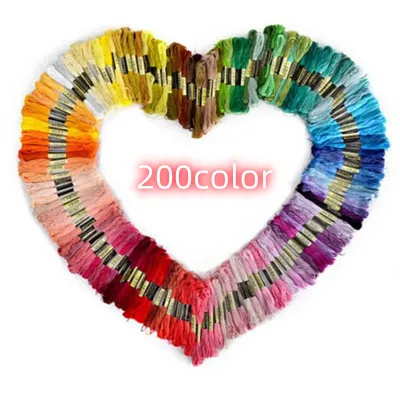
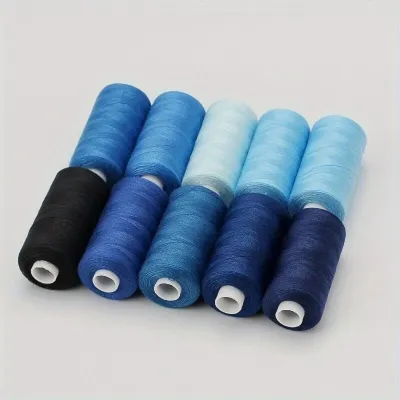
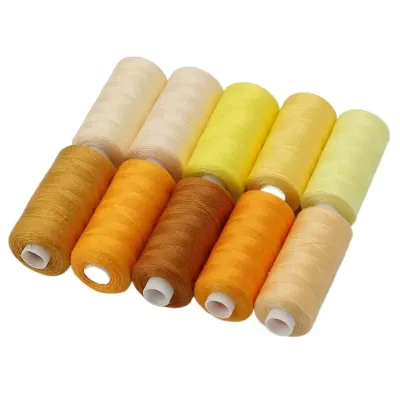
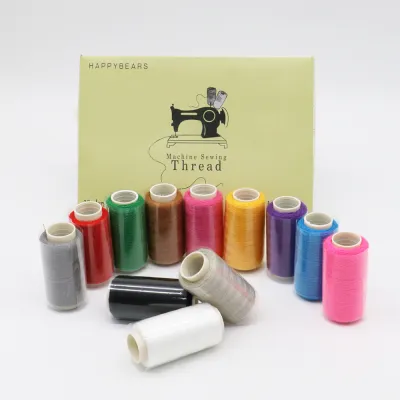
Prices are valid at publication and may change. Please refer to the product page for the latest price.
Tension and Twist
The way a thread is spun, known as its twist, directly impacts how it behaves during hand stitching. Most high-quality hand embroidery threads feature a balanced, relatively loose twist that allows the individual plies to sit side-by-side smoothly. If a thread is over-twisted, it will constantly curl back on itself, creating frustrating knots and loops as you pull it through the fabric. Conversely, an under-twisted thread will split and fray prematurely at the needle eye, making it difficult to maintain consistent stitch tension.
Thickness and Ply
For those just starting out, a standard six-strand divisible thread—commonly referred to as embroidery floss—is the most versatile option. This thread is composed of six individual, lightly twisted plies that can be easily separated. This divisibility allows you to customize the thickness of your thread to match the weight of your fabric and the detail level of your design. You can use a single strand for delicate, whisper-thin outlines, or combine all six strands for bold, highly textured fills.
Colorfastness Basics
Colorfastness refers to a thread’s ability to retain its dye without bleeding onto the surrounding fabric when washed or exposed to moisture. For beginners, ensuring your thread is colorfast is absolutely critical, as a single bleeding red or blue thread can ruin hours of work during the final rinse. When evaluating options, look for terms like “colorfast,” “fade-resistant,” or “grand teint” on the packaging. These labels indicate that the dye has been chemically set to withstand standard washing conditions.
Understanding Common Thread Materials and Their Handling
Embroidery threads are manufactured from a variety of natural and synthetic fibers, each offering a distinct texture, appearance, and handling experience. Understanding how these materials behave under hand tension will help you select the right option for your specific project goals.

Cotton Threads
Cotton is the undisputed gold standard for hand embroidery, especially for beginners. It offers a soft, matte to semi-matte finish and a natural grip that makes tension control highly intuitive. Most high-quality cotton threads undergo a process called mercerization, which treats the fibers with a mild sodium hydroxide solution. This process increases the thread’s tensile strength, gives it a subtle, elegant luster, and improves its dye absorption, resulting in rich, vibrant colors that resist fading. Cotton behaves predictably on almost all non-stretchy fabrics, making it ideal for surface embroidery, cross-stitch, and needlepoint.
Polyester and Synthetic Blends
Polyester and cotton-polyester blends are highly durable, resistant to shrinking, and offer excellent elasticity. These threads are particularly useful for embroidering items that will undergo frequent, heavy laundering, such as children’s clothing, tote bags, or outdoor gear. However, synthetic fibers are naturally slicker and more slippery than cotton. This lack of grip can make it slightly harder for beginners to maintain even tension, as the stitches may slip or loosen before they are fully secured. They also tend to carry a static charge, which can attract dust and cause the strands to cling together stubbornly.
Rayon and Silk Alternatives
Rayon threads are prized for their intense, brilliant sheen and fluid drape, while silk threads offer an unmatched, luxurious luster and soft texture. While visually stunning, both materials present significant handling challenges that can frustrate a beginner. Rayon is incredibly slippery, prone to untwisting, and has a tendency to “spring” out of the needle eye. Silk, on the other hand, is highly delicate and can easily snag on rough skin, hangnails, or minor imperfections in your embroidery needle. It is generally best to reserve these specialty materials for future projects once you have comfortable control over your basic stitch mechanics.
How to Evaluate Thread Brands on a Beginner's Budget
Building a starter kit does not require a massive financial investment. By learning how to read product labels and inspect threads physically, you can find highly reliable options that offer excellent performance at a fraction of the cost of premium collector sets.
Reading the Label
A standard skein of embroidery floss is typically 8 meters (approximately 8.7 yards) long and wrapped with two paper bands. When examining a label, look for the fiber content, which should ideally read “100% long-staple cotton” for the best handling experience. Additionally, locate the dye lot number. Even when using the exact same color code, subtle variations in dye batches can occur. If your project requires multiple skeins of the same color, matching the dye lot numbers ensures absolute color consistency across your entire design.
Assessing Color Range vs. Project Needs
It is common for beginners to be tempted by massive, inexpensive bulk packs containing 100 or more random colors on online marketplaces. While these packs seem like an incredible value, they often consist of low-grade, unbranded threads that fray, knot, and bleed easily. A far more cost-effective strategy is to purchase a curated beginner palette of 10 to 20 high-quality skeins from a reputable craft store, or to buy individual colors specifically chosen for your first pattern. This targeted approach keeps your initial costs low—often under S$15 to S$20—while ensuring you are working with materials that will not cause unnecessary frustration.
Spotting Quality Red Flags
Before purchasing any thread, perform a quick physical inspection if you are shopping in person, or check detailed user reviews if buying online. Run a short section of the thread between your thumb and forefinger. It should feel smooth, uniform, and slightly polished. Avoid threads that exhibit excessive lint, fuzz, or visible variations in thickness along the strand, as these “slubs” will catch on your fabric and cause tangling. Gently pull a short length of the thread between your hands; it should offer firm resistance and stretch slightly before snapping, rather than breaking instantly under light tension.
Building Your Starter Kit: A Conditional Thread Shortlist
To help you navigate your first purchase, use this structured guide to select the right thread specifications based on your intended fabric and project type.
For Standard Cotton and Linen Fabrics
If you are planning to stitch on non-stretchy, natural fabrics like cotton calico, linen, or Aida cloth, your best choice is a classic mercerized cotton thread.
- Thread Specification: Size 25 six-strand divisible cotton floss.
- Material: 100% long-staple mercerized cotton.
- Key Benefit: Provides excellent stitch definition, a subtle luster, and a natural grip that makes learning basic stitches highly intuitive.
- Recommended Needle: Size 3 to 9 embroidery/crewel needles, depending on the number of strands used.
For Stretchy or Synthetic Fabrics
If you are customizing a stretchy knit t-shirt, a denim jacket with elastane, or a synthetic blend fabric, you need a thread that can flex with the material.
- Thread Specification: Polyester or cotton-polyester blend embroidery thread.
- Material: 100% polyester or a high-polyester blend.
- Key Benefit: Offers superior elasticity and tensile strength, ensuring the stitches do not snap when the fabric stretches during wear or washing.
- Recommended Needle: Ballpoint or stretch needles to prevent cutting the fabric fibers.
For Practice and Sampling
If your primary goal is to practice stitch mechanics, French knots, and filling patterns on scrap fabric before committing to a final piece, look for budget-friendly multipacks that do not compromise on basic structural integrity.
- Thread Specification: Budget-friendly multipacks from established craft brands.
- Material: 100% cotton (ensure "long-staple" is noted on the packaging to minimize fraying).
- Key Benefit: Allows you to experiment freely with color combinations and complex stitches without worrying about the cost per meter.
- Recommended Needle: Standard sharp chenille or crewel needles.
Verification Checklist
Before starting your first official project, use this simple three-step checklist on a scrap piece of your project fabric to verify that your thread and material combination will perform beautifully.
- The Colorfastness Test: Cut a 10-centimeter length of your chosen thread, saturate it thoroughly with warm water, and press it firmly between two layers of white paper towel or scrap white fabric. Leave it to dry completely. If any dye transfers to the white surface, the thread is not colorfast and should only be used on projects that will never be washed.
- The Fray Resistance Test: Thread your needle with two strands of floss and pass it through your target fabric ten times in a simple running stitch. Inspect the thread near the needle eye. If you notice significant fuzzing, splitting, or thinning, your needle eye may be too small, or the thread quality may be too low for that specific fabric weave.
- The Tension and Glide Test: Pull a single stitch tight against the fabric. The thread should glide smoothly through the fibers without catching or pulling the fabric out of shape. If the fabric puckers, adjust your hoop tension or switch to a finer needle.
Purchasing Channels and Pre-Purchase Checks
Where you buy your thread can greatly influence its condition and performance. Knowing what to look for online and in-store will help you secure high-quality materials.
Navigating Online Marketplaces and Craft Stores
When shopping on online marketplaces, avoid listings that use generic terms like “embroidery string” or “craft wire” without specifying the exact material composition. Look for listings from authorized craft distributors or established local sewing shops. Read customer reviews carefully, paying close attention to feedback regarding “frequent breaking,” “excessive lint,” or “bleeding colors.” If a listing has multiple reviews complaining about these issues, it is best to look elsewhere, even if the price is highly attractive.
Checking Physical Inventory
If you have the opportunity to shop at a local craft store, take a moment to inspect the thread display. Avoid purchasing skeins that are covered in dust, as accumulated dust can settle into the fibers and cause them to degrade or discolor over time. Check for sun fading, especially if the display rack is positioned near a window or under harsh fluorescent lighting; faded sections will create highly visible, uneven patches in your finished embroidery. Ensure the paper bands around the skeins are intact and that the thread has not begun to unravel or tangle on the rack.
Storage Considerations
Once you bring your new threads home, proper storage is essential to maintain their quality, especially in humid climates like Singapore’s. High humidity can encourage mold growth and weaken natural cotton fibers over time. Store your skeins in a cool, dry place away from direct sunlight. Clear plastic organizer boxes with small compartments are excellent for keeping your threads organized by color, free from dust, and protected from moisture. For long-term storage, winding your threads onto plastic or cardboard bobbins will prevent tangling and make it easy to see your entire color palette at a glance.
Frequently Asked Questions (FAQ)
Do I need to separate all six strands before stitching?
Yes, it is highly recommended to separate your strands before you begin stitching, even if your pattern calls for all six strands. When thread is manufactured, the six strands are lightly twisted together to keep them organized on the skein. If you stitch with them directly without separating them first, the thread will remain tightly bound, resulting in a thinner, flatter appearance on your fabric.
By pulling the strands apart individually and then recombining the desired number of plies, you relax the twist. This allows the fibers to bloom and sit side-by-side smoothly, providing much better coverage, a richer texture, and a more professional finish. For most beginner projects on medium-weight cotton or linen, using two to three strands offers the ideal balance of detail and fabric coverage.
Can I use regular sewing thread for hand embroidery?
While you can technically use regular sewing thread for hand embroidery, it is generally not recommended for standard projects. Sewing thread is specifically engineered to be thin, highly twisted, and exceptionally strong so that it can run through a sewing machine at high speeds without snapping. This tight twist makes the thread highly prone to curling, looping, and tangling when used for hand stitching, which can be incredibly frustrating for a beginner.
Additionally, sewing thread lacks the soft, lustrous finish and thickness of embroidery floss, meaning your stitches will look very thin and sparse on the fabric. However, regular sewing thread can be highly useful for very fine outline work, delicate micro-embroidery, or utility stitches where you want the thread to blend invisibly into the background fabric rather than stand out as a decorative element.

Community discussion
Share your experience or ask a question. Comments are reviewed before publication.