
A sticker book journal can be a powerful tool for encouraging consistency, creativity, and organization in primary school children. However, a journal that delights a Primary 1 student may feel too childish or restrictive for a Primary 6 student preparing for major school assessments. Choosing the right journal requires balancing physical durability, paper quality, and layout complexity with your child’s changing developmental needs.
By matching the physical specifications of a journal to your child’s specific grade level, you can foster organizational skills and a love for writing without causing frustration. This guide helps parents navigate the transition from play-based tracking to structured planning, providing clear criteria to select age-appropriate sticker journals that align with daily school requirements.
Matching Journal Features to Your Child's Developmental Stage
Children undergo rapid cognitive and physical changes during their six years of primary school. In the lower primary years (Primary 1 to 3), fine motor skills are still developing. Writing requires significant physical effort, and spatial awareness on paper is limited. Journals for this stage must accommodate larger handwriting and broader movements, utilizing wide-ruled lines or open blank spaces where stickers can be placed without overlapping text.
Products mentioned in this guide
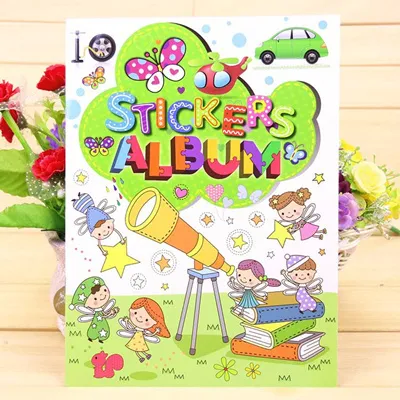
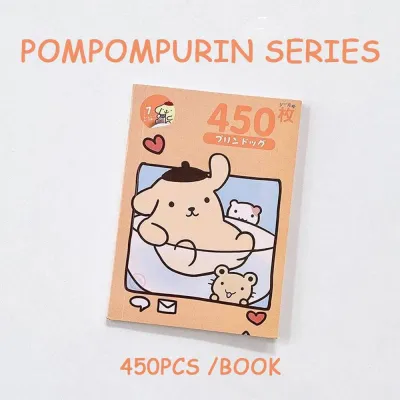
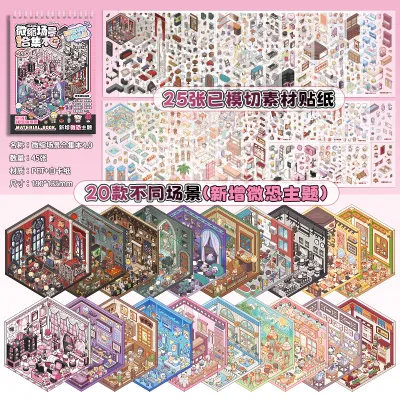
![[KW] Street Food Landscape Sticker Book | 3D Scene Sticker Set for Journal Scrapbook Cute Gift Fun Hobby| HB 10-11](https://img.lazcdn.com/g/p/4d5334f170950cc31b4aaeab3d624ec3.jpg_400x400q80.jpg_.webp)
Prices are valid at publication and may change. Please refer to the product page for the latest price.
As students progress to upper primary (Primary 4 to 6), their fine motor skills mature, allowing them to handle smaller stickers, write in compact scripts, and navigate complex grid layouts. Their cognitive focus also shifts from simple task completion to multi-step planning. While a younger child benefits from immediate visual rewards, an older student requires a layout that supports goal setting, exam preparation tracking, and reflective writing.
Attention span is another critical factor when selecting a journal. A highly complex layout with multiple daily prompts can quickly overwhelm a younger child, leading them to abandon the journal entirely. For lower primary students, simple single-page daily spreads or weekly overviews are ideal. Older students can manage multi-page monthly spreads, habit trackers, and detailed project planners, using stickers as functional markers rather than just decorative rewards.
Essential Specs to Check Before Buying Any Sticker Journal
Before purchasing any sticker book journal, evaluating the physical construction is essential to ensure it survives the school year. The first specification to check is the paper weight, measured in grams per square meter (gsm). Standard school exercise books often use 60 to 80 gsm paper, which is prone to ghosting and ink bleed-through when used with gel pens, markers, or heavy adhesive stickers. For a successful journaling experience, look for paper that is at least 100 gsm, though 120 gsm is highly recommended if your child plans to use felt-tip pens or heavy decorative elements.

Binding type directly impacts how easily a child can use and transport their journal. Spiral and wire-o bindings allow the book to lay completely flat on a school desk, making it much easier to write and place stickers near the margins. However, metal coils can easily bend or snag on other items inside a crowded school bag. Stitched or thread-bound journals offer excellent durability and slide smoothly into backpack compartments, though they may require some initial breaking in to lay flat during use.
Page layouts should match the intended balance between writing and sticker placement. Blank pages offer complete creative freedom but can intimidate children who struggle to write in straight lines. Dotted and grid formats (typically 5mm spacing) provide subtle guidelines that assist with both handwriting alignment and precise sticker positioning. Standard ruled pages are best suited for text-heavy entries, but ensure the line spacing is appropriate for your child’s handwriting size.
Finally, consider the paper’s surface finish and sticker adhesion. Matte, uncoated paper allows stickers to adhere firmly, but it makes repositioning almost impossible without tearing the page surface. Semi-gloss or lightly coated pages offer a small window of time to peel and adjust a misplaced sticker, which is highly beneficial for younger children who are still refining their placement skills. However, avoid extremely glossy paper, as it resists water-based inks and causes gel pens to smudge easily.
Ideal Sticker Journal Types for Lower Primary (Primary 1 to 3)
For students in Primary 1 to 3, the primary goal of journaling is to build positive routines and practice basic writing in a fun, low-pressure format. Journals for this age group should feature large page formats, such as B5 or A4, to provide ample physical space for developing handwriting. Look for journals that feature wide line spacing or dotted midlines, which help young writers maintain consistent letter heights and spacing as they transition from preschool writing styles.
Because younger children are often heavy-handed with coloring tools, stamps, and thick adhesive stickers, the pages must be exceptionally robust. Opt for journals with thick, opaque paper of at least 120 gsm to prevent ink from bleeding through to the reverse side. This thickness also ensures that pages do not tear or wrinkle when heavy stickers are pressed down or repeatedly smoothed over by enthusiastic hands.
Pre-printed visual trackers are highly effective for this developmental stage. Look for journals that include built-in charts for daily habits, emotion check-ins, or reading logs. These layouts allow children to use stickers as direct rewards—for example, placing a star sticker to mark a completed reading session or a smiley face sticker to represent their mood. This visual feedback loop turns routine building into an engaging game, reinforcing positive habits without requiring long paragraphs of written reflection.
Lastly, prioritize journals with durable, wipeable covers. Hardcover designs or those with protective polypropylene (PP) plastic sleeves are ideal for protecting the journal from spilled water bottles, damp hands, and the general wear and tear of early school life. A sturdy cover ensures that the child’s creative work remains preserved and presentable throughout the school term.
Ideal Sticker Journal Types for Upper Primary (Primary 4 to 6)
As students enter Primary 4 and begin preparing for more demanding academic milestones, their journaling needs transition toward functional planning and self-regulation. At this stage, standard ruled lines (7mm or 8mm) or 5mm dot grid layouts are highly suitable. These formats allow older students to balance creative sticker decoration with dense note-taking, daily homework lists, and exam study schedules.
With school bags becoming heavier and more crowded, the physical design of the journal should be streamlined yet durable. Slim, flexible polyurethane (PU) leather covers or lightweight hardcovers are excellent choices. They provide sufficient structural protection to prevent dog-eared pages and bent corners while remaining compact enough to slide easily alongside textbooks and files without adding unnecessary bulk.
Sticker journals for older primary students can be integrated directly into their academic routines. The journal can serve as a personal spelling log, a project planner for group assignments, or a reading reflection diary. Instead of using stickers purely for decoration, students can use them functionally. For instance, color-coded dot stickers can represent different school subjects, and small arrow or flag stickers can highlight urgent deadlines or high-priority tasks.
At this age, aesthetic preferences shift away from early-childhood cartoon characters toward more mature, minimalist designs. Older children often prefer journals with subtle cover designs, pastel color palettes, or geometric patterns. When selecting sticker sheets to accompany the journal, opt for functional icons, motivational quotes, or botanical themes that appeal to their growing sense of independence and personal style.
Building a Practical Back-to-School Stationery Shortlist
When finalizing your purchase, start by cross-referencing your journal choices with your child’s official school stationery list. Some schools have strict guidelines regarding what items can be brought into the classroom to minimize distractions. If a highly decorative sticker journal is deemed too distracting for class, designate it as a home-based journal for tracking homework, reading progress, and weekend reflections, while keeping standard exercise books for school hours.
Balancing your budget with the journal’s intended lifespan is also crucial. While premium, archival-grade journals are beautiful, they may not be practical if your child tends to fill pages quickly or lose items. For daily school use, mid-range journals priced between S$5 and S$20 offer an excellent balance of durable binding and decent paper quality. Save the premium options for special milestone journals or personal diaries kept safely at home.
Before purchasing online or leaving the stationery store, perform a quick quality check on the physical product. Inspect the binding to ensure there are no loose threads or misaligned coils that could cause pages to fall out over time. Flip through the pages to verify that there are no printing errors, missing sheets, or upside-down sections, which can occasionally occur during mass production.
Finally, involve your child in the selection process. While you should control the functional specifications—such as paper weight, size, and binding type—letting your child choose the cover design or the initial sticker themes gives them a strong sense of ownership. This personal connection significantly increases their motivation to open the journal daily, helping them build a lasting habit of organization and self-reflection.
Frequently Asked Questions (FAQ)
Can sticker book journals be used for official school homework?
Most primary schools require standard, school-branded exercise books with specific margins and line rulings for graded homework submissions. Sticker book journals are generally not suitable for official homework unless a teacher has explicitly permitted them for creative writing assignments. Instead, these journals are best utilized as personal organization tools, home-based reading logs, spelling practice diaries, or habit trackers to support your child’s learning routine outside of formal classroom hours.
How do I remove sticker residue from journal pages without tearing them?
To remove sticker residue from paper without causing damage, avoid using liquid solvents, heat guns, or sharp scraping tools, as these will permanently weaken the paper fibers and cause ink to run. Instead, let the area dry completely, then use a clean, soft vinyl eraser to gently rub the residue in a single direction. For stubborn adhesive, you can lightly press a piece of low-tack masking tape or the sticky side of another sticker against the residue to lift it off the page gradually.

Community discussion
Share your experience or ask a question. Comments are reviewed before publication.