
Selecting the right name stamp for your child’s primary school journey is a practical way to manage the constant flow of school supplies, books, and uniforms. The ideal labeling strategy shifts from high-volume, highly visible self-inking stamps in the lower primary years (Primary 1 to 3) to compact, precise pre-inked or custom stamps in the upper primary years (Primary 4 to 6). In the early stages, parents face the massive task of labeling dozens of exercise books, textbooks, and uniform items, making a fast, self-inking stamp with bold, readable fonts the most efficient choice. As children grow and manage specialized equipment like scientific calculators and mathematical instrument boxes, the labeling space shrinks, requiring smaller, more precise impressions that do not smudge on non-porous surfaces. By understanding how different stamp mechanisms interact with various materials, you can ensure your child’s belongings remain clearly marked and easily identifiable throughout their school career.
Understanding Name Stamp Types and Surface Compatibility
Before selecting a name stamp, it is essential to understand the mechanical differences between the primary options available. Self-inking stamps feature a built-in ink pad mechanism that automatically inks the rubber die after every impression. When you press down, the internal die flips to make contact with the built-in pad before pressing onto the surface. This design is highly efficient for flat, porous surfaces like paper and cardboard, though the bulky casing can make it difficult to align precisely on curved or very small items.
Traditional rubber stamps with separate ink pads offer a different set of advantages, primarily centered on flexibility. Because the stamp die is separate from the ink source, you can easily switch between different ink types, such as permanent, fabric, or standard water-based inks, using the same stamp. This versatility is highly useful for families labeling a wide variety of materials, though the multi-step process of pressing the stamp onto a pad and then onto the item can be messy for young children to perform independently.
Products mentioned in this guide
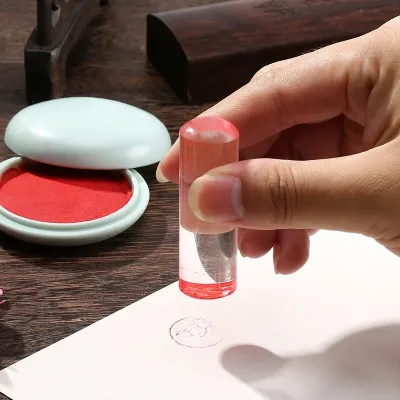
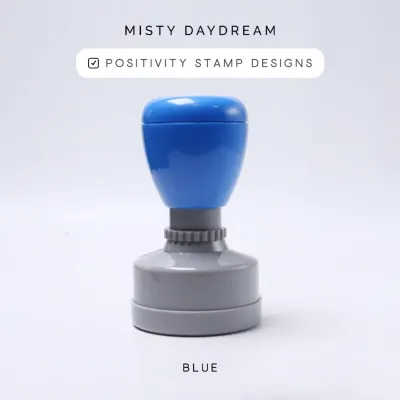
Prices are valid at publication and may change. Please refer to the product page for the latest price.
Pre-inked and custom stamps utilize a gel-like ink embedded directly within the stamp design itself, eliminating the need for a flipping mechanism. This design typically provides the highest impression clarity, allowing for very fine, detailed fonts and compact designs. They are excellent for small spaces but often require specific oil-based ink refills, making it crucial to verify compatibility before purchasing additional ink.
Regardless of the stamp type you choose, ink performance is highly dependent on the exact material combination of the item being labeled. Standard water-based inks work beautifully on paper but will smudge on plastic or wash out of fabrics. Parents should always check manufacturer labels for specific ink properties, such as water resistance, washability, and drying times, rather than assuming a single stamp will work universally across all school gear.
Matching Stamps to Lower Primary Needs (Primary 1–3)
Entering Primary 1 involves a massive influx of new items that must be labeled quickly before the school term begins. Parents are typically faced with marking dozens of exercise books, textbooks, files, and basic stationery items like rulers and pencil cases. A self-inking stamp is highly effective for this high-volume task, allowing you to make rapid, repetitive impressions on paper surfaces in a matter of minutes.

However, lower primary students also carry many non-porous and fabric items that are subjected to daily washing and heavy wear, such as water bottles, lunch boxes, and PE uniforms. Standard paper ink will wash out of cotton-blend uniforms or smudge on plastic containers. For these items, parents should look for specialized textile inks that bond with fabric fibers, or consider supplementing stamps with custom waterproof adhesive labels that can withstand soapy water and daily cleaning.
When selecting a stamp for younger children, size and font readability are critical factors for both the student and their teachers. A stamp with a bold, clean sans-serif font in a size of around 12mm to 15mm in height ensures the name is legible at a glance. Avoid overly cursive or decorative fonts that might confuse a child who is still learning to recognize their own written name in print.
Safety is another important consideration when labeling items that have direct, prolonged contact with a child’s skin, such as school shirts and socks. Always verify the safety instructions on textile ink refills to ensure they are labeled as non-toxic and skin-safe once dry. Additionally, follow the manufacturer’s instructions regarding curing times, as some fabric inks require 24 hours of drying or heat-setting with an iron before the first wash to prevent the ink from bleeding onto other garments.
Adjusting Stamp Choices for Upper Primary (Primary 4–6)
As children transition into the upper primary grades, the nature of their school supplies changes significantly. Students begin using specialized equipment such as scientific calculators, geometry sets, art portfolios, and specific subject folders. These items are often made of hard plastics, metals, or glossy synthetic materials, which offer very small, non-porous areas for labeling.
The large, bold stamps used during the lower primary years are often too bulky for these specialized items. Transitioning to a compact pre-inked stamp—often featuring a slim, pen-like design or a small rectangular footprint—allows for precise placement without obscuring functional buttons, solar panels, or instructional labels on the equipment. This smaller footprint also appeals to older students who may prefer more discreet labeling on their personal belongings.
Ink durability must also be re-evaluated for upper primary items, which are subjected to different wear-and-tear patterns. Older students frequently move between classrooms for specialized subjects, increasing the likelihood of items rubbing against each other inside school bags. Checking the durability of the ink on plastic surfaces is crucial, as standard water-based inks will rub off quickly under the friction of daily handling.
In cases where stamp ink fails to adhere to highly textured or ultra-glossy plastics, parents should transition to high-quality adhesive labels. These can be placed over a stamped impression or used as a complete substitute for items where stamping is physically impractical. This hybrid approach ensures that expensive items, such as scientific calculators, remain clearly marked throughout the crucial national examination years.
Testing and Maintaining Name Stamps for Daily School Use
To ensure your name stamp performs reliably throughout the school year, it is important to establish a routine for testing and maintenance. Before stamping an entire set of expensive textbooks or a new school uniform, always perform a patch test on a hidden area. Apply the stamp to an inconspicuous spot, such as the inside hem of a shirt or the inner margin of a glossy folder cover, and allow it to dry fully to verify that the ink adheres properly without bleeding or smudging.
Regular maintenance will also extend the life of your stamp and keep impressions sharp. Dust, paper fibers, and lint can accumulate on the stamp die over time, leading to blurry or incomplete lettering. Clean the rubber or polymer die gently with a damp, lint-free cloth or a specialized stamp cleaner according to manufacturer guidelines, and replace the ink pad or add refill drops when the impressions begin to fade.
If the stamping mechanism begins to catch, squeak, or jam, check for misaligned internal parts or accumulated debris rather than forcing the mechanism, which can crack the plastic casing. If the rubber die itself becomes hard, cracked, or warped from exposure to heat, it is time to replace the unit. Proper storage is equally vital; keeping your stamps in a cool, dry place away from direct sunlight prevents the ink from drying out prematurely or leaking into school bags.
Frequently Asked Questions (FAQ)
Can I use the same name stamp for both paper and fabric?
Standard paper stamp inks are water-based and will bleed or wash out of fabric almost immediately. To use a single stamp for both mediums, you must select a multi-surface or textile-specific ink pad, and verify that the stamp material is compatible with solvent-based or oil-based inks. Always check the manufacturer’s instructions, as some multi-surface inks require heat-setting with an iron to become permanent on fabrics.
What should I do if the stamp ink smudges on glossy textbook covers?
Glossy textbook covers are non-porous, meaning standard water-based ink cannot penetrate the surface and will smudge. If you must stamp these covers, allow the ink to dry completely for several hours without touching it. Alternatively, you can apply a piece of clear adhesive tape directly over the dry stamped impression to seal it, or switch to a permanent marker or custom adhesive label designed specifically for glossy surfaces.
Are there specific school rules regarding the size or color of name stamps?
While most primary schools do not have rigid rules specifically for name stamps, they generally require all labels to be neat, legible, and unobtrusive. It is best to stick to standard ink colors like black or dark blue, which look professional and are easy for teachers to read. Ensure the stamp size fits comfortably within the designated name boxes on school worksheets and exercise books, typically keeping the height under 15mm.

Community discussion
Share your experience or ask a question. Comments are reviewed before publication.