
To choose the right bubble wrap in Singapore, you must focus on physical specifications—such as bubble size, material thickness, and specialized coatings—rather than relying solely on generic brand names. Selecting the appropriate wrapping material depends on whether you are shipping high-value parcels via local couriers, packing bulky furniture for a residential move, or placing delicate collectibles into climate-controlled storage. By matching the technical specifications of the packaging film to the weight, fragility, and surface characteristics of your items, you can ensure optimal protection and avoid costly transit damage.
Decoding Bubble Wrap Specifications: What Actually Provides Protection
To make an informed decision, it is essential to understand the technical dimensions that dictate how well a protective film performs under stress. The most visible differentiator is bubble size, which typically ranges from small (6 mm in diameter and 3 mm in height) to large (25 mm or more in diameter and 12.7 mm in height). Small bubbles are designed primarily for surface protection, preventing scratches and minor abrasions on compact items like glassware, cosmetics, and small electronics. Because they conform tightly to intricate shapes, they create a dense, form-fitting shield that minimizes movement within a container.
In contrast, large bubbles are engineered for shock absorption, cushioning, and filling empty spaces inside a box. The larger volume of trapped air acts as a heavy-duty spring, absorbing high-impact forces when a package is dropped or jostled during transit. This makes large bubble wrap ideal for wrapping heavier, bulky items such as framed artwork, domestic appliances, and furniture corners. Using small bubbles for heavy items is generally ineffective, as the weight of the object can easily crush the small air pockets, leaving the item vulnerable to direct impact.
Products mentioned in this guide
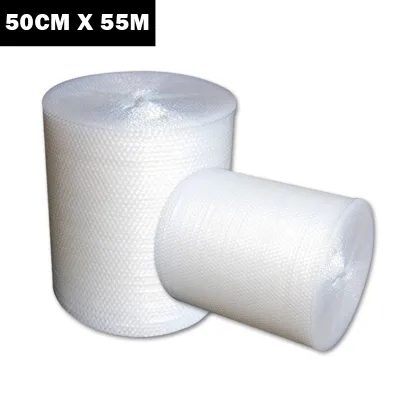
Prices are valid at publication and may change. Please refer to the product page for the latest price.
Beyond bubble diameter, the thickness of the plastic film—measured in microns (µm) or mils—determines its puncture resistance and load-bearing capacity. Standard consumer-grade bubble wrap often utilizes thin-gauge films ranging from 30 to 45 microns, which are suitable for light, non-abrasive household goods. For industrial shipping or sharp-edged items, heavy-duty variants ranging from 50 to 80 microns or more provide the necessary tensile strength to resist tearing. When evaluating options, always check the manufacturer’s specification sheet for the film thickness, as a thicker film prevents the bubbles from popping prematurely under load.
Specialized packaging scenarios require modified material compositions to prevent damage to sensitive surfaces. Anti-static bubble wrap, which is chemically treated to dissipate electrostatic charges, is indispensable for packing bare circuit boards, computer components, and high-end audio equipment. This variant is typically tinted pink or blue for easy identification. For items with highly polished, varnished, or delicate painted surfaces, cohesive or self-adhesive bubble wrap offers a secure fit without leaving sticky adhesive residues. Cohesive wrap adheres only to itself, while adhesive-backed wrap sticks directly to the item, requiring careful verification of surface compatibility before application.
To verify these specifications on the Singapore market, look for suppliers who provide detailed material data sheets rather than generic product descriptions. A reliable specification listing should clearly state the polymer type (usually Low-Density Polyethylene or LDPE), the exact bubble diameter and height, the total film thickness, and whether the material contains recycled content. If a seller only lists a roll as “heavy duty” without providing the actual micron thickness, request these technical details to ensure the product meets your specific performance requirements.
Matching Bubble Wrap Configurations to Your Packaging Needs
Different packaging environments impose unique physical stresses on protective materials. Choosing the right configuration requires analyzing the specific hazards your items will face, whether they are undergoing high-speed sorting on courier belts, experiencing vibrations in a moving truck, or sitting in a humid storage facility.

Shipping Fragile Items via Couriers
The courier network in Singapore involves rapid automated sorting, frequent manual handling, and significant vibrations during last-mile delivery. To safeguard fragile parcels in this high-impact environment, a multi-layered wrapping strategy using small-bubble wrap is often superior to a single layer of large-bubble wrap. Multiple layers of small bubbles create redundant air barriers, ensuring that if one bubble pops, adjacent air pockets continue to absorb the shock. This nesting effect distributes external forces across a wider surface area, protecting delicate items like ceramics, glass bottles, and precision instruments.
Edge protection and void filling are equally critical when preparing parcels for courier transit. Even the best bubble wrap cannot protect an item if it is allowed to slide around inside the corrugated box during transit. Wrap the item securely until it fits snugly within the box, and use additional crumpled bubble wrap or paper to fill any remaining empty spaces. Before sealing and shipping, consult the specific packaging guidelines and fragile goods policies of your chosen courier service, as many providers require a minimum thickness of protective wrapping to honor insurance claims in the event of damage.
Moving and Relocating Household Goods
Residential relocation in Singapore involves bulkier items, structural corners, and varied physical dimensions that demand a different packaging approach. For large appliances, mirrors, and furniture edges, large-bubble wrap or heavy-duty rolls are the most efficient choices. The large air pockets provide the necessary clearance to prevent direct contact between heavy items and hard surfaces, protecting vulnerable corners from structural dents and deep scratches.
To achieve comprehensive protection during a house move, combine bubble wrap with complementary packaging materials. For instance, wrap wooden furniture edges in heavy-duty bubble wrap, then secure the entire piece with stretch wrap or moving blankets to hold the cushioning firmly in place. This multi-layered approach prevents the bubble wrap from shifting or tearing when the furniture is carried through tight hallways or loaded into a moving truck. When planning your purchase, estimate the total volume of your household goods to buy bulk rolls, which are significantly more cost-effective than buying individual pre-cut sheets.
Long-Term Storage of Delicate Collectibles
Before wrapping any high-value collectible, antique, or delicate artwork, always consult the item’s manufacturer care instructions or a professional conservator to verify material compatibility. Standard polyethylene bubble wrap is not designed for prolonged direct contact with sensitive finishes. Over time, the plasticizers in the film can react with varnishes, oil paints, or glossy lacquers, leaving permanent circular marks or chemical residue on the item’s surface. This risk is particularly high in Singapore’s humid climate, where trapped moisture can accelerate chemical degradation.
To prevent surface damage, always establish a neutral barrier layer before applying bubble wrap. Wrap the collectible first in acid-free tissue paper, glassine, or archival-grade protective sleeves. Once the delicate surface is safely insulated from the plastic, you can wrap the outer layer in bubble wrap to provide physical cushioning. Additionally, ensure that your storage unit is climate-controlled to maintain stable temperature and humidity levels, which prevents the plastic film from degrading, off-gassing, or trapping condensation against your valuable items.
How to Evaluate and Select Reliable Bubble Wrap Brands and Suppliers
When sourcing bubble wrap in Singapore, brand names are often less important than the quality control and manufacturing consistency of the supplier. High-quality bubble wrap is characterized by uniform bubble inflation, where every air pocket is fully pressurized and sealed. Inspect the film visually to ensure there are no flat sections, slow leaks, or uneven air distribution. The heat seals between the flat backing film and the molded bubble layer should be strong and continuous, preventing the air from migrating between bubbles when pressure is applied.
Evaluating supplier transparency is a reliable way to identify professional-grade packaging materials. Reputable suppliers willingly provide technical data sheets (TDS) that detail the exact physical properties of their films, including tensile strength, tear resistance, and the percentage of recycled material used. If you are sourcing materials for a business or a high-value move, prioritize suppliers who clearly list specifications such as micron thickness and bubble dimensions rather than using vague marketing terms like “super strong” or “premium quality.”
The choice between industrial packaging wholesalers and general retail stationery brands depends primarily on your volume requirements and budget. Wholesalers offer significant cost savings on large rolls (such as 100-meter rolls) and provide consistent material quality suitable for commercial operations. Retail stationery brands, while more expensive per square meter, offer convenience, pre-cut sheets, and smaller roll sizes that are ideal for occasional household use or small-scale shipping. For ongoing business needs, establishing a relationship with a dedicated packaging wholesaler ensures a reliable supply chain and consistent material specifications.
Before committing to a bulk purchase, it is highly recommended to request sample rolls or sheets from the supplier to perform basic quality checks. You can conduct simple, low-risk physical tests to verify the material’s performance. Press firmly on individual bubbles to test their resistance to popping; high-quality film should require significant, deliberate pressure to rupture. Try tearing the film at the seams to evaluate its tensile strength, and stretch the material to check for premature thinning or deformation. These practical trials ensure the bubble wrap will withstand the rigors of your specific packaging application.
Where to Source Quality Packaging Materials in Singapore
Singapore offers a variety of sourcing channels for packaging materials, ranging from industrial estates to online marketplaces. For high-volume needs, businesses and residents planning large moves should look to local industrial packaging wholesalers located in areas like Ubi, Jurong, or Woodlands. These suppliers stock master rolls in various widths (such as 0.5 meters to 1.5 meters) and lengths (up to 100 meters), offering the lowest unit cost and the highest specification consistency. Many of these wholesalers also provide customized slitting services to cut rolls to your exact required width.
For smaller, immediate packaging needs, local office supply stores, neighborhood stationery shops, and DIY hardware stores across Singapore stock consumer-sized rolls and pre-cut sheets. While the cost per meter is higher, these retail outlets are highly convenient for occasional shippers who do not have the storage space for bulky industrial rolls. These retail products are typically pre-packaged in protective plastic bags, keeping the bubble wrap clean and free of dust until it is ready for use.
When navigating online marketplaces and e-commerce platforms, careful filtering is necessary to avoid substandard products. Many unbranded listings use low-resolution images and vague descriptions that omit critical specifications like micron thickness or material weight. To ensure you receive quality material, search for established local sellers who specialize in packaging supplies rather than general importers. Read customer reviews specifically looking for comments on bubble inflation, film thickness, and delivery packaging, and avoid listings that fail to specify the exact dimensions of the roll.
An often-overlooked factor when purchasing large bubble wrap rolls is the logistics of transport. Due to their low weight but high volume, shipping large rolls via standard courier services can incur high volumetric shipping fees. To avoid these extra costs, check if the supplier offers local self-pickup options at their warehouse, or look for local wholesalers who provide free delivery within Singapore for orders above a certain monetary threshold. Planning your purchase to meet these thresholds can result in substantial savings on your overall packaging budget.
Best Practices for Wrapping, Securing, and Testing Your Package
To maximize the protective capabilities of your chosen bubble wrap, you must apply it using correct packaging techniques. A common point of confusion is whether the bubbles should face inward toward the item or outward toward the box. The industry standard is to place the bubbles facing inward, directly against the item’s surface. This configuration allows the individual air pockets to conform closely to the shape of the object, providing immediate localized cushioning and preventing the item from sliding within the wrap. The flat backing film faces outward, creating a smooth surface that resists external snags and tears.
Securing the bubble wrap requires high-quality packaging tape applied in a manner that does not damage the underlying item. Use acrylic or hot-melt packaging tape to seal the seams of the wrap, ensuring the tape only adheres to the plastic film and never directly touches the item’s surface. Direct contact with tape can leave hard-to-remove adhesive residue or damage delicate finishes like paper, wood, or leather. For highly sensitive items, secure the bubble wrap using stretch film or rubber bands before applying tape to the outer layers.
Once the item is wrapped and placed inside the shipping carton, perform a simple “box shake test” to verify the integrity of your packaging. Close the box flaps and gently shake the package from side to side and up and down. If you feel or hear the item shifting inside, the packaging is insufficient. Reopen the box and add more bubble wrap or void fill until the item is completely immobilized. This step is crucial, as movement inside the box is a primary cause of transit damage, regardless of how many layers of wrap are applied to the item itself.
Finally, consider the environmental impact and lifecycle of your packaging materials. After unpacking, inspect the bubble wrap to determine if it can be reused. If the bubbles remain inflated and the film is free of major tears or dirt, store the wrap flat for future shipping or moving needs. If the material is too degraded or popped to provide adequate protection, check local recycling guidelines in Singapore. Clean, uncontaminated low-density polyethylene (LDPE) films can often be recycled at designated plastic film collection points located at major supermarkets and recycling hubs across the island, helping to reduce packaging waste.
Frequently Asked Questions (FAQ)
Can I use regular bubble wrap for wrapping electronic devices?
Standard plastic bubble wrap is not suitable for wrapping bare electronic components, circuit boards, or internal computer hardware. The friction generated by moving plastic easily creates electrostatic discharge (ESD), which can silently destroy sensitive microchips and delicate circuitry without leaving any visible external damage. For these items, you must use specialized anti-static bubble wrap, which is chemically formulated to prevent the buildup of static electricity. These protective films are easily recognizable by their distinctive pink or blue tint and should always be used in conjunction with anti-static shielding bags for maximum electronic safety.
Does bubble wrap expire or lose its effectiveness over time?
While polyethylene bubble wrap does not have a formal expiration date, its physical performance will degrade over time under certain environmental conditions. Prolonged exposure to direct ultraviolet (UV) light can break down the polymer chains, making the plastic brittle and prone to tearing. Additionally, storing rolls in hot, humid spaces or under heavy compression will cause the trapped air to slowly diffuse through the plastic membrane, resulting in deflated, flat bubbles that offer no cushioning. To preserve the shelf life and elasticity of your bubble wrap, store unused rolls flat in a cool, dry, and dark location away from direct sunlight and heavy loads.

Community discussion
Share your experience or ask a question. Comments are reviewed before publication.