
A 000 brush (also written as 3/0) is an indispensable tool for miniature painters, scale modelers, nail artists, and detailed craft hobbyists. It offers the exact precision required for painting tiny highlights, panel lines, facial features, and intricate script on delicate surfaces. Finding the right 000 brush involves balancing several critical factors, including hair material, tip retention, ferrule construction, and paint capacity. While premium brands like Winsor & Newton, Raphael, and Princeton are highly regarded, the best brand for your collection ultimately depends on your specific painting medium, your preferred technique, and how you maintain these delicate tools. By understanding what makes a high-quality detail brush, you can select a tool that elevates your work and lasts for years.
What to Look for When Buying a 000 Detail Brush
To choose a high-quality 000 brush, you must look beyond the brand label and evaluate the physical construction of the tool. A true detail brush must maintain a needle-like point under light pressure, hold enough paint to prevent constant drying, and withstand repeated cleaning cycles. Understanding these structural components will help you make an informed decision when selecting your next craft tool.
Hair Type and Point Retention
Products mentioned in this guide
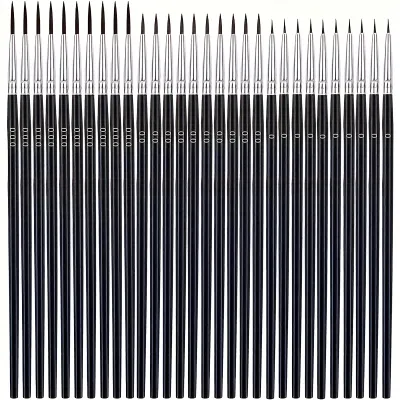
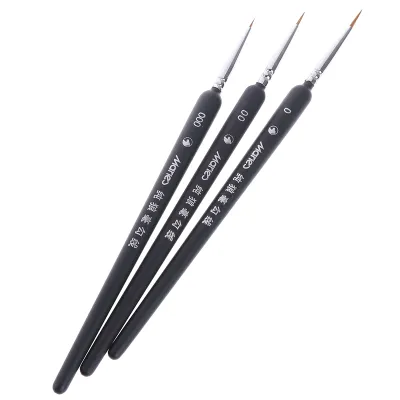
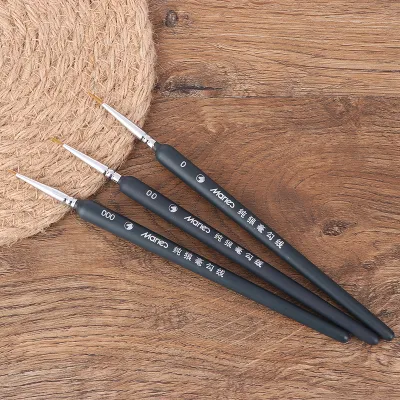
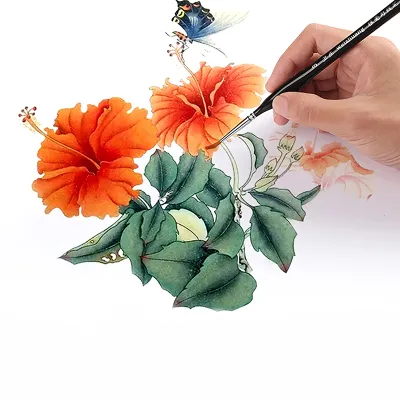
![[ende]60Pcs Thin Detail Paint Brushes Fine Tip Paint Brushes Set with 3 Size 000 00 0 Liner Brush for Crafts Watercolor](https://img.lazcdn.com/g/p/0ddc45b8fd2904adb0774f3c1e15cf4f.jpg_400x400q80.jpg_.webp)
Prices are valid at publication and may change. Please refer to the product page for the latest price.
The choice between natural hair and synthetic fibers is the most critical decision when selecting a fine detail brush. Natural hair, particularly Kolinsky sable (sourced from the tail of the Mustela sibirica), is prized for its exceptional spring and snap. This means the hairs bend smoothly when touching a surface and immediately snap back to a perfect point when lifted. Synthetic fibers, often made of high-grade polyester or nylon, have improved significantly. While they are more durable and resistant to harsh chemicals, they generally lack the natural microscopic scales that allow sable hair to hold and release paint evenly. For ultra-fine detail work, point retention is paramount; a brush that splits or splays after a few strokes will ruin delicate lines. You can test point retention by dipping a brush in water, flicking it gently, and observing if it naturally forms a clean, single point without stray hairs. Understanding how different fibers respond to pressure will help you select a brush that matches your hand’s natural movement and pressure.
Ferrule and Crimp Quality
The ferrule is the metal sleeve that connects the brush hairs to the handle. On premium detail brushes, the ferrule is typically made of seamless nickel-plated brass or copper. Seamless construction is vital because any seam can trap moisture, leading to rust or wood swelling over time. The crimping—the physical indentation that clamps the ferrule to the wooden handle—must be tight and secure. If the ferrule is loose, water and paint can seep into the handle, dissolving the glue holding the hairs and causing premature shedding. A single loose hair on a 000 brush can completely ruin a precise paint stroke on a miniature or craft piece. Always inspect the ferrule for any signs of wobbling or gaps before purchasing, and prioritize double- or triple-crimped designs which offer superior stability and long-term durability.
Handle Length and Weight
Detail brushes are almost exclusively designed with short handles, typically measuring between 12 to 18 centimeters. This short length brings your hand closer to the working surface, offering maximum control and reducing hand fatigue during long, close-up painting sessions. Some brands offer ergonomic handles, such as triangular or flared shapes, which prevent the brush from rolling off your desk and provide a more comfortable, stable grip. Long-handled brushes are designed for easel painting, where the artist stands back to view the entire canvas. For desk-bound crafts, scale modeling, and miniature painting, always opt for short-handled brushes to maintain a stable, comfortable working posture. A well-balanced handle allows you to paint with micro-precision without needing to grip the brush too tightly, preventing hand cramps during intensive detailing sessions.
Brush Belly Capacity
A common misconception is that a detail brush should be incredibly thin from the ferrule to the tip. However, a completely straight, thin brush holds very little paint. Because acrylic and watercolor paints dry rapidly in small quantities, a tiny amount of paint on a straight needle-like tip will dry before it even touches your model. A high-quality 000 brush features a slight belly—a wider section of hair near the middle of the brush head. This belly acts as a reservoir, holding a small pool of wet paint that feeds down to the needle-sharp tip. This allows you to paint smooth, continuous lines without the tip running dry or fraying mid-stroke. When evaluating a brush, look for a round shape that tapers smoothly to a point, rather than a completely flat or straight profile, as this reservoir effect is critical for maintaining an even flow of paint.
Reliable 000 Brush Brands to Consider for Fine Crafts
When looking for a reliable 000 brush, several established brands consistently deliver the precision and durability required for intricate craft work. These brands are widely available in Singapore through specialty art supply stores, hobby shops, and online marketplaces. Because inventory and specific series availability can fluctuate, it is always recommended to verify the exact specifications and current stock before making a purchase.

Winsor & Newton (Series 7 Kolinsky Sable)
Winsor & Newton Series 7 is widely regarded as a benchmark for fine detail painting. Originally commissioned in 1866 for Queen Victoria, these brushes are handcrafted in England using premium Kolinsky sable hair. The Series 7 000 brush is known for its remarkable spring, allowing the brush to snap back to a perfect point after every stroke. Its point retention is superb, and the natural hairs provide a highly controlled, even flow of water-based paints. Winsor & Newton offers both a standard Series 7 (with slightly longer hairs and a fuller belly) and a Series 7 Miniature range (with shorter, stiffer hairs designed for extreme control). Because of their premium materials and hand-assembled construction, these brushes represent a significant financial investment, typically sitting in the premium price tier. They are best suited for serious hobbyists and professionals who work primarily with watercolors, gouache, or highly thinned acrylics and are committed to strict brush maintenance. Investing in a Series 7 requires a commitment to proper cleaning, but the precision it offers is unmatched for ultra-fine line work.
Raphael (8404 or 8402 Series)
The French brand Raphael has been manufacturing artist brushes since 1793. Their 8404 and 8402 series are highly favored by miniature painters and detail artists worldwide. Made from selected Kolinsky sable, the Raphael 8404 features a slightly fuller belly than the Winsor & Newton Series 7, which gives it an exceptionally high paint capacity for a detail brush. This design keeps the paint wet longer, preventing premature drying on the tip. The 8402 series offers a slimmer profile with a slightly longer, finer point, ideal for ultra-precise scrollwork and fine lines. Both series feature seamless metal ferrules and short, black-lacquered handles, providing a luxurious feel and exceptional control. These premium natural hair brushes are ideal for artists who require a reliable paint reservoir for continuous line work, allowing for smoother strokes without constant reloading.
Princeton (Velvetouch or Aqua Elite)
For crafters seeking high-performance synthetic alternatives, Princeton offers outstanding options. The Velvetouch series features a synthetic blend designed to mimic the performance of natural hair while offering superior durability. These brushes are highly resilient, making them excellent for heavier mediums like acrylics and fabric paints. They also feature a signature soft-touch handle that reduces hand fatigue during long painting sessions. The Aqua Elite series utilizes Princeton’s NextGen synthetic technology, which closely replicates the water-holding capacity and spring of natural Kolinsky sable. Both series are highly durable, animal-friendly, and more budget-friendly than their natural hair counterparts, making them excellent choices for everyday crafting and hobby projects. They are particularly resilient when used with modern acrylic mediums, which can be tough on natural hair fibers over time.
Escoda (Reserva or Versatil)
Based in Barcelona, Spain, Escoda is a family-owned company known for its handcrafted brushes. The Escoda Reserva series uses only the finest Kolinsky tajmyr sable hair, which undergoes a unique curing process to ensure the brush retains its shape and spring over years of use. The Reserva 000 brush offers remarkable point control and a smooth paint release. For those who prefer synthetics, the Escoda Versatil series is designed to act as a direct synthetic equivalent to Kolinsky sable. It offers a very sharp point, excellent spring, and high durability. Escoda’s attention to detail extends to their triple-crimped ferrules, which virtually eliminate the risk of hair shedding during delicate work, making them a popular choice among serious hobbyists. The Versatil series is highly praised for its ability to maintain a needle-like point even when subjected to heavy-duty crafting tasks.
Da Vinci (Maestro or Casaneo)
Da Vinci is a German brand renowned for precision engineering and rigorous quality control. The Da Vinci Maestro Series 10 and Series 35 are premium Kolinsky red sable brushes designed for watercolors and fine detail work. They feature perfectly shaped, needle-like tips and seamless, rust-resistant ferrules. For a synthetic option, the Da Vinci Casaneo series uses a wavy synthetic fiber that mimics the soft, high-capacity nature of natural squirrel hair, though it is generally better suited for soft washes. For tight detail work, the Da Vinci Nova or Harbin Kolinsky series are often preferred by modelers and hobbyists due to their stiffer fibers and exceptional point retention, maintaining a needle-like tip over extended use. The precision of German manufacturing ensures that every brush meets strict dimensional standards, giving artists consistent performance from brush to brush.
How to Match Brush Hair to Your Paint Medium
Using the wrong type of brush hair with your chosen paint medium can quickly ruin a delicate 000 tip. Different paints have distinct chemical compositions, drying times, and cleaning requirements that directly affect brush longevity. Matching your brush material to your medium is essential for protecting your investment.
Acrylic Paints
Acrylic paints dry through a process of water evaporation and chemical polymerization, forming a water-resistant plastic film. Because acrylics dry quickly, paint can easily dry inside the brush hairs, especially near the ferrule. For acrylic painting, high-quality synthetic fibers (such as those found in Princeton Velvetouch or Escoda Versatil) are generally recommended. Synthetic fibers are highly resistant to the alkaline nature of acrylic binders and can withstand frequent, vigorous cleaning. While natural sable brushes can be used with highly thinned acrylics, the paint can dry and strip the natural oils from the hair, causing the tip to split prematurely. If you use natural hair with acrylics, ensure you clean the brush thoroughly every few minutes during use. Synthetic fibers also offer a stiffer snap, which helps push heavy-bodied acrylic paint across textured craft surfaces more effectively.
Watercolors and Gouache
Watercolors and gouache rely on water-soluble binders like gum arabic. These mediums require a brush that can hold a significant amount of water and release it in a smooth, controlled flow. Natural Kolinsky sable brushes excel dramatically in this category. The microscopic scales on natural hair hold water through capillary action, allowing you to paint long, delicate lines without having to constantly reload your brush. High-end synthetic brushes designed specifically for watercolors, such as Princeton Aqua Elite, also perform exceptionally well and offer a more durable, cost-effective alternative that maintains excellent water retention and delicate control. When painting with watercolors, the soft nature of natural sable prevents the brush from lifting underlying dry paint layers, allowing for smooth, seamless glazing and fine details.
Enamels and Oils (for Model Kits)
Scale modelers and miniature painters frequently use enamel or oil-based paints for weathering, washing, and fine panel lining. These paints require organic solvents, such as mineral spirits, turpentine, or specialized thinners, for dilution and cleanup. Natural hair brushes generally perform very well with oils and enamels because the natural fibers are highly resistant to these solvents. However, harsh solvents can dry out the natural oils in the hair over time, making them brittle. If you use natural hair brushes with solvents, you must condition them regularly. Synthetic brushes can also be used, but you must verify that the synthetic fibers are explicitly rated as solvent-resistant, as some cheaper synthetic materials can melt or curl when exposed to strong thinners. Always check the manufacturer’s solvent compatibility charts to ensure your synthetic brushes will not degrade during cleaning.
Verification Step
Before starting your project, always check the product packaging, label, or manufacturer’s official website to confirm that the brush is compatible with your specific paint medium and cleaning solvents. If you are using specialized solvents or heavy-bodied paints, a quick verification can save you from permanently damaging an expensive 000 brush.
How to Protect and Maintain Your Ultra-Fine Brush Tip
A high-quality 000 brush is a precision instrument. Because the brush head contains a very small number of hairs, even minor damage or improper care can permanently ruin its ability to hold a fine point. Following a disciplined maintenance routine will significantly extend the lifespan of your brushes.
Immediate Cleaning
Never allow paint to dry on your 000 brush. Acrylic paint, in particular, can dry within minutes, especially in warm climates. Once paint dries inside the ferrule—the area of hair closest to the metal sleeve—it expands, pushing the surrounding hairs outward and permanently splitting the fine point. Wipe your brush gently on a damp lint-free cloth or paper towel frequently during your painting session, and clean it thoroughly with water or the appropriate solvent immediately after you finish painting. Developing a habit of rinsing your brush every few minutes during a painting session will prevent paint from accumulating at the base of the hairs, preserving the integrity of the needle-sharp tip for hundreds of sessions.
Appropriate Cleaners
To clean your brushes, use a dedicated brush soap (such as The Masters Brush Cleaner & Preserver) or a mild, pH-balanced soap. Avoid using harsh household detergents, dishwashing liquids, or hot water, especially on natural hair brushes. Hot water can melt the glue holding the hairs inside the ferrule and strip the natural oils from sable hair, leaving it dry and prone to breaking. For solvent-based paints, use the mildest solvent recommended by the paint manufacturer, and follow up with a conditioning brush soap to restore moisture to the fibers. Conditioning your brushes after cleaning ensures that the hairs remain soft, flexible, and resistant to snapping during delicate paint strokes.
Reshaping the Tip
After thoroughly washing and rinsing your brush, gently draw the wet brush head across a clean cloth while rotating the handle to form a sharp, needle-like point. You can also use a tiny dab of brush conditioner or saliva to hold the hairs in place while they dry. Ensure that all the individual hairs are perfectly aligned and that no stray fibers are sticking out before setting the brush aside. This step helps the brush “remember” its sharp shape for the next session. If any hairs have become permanently bent or damaged, they should be carefully trimmed at the base with fine embroidery scissors rather than pulled out, as pulling can loosen the surrounding hairs inside the ferrule.
Proper Storage
How you store your brushes is just as important as how you clean them. Never leave a brush resting vertically on its bristles in a cup of water or solvent; this will permanently bend the delicate 000 tip and loosen the ferrule glue. Always dry your brushes flat on a clean towel. Once dry, store them upright in a brush holder with the tips pointing upward, or store them flat in a protective case. If your brush came with a plastic protective cap, only slide it back on when the brush is completely dry, taking extreme care not to bend any stray hairs backward as you slide the cap over the tip. Proper storage protects the delicate tip from dust, physical damage, and accidental bending, ensuring it is ready for immediate use.
Frequently Asked Questions (FAQ)
What is the difference between a 000 and a 10/0 brush?
Brush sizing is not standardized across the art supply industry, meaning a 000 brush from one brand may be identical in size to a 10/0 brush from another. Generally, brush sizes use a numbering system where 0 is the baseline, and additional zeros indicate smaller sizes. A 000 brush is also written as 3/0. A 10/0 brush (sometimes written as 10/00) is theoretically smaller and finer than a 000 brush. However, because physical dimensions vary by manufacturer, you should always check the exact millimeter measurements of the hair length and width, or inspect physical samples at a local hobby shop, when absolute precision is required for your craft.
Can I use a 000 brush for dry brushing?
You should strongly avoid using a high-quality 000 detail brush for dry brushing. Dry brushing is a highlighting technique that involves removing most of the paint from a stiff brush and dragging the dry bristles vigorously across textured surfaces. This technique creates intense friction that will quickly splay, fray, and permanently destroy the delicate, finely aligned tip of a 000 detail brush. Instead, use older, worn-out brushes, cheap synthetic brushes, or dedicated flat, stiff-bristle dry brushes for this technique, reserving your premium 000 brushes strictly for fine line work and precise detailing.

Community discussion
Share your experience or ask a question. Comments are reviewed before publication.