
Finding reliable peel and seal envelopes for everyday mailing in Singapore requires looking beyond brand names to evaluate physical specifications like adhesive formulation, paper weight, and climate resilience. Because Singapore’s tropical climate features high relative humidity year-round, standard adhesives can degrade or pre-activate if stored incorrectly, leading to open flaps during transit. To secure your daily correspondence, invoices, or marketing materials, you must prioritize envelopes with high-tack permanent adhesives, robust release liners, and sufficient paper density that can withstand both automated sorting machinery and local environmental conditions.
When evaluating options locally, focusing on observable quality checks and material specifications is the most reliable path to securing your mail. By understanding how paper weight, adhesive types, and structural designs interact, you can establish a consistent sourcing and testing routine that protects your documents and optimizes your mailing budget.
Defining Reliability for Everyday Mailing Envelopes
Everyday mailing in a professional or administrative setting demands a much higher standard of envelope reliability than occasional personal correspondence. High-volume mailing operations require envelopes that can be processed quickly, seal instantly without auxiliary tape or moisture, and remain securely closed throughout the entire postal journey. When envelopes fail during transit, the consequences range from minor administrative delays to serious data breaches if confidential documents are exposed.
Products mentioned in this guide
Prices are valid at publication and may change. Please refer to the product page for the latest price.
In Singapore’s postal system, mail undergoes high-speed automated sorting where envelopes are subjected to mechanical friction, bending, and rapid temperature shifts. Common failure points in low-quality envelopes include seal popping, where the flap lifts hours after sealing, and seam splitting, where the side adhesive fails under pressure. These issues are frequently exacerbated by the local climate, as high humidity can weaken standard water-based adhesives before the envelope even leaves the office.
A reliable peel and seal envelope relies on three primary structural components working in harmony: the release liner, the adhesive strip, and the paper grain. The release liner is the protective strip that covers the adhesive until the envelope is ready for use. The adhesive strip must feature a consistent, thick application of pressure-sensitive adhesive that bonds instantly upon contact. Finally, the paper grain must run parallel to the envelope’s fold to ensure the flap folds flat and does not exert upward tension that could pull the seal apart.
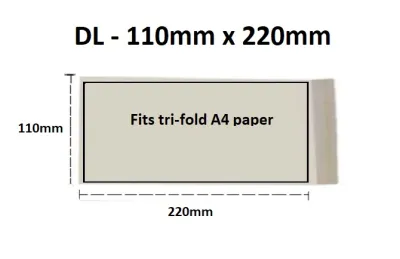
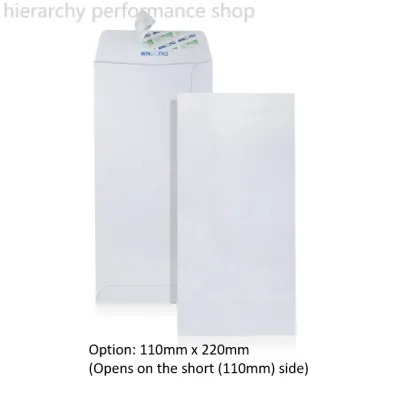
Understanding standard envelope dimensions is also critical for ensuring a proper paper fit and preventing transit damage. The most common sizes for everyday business mailing in Singapore are DL (110mm x 220mm), which fits an A4 sheet folded into thirds; C5 (162mm x 229mm), which accommodates an A5 sheet or an A4 sheet folded in half; and C4 (229mm x 324mm), designed to hold flat A4 documents. Choosing the correct size prevents overstuffing, which puts undue stress on the adhesive seal and increases the risk of tearing.
Core Criteria for Evaluating Peel and Seal Quality
To identify the most reliable envelope brands available in Singapore, you must evaluate several technical specifications on the product packaging or manufacturer data sheets. The first and most critical factor is the adhesive formulation and tack level. Most high-quality peel and seal envelopes utilize hot-melt pressure-sensitive adhesives, which offer excellent initial tack and form a permanent bond that is highly resistant to moisture and temperature fluctuations. Avoid repositionable adhesives for official mail, as they do not provide a tamper-evident seal.

The quality of the release liner is another key indicator of overall manufacturing standards. A premium release liner should be made of silicone-coated paper or plastic that peels away in a single, smooth motion without tearing or leaving static-charged residue. If the liner is difficult to remove or shreds during peeling, it slows down the mailing process and can lead to uneven adhesive exposure, compromising the final seal.
Paper weight, measured in grams per square meter (GSM), directly impacts the durability and privacy of your mail. For standard everyday correspondence, a paper weight of 80 GSM to 100 GSM is recommended, as it provides a good balance between structural strength and postage weight limits. For heavier documents, catalogs, or confidential materials, upgrading to 120 GSM paper ensures the envelope will not tear under stress. Additionally, look for envelopes with an internal security tint—usually a blue or grey pattern printed on the inside—to prevent unauthorized reading of documents through the paper.
Climate resilience is a non-negotiable criterion for stationery stored and used in Singapore. High humidity can cause standard gummed envelopes to stick together in the box, while low-grade peel and seal adhesives can lose their bonding power over time. When sourcing envelopes, verify if the manufacturer specifies humidity resistance or if the product is packed in moisture-barrier cartons. Proper packaging protects the adhesive from ambient moisture during storage, ensuring the envelopes perform reliably even after months in a local storeroom.
Sourcing and Comparing Envelope Options Locally
Sourcing reliable peel and seal envelopes in Singapore involves navigating a mix of local stationery suppliers, specialized paper merchants, and online marketplaces. For businesses with consistent, high-volume mailing needs, establishing a relationship with a local commercial stationery distributor is often the most efficient route. These suppliers can provide bulk quantities, consistent stock levels, and detailed technical specifications that are rarely available at retail outlets.
If you prefer to compare options online, ecommerce platforms and online marketplaces offer a wide variety of envelope brands and styles. When shopping online, filter for local Singapore-based sellers to ensure faster delivery and to minimize the time the paper products spend in hot, humid shipping containers. Carefully review the product descriptions for explicit mentions of GSM ratings, exact dimensions, and adhesive types, and compare prices in S$ to determine the true value of each option.
Evaluating cost-efficiency requires looking beyond the initial purchase price to calculate the price-per-unit. While a box of 500 envelopes may have a higher upfront cost than a pack of 50, the unit price is typically much lower, making bulk purchases highly economical for daily mailing. However, you must factor in shipping fees for heavy paper products, as bulk cartons of envelopes can be costly to transport. Some local suppliers offer free delivery for orders above a certain S$ threshold, which can significantly lower your overall procurement costs.
Before committing to a large-volume purchase of a new envelope brand, always request physical samples from the supplier. Most reputable B2B stationery merchants are willing to provide a small sample pack of various sizes and paper weights. Obtaining these samples allows you to conduct hands-on testing in your specific office environment, ensuring the envelopes meet your standards for adhesive strength, paper opacity, and compatibility with any printing or folding machinery you use.
How to Verify Adhesive and Paper Performance
Conducting simple, low-risk quality checks on your envelope samples is the best way to guarantee performance before deploying them for daily mailing. Begin with a visual and tactile inspection of the release liner and adhesive strip. Peel the liner away slowly; it should release cleanly without pulling up any paper fibers or adhesive. The exposed adhesive strip should be completely uniform, glossy, and free of dry spots, bubbles, or dust contamination.
To test the seal strength, apply the envelope flap to the body using standard manual pressure—a single, firm swipe of your hand across the sealing area. Allow the adhesive to cure for approximately two to five minutes, which is the standard time required for pressure-sensitive adhesives to form a complete bond. Attempt to pull the flap open from one corner; a reliable permanent seal must result in a “fiber tear,” meaning the paper fibers split or tear apart before the adhesive releases. If the flap peels open cleanly without damaging the paper, the adhesive is insufficient for secure transit.
Paper opacity and durability can be verified using standard office tools. Insert a document with high-contrast, bold black text into the envelope and hold it up to a standard overhead office light. If the text is legible through the paper, the envelope lacks sufficient opacity, and you should opt for a higher GSM or a security-tinted model. To simulate the friction of postal transit, rub the surface of the envelope firmly against a clean, dry desktop; the paper should not pill, scuff, or show signs of structural weakening along the seams.
Establishing a clear stop condition for your stationery inventory prevents mailing failures before they occur. If more than two envelopes in a random sample of twenty fail the fiber tear test, exhibit uneven adhesive coverage, or have tearing release liners, the entire batch should be rejected or returned to the supplier. Inconsistent adhesive application is a clear sign of poor quality control, and using such batches increases the risk of mail opening during automated sorting at the post office.
Frequently Asked Questions (FAQ)
Can peel and seal envelopes be reused if the adhesive fails?
Reusing the original peel and seal adhesive strip is not recommended for secure or official mailing once it has failed or lost its tack. Pressure-sensitive adhesives are designed for single-use applications; once exposed to air, dust, or moisture, they cannot form the permanent, tamper-evident bond required for postal transit. For non-critical internal mail or temporary document storage, you can secure a failed envelope using a high-quality glue stick, double-sided stationery tape, or a dedicated envelope moistener if the flap features a secondary gummed layer. However, for external mailing through the postal service, always use a fresh envelope with an intact, fully functional adhesive strip to ensure your contents remain secure.
Do peel and seal envelopes expire or lose their stickiness over time?
Peel and seal envelopes do have a finite shelf life, typically ranging from twelve to twenty-four months depending on how they are stored. The synthetic rubber or acrylic adhesives used on these envelopes are sensitive to environmental factors, particularly heat, light, and humidity. In Singapore’s tropical climate, prolonged exposure to warm, humid air can accelerate the oxidation and drying of the adhesive, causing it to lose its stickiness or turn yellow. To maximize the shelf life of your envelopes, store them in a cool, dry, air-conditioned space, keep the boxes sealed in their original packaging or moisture-barrier wraps, and avoid storing them near external walls, windows, or damp storerooms.

Community discussion
Share your experience or ask a question. Comments are reviewed before publication.