
Choosing the right faraday fabric depends on your shielding goals, the frequencies you need to block, and how the finished item will be handled. There is no single universal fabric that excels at every task; instead, you must balance electrical conductivity, physical durability, and ease of sewing. For simple projects like an RFID-blocking card holder, a lightweight metal-coated polyester is often sufficient. For high-wear privacy pouches that block cellular and Wi-Fi signals, a more robust copper-nickel ripstop or a stainless steel blend is typically required. By understanding how different metals interact with radio waves and environmental factors, you can select a material that delivers reliable performance for your DIY shielding projects.
Identifying Your Shielding Scenario
To select the correct faraday fabric, you must first define the electromagnetic signals you intend to block. Different wireless technologies operate on distinct frequency bands, and the physical demands on the fabric vary significantly depending on how the finished pouch is used.
RFID Blocking: RFID technology is commonly found in contactless payment cards, transit cards, and passports, typically operating at 13.56 MHz. Because these signals are relatively weak and operate over short distances, blocking them requires a complete enclosure but allows for lighter, thinner fabrics. A basic single-layer conductive fabric is often highly effective for sewing slim card sleeves or wallet linings.
Products mentioned in this guide
Prices are valid at publication and may change. Please refer to the product page for the latest price.
Privacy Pouches: Blocking cellular signals, Wi-Fi, Bluetooth, and GPS tracking on smartphones or key fobs requires handling a wider range of frequencies, typically from 800 MHz up to 6 GHz. Because these devices constantly search for connections, any tiny gap in the shielding can allow a signal to slip through. Privacy pouches require highly conductive, flexible fabrics that can withstand daily folding, opening, and closing without cracking.
EMP Protection: Shielding against an Electromagnetic Pulse (EMP) is the most demanding scenario, involving high-intensity, broad-spectrum electromagnetic energy. This requires highly conductive materials, rigorous multi-layer construction, and strict adherence to manufacturer engineering specifications. For these projects, heavy-duty copper or nickel-infused fabrics are standard, often paired with rigid shielding enclosures to ensure complete isolation.
Comparing Common Faraday Fabric Materials
The metals woven or coated onto faraday fabric determine its conductivity, durability, and suitability for sewing.

Silver-Coated Nylon or Polyester: Silver is exceptionally conductive, making silver-coated fabrics highly effective at blocking a wide range of frequencies. These fabrics are soft, lightweight, and drape like standard apparel textiles, making them easy to sew on home machines. However, silver is highly prone to oxidation and tarnishing when exposed to air, ambient moisture, and skin oils. In humid climates, such as Singapore, unshielded silver fabric can degrade over time, gradually losing its conductivity. It is best suited for lined projects where the conductive layer is protected from direct handling.
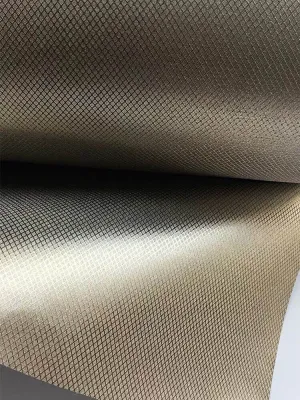
Copper/Nickel Ripstop or Taffeta: This material features a base of ripstop nylon or polyester woven with copper and nickel fibers. It offers excellent conductivity and structural durability, making it a popular choice for heavy-duty privacy pouches. The ripstop weave prevents tears from spreading, which is crucial for maintaining a continuous shield. However, copper-nickel fabrics have a stiffer drape, can cause skin irritation from direct contact with nickel, and the copper component can oxidize if exposed to moisture. These fabrics are best utilized as an inner layer sandwiched between protective decorative fabrics.
Stainless Steel Micro-Fiber Blends: These materials blend stainless steel micro-fibers directly into a polyester or cotton yarn matrix. This construction makes the fabric highly durable, resistant to corrosion, and often washable. Because the metal is integrated into the thread itself, it does not flake or peel with frequent folding. The trade-off is that stainless steel blends are generally heavier, thicker, and less flexible, which can make sewing thick seams or tight corners challenging on standard home machines.
Essential Specifications to Verify Before Purchase
Before purchasing a roll of faraday fabric from an online marketplace or specialty supplier, you should carefully review the manufacturer’s technical specifications. Relying solely on generic “signal blocking” marketing claims can lead to poor project performance.
Attenuation Ratings and Frequency Ranges: Look for a specification sheet that details the fabric’s attenuation rating, measured in decibels (dB). For reliable privacy and signal blocking, aim for a fabric that offers at least 60 to 80 dB of attenuation across the specific frequency bands you need to block (such as 1.5 GHz for GPS and 2.4 GHz to 5 GHz for Wi-Fi).
Surface Resistivity: Surface resistivity, measured in ohms per square (Ω/sq), is a direct indicator of the fabric’s electrical conductivity. For high-frequency shielding, a lower surface resistivity is desirable, as it allows electrical currents to flow easily across the fabric to reflect or absorb electromagnetic waves. High-quality faraday fabrics typically feature a surface resistivity of less than 0.1 ohms per square.
Durability and Care Instructions: Conductive coatings are delicate. Verify whether the fabric is machine washable, hand-wash only, or dry-clean only. Many metal-coated fabrics cannot tolerate standard laundry detergents, bleach, or high heat, which can permanently strip the conductive metal from the synthetic fibers.
Width, Weight, and Drape: Consider the fabric’s weight, measured in grams per square meter (GSM), and its roll width. A heavy GSM fabric provides robust shielding but may be too stiff for a small, folding key fob pouch. Ensure the roll width is sufficient for your pattern layout, allowing you to cut continuous pieces without unnecessary seams.
Sewing and Construction Rules for Effective Shielding
Even the highest-quality faraday fabric will fail to block signals if the finished pouch is poorly constructed. Electromagnetic waves can easily exploit tiny gaps, unshielded seams, or improper closures. Following strict construction rules is essential for maintaining a continuous conductive barrier.
Seam and Stitch Management: When you pierce faraday fabric with a standard sewing needle, you create micro-gaps in the conductive barrier. To prevent signal leakage along stitched seams, use overlapping seams where the fabric is folded over itself before stitching. This ensures that any signal attempting to pass through the needle holes must still traverse multiple layers of conductive material. While standard polyester thread is suitable for structural seams, using conductive thread for the stitching can help maintain electrical continuity across the joint.
Closure Mechanisms: Standard plastic zippers, metal zippers with gaps between the teeth, and simple button closures do not provide a continuous shield. For a faraday pouch to work, the opening must be completely sealed with conductive material. A highly effective method is a roll-top design, where the opening of the pouch is folded over itself at least twice and secured with conductive hook-and-loop tape. This folding action forces the conductive surfaces into tight, continuous contact, eliminating any straight-line paths for radio waves to enter.
Lining and Handling: Because the conductive metals in faraday fabrics are sensitive to physical abrasion, moisture, and skin oils, you should always construct your pouches with a multi-layer design. Sandwich the delicate faraday fabric between an outer protective shell (such as durable canvas, denim, or heavy nylon) and a soft inner lining (such as cotton or standard polyester). This lining prevents your phone, keys, or cards from scratching the conductive coating and protects the fabric from the natural oils on your hands.
Practical Testing Methods for Your Finished Pouch
Once you have completed your sewing project, it is crucial to verify its shielding effectiveness before relying on it to protect sensitive data or devices. You can perform several low-risk, practical tests at home using everyday items.
Cellular and Wi-Fi Testing: Place your smartphone inside the fully sealed pouch. Wait approximately 30 seconds to allow the device to lose its connection to nearby towers and routers. Attempt to call the phone from another line. If the call goes straight to voicemail or the message fails to deliver, the pouch is successfully blocking cellular signals. You can also check your home router’s connected devices list to verify if the phone has disconnected from the Wi-Fi network.
RFID/NFC Testing: To test an RFID-blocking wallet or card sleeve, you can use a smartphone equipped with Near Field Communication (NFC) capabilities or a local transit card reader. Place your contactless payment card or transit card (such as an EZ-Link card) inside the sewn sleeve. Open an NFC-reading application on your phone and hold the sleeved card against the phone’s reader. If the application cannot detect or read the card, your shield is functioning correctly.
Identifying Weak Points: If a signal manages to penetrate your pouch during testing, systematically inspect the construction. Check the corners of the pouch, as these are common areas where fabric can bunch and create small gaps. Ensure that the closure folds tightly and that the conductive hook-and-loop tape makes continuous contact across the entire width of the opening. Adjusting your folding technique or adding an extra layer of fabric to weak seams can often resolve minor leaks.
Frequently Asked Questions (FAQ)
Does faraday fabric block GPS tracking?
Yes, a properly constructed faraday pouch made from high-quality fabric will block GPS signals. GPS relies on relatively weak radio signals transmitted by satellites. However, because these signals are weak, any small gap in your pouch’s closure, an unshielded seam, or a worn-out section of fabric can allow the signal to penetrate, allowing the device to update its location. Ensuring a tight, multi-folded closure is critical for reliable GPS blocking.
Can I wash my faraday fabric in a washing machine?
Washing guidelines depend entirely on the specific material composition of your fabric. Stainless steel micro-fiber blends can often tolerate gentle machine washing, whereas delicate silver-coated or copper-nickel fabrics can be permanently ruined by machine agitation and standard laundry detergents. Always consult the manufacturer’s care instructions. For coated fabrics, hand washing in distilled water with a mild, pH-neutral soap or simply spot-cleaning with a damp cloth is highly recommended to preserve the conductive metal layer.
Do I need conductive thread to sew faraday fabric?
While conductive thread is highly beneficial for maintaining a continuous electrical path across stitched seams, it is not strictly mandatory for all projects. For everyday RFID blocking and simple privacy pouches, you can achieve excellent results using standard polyester thread, provided you use generous overlapping seams (such as a flat-felled seam) and tight, dense stitches. The physical overlapping of the conductive fabric layers is often sufficient to prevent signal leakage in consumer-grade applications.

Community discussion
Share your experience or ask a question. Comments are reviewed before publication.