
Choosing the right anti-theft zipper clip depends on matching the clip’s physical dimensions, locking mechanism, and material to your specific bag’s zipper configuration and daily usage. Whether navigating a crowded commuter train during peak hours or preparing for international travel, securing your bag’s entry points is a practical way to deter opportunistic pickpockets. The ideal clip should integrate seamlessly with your existing zipper pullers without causing structural damage, offering a balance between security and accessibility.
While no security measure is entirely foolproof, adding a physical barrier to your zippers significantly increases the time and effort required to open your bag. This delay is often enough to encourage a thief to seek an easier target. By understanding the mechanical differences between clip styles and verifying compatibility with your bag’s hardware, you can select a solution that protects your belongings while maintaining the convenience of your daily carry.
How Different Anti-Theft Zipper Clips Work
Anti-theft zipper clips function as a physical restraint that links two zipper pullers together or anchors a single puller to a fixed point on the bag. By preventing the sliders from moving independently, these clips keep the zipper track closed and secure. The primary goal is to eliminate the ease of quick, silent access that pickpockets rely on in crowded environments.
Products mentioned in this guide
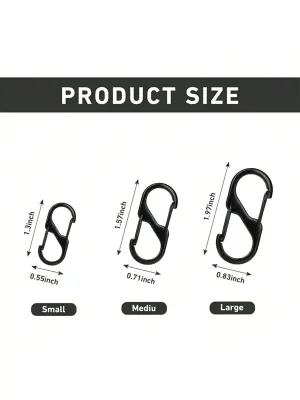
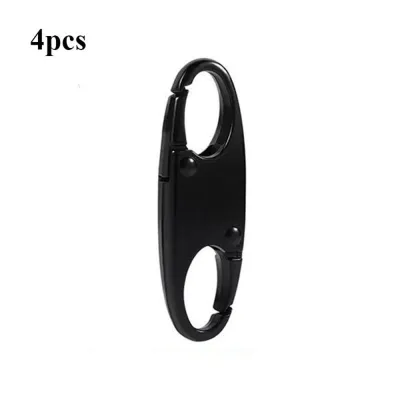
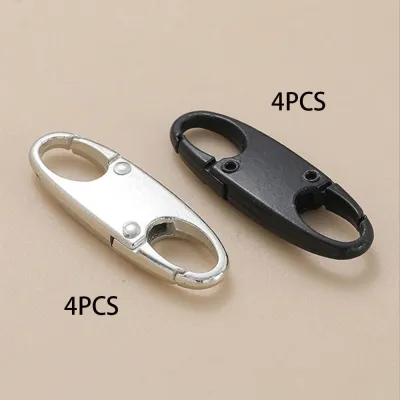
Prices are valid at publication and may change. Please refer to the product page for the latest price.
Locking carabiners are among the most common designs used for this purpose. These clips feature a spring-loaded gate that can be further secured with a threaded collar or a slide-lock mechanism. To open the clip, a user must perform a multi-step action: unlocking the collar and then pressing the gate inward. This design is highly effective at preventing accidental openings and stopping quick-fingered attempts, yet it remains relatively easy for the bag owner to operate with one hand after a bit of practice.
Interlocking padlock-style clips offer a more rigid security option. These devices typically consist of two mating metal components that snap together or a small, specialized shackle that loops through both zipper pullers. Some variations utilize a combination dial or a small key to release the lock. While these provide a high level of physical security, they are slower to open, making them less ideal for compartments you need to access frequently throughout the day.
Magnetic and snap fasteners represent a lower-profile, rapid-release alternative. These clips rely on strong rare-earth magnets or mechanical snap-fit joints to hold the zipper pullers in a closed position. They do not lock in the traditional sense, but they require a deliberate, forceful tug in a specific direction to release. This makes them excellent visual and physical deterrents for daily commuting where high-security locks might feel too cumbersome.
Each of these mechanisms deters theft without requiring permanent alterations to your bag. Unlike sewing permanent locks onto your luggage or replacing the entire zipper assembly, these clips can be attached and removed as needed. This flexibility allows you to adapt your security level based on your destination, switching from a simple magnetic clip for a routine office commute to a robust locking carabiner for travel.
Matching Clip Styles to Backpacks, Handbags, and Luggage
Selecting the right clip style requires analyzing the structure of your bag and how you intend to use it. A clip that works perfectly on a heavy-duty travel backpack may be entirely unsuitable for a delicate leather handbag or a compact travel pouch.

Backpacks and daypacks typically feature double-slider zippers on the main compartments, which are positioned out of your direct line of sight when worn. For these bags, lightweight and quick-release clips are highly practical. Aluminum or reinforced polymer carabiners allow you to secure the main compartment quickly. Because these clips are positioned at chest level or behind your shoulders, choosing a design that you can operate by feel alone is incredibly helpful for daily convenience.
Handbags and crossbody bags require a more discreet approach to security. Bulky, industrial-looking hardware can ruin the aesthetic of a refined bag and may cause physical damage. For these styles, prioritize low-profile clips with highly polished, smooth finishes. Small zinc alloy or brass lobster-style clasps blend in naturally with standard handbag hardware. These clips should be compact enough to tuck neatly under a zipper flap or align closely with the bag’s side seams to remain unobtrusive.
Suitcases and travel luggage demand heavy-duty, robust metal locks. Luggage is frequently subjected to rough handling by airport staff and transport services, meaning any security clip must withstand significant impact and vibration. Heavy-duty stainless steel or thick zinc alloy locks designed to bridge double-slider zippers are the standard choice here. These clips should have a rigid construction that prevents the sliders from being pried apart even under intense pressure.
Travel pouches, toiletry kits, and internal organizers present a different challenge due to their small size and tight spaces. For these items, compact and flexible wire-gate clips or micro-carabiners are ideal. These clips feature thin wire gates that can easily thread through the tiny eyelets of miniature zipper tabs. They add virtually no weight or bulk, allowing your organizers to pack flat while still providing an extra layer of security for sensitive items like passports and currency.
Checking Zipper Puller and Hardware Compatibility
Before purchasing any anti-theft clip, it is essential to verify that the hardware will physically fit your bag’s existing zippers. Forcing an incompatible clip onto a zipper puller can bend the metal, damage the finish, or even snap the puller entirely.
The first step is to measure the hole diameter, or eyelet, of your zipper pullers. Standard zippers are classified by size, such as #3, #5, #8, or #10, with #5 being the most common size for backpacks and handbags. The eyelet on a #5 slider puller is often quite small, sometimes measuring only two to three millimeters in diameter. You must ensure that the pin, shackle, or carabiner gate of your chosen clip is thin enough to pass through this hole smoothly without binding.
Next, verify the clearance and alignment of your double-slider zippers. When the two sliders are pulled together to close the bag, do their eyelets align side-by-side, or do they overlap? Some specialized luggage zippers feature overlapping loops designed specifically to accept a padlock shackle. If your zippers do not align perfectly, a rigid metal clip may not fit. In such cases, a flexible wire-loop clip or a cable-style carabiner is a much better choice, as the flexible cable can easily snake through misaligned eyelets.
It is also important to consider the compatibility of the materials to prevent cosmetic and structural damage. When two different metals remain in contact in a humid environment, they can undergo galvanic corrosion, which degrades the metal over time. If your bag has aluminum zipper sliders, pairing them with an uncoated brass or steel clip can accelerate this process. To prevent this, look for clips with protective anodized coatings, painted finishes, or plastic sleeves that prevent direct metal-on-metal contact.
Evaluating Material Strength and Security Limits
Understanding the physical properties of the materials used in anti-theft clips helps you assess their durability and limitations in real-world conditions. Different materials offer varying levels of resistance to cutting, snapping, and environmental wear.
Stainless steel is the gold standard for strength and durability. It offers exceptional resistance to cutting tools and physical force, making it highly secure. Additionally, stainless steel is naturally resistant to rust, which is a critical consideration in tropical climates with high relative humidity. Zinc alloy is another popular choice; it is lightweight, highly resistant to corrosion, and can be cast into intricate, smooth shapes. However, zinc alloy is generally more brittle than stainless steel and may snap under extreme leverage.
Reinforced polymers and plastics offer a lightweight, non-scratching alternative. High-grade nylon or polyoxymethylene (POM) clips are surprisingly tough and will not damage delicate bag fabrics or leather. However, they do not offer the same level of cut resistance as metal. A determined thief with a pair of heavy-duty shears can easily cut through a plastic clip. Therefore, polymer clips are best suited for low-risk environments where visual deterrence and light physical resistance are sufficient.
It is crucial to recognize that a zipper clip only secures the pullers, not the bag itself. Even if the pullers are locked together, a standard nylon zipper track can be punctured and opened using a simple ballpoint pen, then resealed by sliding the locked pullers over the punctured area. If you require comprehensive security against forced entry, you should pair your zipper clips with a bag that features puncture-resistant double-layer zippers and slash-proof fabric panels.
Environmental factors also play a significant role in the lifespan of your hardware. High humidity, salt air near coastal areas, and exposure to rain can cause internal springs and hinges to stiffen or rust. If you frequently use your bag outdoors, look for clips with sealed spring mechanisms or marine-grade materials. Regularly inspecting the moving parts of your clips ensures they remain functional when you need them most.
Installing and Maintaining Your Zipper Clip
Proper installation and regular maintenance are key to ensuring your anti-theft zipper clip functions reliably over time. Incorrect installation can put unnecessary stress on your zipper sliders, leading to premature wear or failure.
To install an interlocking clip or carabiner-style lock, start by bringing the two zipper sliders close together. Thread the gate or shackle of the clip through the eyelet of the first puller, and then through the eyelet of the second puller. Ensure the gate closes completely and that any locking collar is fully engaged. The clip should hang naturally without twisting or pulling the zipper sliders at an awkward angle, which can cause the zipper teeth to misalign.
Routine maintenance checks should be performed every few weeks, especially if you use the bag daily. Test the spring tension of the gate to ensure it snaps back into place quickly and securely. If the spring feels weak or loose, replace the clip immediately, as a weak gate can easily catch on external objects and open accidentally. Check the hinges and locking collars for any signs of stiffness, dirt buildup, or corrosion.
If a metal clip becomes stiff or difficult to open, do not attempt to force it. Applying excessive force can bend or snap the fragile cast-metal loop of your zipper puller, which is difficult and costly to repair. Instead, apply a single drop of sewing machine oil or a dry Teflon-based lubricant directly to the hinge and spring mechanism. Work the gate back and forth a few times to distribute the lubricant, and wipe away any excess oil with a clean cloth to prevent it from staining your bag’s fabric.
When removing the clip, always disengage the locking mechanism fully before attempting to slide it out of the zipper eyelets. Avoid pulling or twisting the clip while it is still partially threaded through the pullers. Taking these small precautions will preserve the integrity of both your security hardware and your bag’s zippers, ensuring smooth operation for years to come.
Frequently Asked Questions (FAQ)
Will a metal zipper clip scratch leather or delicate fabrics?
Yes, metal zipper clips can scratch leather or delicate fabrics if they have rough casting seams, sharp edges, or if they rub continuously against the bag during movement. To prevent cosmetic damage to luxury handbags or soft-sided luggage, look for clips with highly polished, tumbled finishes that eliminate sharp burrs. Alternatively, you can select clips featuring protective silicone sleeves, rubberized coatings, or opt for high-strength polymer clips that naturally prevent scratching while still providing reliable security.
How can I secure a bag that only has one zipper puller?
If your bag only has a single zipper puller, you cannot link it to a second slider. Instead, you can secure the single puller by clipping it to a fixed anchor point on the bag’s exterior. Look for a nearby metal D-ring, a strap attachment point, or a sturdy fabric loop sewn into the seam of the bag. Never force a clip directly through the zipper track fabric or the stitching of the bag, as this can tear the material, ruin the zipper alignment, and void your bag’s warranty.

Community discussion
Share your experience or ask a question. Comments are reviewed before publication.