
Finding the right blank notebook depends entirely on matching the paper’s physical specifications—such as weight, sizing, and coating—to the specific ink chemistry of your writing tools. While there is no single universal brand that excels at everything, fountain pens require highly sized, ink-resistant paper to prevent feathering, gel pens perform best on moderately textured paper that balances dry time with smooth rolling, and alcohol markers demand specialized bleed-proof barriers. By understanding these technical paper properties and knowing how to test them, you can select a blank notebook that elevates your writing or sketching experience without the frustration of bleed-through or smudging.
Understanding Paper Properties That Affect Ink Performance
To evaluate any blank notebook effectively, you must look beyond the cover design and examine the technical specifications of the paper. The most common metric provided by manufacturers is paper weight, measured in grams per square meter (GSM). While a higher GSM generally indicates thicker, heavier paper, weight alone does not determine how well a page resists ink penetration. A heavy 120 GSM sketch paper made of loose, unsized fibers can feather and bleed worse than a dense, highly sized 52 GSM paper. Density, fiber composition, and surface treatment play far more critical roles in ink compatibility than thickness.
Sizing is the chemical treatment applied to paper during manufacturing to regulate its absorbency. Internal sizing is mixed into the paper pulp, while surface sizing is applied to the finished sheet. Unsized paper, like newsprint or blotting paper, acts like a sponge, pulling liquid ink deep into its fibers. Sized paper resists water absorption, forcing liquid inks to sit on the surface and dry via evaporation rather than soaking. Some premium papers also feature a mineral coating, such as clay, which creates an ultra-smooth surface that enhances ink color vibrancy and sheen but significantly extends drying times.
Products mentioned in this guide
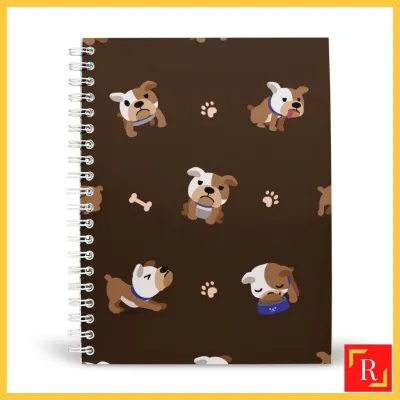
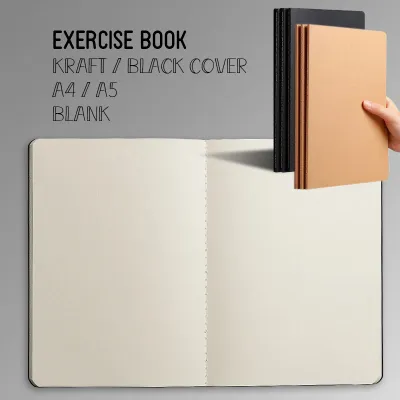
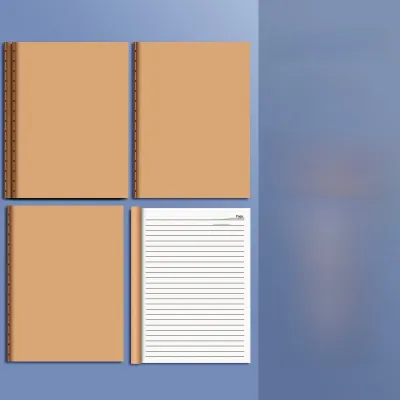
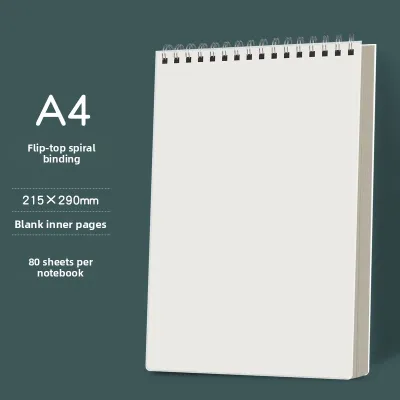
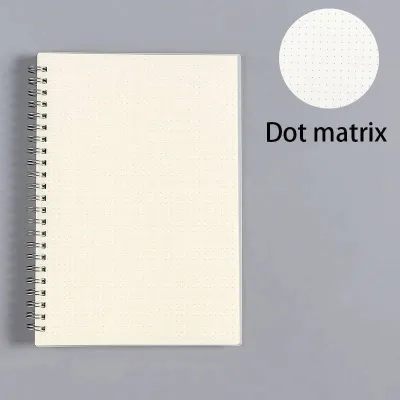
![[SG Stock] A6 Recycled Notebook | Notebook with Pen](https://img.lazcdn.com/g/p/d51a17477c311ea340bb0dc30b685a32.jpg_400x400q80.jpg_.webp)
Prices are valid at publication and may change. Please refer to the product page for the latest price.
When reading product descriptions, certain industry terms can help you decode how the paper will behave. “Fountain pen friendly” indicates that the paper has received sufficient surface sizing to prevent wet inks from spreading or bleeding. “Acid-free” or “pH-neutral” means the paper was processed without acidic compounds, ensuring it will not yellow, become brittle, or degrade over decades. “Mixed-media” typically denotes a heavier paper, often above 150 GSM, designed to handle light washes of watercolor or acrylic without warping, though it may still struggle with the intense solvents found in alcohol-based markers.
The choice between coated and uncoated paper involves a fundamental trade-off between writing feel and drying speed. Ultra-smooth coated papers allow fine pen nibs to glide effortlessly without catching, making them excellent for calligraphy and detailed drawing. However, because the ink sits entirely on top of the coating, it is highly susceptible to smudging under a resting hand. Uncoated papers offer more physical resistance, or “tooth,” which provides excellent tactile feedback and fast drying times, but they are more prone to pulling ink into the fibers, which can cause fine lines to spread.
Matching Paper Characteristics to Specific Writing Instruments
Selecting the ideal blank notebook requires aligning the chemical behavior of your preferred ink with the physical structure of the paper. Different writing instruments interact uniquely with the paper surface, making a tailored approach essential for clean, legible pages.

Fountain Pens and Water-Based Inks
Fountain pen inks are primarily water-based and flow freely from the nib, requiring paper that can control this liquid volume. Without proper surface sizing, the capillary action of the paper fibers will pull the wet ink outward in all directions, a phenomenon known as feathering. Sizing acts as a barrier, keeping the ink pooled on the surface where it can dry cleanly and retain its intended line width. This surface retention is also what allows specialized ink properties, such as shading (color variation) and sheen (a metallic secondary color), to become visible.
When shopping for a blank notebook for fountain pen use, look for explicit labels such as “fountain pen optimized,” “high sizing,” or “ink-resistant.” Many premium Japanese and European stationery brands specialize in these formulations, utilizing dense, long-fiber pulps that naturally resist liquid penetration even at lower weights like 68 GSM or 80 GSM. These papers ensure that even wet, broad nibs produce crisp, sharp lines without bleeding through to the reverse side of the page.
However, highly sized and coated papers introduce a significant trade-off: extended dry times. Because the ink remains on top of the page rather than soaking in, a wet line can take several seconds or even minutes to dry completely. If you write quickly or are left-handed, this can lead to severe smudging, making it necessary to use blotting paper or opt for a slightly more absorbent, semi-sized paper that balances dry time with line crispness.
Gel Pens and Rollerballs
Gel pens and rollerballs utilize water-based or gelled inks that require a balanced paper surface to perform optimally. Unlike fountain pens, which glide on a cushion of liquid, gel pens rely on a tiny rotating ball at the tip that needs physical friction—often referred to as “tooth”—to roll smoothly across the page. If a paper is overly glossy or heavily coated, the metal ball may slide without rotating, leading to skipping, inconsistent ink flow, and frustrating gaps in your writing.
Standard premium blank notebooks with a matte, uncoated finish and a weight of 80 to 100 GSM generally provide the ideal amount of texture for these pens. This level of tooth ensures a continuous, clean line while allowing the ink to bind securely to the paper fibers. Because gel inks are thicker than fountain pen inks, they are less prone to feathering, making them highly compatible with a wide variety of mid-range notebook papers.
The primary risk with fast-flowing gel inks is smudging, particularly with broader tip sizes like 0.7mm or 1.0mm. On highly coated papers, the gel binder takes longer to set, so it is wise to verify the paper’s absorption rate by running a quick test or opting for medium-weight, uncoated paper that absorbs the ink carrier quickly while keeping the pigment crisp.
Markers and Alcohol-Based Inks
Alcohol-based markers present the most severe challenge for notebook paper because alcohol acts as a highly efficient solvent that rapidly penetrates paper fibers. Standard notebook paper, regardless of how high its GSM is, will almost always suffer from bleed-through when subjected to alcohol markers, as the solvent dissolves standard sizing and carries the pigment straight to the next page. This can quickly ruin subsequent sheets in a bound notebook.
To use markers successfully in a blank notebook, you must seek out specialized “bleed-proof” or “marker-proof” paper. These papers often feature a microscopic plastic or chemical barrier coated on the back of each sheet, which completely blocks the solvent from passing through, allowing you to blend colors smoothly on the front without ruining subsequent pages. Alternatively, heavy mixed-media papers of 200 GSM or higher can absorb a significant volume of ink before bleeding, though they may still show heavy ghosting on the reverse side.
If specialized marker notebooks are unavailable or too costly, practical workarounds are essential. Placing a loose, heavy plastic backing sheet or a thick piece of cardstock directly behind your active page will catch any escaping ink, protecting the rest of your blank notebook while allowing you to use standard heavy-weight paper. Another option is to select notebooks with single-sided perforated pages, allowing you to remove the sheet before coloring.
How to Evaluate and Test Notebook Paper Before Committing
When browsing online marketplaces or physical stationery shops in Singapore, evaluating paper quality requires looking past generic marketing buzzwords. Terms like “premium luxury paper” or “super-smooth sheets” often carry no technical meaning; instead, search product descriptions for specific material details, such as “acid-free wood-free paper,” “cotton content,” or explicit compatibility with fountain pens and heavy inks. Checking user reviews specifically written by artists or calligraphers can also provide reliable insights into how the paper handles wet media.
If you are shopping in a physical store that provides sample notebooks, you can perform a simple, non-destructive test on a back page to verify performance. Draw a solid line with your heaviest pen, make a few dense dots to pool the ink, and wait to see how quickly it dries. Flip the page to check for “ghosting” (seeing the shadow of the ink through the paper) and “bleed-through” (ink physically soaking through to the other side), while also inspecting the edges of your lines for any fuzzy feathering. This hands-on test is the most reliable way to ensure compatibility with your specific pen and ink combination.
Beyond the paper itself, evaluate the notebook’s binding and lay-flat capabilities, as these directly impact your writing comfort. A true lay-flat binding, such as thread-sewn or exposed-spine binding, allows the notebook to open completely flat, making it much easier to write or draw near the center gutter and ensuring you can utilize every square centimeter of your blank pages. Avoid tightly glued perfect bindings if you plan to use the notebook for sketching or extensive writing, as they tend to spring closed and resist staying open.
Conditional Selection Guide for Your Blank Notebook
To finalize your choice, align your purchase with your primary writing instrument and budget. If your daily routine revolves around fountain pens and wet inks, prioritize highly sized, premium Japanese or European blank notebooks. While these specialized papers represent a higher initial investment, they are essential for preserving the unique shading and sheen of your inks without ruining the reverse side of your pages.
For general journaling, note-taking, or sketching with standard gel pens, rollerballs, and pencils, a mid-range blank notebook featuring 80 to 100 GSM uncoated, acid-free paper offers the best balance of performance and value. These notebooks are widely available, dry quickly, and provide enough tooth for a satisfying writing feel without the premium price tag of specialized art or fountain pen papers.
Finally, before committing to a specific notebook system, verify the long-term availability of replacement refills or specific formats. If you find a paper type that perfectly matches your writing style, choosing a brand that offers consistent, year-round stock in Singapore ensures you can maintain a cohesive archive of your thoughts, sketches, and projects without having to restart your search every time a notebook is filled.

Community discussion
Share your experience or ask a question. Comments are reviewed before publication.