
When purchasing packaging materials, the letters and numbers stamped on a box can be highly confusing. Carton box specifications—such as single-wall, double-wall, and various flute sizes—are not arbitrary design choices. Instead, they are precise structural engineering standards that dictate how much weight a box can support, how well it resists punctures, and how high it can be stacked.
Selecting the wrong carton specification can lead to costly consequences, including damaged merchandise, collapsed warehouse stacks, and elevated shipping fees. Understanding these specifications allows you to choose the exact level of protection your items require, balancing safety with cost-efficiency. Whether you run an e-commerce business, are planning a residential move, or manage warehouse logistics, mastering these packaging basics ensures your goods arrive intact.
Understanding Carton Walls: Single-Wall vs. Double-Wall Construction
To understand how a carton box achieves its strength, you must first look at its structural anatomy. A standard corrugated carton is a multi-layered composite made of flat paperboard sheets known as liners, and a wavy, ribbed sheet known as the corrugated medium (or fluting). The liners form the flat inner and outer walls of the box, while the medium is glued between them to provide structural rigidity and cushioning.
Products mentioned in this guide
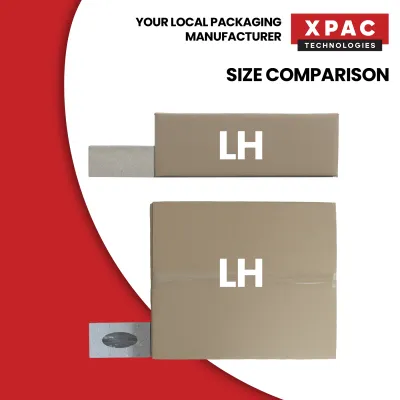
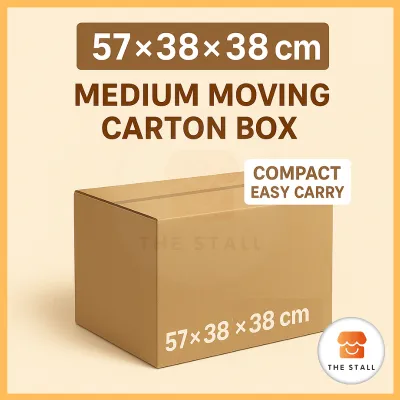
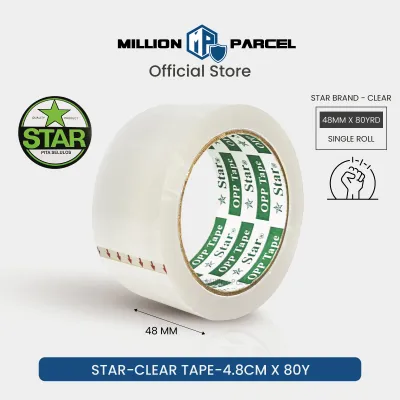
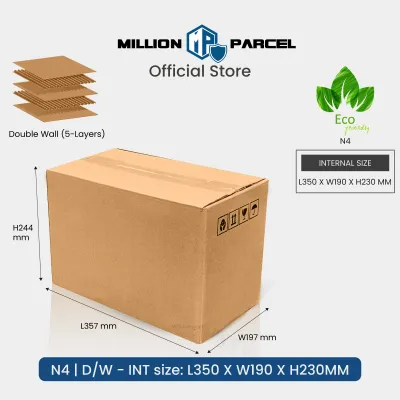
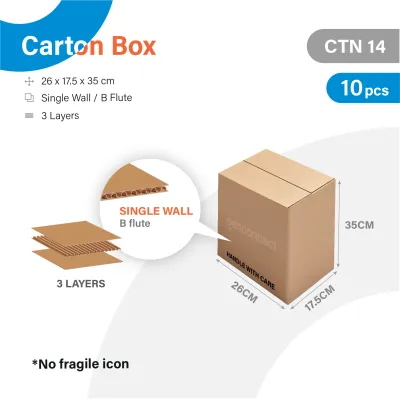
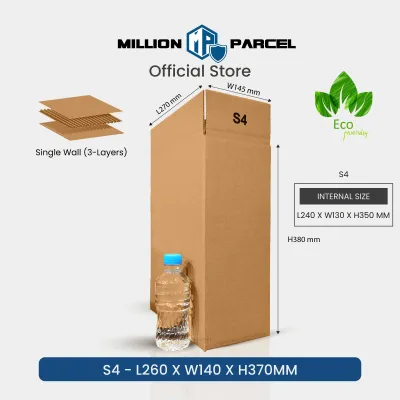
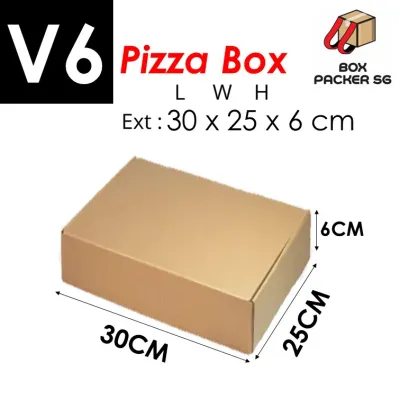
Prices are valid at publication and may change. Please refer to the product page for the latest price.
Single-Wall Construction Single-wall construction features a single layer of corrugated medium sandwiched between two flat outer liners. Because of its lightweight profile, single-wall boxes are highly cost-effective and keep shipping weights to a minimum. They are the industry standard for shipping lightweight to medium-weight items, such as books, clothing, cosmetics, and pre-packaged consumer goods.
Double-Wall Construction Double-wall construction adds an extra layer of protection by using two layers of corrugated medium separated and supported by three flat liners. This design is significantly thicker and more rigid, making it ideal for heavy, fragile, or high-value products. Double-wall boxes provide superior resistance to crushing, drops, and external punctures during rough transit.
Triple-Wall and Material Quality Triple-wall cartons feature three medium layers and four liners, offering industrial-grade strength for extreme weights like automotive parts. They are rarely needed for standard consumer packing. When sourcing boxes, do not rely solely on the “single” or “double” label; always verify the physical thickness and the manufacturer’s load ratings, as paper quality and liner weights vary across suppliers.
Decoding Flute Profiles: How A, B, C, E, and F Flutes Affect Protection
The wavy corrugated medium inside a carton wall is called the “flute.” Its height and frequency determine the box’s thickness, cushioning, and vertical stacking strength. Flute profiles are categorized by letters, but these letters do not follow alphabetical order for thickness or strength because they were named in the order of their historical invention.

A-Flute A-flute is the thickest standard profile, measuring approximately 4.8 mm. It features tall, widely spaced waves that provide excellent vertical cushioning and shock absorption, making it ideal for fragile items. However, because the waves are tall and sparse, it has lower flat crush resistance and stacking strength.
B-Flute B-flute is thinner and more rigid, measuring roughly 3.2 mm. With a higher density of smaller waves, it offers exceptional flat crush resistance, high stacking strength, and a flatter surface. This makes B-flute perfect for custom printing, retail display boxes, and canned goods.
C-Flute C-flute is the most versatile and common profile for standard shipping boxes, measuring about 4.0 mm. It balances respectable cushioning with adequate vertical stacking strength, making it the default choice for moving and shipping cartons.
E-Flute and F-Flute (Micro-Flutes) E-flute (1.6 mm) and F-flute (0.8 mm) are ultra-thin, rigid micro-flutes designed to replace traditional folding paperboard. They provide an exceptionally smooth surface for high-resolution graphics and custom branding, commonly used in cosmetics, subscription boxes, and light electronics.
Combined Flutes in Double-Wall Cartons Double-wall boxes frequently combine different flute sizes to merge their strengths. For example, a BC-flute box pairs a B-flute outer layer (for puncture resistance and smooth printing) with a C-flute inner layer (for shock absorption). Always verify the exact millimeter measurements with your packaging supplier rather than relying solely on the letter.
ECT vs. Mullen Test: Reading the Box Maker's Certificate for Strength
On the bottom flap of high-quality shipping cartons, you will usually find a circular stamp called the Box Maker’s Certificate (BMC). This certificate details the box’s construction, dimensions, and strength limits, helping you verify if a box can handle your specific logistical risks.
The Edge Crush Test (ECT) The Edge Crush Test measures the top-to-bottom compression strength of the corrugated board, evaluating how much weight the edges of the box can support before buckling. Expressed in pounds per width-inch (such as 32 ECT or 44 ECT), this rating is critical if you plan to stack boxes on pallets or in warehouse racks where vertical load-bearing capacity is essential.
The Mullen Test (Bursting Strength) The Mullen Test measures the puncture and tear resistance of the box’s flat walls, evaluating how much pressure the face of the cardboard can withstand before bursting open under tension (expressed in pounds per square inch, such as 200#). This rating is crucial if you are shipping heavy, irregularly shaped items with sharp corners that might puncture the walls during rough courier handling.
Choosing Between ECT and Mullen Prioritize ECT if your boxes will be neatly stacked on pallets or stored in warehouses where vertical compression is the primary threat. Prioritize Mullen if your boxes will be shipped individually via parcel couriers, contain loose items that shift, or face rough handling and physical punctures. Do not assume a high rating in one test automatically means a high rating in the other; they measure entirely different physical properties.
How to Choose the Right Carton Box for Your Shipping and Storage Needs
Selecting the perfect carton box requires matching your specific shipping or storage scenario with the correct combination of wall construction, flute size, and strength rating.
Standard E-commerce & Parcel Shipping For everyday e-commerce fulfillment involving lightweight items like apparel or books, choose single-wall, C-flute cartons with a standard 32 ECT rating. This combination provides sufficient protection against typical transit impacts while remaining lightweight, helping to minimize volumetric shipping costs.
Heavy, Fragile, or High-Value Items If you are shipping heavy kitchenware, delicate glassware, or expensive electronics, invest in double-wall cartons, such as BC-flute, with a 44 ECT or 200# Mullen rating. The dual-wall construction prevents the box from bulging under heavy loads, while the combined flute layers absorb external shocks.
Retail Packaging & Product Displays For products that sit directly on retail shelves or require a premium unboxing experience, select single-wall, E-flute or F-flute cartons. These micro-flutes offer a polished, flat surface that showcases custom logos and vibrant colors beautifully.
Long-Term Storage & Palletizing For archiving documents or storing inventory in warehouses, prioritize double-wall construction with a high ECT rating (such as 48 ECT or higher). Over time, cardboard can absorb ambient moisture—especially in humid environments like Singapore—which naturally degrades its structural strength. A higher ECT rating ensures the boxes remain stable and do not buckle under sustained vertical loads.
Sizing and Void Fill Even the strongest carton box will fail if it is poorly packed. If a box is too large, the empty space inside compromises its structural integrity, making it highly susceptible to crushing. Choose a box size that closely matches your item’s dimensions, and fill any remaining gaps with high-quality void fill—such as kraft paper or bubble wrap—to create a solid internal structure that supports the box walls.
Frequently Asked Questions (FAQ)
Can I use a single-wall box for heavy items if I add more bubble wrap?
No. Internal void fill and bubble wrap protect the item from shock, but they do not increase the box’s stacking or puncture strength. If a heavy item exceeds the single-wall box’s weight limit, the box will bulge, tear, or collapse regardless of internal padding. Always match the box’s structural rating to the item’s weight.
Does a higher flute letter mean a thicker or stronger box?
No. Flute letters (A, B, C, E, F) were assigned historically and do not follow alphabetical order for thickness or strength. For example, A-flute is thicker than B-flute, but C-flute sits between them, while E and F are micro-flutes. Always refer to the specific profile characteristics and verify exact millimeter measurements with your packaging supplier.

Community discussion
Share your experience or ask a question. Comments are reviewed before publication.