
Selecting the right carton boxes requires understanding that listed dimensions almost always refer to the internal usable space, not the external footprint. These measurements are standardized to help you determine exactly what will fit inside without stretching or damaging the cardboard. By mastering how to read these dimensions, you can prevent shipping damage, avoid unexpected courier fees, and streamline your packing process.
How Carton Box Dimensions Are Measured
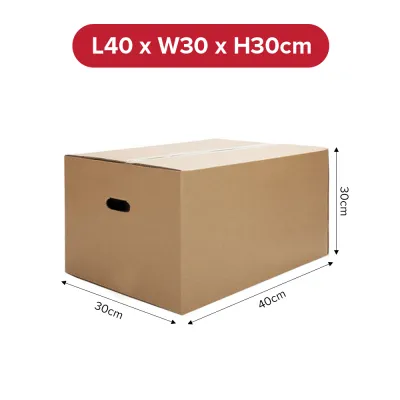
To read a carton box specification correctly, you must follow the industry-standard sequence: Length (L) by Width (W) by Height (H). When you look at an open box, the length is always the longer side of the opening, while the width is the shorter side. The height, sometimes referred to as depth, is measured vertically from the bottom of the box to the top of the open flap line.
Understanding the difference between inside and outside dimensions is critical for successful packaging. Inside dimensions are the standard measurements provided by manufacturers because they dictate the maximum size of the object that can physically fit inside the box. Outside dimensions, on the other hand, include the thickness of the cardboard walls and are used by shipping carriers to calculate dimensional weight and storage space on delivery vehicles.
Products mentioned in this guide
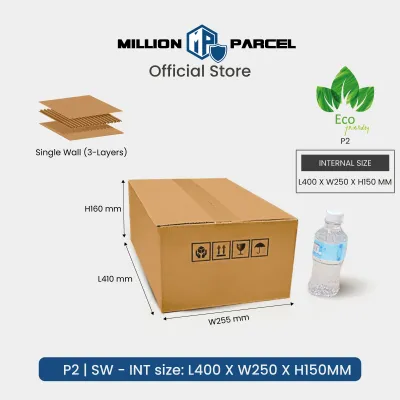
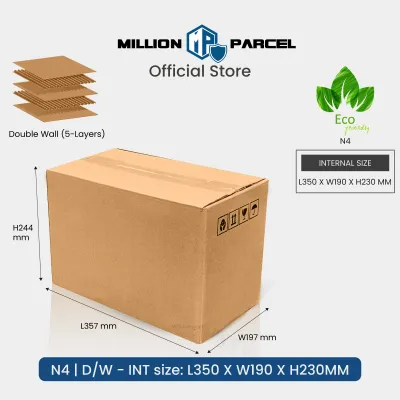
Prices are valid at publication and may change. Please refer to the product page for the latest price.
Before purchasing, always verify whether the listed dimensions are internal or external by checking the product label, technical specification sheet, or manufacturer documentation. If a listing does not explicitly state “inside dimensions,” it is safest to contact the supplier or perform a physical measurement on a sample box to avoid fitting issues.
Decoding Standard Carton Box Classifications and Board Thickness
While some industries use specific numerical codes for boxes, most retail and commercial carton boxes are categorized by their intended application. You will commonly see boxes labeled as mailing boxes, moving boxes, or heavy-duty shipping cartons. These classifications give a general indication of their structural strength and typical size ranges rather than representing a universal, standardized sizing system.

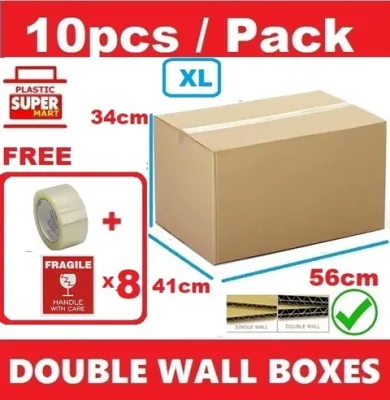
The thickness of the corrugated board plays a major role in how much usable space remains inside the box. Corrugated cardboard is constructed with fluted paper sandwiched between flat linerboards, and it comes in various styles such as single-wall (one layer of fluting) or double-wall (two layers of fluting for heavy-duty use). A double-wall box provides excellent puncture resistance and stacking strength, but its thicker walls physically reduce the internal space compared to a single-wall box with the same external dimensions.
Because fluting thicknesses vary among manufacturers, you should avoid using a generic mathematical deduction to estimate internal space. Instead, consult the manufacturer’s detailed specification sheet to find the exact internal clearance. This step is especially important when shipping tight-fitting items where even a few millimeters of variance can prevent the product from sliding into the box.
Step-by-Step Guide to Selecting the Right Carton Box
Choosing the ideal carton box involves a systematic approach to ensure your items remain secure during transit. Begin by measuring the maximum length, width, and height of the item you plan to pack. If you are packing multiple items together, arrange them as they would sit in the box and measure the total outer boundary of the entire group.
Once you have the item’s base measurements, calculate the required internal dimensions of the box by adding a clearance buffer for protective packaging. If you plan to use bubble wrap, foam inserts, or crumpled paper, you must add the thickness of these materials to all sides of your item’s measurements. For fragile items, a larger buffer is necessary to prevent the product from shifting or making direct contact with the outer walls of the box.
Next, evaluate the weight and fragility of your items to select the correct board grade. Do not rely on visual inspection or a simple touch test to guess a box’s strength; instead, look for the manufacturer’s official weight capacity rating or the Box Maker’s Certificate printed on the bottom flap. Heavy or sharp items require double-wall construction or high-density board grades to prevent the bottom from bursting during handling.
Finally, balance the need for protective cushioning against the risk of creating excessive empty space, known as void. While extra space allows for more padding, oversized boxes require more void-fill materials and can lead to higher shipping costs due to dimensional weight pricing. Aim for a snug but safe fit where the item is cushioned on all sides without causing the box walls to bulge.
Common Sizing Mistakes and How to Avoid Them
One of the most frequent errors in box selection is purchasing cartons based solely on external dimensions. If you buy a box with external dimensions that match your item’s exact size, the thickness of the cardboard walls will prevent the item from fitting inside, forcing you to return the packaging or risk damaging the product.
Another common oversight is ignoring the physical space consumed by the box’s internal structures. Flaps, seams, manufacturer joints, and scoring lines all fold inward and can slightly reduce the usable volume in the corners and edges of the box. If your item has rigid, sharp corners, these minor internal protrusions can prevent a smooth fit.
Using oversized boxes also carries significant financial and logistical penalties. Shipping carriers often charge based on the volume of the package rather than its actual weight, meaning an unnecessarily large box will inflate your shipping fees. Additionally, excessive empty space allows items to slide and gain momentum during transit, which greatly increases the risk of internal damage even if you use protective wrapping.
Frequently Asked Questions (FAQ)
Does the thickness of the corrugated board affect the inside dimensions?
Yes, the thickness of the corrugated board directly impacts the internal usable space of the box. Thicker materials, such as double-wall or triple-wall cardboard, extend further inward than standard single-wall boards, reducing the internal dimensions even if the external footprint remains identical. Always verify the manufacturer’s specified internal dimensions rather than assuming a standard wall thickness.
How much extra space should I leave for packing materials?
As a general guideline, you should leave a uniform buffer of approximately 2 to 5 centimeters of extra space on all sides of your item for protective cushioning. The exact clearance depends on the fragility of the item and the compression properties of your packing material. Fragile glass or electronics require a thicker, denser buffer like molded foam or thick bubble wrap, while durable items may only need minimal void fill to prevent sliding.

Community discussion
Share your experience or ask a question. Comments are reviewed before publication.