
Finding the right notebook in Singapore often comes down to balancing paper performance, format, and cost. For students, educators, and office professionals, the Campus A4 notebook is a familiar staple on desks across the island. However, determining whether it offers better paper quality than other popular stationery brands requires looking closely at how different papers interact with your daily writing tools. There is no single notebook that serves as a universal solution for every writing style; instead, the ideal choice depends on your preferred ink type, binding needs, and organizational habits.
In Singapore’s humid climate, paper behavior can change, affecting ink absorption and drying times. While some users prioritize an ultra-smooth surface that allows gel pens to glide effortlessly, others require thicker, more absorbent sheets to prevent fountain pen ink from feathering or bleeding through. By evaluating key physical specifications and understanding how to perform simple, observable tests, you can make an informed decision between Campus A4 and alternative notebook brands available in local retail stores and online marketplaces.
Key Standards for Judging Notebook Paper Quality
To objectively compare notebook brands, you must first understand the technical standards that dictate paper performance. The most common specification is paper weight, measured in grams per square meter (GSM). Generally, paper ranging from 50 to 70 GSM is lightweight and prone to show-through, whereas paper between 80 and 100 GSM offers greater opacity and thickness, making it more resistant to ink bleeding. However, GSM alone does not determine quality; the raw fiber composition and surface treatment are equally critical.
Products mentioned in this guide
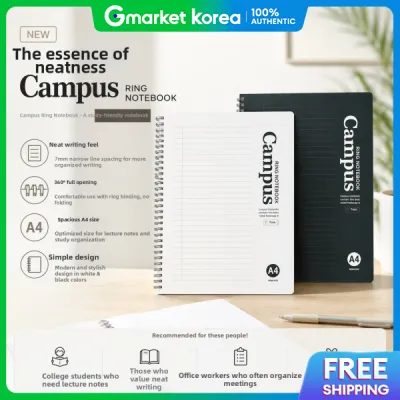
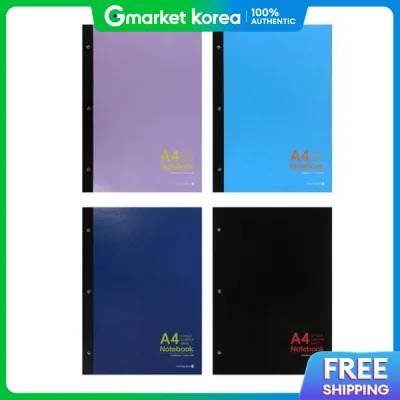
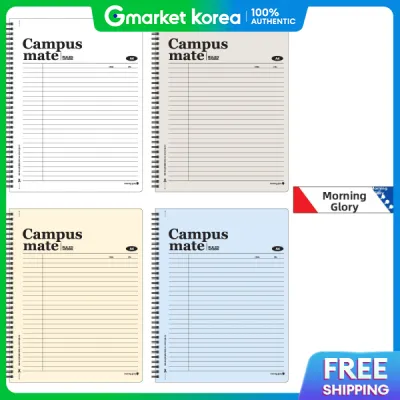
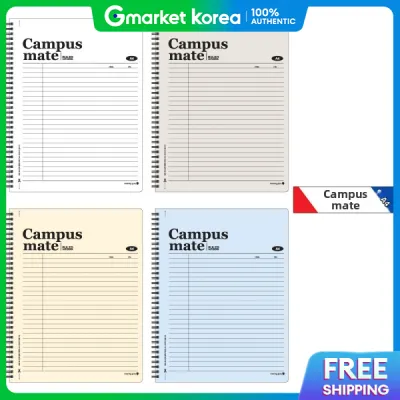
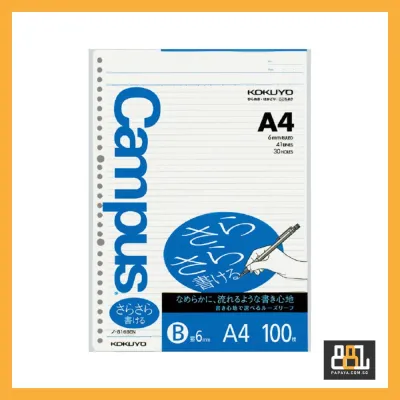
Prices are valid at publication and may change. Please refer to the product page for the latest price.
The finish of the paper—whether it is highly calendered for a smooth, glossy feel or left slightly textured—directly impacts your writing experience. Smooth paper reduces friction, which is excellent for fine-tipped gel pens and fountain pens, but it can prolong ink drying times. Conversely, textured paper, often referred to as having more “tooth,” provides tactile feedback that benefits pencil and ballpoint pen users, though it may cause broader pen tips to drag.
Beyond the paper itself, the ruling format and margin design shape how you organize information. Standard options include lined (ruled), grid, dotted, and blank formats. Some brands incorporate specialized margins or top headers to assist with indexing and date-tracking. Finally, the binding method—whether thread-sewn, glued, or spiral-bound—determines if the notebook will lay completely flat on a desk, which is essential for comfortable edge-to-edge writing, especially in larger formats like A4.
Campus A4 Notebooks: Paper Specs and Observable Traits
Campus A4 notebooks are highly regarded for their systematic approach to page layout and reliable paper consistency. Typically, standard Campus notebooks feature paper weights around 70 to 80 GSM, though specialized series may offer different weights. The paper tone is generally a clean, bright white or a soft, eye-friendly off-white, designed to reduce glare under typical classroom or office fluorescent lighting.

One of the most recognizable traits of the Campus A4 line is its ruling precision. Many models utilize a dotted-ruled system, where faint dots are spaced evenly along horizontal lines. This hybrid design allows you to write straight text while providing vertical alignment guides for drawing diagrams, charts, or columns without the visual clutter of a full grid. The margins are consistently aligned, providing a neat, structured layout for academic or professional note-taking.
In terms of construction, Campus A4 notebooks are frequently bound using a laminated spine with glue or thread-sewing, or via a twin-ring spiral mechanism. The wireless glued bindings are engineered to lay relatively flat when opened, minimizing the annoying bump in the center fold that often disrupts writing flow in larger A4 formats. However, because specifications can vary across different sub-models, product series, or manufacturing batches, you should always check the exact product label or packaging details to confirm the paper weight and sheet count before purchasing.
Campus A4 vs. Competing Brands: Feature and Value Matrix
When comparing Campus A4 to other popular notebook brands found in Singapore’s stationery shops, a structured comparison of observable specifications helps clarify where your money goes. Below is a matrix outlining typical characteristics you can verify on the shelf.
| Notebook Type / Brand | Typical Paper Weight (GSM) | Common Binding Styles | Standard Ruling Options | Sheet Count Range | Typical Price Range (S$) |
|---|---|---|---|---|---|
| Campus A4 Standard | 70 – 80 GSM | Glued, Twin-Ring | Dotted-Ruled, Lined | 30 – 100 sheets | S$2.50 – S$6.00 |
| Western Utility Brands | 80 – 90 GSM | Wire-bound, Stapled | Lined, Grid | 80 – 120 sheets | S$3.00 – S$7.50 |
| Premium Minimalist Brands | 80 – 85 GSM | Thread-Sewn | Dotted, Blank, Grid | 80 – 96 sheets | S$8.00 – S$15.00 |
| Budget House Brands | 60 – 70 GSM | Stapled, Spiral | Lined | 40 – 80 sheets | S$1.00 – S$2.50 |
Beyond basic weight and price, differences in manufacturing precision become apparent upon close inspection. Campus A4 notebooks generally exhibit high paper-sizing accuracy and clean edge finishing, preventing the frayed edges or misaligned pages sometimes seen in budget house brands. Some competing Western utility brands offer micro-perforated sheets, which allow you to tear out pages cleanly for filing—a feature less common in standard Campus glued notebooks, which are designed to keep pages permanently bound.
Value is not merely a calculation of sheet count per dollar; it also encompasses binding longevity and cover durability. While budget house brands offer the lowest entry price, their covers may tear easily, and the binding can fail under daily transport in a backpack. Campus A4 notebooks utilize durable, coated paper or flexible plastic covers that withstand regular handling. However, because the actual writing feel is highly subjective and depends heavily on the specific pen and ink combination you use, these specifications should be treated as a starting point rather than an absolute guarantee of performance.
How to Test Paper Performance with Your Own Pens
Because paper chemistry and ink formulations vary widely, the most reliable way to evaluate a notebook’s paper quality is to perform a hands-on writing test. You can easily do this at home or by using a sample sheet if available in-store. To begin, select a representative selection of your daily writing instruments, such as a standard ballpoint pen, a gel pen (e.g., 0.5mm or 0.7mm), a fine-liner, and a fountain pen if you use one.
First, test for bleed-through and feathering. Write a few sentences with each pen, applying normal writing pressure. Turn the page over to inspect the reverse side. “Bleed-through” occurs when ink penetrates completely through the paper fibers, making the back of the page unusable. “Ghosting” or show-through is when you can see the shadow of the writing on the other side without the ink actually breaking through. Next, look closely at the edges of the written lines; if the ink spreads outward like tiny spiderwebs, the paper is prone to feathering, which is common with wet inks on highly absorbent, untreated paper.
Second, assess drying times, which is particularly important in Singapore’s humid environment where moisture can slow down ink evaporation. Write a quick line of text with a gel or fountain pen, and immediately swipe your finger across it after one, three, and five seconds. Note how long it takes for the ink to set completely without smudging. This test is crucial for left-handed writers who frequently drag their hands across freshly written text.
Finally, evaluate the paper’s “tooth” or friction. Write with a mechanical pencil or a fine-liner to feel how much resistance the paper surface offers. If you plan to use specialized, solvent-based markers, heavy wet inks, or alcohol-based art pens, stop testing on standard notebook paper and consult the manufacturer’s guidelines, as these media typically require specialized, coated, or high-GSM bleed-proof paper to prevent severe bleed-through.
Final Verdict: Choosing the Right Notebook for Your Workflow
Selecting the ideal notebook is a highly personal decision that should align with your daily tasks and writing tools. If your workflow involves structured note-taking, drawing diagrams, or organizing academic lectures, the Campus A4 notebook is an excellent choice. Its specialized dotted-ruled formats, reliable 70 to 80 GSM paper, and flat-laying binding are optimized for standard ballpoint and gel pens, providing a consistent and organized writing experience for daily use.
On the other hand, you should consider alternative notebook brands if your writing routine relies heavily on wet fountain pens that require specialized, high-GSM paper to prevent feathering, or if you prefer alternative binding systems like disc-bound or customizable ring binders. Additionally, if you frequently need to tear out and file your notes, brands that feature micro-perforated pages will better serve your organizational needs.
Keep in mind that neither Campus A4 nor standard alternative notebooks are suitable if your primary creative tools are heavy wet markers, alcohol-based markers, or intense highlighters. These media demand specialized mixed-media or bleed-proof art paper designed to handle heavy solvent loads without damaging subsequent pages. To avoid disappointment, especially when purchasing stationery in bulk or multi-packs, always buy a single unit first to test with your exact pen and ink combination before committing to a larger purchase.
Frequently Asked Questions (FAQ)
Does higher GSM always mean better paper quality?
No, a higher grams per square meter (GSM) rating does not automatically guarantee superior paper quality. While a higher GSM indicates a heavier, thicker sheet of paper that is more opaque and less likely to show ghosting or bleed-through, it does not dictate the surface texture or ink compatibility. The overall writing experience is heavily influenced by other manufacturing factors, such as surface sizing (coatings applied to control ink absorption), fiber density, and the smoothness of the finish. A well-engineered 75 GSM paper with proper sizing can easily outperform a poorly treated 90 GSM paper when it comes to preventing ink feathering and providing a smooth glide.
Can I use fountain pens on standard Campus A4 paper?
You can use fountain pens on standard Campus A4 paper, but the performance will depend heavily on your specific pen nib size and ink formulation. Because standard Campus paper is primarily optimized for everyday ballpoint and gel pens, wet fountain pen inks may experience some degree of feathering or show-through, particularly when using medium or broad nibs that deposit a large volume of ink. If you write with a fountain pen, it is advisable to use fine or extra-fine nibs paired with dry-flowing inks, or to look for specialized series within the brand’s lineup that explicitly state compatibility with fountain pens or feature a higher GSM rating.

Community discussion
Share your experience or ask a question. Comments are reviewed before publication.