
Finding the ideal money budget planner in Singapore requires balancing layout usability with paper performance. When tracking daily expenses, monthly savings, or long-term investments, nothing disrupts the process quite like ink bleeding through to the next page, obscuring previous entries. Because paper performance depends heavily on the specific pen ink, nib size, and manufacturing batch, selecting the right notebook involves understanding verifiable specifications and testing methods rather than relying solely on brand names. Additionally, Singapore’s high relative humidity can affect how paper fibers absorb moisture, which directly impacts ink drying times and feathering. By learning how to evaluate paper characteristics, you can ensure your financial records remain clean, legible, and organized over the course of the year.
Key Paper Dimensions That Define Writing Quality
Paper weight, measured in grams per square meter (GSM), is the most common specification used to evaluate notebook quality. Standard office paper typically sits around 70 to 80 GSM, which is lightweight and highly prone to ink penetration. For financial tracking, where you frequently write on both sides of a page, planners utilizing 100 to 120 GSM paper are generally preferred. This higher density increases the opacity of the page, significantly reducing the shadow of writing—known as ghosting—visible from the reverse side.
Beyond weight, the presence of sizing and surface coatings determines how ink interacts with the paper fibers. Sizing is a chemical treatment applied during manufacturing to control water absorption; unsized paper acts like blotting paper, drawing ink deep into the sheet and causing lines to spread. Coated papers, such as those with satin or matte finishes, keep the ink on the surface longer, resulting in crisp lines and vibrant colors. However, this surface retention also extends drying times, which can lead to accidental smudges if you close your planner too quickly.
Products mentioned in this guide
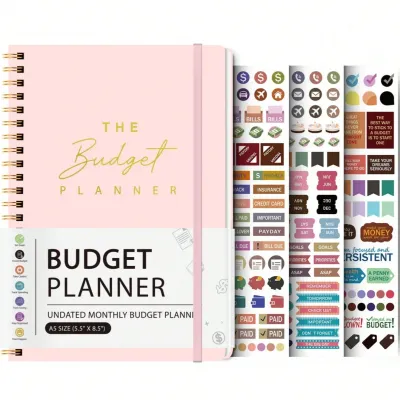
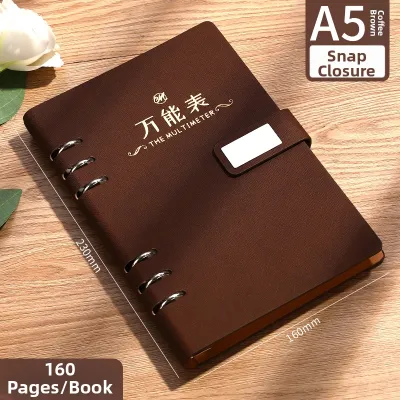
![[SG Ready Stock] A6 Currency Organizer Budget Planner Cash Envelope Savings Money 6 Holes Binder Creative Loose-leaf Notebook](https://img.lazcdn.com/g/p/2f981d6a7911f452ce259749145cdf15.jpg_400x400q80.jpg_.webp)
![[SG Ready Stock] A6 Currency Organizer Budget Planner Cash Envelope Savings Money 6 Holes Binder Creative Loose-leaf Notebook](https://img.lazcdn.com/g/p/f1e12806b5b43fedea81eadb2794ace9.jpg_400x400q80.jpg_.webp)
![[Can Hold 100 Sheets] Large Capacity Money Saving Book Genuine Leather Cash Binder Waterproof Financial Management Reusable Wallet-152c4c8b](https://img.lazcdn.com/g/p/aadb744c778406bd76c39a461ea27009.jpg_webp_400x400q80.jpg_.webp)
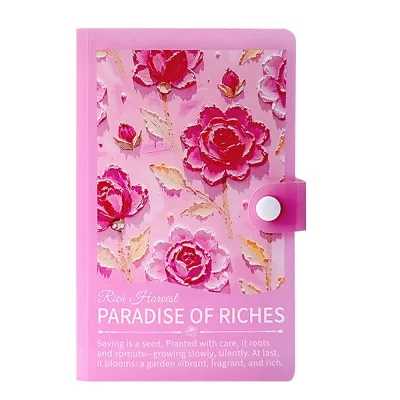
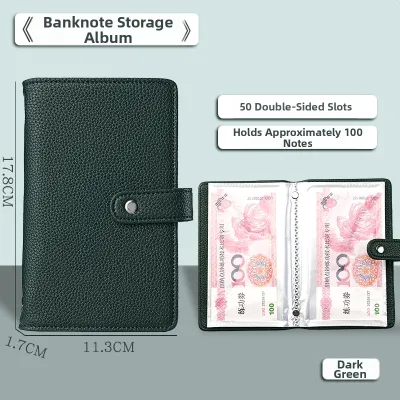
Prices are valid at publication and may change. Please refer to the product page for the latest price.
Surface texture, often referred to as “tooth,” also plays a critical role in writing comfort. Toothy paper has a microscopic roughness that provides tactile feedback, which is highly satisfying for pencil users and helps control the tip of ballpoint pens. Extremely smooth paper, on the other hand, allows gel pens and fountain pens to glide effortlessly across the page without skipping. Choosing between smooth and toothy finishes is largely a matter of personal preference, but it directly influences how tired your hand feels after a long budgeting session.
Finally, the brightness and tint of the paper affect visual comfort during detailed financial logging. High-brightness white paper offers maximum contrast, making fine lines and small numbers easy to read under direct study lamps. However, cream or off-white paper tones soften this contrast, reducing eye strain when you are analyzing complex spreadsheets or balancing accounts for extended periods. When selecting a planner, consider the lighting conditions of your primary workspace to choose a paper tint that supports comfortable, long-term use.
Ink Bleed-Through and Pen Compatibility
Achieving a clean financial ledger requires matching your writing instruments with the appropriate paper type. Oil-based ballpoint pens are the most forgiving option for budget planners, as their thick, viscous ink dries almost instantly and rarely bleeds, even on thin 70 GSM paper. The trade-off is that ballpoints require more downward writing pressure, which can cause physical embossing on the reverse side of the page, making it difficult to write smoothly on the next sheet.

Gel pens and rollerballs use water-based or gelled inks that flow much more freely, offering a smoother writing experience with minimal hand fatigue. Because these pens deposit a larger volume of liquid ink onto the page, they require paper with adequate sizing to prevent the ink from spreading outward along the paper fibers, a phenomenon known as feathering. In Singapore’s humid climate, water-based inks take longer to dry, meaning a highly absorbent paper can lead to immediate bleed-through if the pen tip rests in one spot for too long.
Fineliners and felt-tip markers, often used for drawing precise lines in custom budget tables, utilize highly fluid inks that easily penetrate standard paper. If your financial tracking involves color-coding categories with these pens, you will need a planner with dense, tightly bound fibers, typically found in premium 100+ GSM paper. Without this density, the solvent in the ink will quickly carry the pigment through to the back of the page, ruining the layout on the subsequent sheet.
Highlighters present the greatest challenge for budget planner paper due to the wide, wet line they deposit. When color-coding expenses—such as highlighting fixed costs in blue and variable spending in yellow—the overlapping start and end points of each stroke pool excess ink. Standard planner paper will almost always show significant ghosting or bleed-through under these conditions. To maintain a clean ledger, you must either upgrade to heavy-duty paper or adjust your highlighting technique to use dry wax highlighters or lighter pastel markers.
Format, Binding, and Layout for Financial Tracking
The structural design of a budget planner dictates how easily you can record data and draw custom financial charts. Page layouts generally fall into three categories: ruled, grid, and dot grid. Ruled pages are excellent for chronological transaction lists and simple expense logs where text alignment is the primary concern. Grid and dot-grid layouts offer far more flexibility, allowing you to easily draw vertical columns for multi-category tracking, create bar charts for savings goals, or design custom monthly budget matrices without needing a ruler.
Binding style directly impacts writing comfort, especially when you are entering figures near the center margin of the book. Lay-flat stitched binding, where the notebook signatures are sewn together, allows the planner to open completely flat on a desk. This is highly beneficial for financial tracking, as it lets you write seamlessly across a double-page monthly spread without fighting a curved spine. Spiral and wire-o bindings also lay flat and allow the book to be folded back on itself, but the metal or plastic coils can obstruct your hand when writing on the inner columns.
Disc-bound and ring-bound planners offer the unique advantage of customizability, allowing you to insert, remove, or rearrange budget templates as your financial goals change. However, these systems require specialized punches and can feel less stable than permanently bound books. When choosing a format, balance the structural stability of a sewn notebook against the modular freedom of a ring system, keeping in mind how each style affects your physical writing posture.
Notebook size is another critical variable, with A5 and B5 being the most popular standards for financial planners. An A5 notebook (148mm x 210mm) is highly portable, fitting easily into a daily carry bag for quick expense logging on the go. A B5 notebook (176mm x 250mm) is larger and heavier, but the extra page real estate is invaluable if your budgeting system involves tracking multiple accounts, detailed investment portfolios, or complex family expenses on a single page.
How to Verify Brand Paper Claims
When shopping for a money budget planner, manufacturer specifications can sometimes be misleading or incomplete. To ensure you are getting high-quality paper, start by checking the product label or online description for explicit GSM ratings and paper origin details. Reliable stationery brands are transparent about these specifications, often highlighting the use of certified acid-free paper or specialized mills known for producing fountain-pen-friendly sheets.
If you are purchasing a planner in person at a local stationery boutique, take the opportunity to feel the paper thickness and observe its opacity against the store lighting. Hold a page up to the light to see how much shadow passes through; a high-quality sheet will look uniform and dense, rather than mottled or patchy. You can also run your fingertips over the surface to assess the smoothness and check for any rough spots that might catch a fine pen tip.
For online purchases from online marketplaces or official brand stores, rely on user reviews that specifically mention pen compatibility. Search the review section for terms like “bleed,” “ghosting,” “fountain pen,” or “gel ink” to see how the paper performs under real-world conditions. Many stationery enthusiasts post photos of ink test pages, which provide invaluable visual evidence of how different pen types behave on that specific paper batch.
Once you have purchased a planner, always perform a discreet ink test before committing to your first official entry. Turn to the very last page of the notebook or use an inconspicuous corner to write a few test lines with all the pens and highlighters you plan to use. Observe the drying time, check the edges of the lines for feathering, and flip the page to inspect the reverse side for ghosting or bleed-through. This simple step prevents you from ruining a new planner with incompatible ink.
Decision Framework: Choosing Your Ideal Budget Planner
To select the right budget planner, you must align your writing tools, tracking habits, and portability needs into a single decision framework. If your budgeting style relies on visual elements, color-coded highlighters, and wet gel pens, prioritize a planner with 100 to 120 GSM paper featuring a smooth, sized finish. This combination ensures that your colors remain vibrant and your lines stay sharp without bleeding through to the next page, though you will need to allow a few extra seconds for the ink to dry.
If you prefer a lightweight, highly portable planner that you can carry daily to log cash expenses on the go, a standard 80 GSM notebook is often the most practical choice. Pair this lighter paper with a fine-tip ballpoint pen or a quick-dry gel pen to minimize the risk of smudging and ghosting. This setup keeps the overall profile of the notebook slim and easy to carry, ensuring you never hesitate to bring it along on daily errands.
Finally, if your financial tracking involves drawing complex tables, ledger columns, and monthly comparison charts, focus on structural layout and binding. Look for a B5-sized dot-grid notebook with lay-flat stitched binding, which provides the physical space and flat surface necessary for precise drawing. By matching your physical writing environment with the technical specifications of the paper, you can establish a comfortable, reliable budgeting routine that lasts the entire year.
Frequently Asked Questions (FAQ)
Does a higher paper weight always guarantee zero ink bleed-through?
No, a higher paper weight does not automatically guarantee that ink will not bleed through to the other side. While GSM measures the weight and density of the paper, bleed-through is heavily influenced by the paper’s internal and surface sizing. Sizing acts as a barrier that controls how much liquid the paper fibers absorb; an unsized or poorly sized 120 GSM paper can still allow wet inks to penetrate deeply and bleed. Conversely, a highly sized, premium 80 GSM paper can resist bleed-through from wet fountain pens remarkably well. Always look for paper specifications that mention sizing or pen compatibility rather than relying solely on the GSM number.
Can I use highlighters on standard budget planner paper without ghosting?
Standard budget planner paper, which typically ranges from 70 to 80 GSM, is highly prone to ghosting and minor bleed-through when used with wet highlighters. Because highlighters deposit a broad, wet layer of ink, the paper fibers quickly become saturated, allowing the pigment to show through on the reverse side. To prevent this, consider using dry wax highlighters, which apply a translucent colored film without wetting the paper. Alternatively, you can use mild pastel highlighters that contain less intense pigments, or simply underline key figures with a fine-tip colored gel pen instead of highlighting the entire block of text.

Community discussion
Share your experience or ask a question. Comments are reviewed before publication.