
To protect your items during shipping, you must select the correct combination of bubble size and film thickness. Choosing the wrong specifications can lead to damaged goods, higher shipping costs, or wasted packaging materials. The right choice prevents transit damage by matching the physical vulnerabilities of your item to the specific protective qualities of the wrap.
Bubble wrap is not a one-size-fits-all solution. The two primary specifications—bubble diameter and film thickness—serve entirely different protective functions. Understanding how these two metrics work together is the key to ensuring your packages arrive intact, whether you are shipping delicate stationery across Singapore or sending heavy household appliances overseas.
Bubble diameter refers to the actual width of the air pockets, which determines the depth of the cushioning and its capacity to absorb impact. Film thickness, measured in mils, refers to the gauge of the plastic sheet itself, which determines how well the wrap resists punctures, tears, and popping under pressure. Balancing these two specifications based on your item’s weight, fragility, and surface texture is far more effective than simply choosing the largest or thickest wrap available.
Products mentioned in this guide
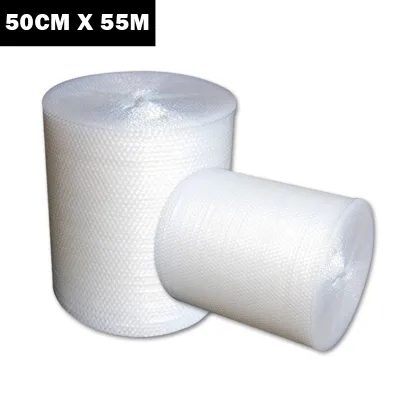
Prices are valid at publication and may change. Please refer to the product page for the latest price.
Bubble Diameter Decoded: Choosing Small vs. Large Bubbles
The diameter of the bubbles dictates how much space exists between your item and the outer box, directly influencing shock absorption and flexibility. Selecting the appropriate bubble size requires evaluating the item’s dimensions, weight, and vulnerability to surface scratches.
Small bubbles, which typically measure between 3mm and 5mm (approximately 1/8-inch to 3/16-inch) in diameter, are designed for close-fitting surface protection. Because the air pockets are small and densely packed, this wrap is highly flexible and conforms easily to intricate shapes. It is the ideal choice for wrapping lightweight, delicate items such as cosmetics, glassware, small electronics, and high-end stationery. The tight fit prevents the item from shifting within its wrapping, minimizing friction and protecting polished surfaces from scratches and scuffs.
Large bubbles, usually ranging from 12mm to 25mm (approximately 1/2-inch to 1-inch) in diameter, provide a much deeper cushion of air. This extra space is essential for absorbing high-impact shocks during transit, particularly when packages are dropped or stacked under heavy loads. Large bubble wrap is best suited for bulkier, heavier, or irregularly shaped items like large ceramics, electronics, and small home appliances. Additionally, the high profile of these bubbles makes them excellent for filling empty spaces inside shipping boxes, a process known as void-fill, which prevents items from shifting.
When deciding on bubble diameter, remember that bubble size is about shock dispersion and shape conformity, not simply the total volume of air. If an item has delicate, protruding parts, wrapping it first in small bubbles ensures those parts are tightly secured without being subjected to uneven pressure. You can then use large bubbles as an outer layer to absorb external impacts.
Film Thickness and Mil Ratings Explained
While bubble diameter determines the cushioning depth, the thickness of the plastic film determines the durability of that cushion. In the packaging industry, film thickness is measured in “mils,” where one mil is equal to one-thousandth of an inch. Understanding this measurement helps you choose a wrap that will not pop or tear prematurely under stress.

Standard or light-duty bubble wrap typically features a film thickness of 1 mil to 1.5 mil. This gauge is highly economical and perfectly adequate for lightweight items, short-distance transit, or items that already have sturdy primary packaging. It provides excellent surface protection against dust, fingerprints, and minor scuffs. However, because the plastic is relatively thin, the bubbles are more susceptible to popping under heavy loads, and the film can tear easily if it encounters rough surfaces or sharp corners.
Heavy-duty bubble wrap, which ranges from 2 mil to 3 mil or more, is engineered for demanding shipping environments. This thicker plastic film is highly resistant to punctures, tearing, and abrasion. It is necessary for shipping heavy items that exert significant pressure on the bubbles, as well as items with sharp edges or corners that would easily pierce standard film. Heavy-duty wrap ensures that the air pockets remain fully inflated throughout long-distance transit and multiple handling stages.
It is a common misconception that a thicker film makes the bubble wrap “softer” or more cushioned. In reality, film thickness only affects structural integrity and durability. A thicker film makes the wrap stiffer and harder to compress, which actually reduces its flexibility. Therefore, you should only opt for higher mil ratings when your items are heavy enough to require high compression resistance or have edges that threaten to puncture the plastic.
How to Match Bubble Wrap Specs to Your Items
To optimize your packaging workflow and minimize shipping costs, you should match your specific items to the correct bubble wrap specifications. This prevents over-packaging, which adds unnecessary weight and bulk, while ensuring your items remain fully protected.
For lightweight and fragile items, such as ceramics, small glass bottles, delicate ornaments, or collectible stationery, the best approach is to use small bubbles with standard film thickness (1 mil to 1.5 mil). This combination conforms tightly to the item’s contours, preventing movement and protecting delicate surfaces from abrasion. Because these items are light, they do not exert enough pressure to pop standard-gauge bubbles, making heavy-duty film unnecessary.
For heavy and fragile items, such as large glass vases, heavy stoneware, or small kitchen appliances, you should utilize large bubbles paired with heavy-duty film thickness (2 mil to 3 mil). The large bubbles provide the necessary depth to absorb heavy drops, while the thicker film prevents the bubbles from popping under the item’s weight. If heavy-duty wrap is unavailable, you can achieve similar puncture resistance by wrapping the item in multiple layers of standard-gauge large bubble wrap.
For items with sharp or irregular edges, such as metal hardware, hand tools, or industrial parts, prioritizing film thickness is critical. Even lightweight metal items can easily puncture standard 1 mil plastic. For these applications, select a heavy-duty wrap of at least 2 mil to 3 mil. The bubble size should be chosen based on the item’s overall weight: use small bubbles for lightweight tools to keep the package compact, or large bubbles for heavier equipment that requires significant shock absorption.
Understanding the difference between void-fill and surface wrapping is also essential for efficient packaging. When your goal is to fill empty spaces in a box to prevent an item from sliding around, large bubbles are the most efficient choice because they fill volume quickly with minimal material. Conversely, when your goal is to protect the item’s surface from direct impact or scratching, small bubbles wrapped tightly around the product are far more effective.
Frequently Asked Questions (FAQ)
Does the bubble side face in or out when wrapping?
The bubbles should almost always face inward, directly touching the surface of the item you are wrapping. This orientation allows the individual air pockets to cradle the item, providing maximum shock absorption and preventing the wrap from sliding off during handling. The flat, smooth side of the plastic should face outward, making it easier to tape securely and preventing the bubbles from getting caught or popped on the edges of the shipping box. Facing the bubbles outward is generally only done when wrapping items with highly sensitive finishes that might be temporarily marked by the circular bubble patterns, though wrapping the item in clean packing paper first is a safer alternative.
Can I use standard bubble wrap for heavy items if I add more layers?
Using multiple layers of standard bubble wrap can increase puncture resistance and provide extra surface protection, but it is not a perfect substitute for the correct specifications. While layering standard wrap helps distribute weight, it does not change the fundamental height of the air pockets. If you are shipping a heavy item that requires deep shock absorption, layering small bubble wrap will not provide the same impact protection as a single layer of large bubble wrap. For heavy items, it is always best to use large bubbles, and if those items have sharp edges, you should opt for a heavy-duty mil thickness to ensure the bubbles do not deflate under pressure.

Community discussion
Share your experience or ask a question. Comments are reviewed before publication.