
Understanding the right bubble wrap pouch for your items requires looking beyond basic dimensions. The ideal choice depends on matching the pouch’s bubble size, material thickness, and internal capacity to the specific weight, fragility, and shape of what you are packing. This guide breaks down these key specifications to help you make informed packaging decisions without overpaying for unnecessary bulk or risking damage with inadequate protection.
Understanding Bubble Wrap Pouch Specifications
Bubble diameter and height directly influence how a pouch protects its contents. Small bubbles, typically measuring 10mm in diameter and 3mm to 4mm in height, conform closely to intricate shapes. This profile is excellent for preventing surface scratches on compact items. In contrast, large bubbles, often 25mm in diameter and 9mm in height, act as robust shock absorbers. They create a thick cushion that absorbs energy from drops or heavy impacts, making them ideal for bulkier goods.
Material thickness and layers determine a pouch’s puncture resistance and weight capacity. Manufacturers specify thickness in microns (µm) or gauge, with standard pouches ranging from 40 to 70 microns. Heavy-duty or multi-layer options can exceed 100 microns. Multi-layer pouches feature an outer flat plastic layer, a middle bubble layer, and sometimes an inner lining. This co-extruded construction significantly improves puncture resistance, preventing sharp edges from piercing the plastic.
Products mentioned in this guide
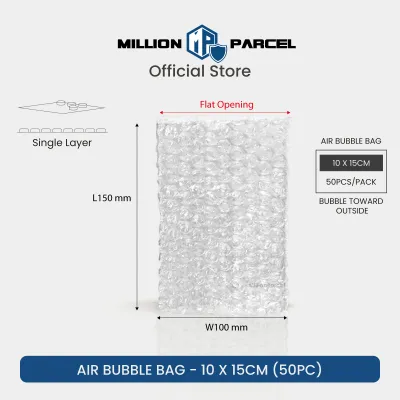
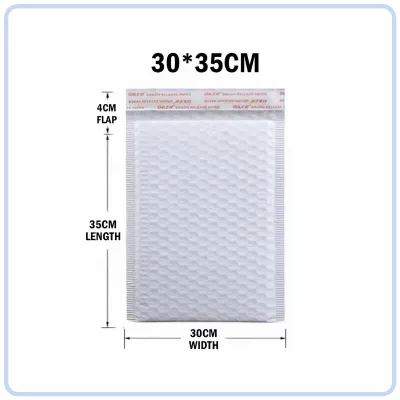
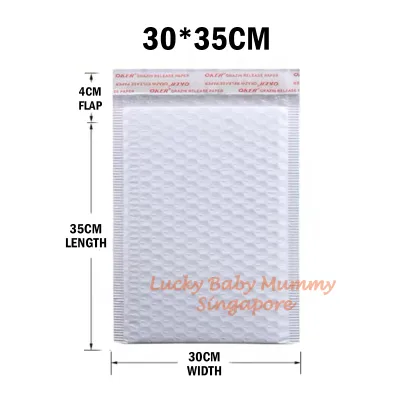
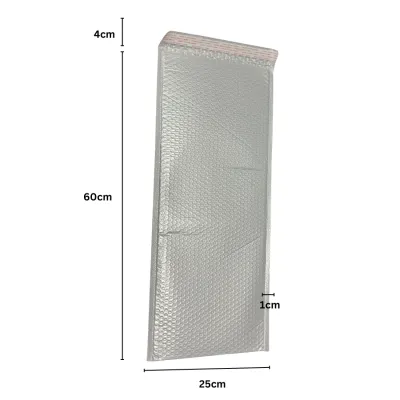
![[SG SELLER] Matte Bubble Mailer Poly Mailer Self-Seal Adhesive Padded Envelope Water Resistant Shipping Bags for Mailing](https://img.lazcdn.com/g/p/a61faf78eab8d6675425500915db76e8.png_400x400q80.png_.webp)
Prices are valid at publication and may change. Please refer to the product page for the latest price.
Stated pouch sizes almost always refer to external dimensions. Because the bubbles project inward, they reduce the usable internal width and length. Additionally, side seams and bottom folds take up valuable space. When selecting a pouch, always check the manufacturer’s specified internal dimensions, which are typically 10mm to 20mm smaller than the external measurements, to ensure your item actually fits inside.
Matching Specifications to Item Characteristics
For lightweight and non-fragile items like stationery, softcover books, or apparel, protection against scratches, dust, and light moisture is the primary goal. A standard single-layer pouch with a small bubble profile (10mm diameter) and a thickness of 40 to 50 microns is highly cost-effective. These pouches keep shipping weight minimal, which helps lower local postage costs while providing sufficient surface protection.

Medium-weight or semi-fragile items, such as small electronics, cosmetics in plastic containers, or hard plastic toys, require a step up in protection. A medium-thickness pouch of around 60 to 80 microns with small or medium bubbles helps absorb moderate vibrations. If the item has defined corners or protruding parts, look for co-extruded or double-walled pouches to prevent the corners from puncturing the plastic during handling.
Heavy or highly fragile items like glassware, ceramics, and precision instruments demand maximum shock absorption. For these items, prioritize large bubble profiles (25mm diameter) and heavy-duty material thickness of 90 microns or higher. Multi-layer pouches are highly recommended here to ensure the bubbles do not pop under the weight of the item. Always verify the manufacturer’s recommended load limits and consider wrapping the item in an additional layer of packing paper before placing it in the pouch.
Calculating the Correct Pouch Dimensions
To find the right pouch size, start by measuring the item’s three dimensions—length, width, and height—at their absolute widest points. If you are shipping an item inside its original retail box, measure the box instead of the bare item. Do not forget to include any protruding parts, such as handles, knobs, or power cords, as these will stretch the pouch and potentially cause a seam blowout.
Next, calculate the minimum internal dimensions required. A reliable formula is to add the item’s height to its width to determine the required pouch width, and add the height to the length to determine the required pouch length. For example, if an item is 150mm long, 100mm wide, and 30mm thick, you will need a pouch with internal dimensions of at least 130mm in width (100 + 30) and 180mm in length (150 + 30).
Finally, account for the space occupied by the bubbles themselves and the sealing flap. It is wise to add an extra 10mm to 20mm of clearance to both the width and length to allow the item to slide in easily. If the pouch features a self-adhesive flap, ensure the flap length is excluded from your usable length calculation, as it must fold over the exterior to seal the opening securely.
Verification Steps Before Purchasing
Before committing to a bulk order, inspect the sealing mechanism. Self-adhesive peel-and-seal strips offer the fastest packing workflow, but you must verify that the adhesive is strong enough to remain closed under tension, especially in warm, humid climates where some adhesives can degrade. For high-security or moisture-sensitive shipments, look for pouches that can be heat-sealed or those featuring heavy-duty ziplock closures.
Conduct a physical fit test using a sample pouch and your actual product. Slide the item inside and check for tight spots along the seams. If the seams look strained or the bubbles are flattened tightly against the item, the pouch is too small. Conversely, if the item slides around excessively, it may sustain damage from shifting; you will need to fill the void with packing materials or choose a smaller pouch size.
Review the supplier’s technical specification sheets to confirm the material composition and thickness. Compare these specifications against your received samples by feeling the density of the plastic and checking if the bubbles resist popping when squeezed gently. Consistent material quality ensures your packaging remains reliable across every shipment.
Frequently Asked Questions (FAQ)
Does a larger bubble size always provide better protection?
No, larger bubbles are not universally better. While large bubbles (25mm) excel at absorbing heavy impacts and filling large voids for bulky items, they do not conform well to small, intricate, or flat items. For compact items like jewelry or small electronic components, smaller bubbles (10mm) provide superior surface protection, prevent shifting, and ensure the pouch wraps snugly around the item’s unique contours.
How do I know if a bubble pouch is strong enough for heavy items?
To verify if a pouch can handle heavy items, check the manufacturer’s specifications for material thickness (look for 90+ microns) and puncture resistance. Avoid relying solely on visual inspection. Perform a physical load test by placing your heaviest item inside a sample pouch, sealing it, and gently shaking it. Inspect the bottom fold and side seams for any signs of stretching, separation, or tearing before proceeding with bulk packaging.

Community discussion
Share your experience or ask a question. Comments are reviewed before publication.