
Selecting the correct protective packaging is the most critical step in ensuring your items survive transit without damage. The core difference between small and large bubble wrap lies in how the bubble diameter dictates the type of protection offered. Small bubbles, typically measuring about 10 millimetres in diameter and 3 to 4 millimetres in height, provide high surface contact and scratch prevention, making them ideal for delicate, lightweight, and smooth-surfaced items. In contrast, large bubbles, which usually measure around 25 millimetres or more in diameter and up to 12 millimetres in height, offer deep shock absorption and impact resistance, which is necessary for heavy, bulky, or irregularly shaped objects. Choosing the right wraping bubble depends entirely on whether your primary concern is preventing surface abrasions or absorbing high-impact drops.
By understanding how these two distinct bubble profiles perform under pressure, you can optimize your packaging strategy, reduce return rates, and control shipping costs. Whether you are sending delicate glassware across Singapore or preparing heavy household appliances for a major move, matching the bubble size to the physical properties of your item is essential.
How Bubble Size Affects Cushioning and Surface Protection
The physical dimensions of the air pockets on a wraping bubble sheet directly influence how the material distributes external forces. Small bubbles create a dense, closely packed network of tiny air cushions. This high density maximizes the surface contact area between the plastic and the wrapped item, which prevents the material from shifting or rubbing against polished surfaces. Because the air volume in each individual bubble is low, these sheets excel at dispersing light, localized friction rather than heavy impacts.
Products mentioned in this guide
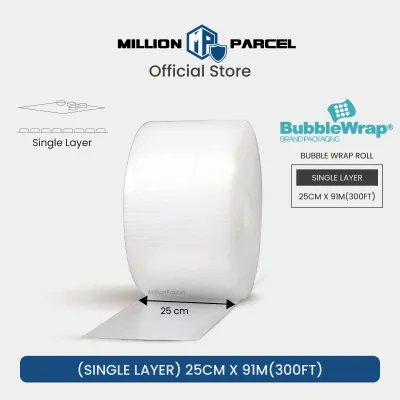
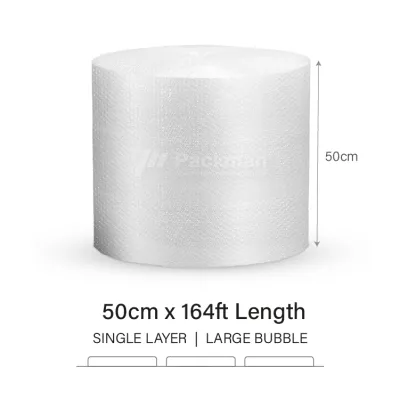
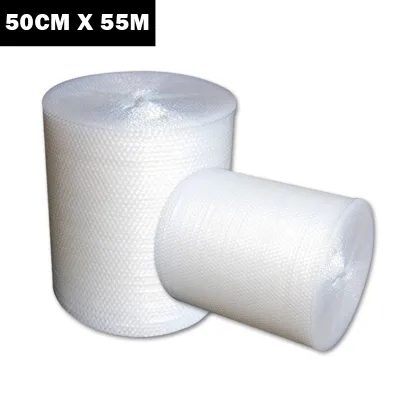
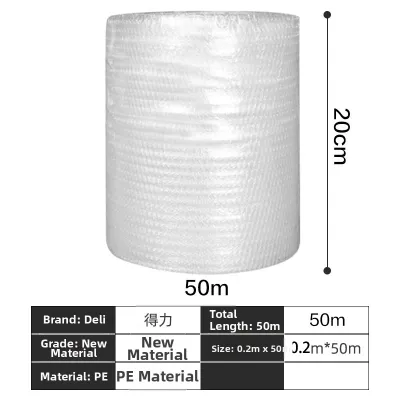
![[SG] Bubble Wrap® 10m | Foam Roll 5m | Packing Tapes – Cushioning for Packing Moving Warehouse Use](https://img.lazcdn.com/g/p/5d1b2367f552267faa5f9fe7d51ee653.jpg_400x400q80.jpg_.webp)
Prices are valid at publication and may change. Please refer to the product page for the latest price.
Large bubbles contain a much higher volume of air per pocket, creating a thick, springy barrier between the item and the outer shipping container. When a package is dropped or subjected to sudden vibrations during transit, these larger chambers compress to absorb the kinetic energy, preventing the shock from reaching the enclosed object. However, because the bubbles are spaced further apart, they offer less uniform surface contact, which can leave small, intricate areas of an item vulnerable if wrapped incorrectly.
Material flexibility is another critical factor determined by bubble size. Small bubble wrap is highly pliable, allowing it to conform tightly to complex geometries, sharp corners, and delicate protrusions without springing open. Large bubble wrap is significantly stiffer due to the size of its air pockets, making it less suitable for wrapping tight curves but highly effective as a rigid void filler that keeps items firmly anchored in the center of a box.
When to Use Small Bubble Wrap for Delicate Items
Delicate, lightweight, and smooth-surfaced objects require a packaging material that acts like a second skin to prevent surface-level damage. Small bubble wrap is the ideal choice for items such as glassware, porcelain figurines, ceramic tableware, and polished electronics. These objects are highly susceptible to micro-scratches, scuffs, and surface abrasions that can occur from the constant vibration of delivery vehicles. The dense pattern of small bubbles ensures that every square centimetre of the item’s surface is cushioned against friction.

When wrapping items with intricate details, small crevices, or delicate finishes, the flexibility of small bubbles becomes indispensable. For example, when packing a crystal wine glass, small bubble wrap can be easily tucked inside the bowl and wrapped snugly around the thin stem. This tight conformity eliminates empty spaces where movement could lead to structural failure under pressure.
Furthermore, small bubble wrap is highly effective for layering between flat items. When shipping a stack of ceramic plates or framed artwork, placing a sheet of small bubble wrap between each piece prevents them from knocking against one another. This method distributes the weight evenly across the entire surface area, minimizing the risk of hairline fractures during handling.
When to Use Large Bubble Wrap for Heavy or Bulky Items
Heavy, bulky, or irregularly shaped items demand a level of shock absorption that small air pockets simply cannot provide. Large bubble wrap is specifically engineered to protect substantial objects like furniture parts, automotive components, large household appliances, and heavy metal tools. These items exert significant force when shifted, which would instantly pop or flatten smaller bubbles, leaving the item unprotected against the hard walls of the shipping box.
The primary strength of large bubble wrap is its ability to withstand high-impact drops and severe compressive forces. The deep air cushions act as heavy-duty shock absorbers, decelerating the movement of heavy items during rough handling. This makes it the preferred choice for protecting the corners of heavy wooden tables, the edges of metal frames, and the sensitive outer casings of large electronic equipment.
In addition to direct wrapping, large bubble wrap serves as an exceptional void-filling material. When shipping items in oversized boxes, empty spaces allow the contents to slide around, increasing the likelihood of damage. Filling these voids with crumpled large bubble wrap prevents item shifting and reinforces the structural integrity of the shipping box, reducing the risk of the cardboard collapsing under the weight of other packages.
Side-by-Side Comparison for Packaging Decisions
When managing mixed shipments or optimizing a high-volume packing station, evaluating both bubble sizes across practical dimensions helps streamline your workflow and control expenses. One of the most immediate considerations is the physical bulk and weight added to the final package. While plastic wrap itself is lightweight, the sheer volume of large bubble wrap can force you to use a larger outer box, which may increase dimensional weight shipping fees charged by local couriers.
| Feature / Dimension | Small Bubble Wrap (10 mm) | Large Bubble Wrap (25 mm+) |
|---|---|---|
| Primary Protective Function | Scratch prevention and surface abrasion protection | Shock absorption and heavy impact resistance |
| Best Suited Item Weight | Lightweight to medium items | Heavy, bulky, or dense items |
| Flexibility & Conformity | High; easily wraps tight curves and small details | Low; stiff structure best for flat or broad surfaces |
| Void-Filling Efficiency | Low; requires significant material to fill empty spaces | High; quickly fills large empty volumes in boxes |
| Handling & Cutting | Easy to tear or cut; highly manageable for small items | Requires more effort to fold; best cut with sharp shears |
Cost-effectiveness also depends heavily on the volume of wrap needed versus the level of protection required. Using small bubble wrap to fill a large void is highly inefficient and expensive, as it requires multiple layers and excessive material to achieve the same volume as a single sheet of large bubble wrap. Conversely, using large bubble wrap to protect small, delicate items leads to wasted space and poor coverage, as the stiff bubbles cannot conform to the item’s shape.
In a fast-paced packing environment, the ease of handling, cutting, and folding can impact productivity. Small bubble wrap is generally easier to tear along perforated lines and fold around small boxes, making it highly efficient for home businesses and stationery stations. Large bubble wrap requires more deliberate cutting and securing, but it covers large surface areas much faster, reducing the time spent wrapping bulky goods.
How to Wrap and Secure Items for Maximum Protection
To maximize the protective qualities of your chosen wraping bubble material, you must apply correct wrapping techniques. The first step is determining the appropriate number of layers based on the item’s fragility, weight, and the shipping distance. For lightweight, fragile items wrapped in small bubble wrap, a minimum of two to three layers is recommended to ensure adequate cushioning. For heavy items wrapped in large bubble wrap, a single, well-secured layer may suffice for surface protection, but critical impact points like corners should receive double reinforcement.
Securing the wrap is just as important as the wrapping process itself. Use high-quality packing tape to seal the edges, ensuring the tape is adhered directly to the plastic film rather than the item’s surface. Avoid pulling the tape too tightly across the bubbles, as excessive tension can compress or pop the air pockets, compromising the cushion before the package even leaves your hands.
For complex, multi-part, or highly fragile shipments, a hybrid approach combining both bubble sizes offers comprehensive protection. Start by wrapping the item in a layer of small bubble wrap to protect its delicate surfaces from scratches and to conform to its unique shape. Next, wrap the entire bundle in a layer of large bubble wrap to provide a heavy-duty shield against external impacts. Finally, use additional large bubble wrap to fill any remaining void spaces inside the shipping box, ensuring the item remains securely suspended and immobile.
Frequently Asked Questions (FAQ)
Can I reuse bubble wrap for shipping?
Yes, bubble wrap can be reused for shipping, provided you inspect its condition thoroughly before packing. Over time and through repeated use, the air pockets can lose pressure, pop, or tear, which significantly reduces their cushioning ability. Before reusing a sheet, perform a quick visual and physical check: squeeze several bubbles to ensure they remain firm and pressurized, and inspect the plastic for any major punctures or tears.
If the wrap shows signs of deflation or structural wear, avoid using it for highly fragile, valuable, or heavy items. Instead, degraded bubble wrap can be repurposed for packing non-fragile items to prevent shifting, or kept for household storage needs where high-impact protection is not required.
Does the bubble side face in or out?
As a general rule, the bubble side of the wrap should face inward, directly touching the item you are protecting. This orientation allows the individual air pockets to conform closely to the unique shape, contours, and protrusions of the object, providing a more secure grip and preventing the wrap from sliding during transit. It also ensures that the smooth outer plastic layer faces outward, creating a clean surface that is easy to tape and resistant to snagging on the cardboard box.
The only exception to this rule is when you are wrapping items with extremely delicate, painted, or highly polished surfaces that might be marked by the concentrated pressure of the individual bubbles. In such cases, wrapping the item first in acid-free tissue paper or foam wrap before applying the bubble wrap—with the bubbles facing inward—will prevent any potential surface marking while maintaining maximum shock absorption.
Community discussion
Share your experience or ask a question. Comments are reviewed before publication.