
When preparing items for shipping, storage, or relocation, choosing the correct bubble wrap packing roll specification is the single most critical factor in preventing transit damage. Selecting the wrong bubble size or material thickness can lead to popped air pockets, surface scratches, or shattered valuables. To secure your goods effectively, match small bubbles (10mm diameter) to lightweight items requiring surface protection, and reserve large bubbles (25mm diameter) for heavy or highly fragile items that need robust shock absorption and void fill.
Quick Guide: Matching Bubble Specs to Your Items
To help you select the optimal bubble wrap packing roll for your specific packing task, the matrix below outlines the recommended specifications based on common item categories.
| Item Category | Recommended Bubble Diameter | Recommended Thickness / Layers | Primary Protection Goal |
|---|---|---|---|
| Small Electronics | Small (10mm) | Single-layer (anti-static if bare) | Surface scratch prevention |
| Glassware, Ceramics | Small (10mm) | Double-layer (inner + outer wrap) | Impact distribution |
| Framed Pictures | Small (10mm) or Medium | Single-layer (reinforced corners) | Edge protection |
| Heavy Appliances | Large (25mm) | Multi-layer (heavy duty) | Heavy shock absorption |
| Large Glassware & Vases | Large (25mm) | Multi-layer (heavy duty) | Void fill and impact protection |
| Heavy Furniture Parts | Large (25mm) | Multi-layer (co-extruded) | Puncture resistance |
Note: These recommendations serve as general guidelines. Always verify the exact dimensions, weight limits, and material strength on the specific manufacturer’s product label before packing high-value, rare, or extremely delicate items.
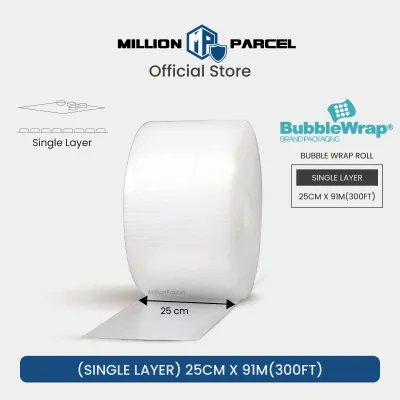
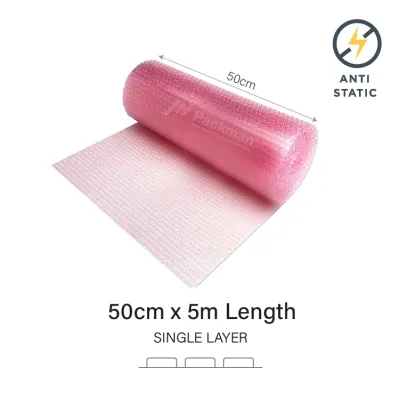
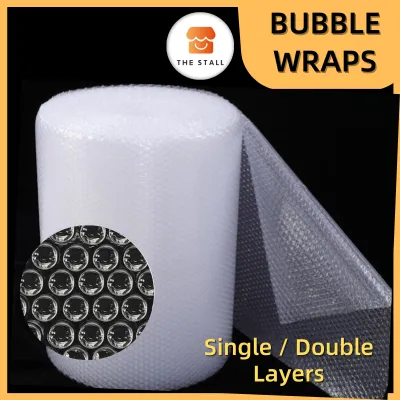
Products mentioned in this guide
![[Bundle] Bubble Wrap 50cm x 10m OPP Clear Tape 48mm Free Fragile Stickers](https://img.lazcdn.com/g/p/aa0af1fb24937edbb8ede1f2ea74be5e.jpg_400x400q80.jpg_.webp)
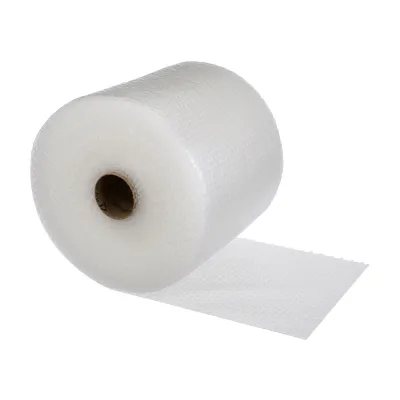
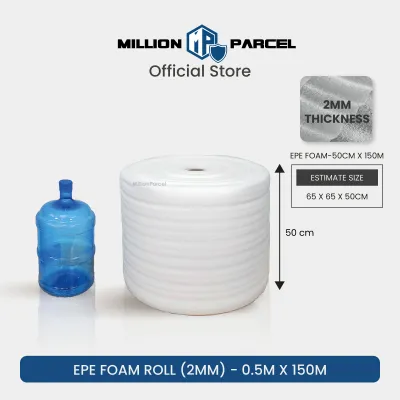
Prices are valid at publication and may change. Please refer to the product page for the latest price.
Understanding Bubble Wrap Specifications
Understanding the physical parameters of a bubble wrap packing roll ensures you select the correct level of protection. Performance depends on bubble diameter and material thickness.

Bubble Diameter: Small vs. Large Bubbles
Bubble diameter dictates the wrap’s flexibility, surface contact area, and capacity for shock absorption. Small bubbles, typically measuring around 10mm (approximately 3/8 inch) in diameter, conform tightly to an item’s contours. This close fit makes them exceptionally well-suited for protecting delicate surface finishes from scratches, dust, and minor abrasions. Small bubbles are highly flexible, allowing you to wrap intricate objects like figurines or small cosmetic bottles without creating awkward, bulky angles that prevent tight boxing.
In contrast, large bubbles, usually measuring 25mm (approximately 1 inch) in diameter, offer a much thicker cushion of air. This larger volume absorbs heavy, blunt impacts during transit and acts as an effective void fill inside shipping cartons. However, a common misconception is that larger bubbles are always superior. In reality, large bubbles lack the flexibility required for wrapping small, delicate items tightly. Furthermore, because of the high pressure within larger air pockets, they can leave circular impression marks on very soft, polished, or painted surfaces if wrapped too tightly without a protective inner layer.
Thickness and Layers: Single vs. Multi-Layer
The overall durability and puncture resistance of a bubble wrap packing roll are determined by its thickness and structural layering. Standard bubble wrap typically consists of a single layer of plastic film shaped into bubbles and bonded to a flat backing sheet. While lightweight and economical, single-layer wrap is susceptible to popping under concentrated pressure or when exposed to sharp edges.
For heavier loads, multi-layer bubble wrap—often featuring double or triple co-extruded plastic layers—provides significantly greater structural rigidity. These heavy-duty options use multiple laminated layers of polyethylene to trap air more securely, preventing the bubbles from deflating or popping under the static weight of heavy items. In technical specifications, this material thickness may be measured in microns (µm) or mils. When preparing to pack unusually heavy, sharp, or high-value items, check the manufacturer’s packaging specifications for these thickness metrics to ensure the film can withstand the anticipated loads without tearing.
Matching Bubble Specs to Item Fragility and Weight
An effective packing strategy requires matching the physical specifications of your bubble wrap packing roll to the weight, fragility, and shape of each item. This ensures maximum safety while avoiding unnecessary shipping volume and material waste.
Lightweight and Low-Fragility Items
For items that are relatively sturdy and lightweight, such as books, clothing, solid plastic household goods, or non-breakable cosmetics, the primary shipping risk is surface abrasion rather than structural breakage. In these scenarios, a standard small-bubble, single-layer roll is the most efficient choice. This specification provides a thin barrier that shields the items from dust, moisture, and superficial scratches without adding excessive bulk or weight to your shipping carton.
Using oversized or thick bubble wrap for low-risk items is not only economically inefficient but also increases the size of your shipping box, which can elevate dimensional weight shipping fees. In some cases, bubble wrap may even be entirely unnecessary. For very low-risk, non-fragile items like apparel or durable soft goods, simpler and more sustainable alternatives like recycled kraft paper or plain tissue paper can suffice to keep items clean and separated during transit.
Medium-Weight and Moderate-Fragility Items
Items of moderate weight and fragility—such as small kitchen appliances, standard ceramic tableware, or glass-fronted framed pictures—require a balanced approach. These items are heavy enough to pop thin, single-layer bubbles under sudden impact, yet they still require precise surface protection to prevent scratches or chipping.
For these objects, a combination wrapping technique is highly effective. Start by wrapping the item in a tight inner layer of small-bubble wrap to protect the delicate surface finish and secure any moving parts. Follow this with an outer layer of medium or large-bubble wrap to provide a shock-absorbing cushion against external impacts. When wrapping items like picture frames or small appliances, pay close attention to protruding edges, handles, and corners. These areas concentrate impact forces and should always receive extra layers of wrap or dedicated cardboard corner protectors before the item is boxed.
Heavy, High-Fragility, and Oddly Shaped Items
Heavy, highly fragile, or irregularly shaped items—such as large glass vases, delicate electronics, or heavy mechanical parts—present the greatest packing challenge. The static weight of these items can easily crush standard bubble wrap, leaving them vulnerable to direct impact. To prevent this, always select a large-bubble, multi-layer, heavy-duty bubble wrap packing roll. The reinforced plastic layers ensure the air pockets remain fully inflated even under continuous, heavy pressure.
When dealing with oddly shaped items, the packing process must extend beyond simple wrapping. Use the large-bubble wrap to fill any hollow spaces within the item itself, and then wrap the exterior until the irregular contours are built up into a uniform, box-like shape. This structural wrapping makes it much easier to fit the item snugly into a rectangular shipping carton. Once the wrapped item is placed in the box, use additional large-bubble wrap as void fill to completely eliminate any empty space, ensuring the item cannot shift in any direction during transit.
Practical Packing Techniques for Maximum Protection
Even the highest-quality bubble wrap packing roll cannot protect your items if it is applied incorrectly. Mastering a few fundamental wrapping techniques will ensure your items survive the rigors of handling and shipping.
The first rule of wrapping is to address the orientation of the bubbles. Always place the bubble wrap with the bubble side facing inward, directly against the surface of the item, while keeping the smooth side facing outward. Placing the bubbles against the item provides superior cushioning, as the individual air pockets can conform to the item’s shape and grip the surface, preventing slippage. Additionally, keeping the smooth side on the outside prevents the bubbles from catching, snagging, or popping against the rough interior walls or edges of the cardboard shipping box.
Once the item is wrapped, secure the bubble wrap firmly using high-quality packaging tape. However, you must exercise caution: never apply adhesive packing tape directly to delicate surfaces, painted finishes, bare wood, or antique glazes, as the adhesive can peel away finishes or leave a stubborn residue that is difficult to remove. Instead, wrap the item completely in a protective layer of acid-free tissue paper or stretch film first, or ensure that the tape only adheres to the bubble wrap itself.
Finally, before sealing your shipping carton, perform the “shake test” verification. Close the box flaps and gently shake the package. If you feel or hear the item shifting, sliding, or thumping inside, there is insufficient cushioning or void fill. Reopen the box and add more bubble wrap or packing paper until the item remains completely stationary when the carton is moved.
Frequently Asked Questions (FAQ)
Can I reuse bubble wrap from previous packages?
Yes, you can reuse bubble wrap, but you must inspect it carefully first. Visually and physically check the bubble wrap packing roll remnants for popped air pockets, deflated sections, tears, or embedded dirt and debris that could scratch delicate surfaces. If the wrap has lost its air tension or has numerous popped bubbles, do not use it to protect high-fragility or high-value items. Instead, restrict compromised bubble wrap to low-risk applications, such as filling empty spaces in boxes containing non-fragile items, or discard it if it can no longer provide adequate cushioning.
Is anti-static bubble wrap necessary for electronics?
Anti-static bubble wrap—which is typically tinted pink or green for easy identification—is designed specifically to prevent electrostatic discharge (ESD) from damaging sensitive electronic components. You should use anti-static bubble wrap when packing bare circuit boards, internal computer components, or exposed electronic sensors. For fully cased, consumer-grade electronics like smartphones, laptops, or small household appliances, the outer plastic or metal chassis already provides a physical barrier against ESD. In these cases, standard clear bubble wrap is perfectly sufficient to provide physical shock protection.

Community discussion
Share your experience or ask a question. Comments are reviewed before publication.