
When preparing fragile items for transit, selecting the correct bubble wrap for packaging is the single most critical factor in preventing costly damage. The ideal choice depends entirely on the primary vulnerability of the item you are shipping. For delicate electronics, your main threats are electrostatic discharge (ESD) and surface abrasions, which require small-bubble, anti-static wrap. For glassware, ceramics, and porcelain, the primary danger is structural shattering from sudden impact or vibration, which demands the deep shock absorption of large-bubble standard wrap.
Aligning the physical properties of the packaging material with the specific physical risks of your cargo ensures that items arrive intact. Whether you are shipping high-value items across Singapore or sending fragile parcels internationally, understanding these material differences prevents shipping failures. Making the wrong choice can lead to micro-scratches on sensitive screens or catastrophic cracks in heirloom glassware.
Understanding Bubble Wrap Specifications and Types
To make an informed decision, you must first understand the technical specifications that differentiate the main types of bubble wrap for packaging. These materials are engineered from low-density polyethylene (LDPE) but are structured differently to serve distinct protective roles. The primary variables are bubble diameter, bubble height, and the presence of chemical additives that alter electrical conductivity.
Products mentioned in this guide
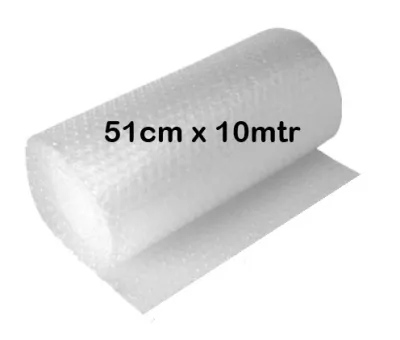
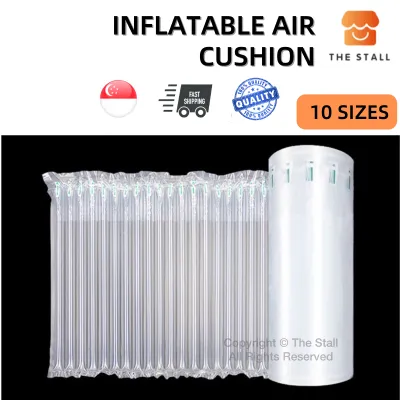
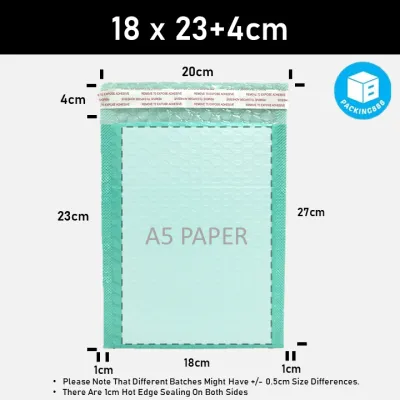
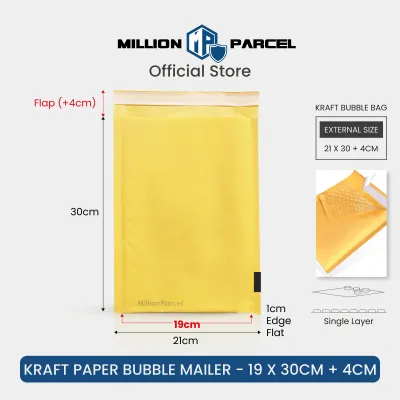
Prices are valid at publication and may change. Please refer to the product page for the latest price.
Small Bubble Wrap (High Density)
Small bubble wrap typically features air pockets with a diameter of 3/16 inch (approximately 4.8 mm) or 1/8 inch (approximately 3.2 mm) and a height of around 1.5 mm to 2 mm. Because the bubbles are small, they are packed together at a very high density per square meter. This high bubble density creates a highly flexible, conforming sheet that wraps tightly around irregular geometries, sharp corners, and intricate details without leaving large air gaps.
The primary mechanical function of small bubble wrap is surface protection. It acts as an excellent barrier against scratches, dust, moisture, and minor abrasions. When you wrap a polished item, the high density of the bubbles distributes contact pressure evenly across the surface. However, because the air volume within each individual bubble is relatively low, small bubble wrap has limited compressibility. It cannot absorb heavy, high-velocity kinetic impacts or prevent heavy items from bottoming out against the outer walls of a shipping carton during a drop.
Large Bubble Wrap (Deep Cushioning)
Large bubble wrap features significantly larger air pockets, typically measuring 1/2 inch (approximately 12.7 mm) or even 1 inch (approximately 25.4 mm) in diameter, with a height of 6 mm to 12 mm. These larger air chambers contain a much higher volume of trapped air, which translates directly to superior shock absorption and deep cushioning capabilities.
When a packaged item experiences a sudden drop or jarring vibration during transit, the large air pockets compress, absorbing and dissipating the kinetic energy before it can reach the item itself. This makes large bubble wrap highly effective for heavy, bulky, or extremely brittle items that are prone to shattering. Additionally, its high profile makes it an excellent material for filling empty spaces (void fill) inside a shipping box, preventing items from shifting. The trade-off is that large bubble wrap is much bulkier, less flexible, and does not conform easily to fine, intricate shapes. If wrapped too tightly around delicate, soft-surfaced items, the highly pressurized large bubbles can occasionally leave circular pressure marks or impressions.
Anti-Static Bubble Wrap (Static Dissipation)
Anti-static bubble wrap is engineered specifically for packaging sensitive electronic components that are vulnerable to electrostatic discharge (ESD). Unlike standard clear bubble wrap, which is a highly effective electrical insulator that easily generates and retains static charges through friction (triboelectric charging), anti-static wrap is treated with a topical antistatic agent or manufactured with antistatic additives embedded within the LDPE resin.
This chemical formulation allows the material to slowly and safely dissipate electrostatic charges, preventing the accumulation of static electricity that can ruin microchips, circuit boards, and internal sensors. To make it easily identifiable in shipping and warehouse environments, anti-static bubble wrap is almost universally tinted pink. It is most commonly manufactured with small bubbles (3/16 inch) because electronics require both precise surface-level scratch protection and a snug, conforming fit that minimizes friction-generating movement within the packaging.
Vulnerability Analysis: Electronics vs Glassware
Choosing the right packaging material requires a deep understanding of why electronics and glassware fail under mechanical stress. Their physical properties are fundamentally different, meaning a packaging strategy that protects a wine glass could easily lead to the failure of a laptop, and vice versa.

Electronics: Surface Protection and Static Control
Electronic devices, such as laptops, tablets, smartphones, printed circuit boards (PCBs), and camera lenses, face a dual threat during transit: physical abrasion and invisible electrical damage. The exterior surfaces of modern electronics often feature polished plastics, anodised aluminium, or treated glass screens. These materials are highly susceptible to micro-scratches caused by friction against abrasive packaging materials or trapped dust particles. High-density, small-bubble wrap provides a smooth, uniform contact surface that minimizes this friction.
The more insidious threat, however, is electrostatic discharge. When standard plastic bubble wrap rubs against itself, a cardboard box, or the item’s chassis during transit, it can generate thousands of volts of static electricity. If this charge discharges into an exposed port, pin, or integrated circuit, it can instantly melt sub-micron silicon pathways, rendering the device useless without showing any external signs of damage. Therefore, anti-static properties are non-negotiable for any electronic item with exposed circuitry or metal connections. While physical shock protection is still necessary, most consumer electronics are built with rigid internal frames or magnesium-alloy chassis that provide some structural protection, making deep shock absorption secondary to static control and surface preservation unless the device is exceptionally heavy.
Glassware: Shock Absorption and Edge Cushioning
Glassware, ceramics, porcelain, and crystal present a completely different set of structural vulnerabilities. Glass is an amorphous solid with high compressive strength but extremely low tensile strength and virtually no elasticity. When glass is subjected to a sudden impact, it cannot deform to absorb the energy; instead, the stress concentrates at microscopic surface flaws, causing instantaneous, catastrophic cracking or shattering.
The primary objective when packaging glassware is to prevent this kinetic energy from ever reaching the glass surface. This requires deep cushioning that can absorb high-impact forces. Glassware items also have highly vulnerable geometric features, such as the thin stems of wine glasses, the delicate handles of ceramic mugs, and the sharp rims of bowls and plates. These protrusions act as levers; a small force applied to the tip of a wine glass stem translates into immense rotational stress at the base of the bowl.
To protect these weak points, you need a material that can wrap around the entire object and provide a thick, compressible barrier that prevents the item from “bottoming out” against the hard outer box or other items. Large bubble wrap is ideal for this because its thick air pockets provide the necessary deceleration zone during a drop. Multiple layers are required to ensure that even if some bubbles pop under extreme localized pressure, adjacent air pockets continue to isolate the glass from impact.
Comparison Table and Decision Framework
To help you quickly select the correct material for your specific packaging task, the table below compares the key physical characteristics and performance metrics of the three primary bubble wrap types.
| Feature | Small Standard | Large Standard | Small Anti-Static |
|---|---|---|---|
| Bubble Size | 3/16" (4.8 mm) or 1/8" (3.2 mm) | 1/2" (12.7 mm) to 1" (25.4 mm) | 3/16" (4.8 mm) or 1/8" (3.2 mm) |
| Primary Protection Mechanism | Surface abrasion prevention & tight contouring | Deep shock absorption & kinetic energy dissipation | Electrostatic discharge (ESD) prevention & scratch protection |
| Best Suited For | Polished wood, small figurines, metal parts, non-electronic delicate surfaces | Wine glasses, heavy ceramics, vases, mirrors, large fragile items | Circuit boards, internal computer components, laptops, cameras |
| Static Control | None (generates static charge) | None (generates static charge) | High (dissipates static charge; pink tinted) |
Actionable Decision Framework
When preparing your shipment, apply the following decision rules to select and verify your packaging materials:
- Choose Small Anti-Static if… you are packaging exposed circuit boards, computer graphics cards, hard drives, laptops, gaming consoles, or any device with sensitive internal microprocessors and external ports.
- Choose Large Standard if… you are packing wine glasses, crystal vases, heavy stoneware plates, ceramic figurines, mirrors, or any heavy glass item that requires deep shock cushioning to survive a drop from waist height.
- Choose Small Standard if… you are wrapping non-electronic items with delicate finishes, such as polished lacquerware, small porcelain trinkets, picture frames, or highly contoured items that require a tight, form-fitting wrap.
- Verify first if… the item has specific manufacturer packaging guidelines. Extremely high-value electronics, medical devices, or heavy precision instruments may require custom-molded polyurethane foam inserts, double-boxing, or rigid flight cases rather than standard bubble wrap to preserve warranties and ensure safety.
Best Practices for Wrapping and Boxing Fragile Items
Choosing the right bubble wrap for packaging is only half the battle; applying it correctly is what guarantees transit survival. Professional packers use the “wrap, cushion, fill” method to create a multi-layered protective system inside the shipping container.
First, prepare the item by ensuring it is clean and dry. If you are wrapping a highly polished or delicate surface, consider applying a layer of acid-free tissue paper or a soft foam pouch first to prevent any potential chemical interaction or physical marking from the bubble wrap plastic. When wrapping, always orient the bubble wrap so that the bubbles face inward, resting directly against the item. This configuration allows the individual air pockets to cradle the item’s contours, maximizing surface area contact and preventing the wrap from sliding.
Secure the bubble wrap firmly using high-quality packaging tape. It is critical to ensure that the adhesive tape never makes direct contact with the surface of the item, as tape residues can damage polished finishes, lift paint, or ruin delicate electronic screens. Instead, only tape the bubble wrap to itself. For highly vulnerable areas—such as the stems of wine glasses, the handles of mugs, or the corners of electronic casings—apply extra localized layers of bubble wrap. Wrap these protrusions separately before wrapping the entire object to build up a thick, protective buffer.
Once the item is securely wrapped, prepare a rigid, double-walled corrugated shipping box. Do not place the wrapped item directly onto the hard bottom of the box. Instead, create a cushioning foundation by placing at least 5 to 8 centimeters of compressed void fill—such as crumpled kraft paper, packing peanuts, or sheets of large bubble wrap—at the bottom of the carton. Place the wrapped item in the center of the box, ensuring it does not touch any of the outer walls.
Fill all remaining empty spaces around and above the item with additional void fill. The goal is to eliminate all movement within the box. Before sealing, perform a gentle shake test: close the box flaps and shake it lightly. If you feel or hear the contents shifting, open the box and add more void fill. Finally, seal the box securely using the “H-taping” method, applying heavy-duty packaging tape along all seams and edges to reinforce the box’s structural integrity against the high humidity and variable handling conditions typical of transit in Singapore and regional shipping routes.
Frequently Asked Questions (FAQ)
Can I use regular bubble wrap for electronics if I lack anti-static materials?
Using regular plastic bubble wrap directly against bare electronic components is highly risky because friction during transit generates static charges that can permanently damage microchips. If you do not have anti-static bubble wrap, you can mitigate this risk by placing the electronic device inside a certified static-shielding bag or an anti-static pouch first. Once the device is sealed inside the protective static barrier, you can safely wrap the outside of the bag in standard clear bubble wrap to provide physical cushioning.
Should the bubbles face inward or outward when wrapping?
For optimal protection, the bubbles should always face inward, toward the item being wrapped. This allows the flexible air pockets to conform tightly to the item’s shape, distributing pressure evenly and preventing the wrap from slipping during handling. Additionally, keeping the smooth plastic backing on the outside makes it much easier to wrap tape around the package and slide the wrapped item smoothly into the shipping box without catching or popping the bubbles.
Is bubble wrap alone enough to protect glassware during shipping?
No, bubble wrap alone is rarely sufficient to guarantee the survival of fragile glassware during shipping. Bubble wrap is designed to provide localized cushioning and shock absorption, but it must work as part of a complete packaging system. To prevent damage from heavy impacts and external crushing forces, you must combine bubble wrap with a rigid, double-walled corrugated box and high-density void fill to keep the item centered and immobile.

Community discussion
Share your experience or ask a question. Comments are reviewed before publication.