
Choosing the right watercolor pen depends on your artistic style and how you prefer to control your lines. The core distinction lies in the nib design: flexible brush tips deliver variable-width strokes and expressive washes, while rigid fineliners provide consistent, precise lines for intricate detail work.
For artists seeking to blend colors seamlessly or practice modern calligraphy, the brush tip is the ideal choice. Conversely, if your work involves architectural sketching, botanical illustrations, or structured bullet journaling, the fineliner offers the predictability you need. Many creators find that combining both tools in a single piece allows them to build rich textures, using the brush tip for broad background washes and the fineliner for sharp, defining outlines.
How Brush Tip and Fineliner Nibs Actually Differ
To understand how these pens perform on paper, it is essential to look at their physical construction. Brush tip watercolor pens typically feature either individual synthetic nylon bristles or a solid, flexible felt core shaped into a tapered point. This design mimics a traditional paintbrush, allowing the nib to bend and spring back as you apply pressure.
Products mentioned in this guide
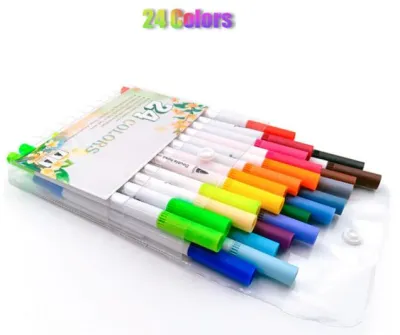
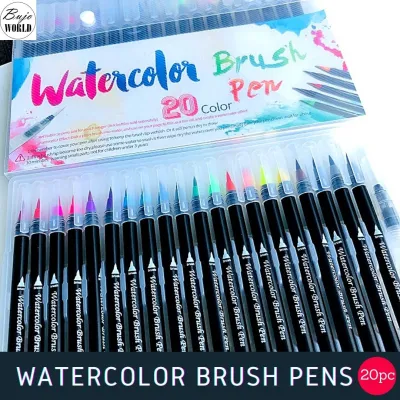
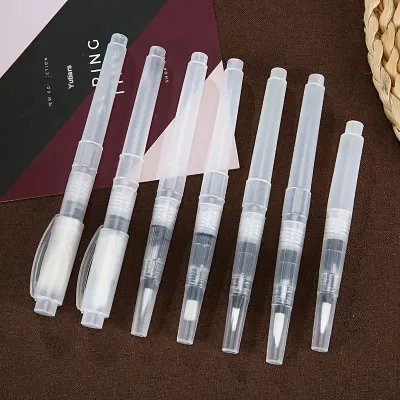
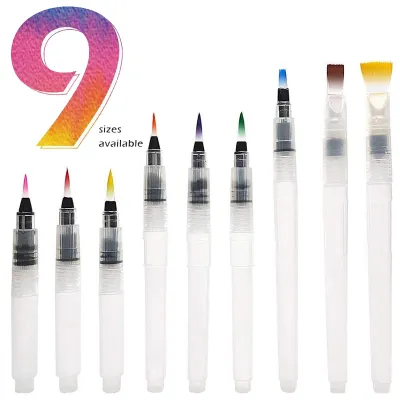
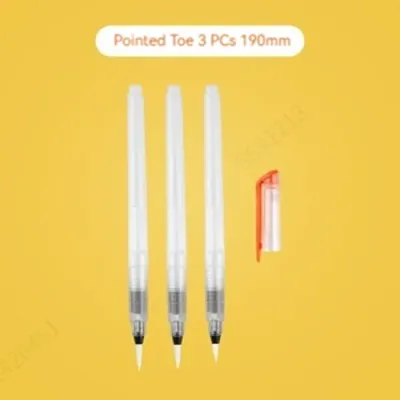
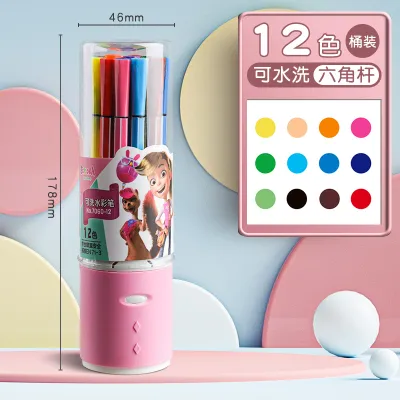
Prices are valid at publication and may change. Please refer to the product page for the latest price.
Fineliners, on the other hand, utilize a rigid plastic or fiber tip encased in a protective metal sleeve. This metal collar supports the delicate tip, ensuring it remains perfectly upright and does not bend, even under firm writing pressure.
This structural difference directly dictates line variation. With a brush tip, a light touch produces a hairline stroke, while increasing your downward pressure spreads the bristles or felt to create a wide, dramatic sweep. This dynamic range requires a steady hand and muscle memory. Fineliners eliminate this variable entirely; they are engineered to produce a single, fixed line width—such as 0.3mm or 0.5mm—regardless of how hard or soft you press. This makes them highly predictable and excellent for technical layouts.
Ink flow rates also differ significantly between the two designs. The flexible, porous nature of brush tips allows for a high volume of ink delivery, which is necessary to cover larger areas and facilitate wet-on-wet blending techniques. Fineliners restrict ink flow to a controlled, slower rate to prevent pooling and ensure that fine lines remain crisp and sharp. Because of this, a brush tip will naturally deposit more moisture onto your paper, which can dramatically affect drying times and paper stability.
Which Watercolor Pen Fits Your Drawing Technique?
Selecting between these two tools requires analyzing your preferred drawing techniques and how you interact with the medium. Different artistic styles demand distinct ink behaviors and physical movements. For instance, techniques like gradient blending and soft color transitions rely on the high ink volume of a brush tip, which keeps the paper wet long enough to manipulate the pigment. On the other hand, dry techniques like cross-hatching, stippling, and precise geometric patterns are far easier to execute with the rigid, predictable tip of a fineliner.

The learning curve is another critical factor to consider. Mastering a brush tip requires developing precise hand pressure control, as even a slight wobble can alter the thickness of your line. Beginners may find this frustrating at first, whereas a fineliner offers immediate control and familiarity, behaving much like a standard writing pen. Understanding these dynamics helps you choose the tool that matches your current skill level and artistic goals.
When to Choose Brush Tip Pens
Brush tip watercolor pens are the ultimate tool for expressive illustrations, modern calligraphy, and faux watercolor washes. If your art style embraces fluid movement, organic shapes, and bold transitions, the flexibility of a brush nib is indispensable. The ability to transition from a delicate whisper of a line to a broad stroke in a single movement allows for highly dynamic figure drawing and botanical elements like leaves and petals.
These pens excel at blending. Because they lay down a generous amount of water-soluble ink, you can easily blend two colors directly on the paper or use a water brush pen to create smooth, seamless gradients. This makes them perfect for creating atmospheric backgrounds and soft shading.
However, using brush tips successfully requires a mindful approach to hand pressure. Applying too much force or using them on rough, abrasive paper can quickly cause the synthetic fibers or felt to fray, permanently ruining the fine point. Artists must practice a light touch, using the weight of the pen itself for fine lines and reserving heavier pressure only for intentional, broad strokes.
When to Choose Fineliner Watercolor Pens
Fineliner watercolor pens are the superior choice for highly detailed, structured artwork such as botanical illustrations, architectural sketching, and intricate mandala patterns. When your work relies on absolute precision, any variation in line weight can disrupt the symmetry and clean look of the piece. The rigid metal-clad tip of a fineliner ensures that every line remains uniform from start to finish.
These pens are highly effective for shading techniques that do not rely on wet blending, such as hatching, cross-hatching, and stippling. Because the ink flow is tightly controlled, you can layer dozens of fine lines close together without worrying about the ink bleeding into a single, messy blob.
For beginners, fineliners provide a comforting level of predictability. You do not need to master complex pressure control to get a clean line, making them excellent for bullet journaling, outlining watercolor paintings, or sketching on the go. They allow you to focus entirely on your composition and detail work without worrying about nib deformation.
Paper Compatibility and Ink Behavior to Verify
The interaction between your watercolor pen and your paper is just as important as the pen itself. Because watercolor pens use water-based inks, standard copy paper or thin journal pages will quickly saturate, leading to severe feathering, bleed-through, and paper pilling. To achieve the best results, you must verify that your paper medium is compatible with wet media.
For brush tip pens, which deposit a high volume of ink, heavy paper is essential. A minimum weight of 200 gsm (grams per square meter) is recommended, though 300 gsm cold-pressed or hot-pressed watercolor paper is ideal. Cold-pressed paper has a textured surface that can create beautiful, dry-brush effects, but it can also accelerate the fraying of felt brush tips. Hot-pressed paper offers a smooth surface that is much gentler on delicate brush nibs and allows for incredibly smooth blending, though it absorbs water slightly slower.
Fineliners are less demanding due to their lower ink flow, but they still require care. If you use a fineliner on highly textured, rough watercolor paper, the fine tip can catch on the fibers, causing the ink to splatter or the nib to wear down prematurely. A smooth, heavy mixed-media paper or hot-pressed watercolor paper provides the perfect balance of smoothness and absorbency for fine detail work.
In high-humidity environments like Singapore, ink drying times can be significantly prolonged. Water-based inks remain active on the paper longer, which extends your blending window but also increases the risk of accidental smudging. Before committing to a full project, always perform an observable check: test your pen on a scrap piece of the exact paper you plan to use. Observe how quickly the ink dries, check the back of the page for bleed-through, and rub a wet brush over a dried line to verify its water resistance or solubility.
How to Make Your Final Choice
To make your final decision, evaluate your primary artistic goals and the specific requirements of your projects.
Choose Brush Tip watercolor pens if:
- Fluidity is key: Your style focuses on fluid, organic shapes, hand lettering, or large color washes.
- Blending is essential: You want to blend colors directly on the paper to create soft gradients and painterly effects.
- You enjoy dynamic control: You are willing to practice hand pressure control to master variable line weights.
Choose Fineliner watercolor pens if:
- Precision is required: Your work consists of technical drawings, architectural sketches, mandalas, or highly detailed outlines.
- Consistency is preferred: You require absolute uniformity in line width and want to avoid any accidental line variation.
- You want ease of use: You prefer a tool with a minimal learning curve that behaves predictably on a variety of smooth papers.
When shopping, always check the manufacturer’s specifications for nib sizes and ink properties. Fineliners are typically categorized by precise millimeter ratings (e.g., 0.1mm, 0.3mm, 0.8mm), allowing you to select the exact thickness needed for your details. Verify whether the ink is water-based dye (which remains highly soluble and easy to blend even after drying) or pigment-based (which often becomes water-resistant once dry, making it perfect for outlining before applying wet washes).
If you are undecided, avoid buying large, expensive bulk sets immediately. Instead, start with a small, multi-color set of three to five pens of your chosen type. This allows you to test the ink vibrancy, drying speed, and nib durability on your preferred paper without a significant financial commitment.
Frequently Asked Questions (FAQ)
Can I use fineliner watercolor pens for blending?
While fineliners are not designed for broad washes or seamless color blending due to their narrow tips and restricted ink flow, you can still achieve subtle gradients. One effective workaround is stippling, where you place dots of different colors close together, allowing the viewer’s eye to blend them visually. Alternatively, you can draw a concentrated line of ink on a non-porous surface, such as a plastic palette, and use a wet brush to pick up the pigment and apply it to your paper for a soft, controlled wash.
How do I prevent my brush tip watercolor pens from fraying?
To extend the lifespan of your brush tips, always use a light hand and avoid pressing the nib flat against the paper. Work on smooth surfaces like hot-pressed watercolor paper or marker paper, as rough textures act like sandpaper on delicate synthetic fibers. Additionally, always store your pens horizontally to keep the ink evenly distributed, and cap them immediately after use with a firm click to prevent the nib from drying out and hardening.

Community discussion
Share your experience or ask a question. Comments are reviewed before publication.