
Finding the ideal blank notebook involves matching the paper’s physical properties to your preferred writing instruments. Whether you sketch with heavy markers, write with wet fountain pens, or jot down notes with gel pens, the paper’s reaction to ink determines your overall experience. Understanding how paper fibers interact with different ink formulas allows you to select a notebook that prevents frustrating issues like ink bleeding, feathering, and ghosting.
When shopping for a blank notebook, it is easy to get caught up in cover designs, binding styles, and brand names. However, the true value of a notebook lies in its paper quality and how well it accommodates your specific tools. A notebook that works beautifully for a fine-point gel pen might fail under the wet flow of a medium-nib fountain pen or the intense saturation of an alcohol-based marker.
By learning to read paper specifications and understanding the mechanics of ink absorption, you can make informed purchasing decisions. Whether you are spending S$10 on a basic journal or over S$40 on a premium thread-bound volume, knowing what to look for ensures your thoughts, sketches, and plans remain crisp and legible on both sides of the page.
Products mentioned in this guide
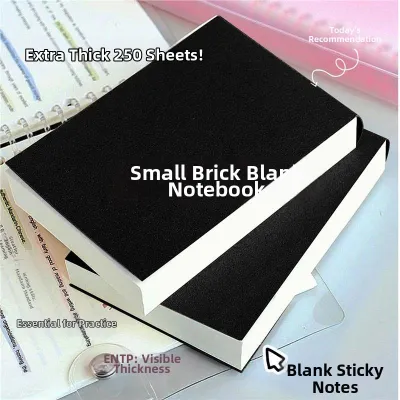
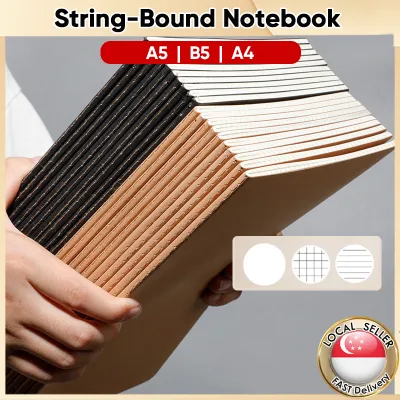
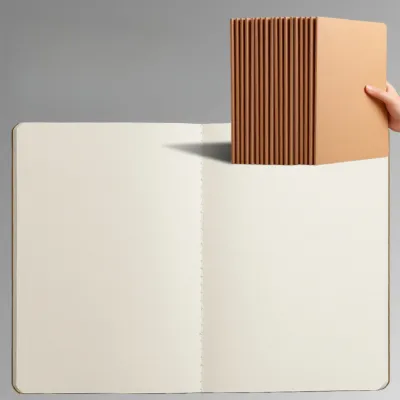
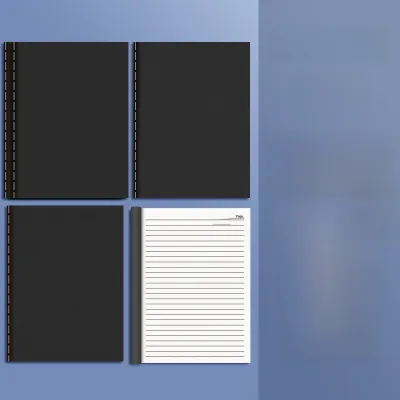
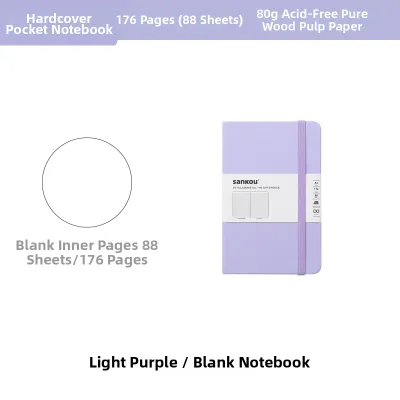

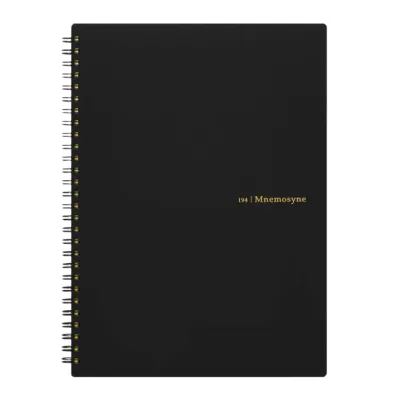
Prices are valid at publication and may change. Please refer to the product page for the latest price.
Understanding Paper Performance Issues
To evaluate paper quality effectively, you must first understand the three primary failure modes that occur when wet or heavy ink meets paper. The most disruptive of these is bleed-through, which happens when ink completely penetrates the paper fibers and appears on the reverse side of the sheet. This issue makes writing on both sides of a page virtually impossible and can ruin subsequent pages if the ink pools heavily.
Bleed-through is typically caused by a combination of highly liquid ink, a generous ink flow, and highly absorbent paper fibers. When the paper lacks the physical density or chemical treatment to slow down absorption, the ink travels straight through the sheet. This is a critical concern for anyone who wants to maximize the usable pages in their blank notebook.
The second common issue is feathering, which occurs when ink spreads horizontally along the paper’s cellulose fibers. Instead of a crisp, clean line, feathering results in fuzzy, spiderweb-like edges that distort your handwriting or sketches. This problem is particularly prevalent with water-based inks and papers that have loose, untreated fibers.
Feathering not only ruins the aesthetic appeal of your writing but can also cause fine lines to merge, making small handwriting illegible. It indicates that the paper is absorbing the liquid too quickly and unevenly across its surface.
The third issue is ghosting, also known as show-through. Ghosting is characterized by a shadow of the writing being visible on the reverse side of the page, even though the ink has not physically broken through the paper surface. While it does not prevent you from writing on the back of the page, severe ghosting can make reading your notes distracting and cluttered.
Unlike bleed-through and feathering, which are chemical and structural absorption issues, ghosting is primarily a function of paper opacity and thickness. Thinner papers, even those with excellent chemical treatments that prevent bleeding, will naturally exhibit more ghosting simply because they are more translucent.
Key Paper Specifications to Check Before Buying
Equipping yourself with the technical labels and physical traits of paper allows you to evaluate a blank notebook without relying solely on brand marketing. The most common specification you will encounter is paper weight, measured in grams per square meter (GSM). Standard notebook paper typically ranges from 50 GSM to 160 GSM, with higher numbers indicating thicker, heavier paper.

While a higher GSM generally offers better resistance to bleed-through and ghosting, it is not a universal guarantee of quality. Thicker paper adds significant bulk and weight to a notebook, making it less portable. Furthermore, a high-GSM paper that lacks proper chemical treatment can still suffer from feathering, while a well-engineered 80 GSM paper can handle wet inks beautifully.
This brings us to paper sizing, which is the chemical treatment applied during manufacturing to control water resistance. Internal sizing is mixed directly into the paper pulp before the sheets are formed, while surface sizing is applied to the finished page. Sizing acts as a barrier, slowing down ink absorption and forcing the liquid to dry on the surface rather than soaking into the fibers.
Without adequate sizing, paper behaves like a paper towel, rapidly pulling ink in all directions. When evaluating a blank notebook, look for indications of hard sizing or surface sizing, which are essential for maintaining crisp lines with wet writing instruments.
The finish of the paper—whether it is coated or uncoated—also plays a massive role in performance. Coated papers have a thin layer of clay, calcium carbonate, or polymers that creates an exceptionally smooth, non-porous surface. This coating keeps the ink sitting on top of the page, which enhances color vibrancy and showcases unique ink properties like shading and sheen.
However, coated papers suffer from significantly longer drying times, making them prone to smudging if you close the notebook too quickly. Uncoated papers are more porous and absorb ink faster, which reduces smudging but increases the risk of feathering if the paper fibers are not tightly bound.
Evaluating Paper Compatibility by Pen Type
Fountain Pens
Fountain pen inks are water-based and flow freely from the nib, depositing a relatively large volume of liquid onto the page. To handle this wet delivery, fountain pen users require a hard-sized, smooth paper that prevents the ink from sinking too quickly into the fibers. This preserves the crispness of the line and prevents feathering.
However, the trade-off for this crispness is drying speed. On highly coated, fountain-pen-friendly papers, the ink can take several minutes to dry completely. If you write quickly, use a broad or wet nib, or need to close your blank notebook immediately, you must be prepared for potential smudging unless you use a blotter sheet.
Gel Pens
Gel pens utilize a water-based gel ink with a high pigment load. The ink is highly viscous when at rest but thins out under the physical pressure of the rolling ball tip, creating a thick, vibrant line. Because gel ink sits relatively thick on the page, it requires a moderately absorbent paper to dry within a reasonable timeframe.
If the paper is too heavily coated, gel ink will pool on the surface and smudge at the slightest touch. Conversely, if the paper is too thin or absorbent, heavy gel ink application—especially from broader tips like 0.7mm or 1.0mm—can cause localized bleed-through. A quick-absorbing, medium-weight paper balances drying speed with bleed resistance.
Markers and Highlighters
Markers and highlighters present the most extreme challenge for any blank notebook. Alcohol-based markers contain solvents that rapidly dissolve paper sizing and penetrate deep into the cellulose fibers. This chemical behavior causes severe bleed-through on almost all standard notebook papers, regardless of brand.
To use alcohol markers successfully, you must seek out specialized marker paper or ultra-high GSM options, typically 120 GSM to 160 GSM or higher. Standard uncoated notebooks will bleed through almost instantly, requiring you to place a protective backing sheet behind your working page to save the subsequent sheets from ruin. Water-based highlighters are less aggressive but can still cause feathering on poorly sized paper.
How to Test a Blank Notebook Before Committing
Because smoothness, bleed resistance, drying speed, and erasability depend entirely on the exact combination of paper and ink materials, you should always perform a physical test before committing to a new blank notebook. Start by selecting a page at the very back of the notebook to serve as your testing ground.
Begin with a dry-time test to evaluate smudging and pooling. Draw several solid lines or write a few words, then run a clean finger across the ink at specific intervals—such as 2, 5, 10, and 30 seconds. Note how long it takes for the ink to set completely without leaving a smudge trail.
Next, check for ghosting and bleed-through by holding the tested page up to a natural light source or a bright desk lamp. Observe the reverse side of the page under normal writing light to see if the ink shadow is distracting. Check closely for any tiny spots where the ink has physically broken through the paper surface.
Always conduct these tests using the exact pen, ink color, nib size, and writing pressure you plan to use daily. Even minor variations, such as switching from a fine gel pen to a medium gel pen, or using a different brand of fountain pen ink, can significantly alter how the paper behaves.
Choosing the Right Blank Notebook for Your Needs
To select the ideal blank notebook, you must establish a decision framework based on your primary writing style and tools. If your daily routine revolves around fountain pens and you prefer writing on both sides of the page, prioritize heavily sized, mid-weight paper (around 80 GSM to 100 GSM) with a smooth, satin finish. This combination offers the best balance of line crispness and bleed resistance.
If you rely on gel pens for rapid note-taking and cannot afford to wait for ink to dry, choose a quick-drying, standard-weight paper (around 70 GSM to 90 GSM) with a slightly more porous, uncoated finish. This ensures your notes remain smudge-free, even during fast-paced meetings or lectures.
For those who primarily sketch with markers, highlighters, or heavy ink washes, look for ultra-thick paper (120 GSM to 160 GSM) or specialized coated marker paper. Alternatively, you can accept single-sided use and always keep a thick blotter card or scrap sheet directly behind your active page to protect the rest of the notebook.
Beyond paper specs, verify the physical dimensions (such as A5 or B6 standards) and binding style of the notebook. A lay-flat thread binding is highly recommended for comfortable edge-to-edge writing, especially when using unruled pages. Ensure the notebook dimensions fit your daily carry bag and desk setup comfortably.
Finally, always verify manufacturer specifications carefully and treat marketing claims with caution. Terms like “fountain pen friendly” or “bleed-proof” are unregulated marketing labels rather than standardized industry certifications. By focusing on physical specifications like GSM, sizing, and finish, and conducting your own observable trials, you can find a blank notebook that perfectly matches your creative and professional needs.
Frequently Asked Questions (FAQ)
Does storing a notebook in a humid environment affect paper quality?
Yes, ambient moisture can significantly alter how paper behaves. In humid climates, such as Singapore, paper fibers naturally absorb moisture from the air over time. This absorbed moisture can soften the paper’s sizing, making the fibers more absorbent and increasing the risk of feathering and bleed-through, even with pens that previously performed perfectly. To preserve your blank notebooks, store them in dry, climate-controlled environments, and consider keeping unused notebooks in sealed storage boxes with silica gel packets.
Can I use a blotter sheet to prevent bleed-through in standard notebooks?
Using a blotter sheet or a thick piece of scrap paper placed directly behind your active page is an excellent way to protect subsequent sheets from accidental bleed-through. While this physical barrier successfully saves the rest of your notebook, it does not prevent ghosting or fix feathering on the page you are currently writing on. It is a highly effective workaround for thin or absorbent paper, but it is not a substitute for high-quality, well-sized sheets.

Community discussion
Share your experience or ask a question. Comments are reviewed before publication.