
Selecting the right large carton box requires balancing physical dimensions, internal volume, and structural strength. While many suppliers categorize boxes exceeding 50 cm or 60 cm on their longest side as “large” or “big,” there is no single universal standard. To find the perfect fit, you must measure your items at their widest points, account for protective cushioning, and verify the manufacturer’s weight capacity rating. Choosing an incorrect size can lead to damaged goods, structural collapse during transit, or unnecessary shipping fees.
Understanding Standard Dimensions for Big Carton Boxes
When browsing for large carton boxes, the dimensions listed on packaging websites or retail shelves can sometimes be misleading if you do not know how to read them. Most manufacturers present dimensions in a standard format: Length x Width x Height (L x W x H). The length and width represent the opening of the box, while the height represents the depth. Identifying the opening is crucial because it dictates how you will load your items and whether bulky objects can physically pass through the top flaps.
A common pitfall is failing to differentiate between inner and outer dimensions. Outer dimensions are important for calculating shipping fees, vehicle cargo space, or storage rack compatibility. However, inner dimensions dictate the actual usable packing capacity. Because corrugated cardboard has thickness—especially double-wall varieties—the inner space is always smaller than the outer measurements. Always check the manufacturer’s specification sheet to confirm the internal clearance before purchasing.
Products mentioned in this guide
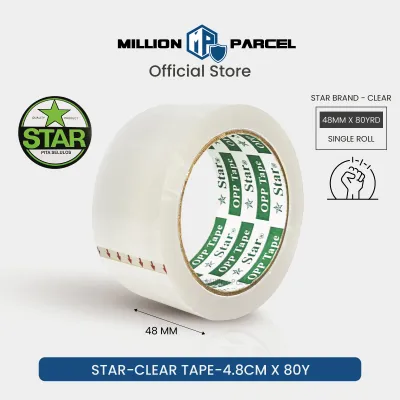
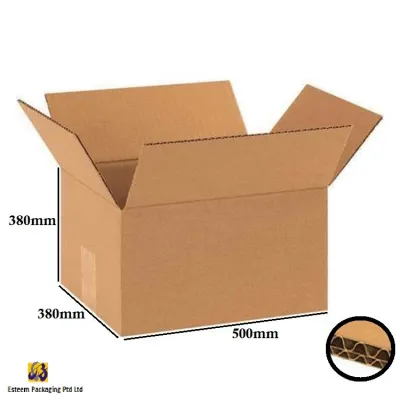
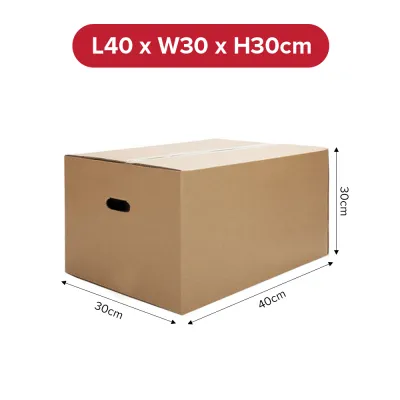
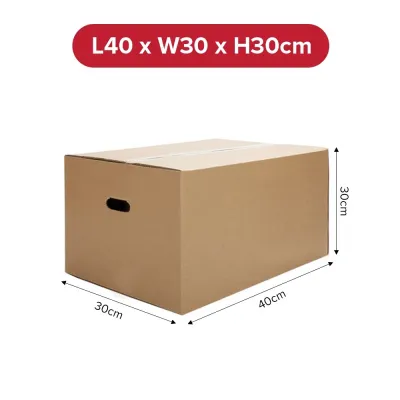
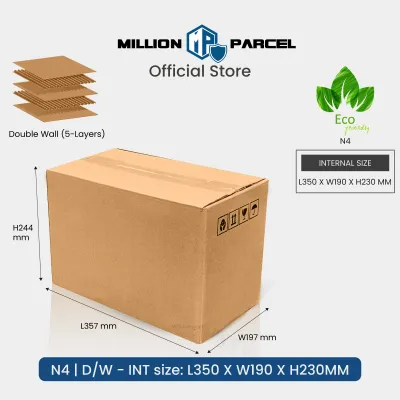
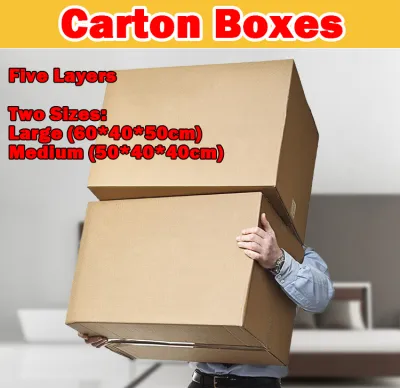
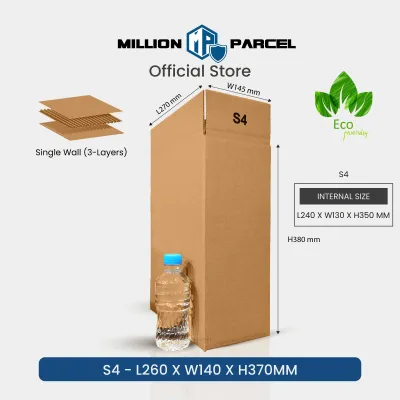
Prices are valid at publication and may change. Please refer to the product page for the latest price.
It is also important to recognize that “standard” large sizes are highly variable across different suppliers. One manufacturer might label a 50 x 40 x 40 cm box as “large,” while another reserves that term for boxes measuring 60 x 40 x 50 cm or larger. Because there is no centralized regulatory body enforcing standard box sizes, you must treat every supplier’s catalog as unique. Always verify the exact millimeter or centimeter specifications rather than relying on generic labels like “big” or “extra-large.”
How to Measure Your Items and Calculate Required Space
To determine the box size you need, start by measuring the items you plan to pack. If you are packing a single, uniform item like a stack of documents or a rectangular storage bin, the process is straightforward. However, for irregular, protruding, or bulky items, you must measure the absolute longest, widest, and tallest points. Do not assume a piece of equipment or a decorative item has a uniform shape; a single protruding handle or leg can prevent the box flaps from closing if not accounted for.

Once you have the maximum dimensions of your items, you must calculate the necessary buffer space for protective cushioning. Items should never touch the inner walls of the carton box directly, as any external impact during transit will transfer directly to the contents. As a general rule of thumb, allow at least 5 cm of clearance on all sides for protective materials like bubble wrap, packing peanuts, or crumpled paper. Add this buffer to your item’s measurements to find the minimum required inner dimensions of your box.
You must also evaluate whether to consolidate multiple items into one large box or distribute them across several smaller ones. While a single large box might seem convenient, packing too many heavy items together can make the box difficult to lift and increase the risk of structural failure. Consider the physical handling limits of yourself or your delivery couriers. If the total weight of consolidated items approaches the maximum limit of a single box, distributing the load is often the safer and more ergonomic choice.
Matching Box Strength and Structure to Your Load
A box’s physical size does not automatically correlate with its weight capacity. To ensure your items remain secure, you must match the box’s material and structural design to the density and fragility of your load. Corrugated cardboard boxes are typically available in single-wall or double-wall configurations. Single-wall boxes consist of one fluted medium glued between two flat linerboards, making them suitable for lightweight or medium-weight items. Double-wall boxes feature two layers of fluted medium, providing significantly higher crush resistance and stacking strength for heavy or fragile goods.
Rather than guessing a box’s strength based on its thickness, rely on official manufacturer ratings. Look for the Edge Crush Test (ECT) rating or the Bursting Test rating, which are often printed on a stamp on the bottom flaps of high-quality boxes. The ECT rating measures the box’s top-to-bottom stacking strength, which is critical if you plan to stack multiple large boxes in a storage unit or delivery truck. Always verify that your item’s weight falls safely within the manufacturer’s certified weight limit.
The proportions of the box also play a major role in how weight is distributed and handled. A tall, narrow box is ideal for long, vertical items but can easily tip over if packed top-heavy. Conversely, a short, wide box distributes weight over a larger base, making it more stable but potentially harder to carry if the width exceeds a comfortable arm span. Choose a box shape that matches the density of your items to keep the center of gravity low and ensure safe, ergonomic handling.
Practical Tips for Packing and Sealing Large Boxes
Packing a large carton box effectively requires more than just placing items inside; you must secure the internal space to prevent movement. Any empty space inside a large box allows items to shift during transit, which can damage the contents or cause the box walls to cave in when stacked. Fill all remaining voids with appropriate dunnage, such as air pillows, packing paper, or cardboard inserts. The goal is to create a solid, compact block inside the box that supports the outer walls from within.
Sealing a large box requires a stronger taping method than standard small packages. The H-tape method is the industry standard for securing large carton boxes. To apply this, seal the center seam of the box flaps, and then apply tape along the side edges where the flaps meet the box body, forming the letter “H” on both the top and bottom of the box. This reinforces the corners and prevents the flaps from peeling open under heavy loads or high humidity.
Finally, clear labeling is essential for safe handling and preventing bottom-out failures. If a box is heavy, clearly mark it with “Heavy” or “Team Lift” labels on multiple sides so handlers are prepared for the weight. For fragile items, use “Fragile” or “This Side Up” indicators to ensure the box remains in the correct orientation. Proper labeling alerts handlers to take necessary precautions, reducing the risk of accidental drops or improper stacking.
Frequently Asked Questions (FAQ)
Can I use a big carton box for very heavy items?
While you can use a large carton box for heavy items, you must ensure the box is specifically rated for high weight capacities, such as a heavy-duty double-wall or triple-wall corrugated box. Packing heavy items in a standard single-wall large box can cause the bottom to fail or the sides to tear. Always check the manufacturer’s weight limit and use the H-tape method to reinforce all seams.
How should I store unused large carton boxes?
To keep unused large carton boxes in optimal condition, store them flat-packed in a cool, dry environment away from direct sunlight and moisture. High humidity can weaken the adhesive and soften the corrugated fluting, significantly reducing the box’s structural strength when assembled. Keep them elevated off concrete floors on a pallet or shelf to prevent moisture absorption from below.

Community discussion
Share your experience or ask a question. Comments are reviewed before publication.