
Your EZ-Link card is far more than just a convenient pass for public buses and MRT trains. In Singapore, this contactless stored-value card serves as a highly versatile payment tool accepted across thousands of retail outlets, dining establishments, vending machines, and community facilities. Carrying one reduces the need to fumble for loose coins or wait for credit card transactions to process during your daily errands.
Understanding where and how to use your card for everyday purchases can streamline your shopping routine. By recognizing the participating merchants and understanding the basic transaction rules, you can maximize the utility of the card already sitting in your wallet.
Where You Can Use EZ-Link Beyond Transit
Major supermarkets and convenience stores across Singapore widely accept EZ-Link payments. When picking up daily essentials at supermarkets like FairPrice, Cold Storage, or Giant, you can simply tap your card at the checkout counter to complete your purchase. Similarly, convenience stores such as 7-Eleven and Cheers support contactless card payments, making it incredibly fast to grab a quick snack, drink, or newspaper on your way to work.
Products mentioned in this guide
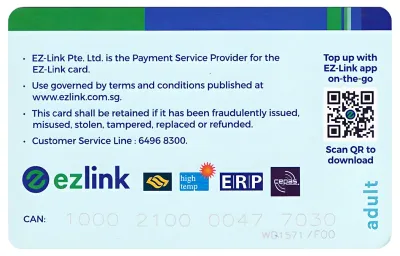
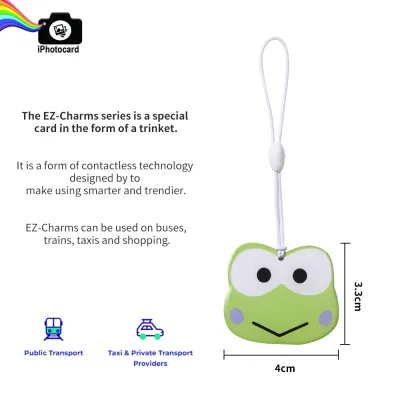
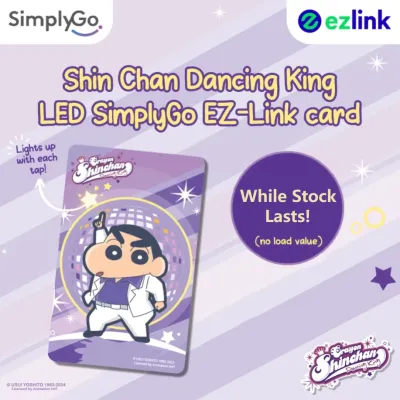
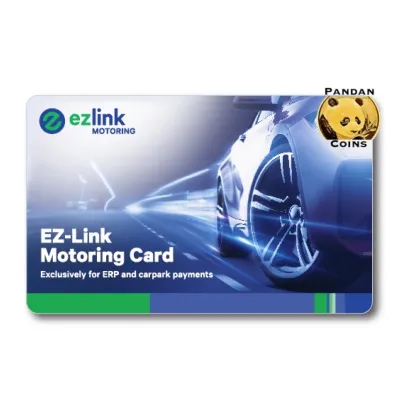
Prices are valid at publication and may change. Please refer to the product page for the latest price.
Beyond standard retail stores, you can use your card at a wide variety of self-service vending machines. Automated dispensers for canned drinks, ice cream, hot meals, and even toys or umbrella rentals frequently feature contactless card readers. These machines process the transaction instantly, saving you the hassle of smoothing out crumpled paper notes or searching for exact change.
The dining scene in Singapore also offers extensive support for contactless stored-value cards. Many food courts, including popular chains like Kopitiam and Food Junction, feature card readers at individual stalls. Fast-food outlets, neighborhood bakeries, and select cafes also accept this payment method, allowing you to pay for your morning coffee or lunch with a single tap.
You can also use your card at various government agencies and community facilities. Public libraries often accept contactless cards for printing services or paying minor administrative fees. Additionally, certain public sports complexes and swimming complexes allow you to tap your card at the entry turnstiles or booking counters, integrating your leisure activities with your daily transit card.
While acceptance is widespread, there is a general distinction between large chain outlets and independent merchants. Large retail chains, franchise outlets, and modernized food courts almost universally support contactless card payments. In contrast, independent hawker stalls, traditional wet market vendors, and small neighborhood shops may still rely strictly on cash or unified QR code systems like SGQR. It is always best to observe the payment terminal at the counter before queuing.
How to Check if a Store Accepts Your Card
The most direct way to confirm whether a store accepts your card is to look for official payment decals. Participating merchants display the distinctive blue CEPAS (Contactless e-Purse Application System) logo or the official EZ-Link decal on their storefront windows, glass doors, or directly on the cash register. If you see these logos alongside other payment network symbols, you can confidently use your card at checkout.

You can also check the point-of-sale terminal itself before making a payment. Modern payment terminals usually feature a digital screen that displays the logos of all accepted payment methods. If the terminal screen shows the card’s logo or a generic contactless card symbol, it indicates that the hardware is equipped to process your transaction.
For those who prefer to plan ahead, the official EZ-Link mobile application offers a convenient merchant directory. Within the app, you can search for nearby participating merchants and filter them by specific categories such as dining, shopping, leisure, or services. This digital tool is particularly useful when exploring new neighborhoods or looking for specific dining options that accept contactless cards.
If you are ever uncertain, the simplest approach is to verify directly with the store staff before placing an order or bringing your items to the register. Asking a quick question like “Do you accept EZ-Link?” prevents any potential inconvenience at checkout. This is especially helpful in smaller shops where the terminal might be temporarily offline or reserved only for specific credit card networks.
Transaction Rules and Checkout Limitations
When using your card for retail purchases, it is important to be aware of merchant-specific transaction limits. Some smaller retailers or convenience stores may enforce a minimum spend limit, such as S$1 or S$2, to cover the cost of processing contactless payments. Conversely, there may also be a maximum transaction limit per tap—often capped around S$200 or S$500 depending on the card type—to protect your funds in case the card is lost or stolen.
Another key limitation is the inability to split bills at many retail terminals. If your purchase total exceeds the remaining balance on your card, most point-of-sale systems will not allow you to pay a portion with the card and the remainder with cash or a credit card. The terminal will simply decline the transaction due to insufficient funds, meaning you must ensure your card is fully loaded before attempting the purchase.
Unlike transit gantries, retail terminals do not allow negative balances or overdrafts. When traveling on buses or the MRT, the system may occasionally let you exit the gantry even if the fare pushes your card into a minor negative balance, which you then clear during your next top-up. Retail point-of-sale systems operate on a strict real-time authorization basis; if your card does not have the exact amount required, the transaction is rejected immediately.
It is also helpful to understand how refunds are handled for retail purchases made with a contactless card. If you need to return an item bought using your card, merchants typically do not credit the refund back to the physical card. Instead, store policies usually dictate that refunds are issued in cash, as store credit, or via a voucher, depending on the retailer’s specific return terms.
Keeping Your Card Ready for Daily Use
To ensure your card is always ready for both travel and shopping, consider setting up an automatic top-up service. By linking your card to a bank card or a designated mobile app, you can configure the card to automatically reload with a pre-selected amount, such as S$20, whenever the balance falls below a specific threshold. This eliminates the risk of running out of funds at a busy checkout counter.
If you prefer manual top-ups, you should regularly monitor your card’s balance and transaction history. You can easily check your remaining funds by tapping your card against the back of an NFC-enabled smartphone running the official mobile app. Alternatively, your balance is displayed on transit gantries as you exit, on ticketing machines at MRT stations, and at the bottom of printed retail receipts after a purchase.
Be mindful of your card’s physical lifespan and expiry date. Standard contactless cards in Singapore generally have a lifespan of five years from the date of manufacture. You can check your card’s expiry date using the official mobile app or at any transit ticketing machine. Once a card expires, it can no longer be used for transit or retail payments, and you will need to obtain a replacement.
If your card expires, is physically damaged, or is lost, you can transfer the remaining stored value to a new card. For registered cards, this process can be initiated through the official mobile app or by visiting a transit ticket office. Keeping your card registered under your profile is highly recommended, as it protects your funds and simplifies the transfer process if the card is misplaced.
Frequently Asked Questions (FAQ)
Can I use one EZ-Link card to pay for multiple people at a retail store?
Yes, you can use a single card to pay for a group’s total bill at a retail store or supermarket. Unlike public transit, where each commuter must tap their own individual card to enter and exit the gantries, retail transactions are processed as a single lump-sum payment. As long as your card has a sufficient balance to cover the entire bill and the total does not exceed the merchant’s maximum transaction limit, you can tap once to pay for everyone’s items.
Are there any surcharges for using the card at retail merchants?
Generally, retail merchants in Singapore do not impose any extra surcharges or processing fees on consumers who choose to pay with a contactless stored-value card. The price you pay at the register is the same as the advertised cash price. However, it is always advisable to review the card issuer’s terms and conditions regarding any potential administrative fees, such as dormant account fees for cards left inactive for long periods, or standard replacement costs for expired cards.

Community discussion
Share your experience or ask a question. Comments are reviewed before publication.